




Artikel: Personalized Skincare: 70% of Dermatologists Use It

Personalized Skincare: 70% of Dermatologists Use It
Many assume personalized skincare is just clever marketing, yet 70% of dermatologists now integrate it into clinical practice. This article cuts through the noise to reveal the science behind truly bespoke skincare, how advanced diagnostics inform treatment decisions, and why your unique skin biology demands tailored care. You’ll discover practical ways to access evidence-based personalized regimens that deliver measurable results, including skin health insights from leading clinicians.
Table of Contents
- Introduction To Personalized Skincare
- Key Factors Influencing Personalized Skincare
- Technologies Enabling Skin Analysis And Personalization
- Clinical Evidence Supporting Personalized Skincare Efficacy
- Common Misconceptions About Personalized Skincare
- Practical Guidance: Accessing And Choosing Personalized Skincare
- Experience Expert Personalized Skincare Today
- Frequently Asked Questions
Key Takeaways
| Point | Details |
|---|---|
| Clinical Foundation | Personalized skincare uses diagnostic tools measuring hydration, sebum, pigmentation, and barrier function to tailor treatments. |
| Individual Factors | Genetics, environmental exposures, and lifestyle choices like diet and stress directly influence skin health and treatment response. |
| Advanced Technology | AI-powered imaging improves diagnostic accuracy by 25%, enabling precise identification of skin concerns. |
| Proven Efficacy | Clinical studies show personalized approaches deliver up to 35% better improvements in hydration and pigmentation than generic products. |
| Expert Access | Virtual consultations with qualified dermatologists make clinical-grade personalized skincare accessible globally. |
Introduction to Personalized Skincare
Personalized skincare represents a clinical methodology where treatment selection stems from objective analysis of your skin’s biological markers. Unlike mass-market products formulated for broad demographics, this bespoke skincare approach integrates measurable data about your skin barrier integrity, sebum production, pigmentation patterns, and hydration capacity.
The process begins with diagnostic evaluation. Clinicians assess specific biomarkers to understand how your skin functions at a cellular level. Personalized skincare relies on diagnostics measuring hydration levels, pigmentation density, barrier function markers, and sebum output. These parameters provide quantifiable baselines that guide active ingredient selection and concentration levels.
This differs fundamentally from conventional skincare marketing that relies on skin type categories like “oily” or “dry.” Such simplistic classifications ignore the complex interplay of genetics, environment, and lifestyle that shapes your skin’s actual needs. The clinical skincare science underlying personalization acknowledges this complexity.
Key clinically measured parameters include:
- Transepidermal water loss (TEWL) indicating barrier health
- Melanin index revealing pigmentation concerns
- Erythema index measuring inflammation and redness
- Sebum secretion rates determining appropriate moisturizer weights
Pro tip: Request documentation of your baseline measurements during consultations. Tracking these metrics over time provides objective proof your regimen works, rather than relying on subjective impressions.
Dr. Mandy, recently featured in Tatler’s Beauty Guide 2026, emphasizes that personalized skincare science transforms how dermatologists address problematic skin conditions. Her approach combines diagnostic precision with individualized treatment protocols that adapt as your skin responds.
Key Factors Influencing Personalized Skincare
Your genetic blueprint determines fundamental aspects of skin behavior. Variations in genes controlling ceramide synthesis affect barrier function, while polymorphisms in melanin production genes influence pigmentation responses. These inherited factors explain why certain active ingredients work brilliantly for some people but trigger reactions in others.

Environmental exposures create another layer of complexity. UV radiation generates free radicals that degrade collagen and trigger melanin overproduction. Air pollution deposits particulate matter that penetrates pores and promotes inflammation. Climate variations affect transepidermal water loss, making the same moisturizer perfect for humid summers but inadequate during dry winters.
Lifestyle factors like diet, stress, and sleep measurably impact skin inflammation markers and barrier recovery rates. Chronic stress elevates cortisol, which impairs wound healing and exacerbates conditions like acne and rosacea. Poor sleep quality reduces overnight skin repair processes, while nutrient deficiencies compromise collagen synthesis.
| Factor | Primary Influence | Personalization Priority |
|---|---|---|
| Genetics | Skin type, barrier function, pigmentation tendencies | Active ingredient selection and concentration |
| Environment | UV damage, pollution exposure, climate conditions | Antioxidant needs, barrier support, seasonal adjustments |
| Lifestyle | Stress levels, sleep quality, dietary patterns | Anti-inflammatory ingredients, repair enhancers |
Pro tip: Discuss significant lifestyle changes with your dermatologist. Starting a new medication, relocating to a different climate, or experiencing prolonged stress may necessitate regimen adjustments.
The dermatologist guidance you receive should account for these intersecting factors. This comprehensive assessment explains why cookie-cutter routines fail, they cannot possibly address the unique combination of genetic predisposition, environmental context, and lifestyle impact on skin health that defines your situation.
Technologies Enabling Skin Analysis and Personalization
Advanced imaging systems now provide objective, reproducible skin assessments that eliminate guesswork. High-resolution cameras capture surface texture, pore size, and fine lines, while cross-polarized light penetrates deeper to reveal subsurface pigmentation and vascular patterns. These images create visual documentation of your skin’s condition before treatment begins.
AI-driven imaging improves diagnostic accuracy by 25% compared to traditional manual evaluation. Machine learning algorithms analyze thousands of data points in each image, identifying subtle patterns human observers might miss. This technology excels at detecting early photoaging signs or monitoring treatment progress with millimeter precision.
Non-invasive biomarker devices complement visual assessment with quantitative measurements:
- Corneometers measure stratum corneum hydration using electrical capacitance
- Sebometers assess lipid content on the skin surface via photometric analysis
- Cutometers evaluate elasticity by applying controlled suction and measuring deformation
- pH meters track acid mantle status, crucial for barrier function
Teledermatology platforms have democratized access to expert analysis. Through virtual skin consultations, you can receive professional assessment without geographical constraints. Clinicians review high-quality images you submit, often using the same AI skin analysis technology employed in clinic settings.
AI imaging enhances assessment accuracy by approximately 25%, supporting superior personalization outcomes through objective, reproducible analysis.
Dr. Mandy’s practice integrates these technologies to create comprehensive skin profiles. Featured in Tatler for her expertise with problematic conditions, she demonstrates how combining visual AI analysis with biomarker readings produces treatment precision impossible through observation alone. This technological foundation enables truly personalized protocols that adapt as your skin evolves.
Clinical Evidence Supporting Personalized Skincare Efficacy
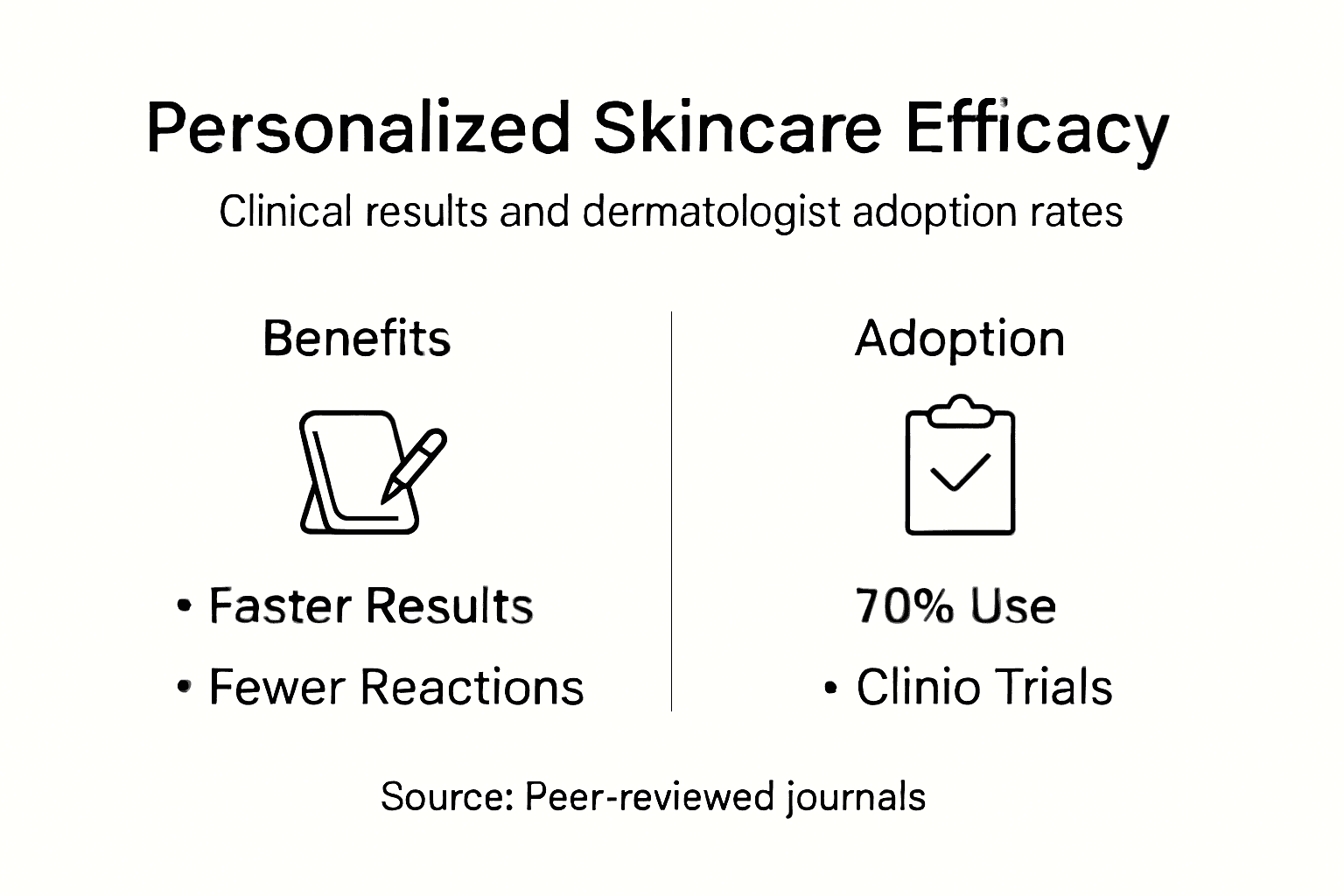
Rigorous clinical trials validate personalized skincare’s superiority over generic approaches. Personalized skincare improves hydration and pigmentation by up to 35% more than standardized regimens within 12 weeks. These studies measured objective biomarkers like TEWL and melanin index rather than subjective satisfaction ratings, providing robust evidence of therapeutic benefit.
The mechanism behind this enhanced efficacy relates to precise active ingredient matching. When clinicians select retinoid concentration based on your measured cell turnover rate, or calibrate niacinamide percentage to your specific pigmentation density, they optimize therapeutic dosing. This contrasts with generic products formulated at “average” concentrations that may be too weak for some users and irritating for others.
| Aspect | Generic Approach | Personalized Approach |
|---|---|---|
| Treatment Selection | Based on marketing claims and trends | Based on clinical diagnostics and biomarkers |
| Ingredient Concentration | Standardized for broad populations | Calibrated to individual tolerance and needs |
| Safety Profile | Higher risk of irritation or inadequacy | Reduced adverse effects through targeted selection |
| Outcome Measurement | Subjective self-assessment | Objective biomarker tracking |
Expert dermatologists emphasize that personalization extends beyond product selection to application protocols. The same vitamin C serum applied once daily might suit someone with robust barrier function but prove irritating for another person requiring alternate-day use. These nuances emerge only through individualized assessment.
Personalized skincare represents the future of dermatological treatment, improving precision and patient satisfaction while minimizing adverse reactions through scientifically guided ingredient selection.
The clinical outcomes with bespoke regimens documented in peer-reviewed journals confirm what practitioners observe daily. Patients following personalized protocols report faster visible improvements and fewer setbacks from irritation or incompatible product combinations. This evidence base continues expanding as more clinicians adopt diagnostic tools and contribute clinical trial evidence to the literature.
Common Misconceptions about Personalized Skincare
Several persistent myths cloud understanding of legitimate personalized skincare, causing unnecessary skepticism among consumers seeking effective solutions.
-
Myth: Personalized skincare is just marketing hype. Reality check: 70% of dermatologists apply personalized skincare approaches in clinical practice, confirming medical validity. This isn’t a cosmetic trend but an evolution in dermatological treatment methodology supported by diagnostic technology and clinical evidence.
-
Myth: More ingredients equal better results. The truth contradicts this assumption. Personalized regimens often succeed by eliminating unnecessary actives that burden your skin without addressing your specific concerns. A targeted serum with three precisely dosed ingredients typically outperforms a 15-ingredient cocktail where nothing reaches therapeutic concentration.
-
Myth: Lifestyle factors don’t influence personalization needs. Research demonstrates otherwise. Your sleep patterns affect overnight skin repair rates, stress levels modulate inflammation markers, and dietary choices impact nutrient availability for collagen synthesis. Effective personalization accounts for these variables rather than focusing solely on topical products.
-
Myth: Skin type categories provide sufficient personalization. Classifying yourself as “combination” or “sensitive” offers crude guidance at best. Two people with oily skin may have completely different sebum composition, pore density, and inflammatory profiles requiring distinct treatment approaches. True personalization begins where skin type categories end.
These misconceptions often prevent people from seeking the expert skincare insights that could transform their results. Understanding the science separates legitimate personalized care from superficial customization gimmicks like adding your name to a generic product label.
Dr. Mandy addresses these myths regularly in her practice and in publications like Tatler. Her approach to problematic skin conditions demonstrates how personalization grounded in clinical diagnostics differs fundamentally from marketing-driven customization. The distinction matters because only evidence-based personalization delivers the superior outcomes validated in clinical trials.
Practical Guidance: Accessing and Choosing Personalized Skincare
Navigating the personalized skincare landscape requires discernment to identify truly clinical services versus superficial customization. Start by prioritizing consultations with board-certified dermatologists or extensively trained skincare professionals who employ validated diagnostic tools before recommending products.
Legitimate personalized services share common characteristics:
- Comprehensive skin analysis using calibrated devices measuring objective biomarkers
- Detailed health history review covering medications, lifestyle factors, and previous product reactions
- Clear explanation of how diagnostic findings inform specific product recommendations
- Follow-up protocols for monitoring progress and adjusting treatments as needed
- Transparent pricing without pressure to purchase proprietary product lines immediately
Both in-person clinics and virtual platforms can deliver quality personalized care, provided they meet these standards. Personalizing your skincare routine becomes accessible regardless of location when you choose reputable telehealth services that replicate clinic-quality assessment remotely.
Virtual consultations typically require you to submit high-resolution photographs under specific lighting conditions. Advanced platforms may send home testing devices for measuring hydration or pH levels. The dermatologist analyzes this data to create your customized protocol, often with greater convenience than traditional appointments require.
Questions to ask potential providers:
- What specific diagnostic tools do you use for skin assessment?
- How do you determine appropriate active ingredient concentrations for individual patients?
- What is your protocol for monitoring treatment response and making adjustments?
- Do you collaborate with other healthcare providers to address systemic factors affecting skin health?
Pro tip: Choose practitioners who view personalization as an ongoing process rather than a one-time prescription. Your skin changes with seasons, age, and life circumstances. Providers who schedule periodic reassessments and proactively adjust your regimen deliver superior long-term outcomes.
The virtual skincare consultations now available through established dermatology practices combine clinical expertise with convenience. This accessibility means you can receive the same caliber of personalized care previously available only through in-person specialist visits. Some services even integrate holistic wellness approach considerations, acknowledging that skin health connects to overall physiological function.
Experience Expert Personalized Skincare Today
Ready to move beyond generic routines that ignore your unique skin biology? The M-ethod offers clinically sophisticated personalized skincare guided by UK-trained dermatologists who understand the science behind truly bespoke regimens. Dr. Mandy, recently featured in Tatler’s Beauty Guide 2026 for her expertise with problematic skin conditions, leads consultations that combine advanced diagnostics with evidence-based treatment selection.
Access virtual skincare consultation services from anywhere, receiving the same thorough assessment and personalized protocol development available in London and Athens clinics. The process integrates cutting-edge skin analysis technology with dermatological expertise to create regimens calibrated precisely to your needs.
Explore specialized treatments proven effective for specific concerns:
- ClearSkin serum for acne-prone skin with targeted antimicrobial and sebum-regulating actives
- Intensive Eye Therapy addressing periorbital aging with clinically dosed peptides and retinoids
- Prescription-strength formulations unavailable through conventional retail channels
The M-ethod’s approach exemplifies personalized skincare’s potential when clinical expertise meets premium formulations. Rather than guessing which products might work, you receive evidence-based recommendations tailored to your diagnostic profile and monitored for optimal results.
Frequently Asked Questions
What skin parameters are typically evaluated in personalized skincare?
Comprehensive assessments measure hydration levels via transepidermal water loss, sebum production rates, melanin distribution indicating pigmentation concerns, and erythema index revealing inflammation. Advanced evaluations may include pH measurement, elasticity testing, and microscopic analysis of pore characteristics and surface texture patterns.
How often should personalized skincare regimens be updated or reassessed?
Most dermatologists recommend reassessment every 12 to 16 weeks initially, as this timeframe allows sufficient cell turnover to evaluate treatment efficacy objectively. Once your regimen stabilizes and achieves desired outcomes, biannual reviews typically suffice unless significant lifestyle changes, seasonal shifts, or new concerns emerge requiring protocol adjustments.
Can personalized skincare prevent adverse reactions better than generic products?
Yes, significantly. By selecting active ingredients and concentrations based on your measured tolerance thresholds and barrier function status, personalized protocols minimize irritation risk. Clinicians avoid ingredients you’ve previously reacted to and calibrate potent actives like retinoids or acids to your specific capacity, reducing the trial-and-error approach that often causes setbacks with generic products.
Is virtual consultation as effective as an in-person dermatology visit?
For skincare personalization specifically, virtual consultations deliver comparable outcomes when proper protocols are followed. High-quality images combined with detailed health questionnaires provide sufficient data for expert analysis in most cases. Complex medical conditions requiring physical examination or in-office procedures still necessitate in-person visits, but routine personalized skincare development translates well to telehealth formats.
Are personalized skincare products more expensive than standard ones?
Initial costs typically run higher due to professional consultation fees and clinical-grade formulations. However, the targeted approach often proves more economical long-term by eliminating wasteful spending on ineffective products. You purchase only what your skin actually needs at concentrations that work, avoiding the expensive trial-and-error cycle common with generic skincare shopping. Many find personalized regimens require fewer total products than their previous routine.


