




Bespoke Skincare Regimen: Transforming Complexions
Finding the perfect skincare regimen can feel like searching for a tailored suit—what works brilliantly for one person often falls flat for another. Precision matters when your complexion reflects your lived experiences, environmental exposure, and unique biology. Bespoke skincare harnesses advanced technologies and expert consultations to deliver clinically-backed results, offering targeted solutions for issues like ageing and pigmentation where generic routines simply cannot compete.
Table of Contents
- What Makes A Skincare Regimen Bespoke
- Key Elements Of A Personalised Routine
- Why Practitioner Involvement Is Essential
- Choosing Clinical-Grade Products And Treatments
- Risks Of DIY Versus Expert Guidance
Key Takeaways
| Point | Details |
|---|---|
| Bespoke Skincare | Tailored skincare regimens focus on individual skin types and concerns, providing targeted solutions that generic products often fail to deliver. |
| Professional Consultation | Working with a certified practitioner ensures expert analysis and targeted recommendations, allowing for effective, personalised skincare routines. |
| Importance of Monitoring | Regular evaluations and adjustments to skincare routines are crucial as skin conditions and needs change over time. |
| Clinical-Grade Products | Utilising scientifically backed, clinical-grade formulations enhances treatment efficacy, addressing specific skin concerns more effectively than over-the-counter options. |
What Makes a Skincare Regimen Bespoke
Generic skincare routines treat everyone’s skin identically, which is precisely why they fail so often. Your skin is as individual as your fingerprint—shaped by genetics, environment, lifestyle, and specific concerns that demand tailored solutions, not one-size-fits-all approaches.
Bespoke skincare means creating formulations and routines that cater to your unique skin type, concerns, and goals. It moves beyond drugstore products to address your actual skin needs with precision and scientific backing. Whether you’re battling stubborn pigmentation, addressing fine lines, or managing sensitive reactive skin, a bespoke regimen targets exactly what matters to you.
The Core Elements of Bespoke Skincare
A truly personalised regimen rests on several foundational elements:
- Your specific skin profile – determined through professional analysis of your skin type, barrier function, microbiome, and sensitivities
- Targeted active ingredients – selected based on clinical evidence for your particular concerns, not trendy ingredients that won’t serve you
- Professional guidance – working with a certified practitioner who understands dermatological science and can adjust formulations over time
- Advanced technologies – when appropriate, incorporating devices like clinical skincare protocols that amplify product efficacy
- Realistic timelines – understanding that visible transformation requires consistency and patience, typically 8–12 weeks for meaningful results
The difference between bespoke and standard skincare is measurable. Bespoke formulations leverage advanced technologies and expert consultations to ensure superior efficacy and consumer satisfaction, addressing specific issues such as dryness, ageing, or acne that generic products simply cannot tackle effectively.
To better understand personalised skincare, here’s a comparison of bespoke versus standard routines:
| Approach | Customisation Level | Scientific Support | Long-term Effectiveness |
|---|---|---|---|
| Standard | Minimal, generic formulas | Often limited or marketing-led | Typically low, may not address root issues |
| Bespoke | Highly tailored to individual | Evidence-based, practitioner-guided | High, adapts as skin changes |
Why Professional Consultation Matters
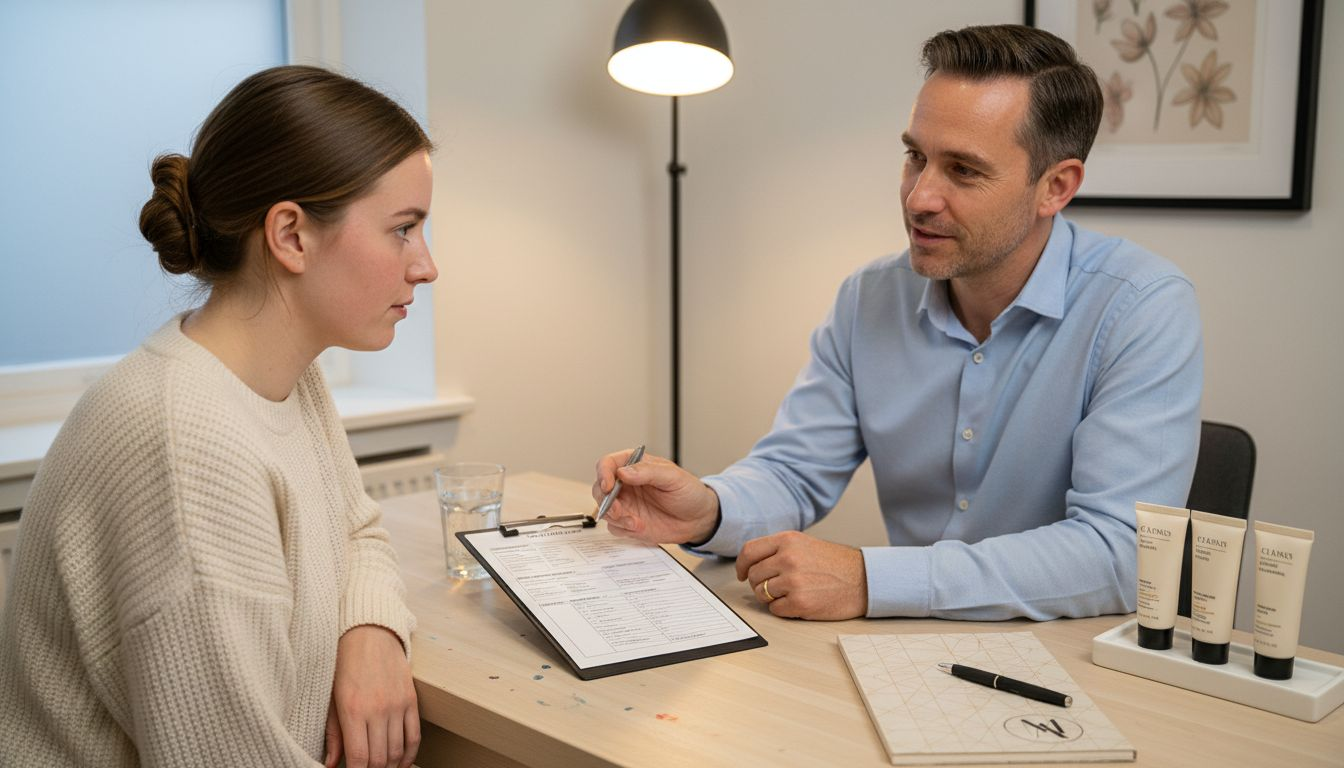
This is where many people stumble. You cannot create a truly bespoke regimen by researching ingredients online or following influencer recommendations. Your skin requires expert analysis from someone qualified to assess your unique situation.
Working with a certified practitioner makes all the difference. Dr. Mandy, featured in Tatler’s Beauty Guide 2026, exemplifies the level of expertise required to design regimens that actually transform complexions. Her credentials and recent recognition underscore what matters: a practitioner who understands clinical skincare deeply, stays current with scientific advances, and can personalise treatments based on your individual skin architecture.
Professional consultations ensure your regimen addresses your actual skin needs, not assumed ones—this is the foundation of visible, lasting transformation.
Without expert assessment, you risk wasting money on products that don’t address your real concerns. You might use actives that irritate your barrier, or skip ingredients you desperately need. A certified practitioner prevents these costly mistakes.
The Transformation Process
Bespoke skincare isn’t a one-time prescription you follow forever. Your skin changes—seasonally, due to stress, with age, and through hormonal fluctuations. Your regimen should evolve accordingly.
A qualified practitioner monitors your progress, adjusts formulations when needed, and introduces new actives strategically. This adaptive approach is what separates genuine bespoke skincare from static routines you downloaded from a blog.
Pro tip: Schedule your initial consultation with a certified practitioner who can assess your skin barrier, analyse your specific concerns, and design a regimen tailored to your lifestyle and budget—not someone selling you a standardised “kit.”
Key Elements of a Personalised Routine
A personalised routine isn’t about having the most products or the trendiest brands. It’s about understanding what your skin genuinely needs and delivering exactly that, nothing more, nothing less.
The foundation starts with knowing yourself. Your skin type, whether dry, oily, combination, or sensitive, determines which ingredients will work with you rather than against you. Your specific concerns—whether pigmentation, fine lines, reactive flare-ups, or textural irregularities—shape which actives belong in your regimen. And your lifestyle factors, from stress levels to climate exposure to sleep patterns, influence how your skin responds to any routine.
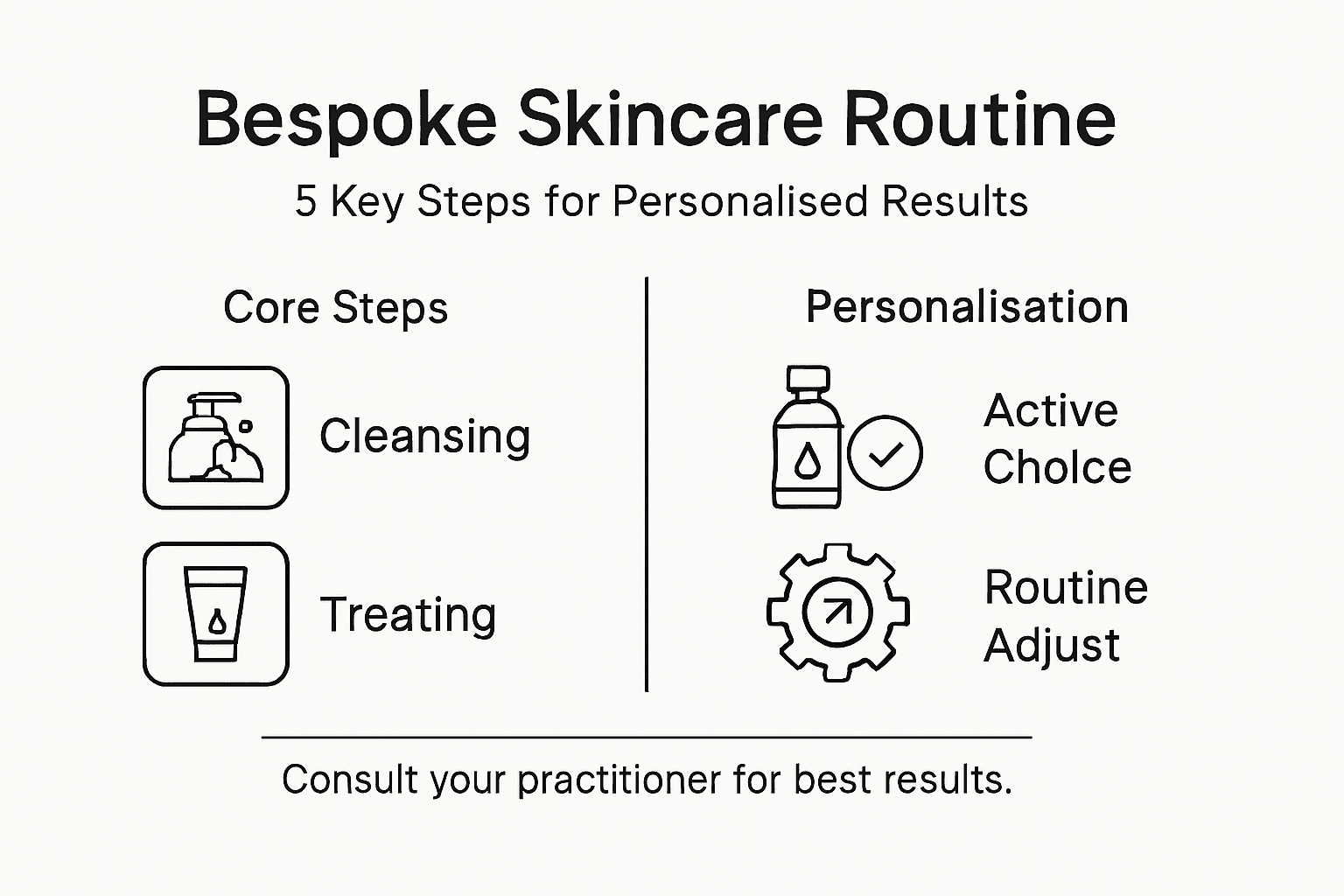
The Five Core Components
Every effective personalised routine rests on these pillars:
- Cleansing – removing surface debris and impurities without stripping your skin barrier. Your cleanser choice depends entirely on your skin type and sensitivity threshold.
- Targeted treatments – serums or essences containing active ingredients like retinol, niacinamide, or peptides selected specifically for your concerns, not generic “superstar” ingredients
- Moisturisation – hydration and occlusion tailored to your skin’s actual barrier needs, not what marketing tells you to use
- Sun protection – daily SPF appropriate for your skin type and lifestyle, applied correctly to prevent photoaging and pigmentation worsening
- Consistency and adjustment – following your routine as designed, then refining it when your skin evolves
Understanding active ingredients beneficial for your specific concerns ensures you’re not just applying products but actually addressing what matters to your complexion.
Why Layering Order Matters
Product sequencing isn’t arbitrary. The order in which you apply treatments affects absorption, efficacy, and whether ingredients interact positively or neutralise each other. Lighter textures generally go first, heavier products last. Water-based serums precede oils. Actives requiring specific pH levels must be applied correctly to function.
This is where professional guidance becomes invaluable. A certified practitioner designs your layering sequence based on your specific actives and formulations, not generic “routine templates” you’ll find online.
A well-designed routine addresses your actual skin architecture—your barrier function, microbiome, and sensitivities—not a one-size-fits-all sequence.
Evaluation and Evolution
Your skin isn’t static. Seasonal changes, hormonal shifts, stress, and ageing all require routine adjustments. What worked brilliantly in summer might be inadequate in winter. An active that served you beautifully for two years might need rotating out as your skin builds tolerance.
Regular evaluation—ideally with your practitioner—ensures your routine stays effective. This adaptive approach separates genuine personalised skincare from static routines you follow indefinitely regardless of what your skin is actually telling you.
Pro tip: Track your skin’s response to each product for at least four weeks before adjusting, noting texture changes, sensitivity shifts, and how your skin responds to environmental stressors—this data guides smarter routine refinements.
Why Practitioner Involvement Is Essential
You could spend months researching skincare ingredients, watching tutorials, and experimenting with products. Or you could work with a certified practitioner and see tangible results in weeks. The difference is expertise combined with scientific assessment.
Practitioners provide something you cannot give yourself: objective analysis of your skin. You might think you have oily skin when your barrier is actually compromised and overproducing sebum as a defence mechanism. You might blame genetics for your pigmentation when environmental damage and incorrect product use are the real culprits. A qualified practitioner sees what’s actually happening beneath the surface.
What Practitioners Bring to Your Regimen
Working with a certified practitioner transforms skincare from guesswork into clinical precision:
- Professional skin assessment – analysing your barrier function, microbiome balance, sensitivity triggers, and underlying concerns that cosmetic products alone cannot address
- Safe, targeted recommendations – expert analysis of skin types and conditions enabling targeted treatments that prevent complications common with DIY approaches
- Access to prescription-strength solutions – products and technologies unavailable to consumers without professional guidance
- Ongoing monitoring and adjustment – your practitioner tracks progress, identifies when to introduce new actives, and recognises when your skin needs a different approach
- Procedural expertise – knowing when topical products alone aren’t sufficient and professional treatments like micro-needling or injectables serve your goals
Why This Matters for Your Specific Concerns
If you’re battling stubborn pigmentation, a practitioner understands whether you need melanin-inhibiting actives, professional peels, or laser treatments—or a combination. If fine lines are your focus, they assess whether you need collagen-stimulating ingredients, injectable support, or both.
Practitioners bridge the gap between consumer expectations and clinical realities by assessing your skin scientifically and recommending treatments that actually work for your specific situation, not trending ingredients that might waste your money.
Dr. Mandy exemplifies this expertise. Featured in Tatler’s Beauty Guide 2026, her credentials and recent recognition reflect her commitment to clinically-backed, personalised skincare. Working with a certified practitioner of this calibre ensures your regimen addresses your actual skin needs with precision.
A qualified practitioner prevents costly mistakes, accelerates visible results, and ensures your regimen evolves as your skin changes over time.
The Competitive Advantage
Affluent individuals understand that certain investments deliver disproportionate returns. Premium skincare with professional guidance is one of them. Your practitioner becomes your skincare strategist, saving you money by preventing ineffective purchases and maximising results from products you do use.
This partnership approach separates genuine transformation from endless product cycling.
Pro tip: During your initial consultation, ask your practitioner to explain their assessment findings—what they observe about your barrier function, microbiome, and specific concerns—so you understand the logic behind every recommendation rather than simply following instructions.
Choosing Clinical-Grade Products and Treatments
Not all skincare products are created equal. The difference between a high-street moisturiser and a clinical-grade formulation isn’t marketing hype—it’s rooted in scientific rigour, ingredient concentration, and measurable efficacy.
Clinical-grade products undergo extensive research and testing before reaching consumers. They contain evidence-backed actives at therapeutically effective concentrations. They’re formulated to penetrate skin barriers, address underlying concerns, and deliver visible transformation. This is fundamentally different from cosmetic products designed primarily to feel pleasant and look appealing.
What Sets Clinical-Grade Apart
Clinical-grade skincare differs from standard products in several critical ways:
- Rigorous formulation standards – clinical-grade products such as tretinoin, peptides, and antioxidants are extensively researched to safely and effectively target skin ageing and other concerns with substantial evidence backing their efficacy
- Higher active concentrations – therapeutic levels of ingredients rather than token amounts that provide minimal benefit
- Professional-grade efficacy – formulations designed to address deeper skin concerns, not merely superficial hydration or aesthetics
- Stability and delivery systems – advanced technology ensuring actives remain potent and penetrate where needed
- Dermatologist-developed – created by skin experts who understand skin biology, not marketing teams prioritising fragrance and texture
Combining Topical and Professional Treatments
The most transformative results come from combining clinical-grade topical regimens with professional procedures. Your at-home routine handles daily maintenance and prevention. Professional treatments address concerns that topical products alone cannot resolve.
Consider pigmentation. A clinical-grade serum containing hydroquinone, kojic acid, or vitamin C inhibits melanin production over weeks and months. But if you have deep melasma or extensive sun damage, professional peels or laser treatments accelerate results dramatically.
Similarly, fine lines respond to retinoids and peptides, but combining these with professional collagen-stimulating treatments like micro-needling or radiofrequency achieves results in months rather than years.
Clinical-grade products and professional treatments work synergistically—your home routine maintains and prevents whilst procedures provide deeper transformation.
Selecting Products for Your Specific Profile
Evidence-based products ensure efficacy and safety across diverse ethnic skin profiles, from moisturisers addressing specific barrier concerns to targeted formulations addressing particular pigmentation patterns.
Your practitioner understands which clinical-grade actives suit your skin’s unique characteristics. They know whether you’ll tolerate aggressive retinoids or need gentler alternatives. They recognise which actives complement each other and which create irritation.
This expertise prevents expensive mistakes and accelerates your path to visible transformation.
Pro tip: Request your practitioner’s clinical reasoning for each product recommendation—understand why they’ve chosen specific actives, concentrations, and brands rather than accepting generic suggestions without explanation.
Risks of DIY Versus Expert Guidance
The skincare aisle is filled with products promising transformation. Social media influencers share their routines. Online forums recommend specific actives. It feels accessible, empowering even. But DIY skincare without professional oversight carries genuine risks that can damage your skin far more than leaving it untreated.
The difference between success and damage often comes down to one thing: expert assessment. A certified practitioner recognises what your skin needs. You might see a problem and guess at a solution. Those guesses can be costly.
The Real Risks of Going It Alone
DIY skincare creates multiple layers of risk:
- Improper product use – applying actives incorrectly, at wrong concentrations, or in incompatible combinations that trigger irritation or barrier damage
- Skin irritations and sensitivities – introducing actives your barrier cannot tolerate, causing inflammation that worsens your actual concerns
- Infection and contamination – using unpreserved formulations or contaminated products that introduce bacteria into your skin
- Adverse reactions – combining ingredients that interact negatively, or using products that trigger unexpected sensitivity responses
- Exacerbating existing conditions – addressing the wrong underlying cause, making pigmentation darker, acne more inflamed, or sensitivity more reactive
DIY skincare and online treatments pose risks including improper product use, skin irritations, infections, and adverse reactions without professional assessment, leading to ineffective or harmful regimens.
Here’s a quick reference on risks associated with DIY skincare versus expert-guided regimens:
| Regimen Type | Common Risks | Monitoring Method | Problem Resolution |
|---|---|---|---|
| DIY | Irritation, incorrect actives, infections | Self-assessment, subjective | Trial and error, often prolonged |
| Expert-led | Lower risk, professional oversight | Practitioner evaluation, objective | Immediate adjustments, targeted interventions |
Specific Dangers of Unscientific Formulations
Homemade or unregulated skincare carries particular hazards. Without proper preservation systems, products develop bacterial growth within weeks. Without scientific formulation knowledge, ingredient ratios become guesswork. Actives that require specific pH levels don’t work at all if formulated incorrectly, or worse, cause chemical burns.
DIY risks encompass bacterial contamination, improper preservation, ingredient mismatch, and potential skin damage such as irritation and burns due to unscientific formulations.
You might think you’re being careful. You might research ingredients thoroughly. But without dermatological training, you cannot assess skin barrier function, recognise signs of sensitisation, or understand how actives interact with your specific microbiome and genetics.
Professional oversight prevents costly mistakes and protects your skin from damage that takes months to repair.
The Cost of Professional Mistakes Versus DIY Risks
An expensive skincare product used incorrectly wastes money. A clinical-grade active applied improperly can trigger barrier damage requiring months of repair. Aggressive treatments chosen without professional guidance can cause post-inflammatory hyperpigmentation that lingers for years.
A certified practitioner monitors your skin’s response, adjusts your regimen when needed, and stops treatments that cause harm. You cannot do this objectively for yourself.
Pro tip: If you’ve been using DIY skincare and notice increased sensitivity, redness, or texture changes, pause all actives and consult a practitioner before continuing—catching barrier damage early prevents months of recovery.
Experience True Skincare Transformation with Bespoke Solutions
Struggling with generic skincare that overlooks your unique skin profile and concerns is a common challenge. This article highlights how a bespoke regimen, rooted in professional guidance and clinical-grade products, is essential for effective transformation. Whether your goal is to reduce pigmentation, combat ageing, or calm sensitive skin, understanding your skin barrier, microbiome, and the right formulation is crucial to success.
At The M-ethod, we specialise in delivering these exact personalised skincare experiences through exclusive prescription-strength products, advanced technologies, and expert virtual consultations. Discover how partnering with certified practitioners can help you avoid costly mistakes and accelerate visible results with tailored regimens designed just for you.
Unlock your skin’s potential today by exploring our bespoke services, advanced treatments, and curated product collections at The M-ethod Skin. Book your personalised consultation now and take the first step towards the complexion you deserve.
Frequently Asked Questions
What is bespoke skincare?
Bespoke skincare is a personalised skincare regimen tailored to your unique skin type, concerns, and goals. It goes beyond generic routines by creating formulations that specifically address your individual skin needs.
Why is professional consultation important for a bespoke skincare regimen?
A professional consultation is essential as it provides an expert analysis of your skin. A certified practitioner can identify your specific skin concerns, make targeted recommendations, and adjust your regimen as needed based on your skin’s response over time.
How do I know which active ingredients to use in my routine?
The selection of active ingredients should be based on a thorough understanding of your skin’s needs. A bespoke skincare regimen will utilise targeted active ingredients that have clinical evidence supporting their efficacy for your specific concerns, whether that’s pigmentation, fine lines, or sensitivity.
How can I ensure my skincare routine evolves with my skin?
Regular monitoring and evaluation with your practitioner are crucial. Your skin can change due to various factors like seasonality, hormonal shifts, and stress. A professional will adjust your regimen, introducing new actives or modifying existing ones to ensure continued effectiveness.