




Άρθρο: International skincare shipping: what you need to know

International skincare shipping: what you need to know
TL;DR:
- International skincare shipping involves transporting products across borders while complying with customs and safety regulations. Proper documentation and packaging are essential to prevent delays, seizures, or destruction of goods. Customers must understand specific country restrictions and non-refundable duties before ordering.
International skincare shipping is the process of transporting skincare products across national borders, requiring compliance with customs regulations, carrier restrictions, and country-specific cosmetic safety standards. The global beauty and cosmetics industry recorded a 46.6% year-over-year increase in international growth as of july 2025, driven by consumer demand for cross-border skincare brands and clean beauty products. That figure signals one clear truth: more people than ever are ordering skincare from abroad, and understanding how the process works protects both your purchase and your skin. Whether you are buying prescription-strength treatments from a UK clinic or sending products to clients overseas, knowing what is international skincare shipping means knowing the rules before the parcel leaves the shelf.
What is international skincare shipping and how does it work?
International skincare shipping is the movement of cosmetic and skincare goods between countries through commercial carriers, subject to the customs laws of both the exporting and importing nation. Unlike shipping general goods, skincare differs from general goods because country-specific cosmetic laws can result in shipment seizure or destruction if preparation is inadequate. That distinction matters enormously. A moisturiser that clears UK customs without issue may be flagged, held, or destroyed at the border of another country if its ingredients or labelling do not meet local standards.

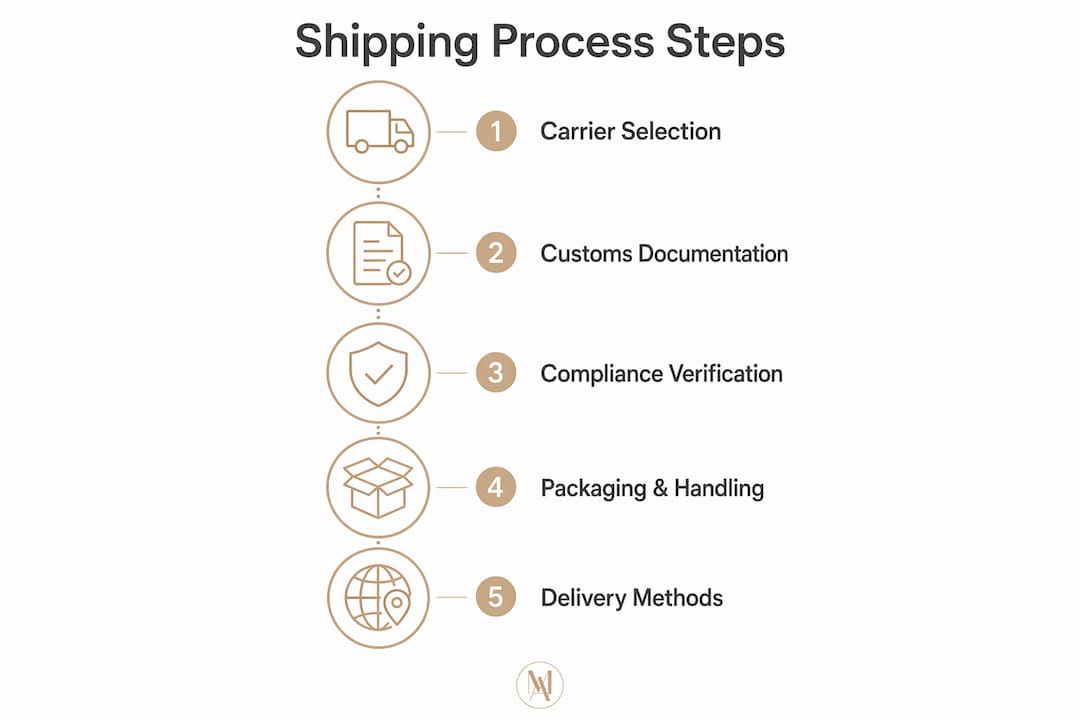
The process involves three core stages: carrier selection, customs documentation, and compliance verification. Each stage carries its own risks and requirements. Skipping or rushing any one of them is the most common reason international skincare orders fail to arrive.
What are the main shipping methods for skincare products?
Shipping timelines vary significantly by method: Express Air delivers in 1–5 days, Air Freight in 3–10 days, and Sea Freight takes 20–45 days for bulk shipments. Each method suits a different type of order, and choosing the wrong one costs money or risks product integrity.
| Shipping method | Typical transit time | Best suited for | Cost level |
|---|---|---|---|
| Express Air | 1–5 days | Individual orders, time-sensitive products | High |
| Air Freight | 3–10 days | Mid-volume shipments, temperature-sensitive items | Medium |
| Sea Freight | 20–45 days | Bulk wholesale orders, non-perishable products | Low |
Express Air is the right choice for individual consumers ordering prescription-strength serums or temperature-sensitive treatments. The speed reduces the time a product spends in potentially unsuitable conditions. Air Freight suits mid-volume orders where cost matters but a three-week wait is unacceptable. Sea Freight is reserved for large wholesale consignments where the low cost justifies the extended timeline and the products are stable at ambient temperature.
Pro Tip: If you are ordering a small number of high-value skincare products, consolidated air freight groups your parcel with others heading to the same destination. It costs less than express delivery and still arrives within a week in most cases.
Choosing between these options also depends on the nature of the product itself. Retinoids, vitamin C formulations, and peptide serums can degrade with prolonged heat exposure. For those products, express air is not a luxury. It is a necessity.
How do customs regulations affect international skincare shipping?
Customs regulations are the single greatest source of delays and losses in cross-border skincare orders. Country-specific regulations vary widely, and a product compliant in one region may be restricted in another. The EU, the US, and Gulf Cooperation Council (GCC) countries each maintain distinct banned ingredient lists, labelling requirements, and import approval processes.
The most common compliance failures include:
- Incorrect HS codes. Harmonized System codes define a product’s tariff classification and safety requirements. An incorrect code causes shipments to be held or rejected at the border.
- Missing Safety Data Sheets (SDS). Many carriers and customs authorities require SDS documentation for products containing alcohol, fragrances, or active pharmaceutical ingredients.
- Absent import licences. Some EU customs authorities require import licences for beauty products. Without them, shipments are rejected rather than delayed.
- Prohibited ingredients. An ingredient approved in the UK may appear on a restricted or banned list in the destination country. This applies particularly to certain preservatives, sunscreen actives, and retinoid concentrations.
- Restricted market access. Turkey prohibits direct-to-consumer cosmetic shipments, requiring a local importer or distributor to handle the goods. Sending directly to a Turkish consumer will result in the parcel being refused.
Pro Tip: Before placing an international skincare order, check the destination country’s national cosmetics regulatory authority website. The EU uses the CPNP (Cosmetic Products Notification Portal), the US uses the FDA, and GCC countries use the Gulf Standards Organisation. Each publishes updated banned ingredient lists.
Non-compliance does not simply mean a delay. Customs authorities in many countries have the authority to destroy shipments outright rather than return them. That means you lose both the product and the money paid for it.
What packaging and handling standards apply to skincare shipped abroad?
Skincare products require specialist packaging because many contain alcohol, fragrances, or aerosols subject to Dangerous Goods regulations, requiring double-sealed, leak-proof packaging and sometimes cold-chain logistics. This is not optional. Carriers including DHL and major freight operators enforce these standards at the point of acceptance.
The key packaging requirements for international skincare shipments are:
- Double-sealed, leak-proof containers. Liquids must be secured against pressure changes during air transport. A single seal is insufficient for most carriers.
- Temperature-controlled packaging. Products sensitive to heat, such as live probiotic formulations or certain vitamin C serums, require insulated packaging and, for longer routes, gel ice packs or phase-change materials.
- Dangerous Goods labelling. Aerosol and alcohol-based products require UN-labelled hazardous materials packaging and, in many cases, Safety Data Sheets to satisfy carrier requirements.
- Compliant product labelling. Each product must display batch numbers, full ingredient lists (INCI format is standard internationally), usage instructions, and the country of manufacture.
Packaging is your first line of defence against both physical damage and regulatory hold-ups. A product that arrives broken or leaking is a loss. A product that arrives without correct hazardous goods labelling may be confiscated entirely.
Smart packaging choices also reduce the risk of damage claims and the administrative burden of filing them. Outer cartons should be rigid, with adequate cushioning to absorb the vibration and pressure changes typical of air freight. For premium or medical-grade skincare, this level of care reflects the value of the product inside.
What should you know about international skincare returns policies?
International skincare returns are more restrictive than domestic ones, and the financial implications are often misunderstood. Companies typically provide 30-day refund windows, with some extending to 60 days, but international duties and taxes paid are non-refundable in almost all cases. That means the cost of returning a product from abroad is always higher than the purchase price alone suggests.
The standard conditions governing international skincare returns include:
- Unopened and unused products only. Most retailers require products to be in their original, sealed packaging. A product that has been opened, even once, is typically ineligible for a refund.
- Non-refundable duties and taxes. Duties and taxes are excluded from refunds in almost all international returns. These are paid to the destination country’s customs authority, not to the retailer.
- Restocking fees. Some companies deduct restocking fees when a return is due to personal preference rather than a product fault. These fees typically range from 10% to 20% of the product value.
- Return shipping costs. The customer generally bears the cost of return shipping for international orders. This can be substantial, particularly for heavier items or shipments from outside Europe.
- Customs implications on return. Returning a product internationally triggers a second customs event. The original retailer may face import duties on the returned goods, which can complicate the refund process further.
For full details on Them-ethod’s own delivery and refund policy, including international return conditions, the policy page sets out the specific terms clearly.
Understanding these conditions before purchasing protects you from unexpected costs. If you are ordering a high-value treatment from a UK-based clinic, read the returns policy as carefully as you read the ingredient list.
Key takeaways
International skincare shipping requires compliance with customs regulations, correct HS codes, specialist packaging, and a clear understanding of non-refundable duties before you place an order.
| Point | Details |
|---|---|
| Shipping method selection | Choose Express Air for individual or temperature-sensitive orders; Sea Freight only for stable, bulk consignments. |
| Customs documentation | Correct HS codes and Safety Data Sheets are mandatory. Errors cause shipments to be held or destroyed. |
| Packaging standards | Dangerous Goods regulations require double-sealed, leak-proof, and correctly labelled packaging for most skincare products. |
| Country-specific restrictions | Some countries, including Turkey, ban direct consumer imports entirely. Always verify destination rules before ordering. |
| Returns policy awareness | International duties and taxes are non-refundable. Returns must meet strict unopened product conditions to qualify. |
My honest view on international skincare shipping
Having worked with premium skincare brands and clients across multiple countries, the pattern I see most often is this: people research the product meticulously and give almost no thought to how it will travel. They spend an hour reading clinical studies on a retinoid formulation and thirty seconds glancing at the shipping information. That imbalance is where things go wrong.
The regulatory complexity of cross-border skincare is genuinely underestimated. I have seen shipments of high-quality, clinically validated products destroyed at customs because the HS code was wrong by a single digit. I have seen clients lose the full cost of an order because they did not realise their country required a local distributor. These are not edge cases. They are routine outcomes when documentation is treated as an afterthought.
The growing demand for clean beauty and global skincare trends is pushing more consumers toward international purchases, which is genuinely exciting. Access to medical-grade formulations that were once only available in specialist clinics is now possible from anywhere in the world. But that access comes with responsibility. Read the customs rules for your country. Confirm the retailer ships compliantly. Check whether your order qualifies for a return before you need one.
My advice is simple: choose a retailer who treats international shipping as seriously as they treat the products themselves. Compliance expertise is not a bonus feature. It is the baseline.
— Jess
Them-ethod’s approach to international skincare delivery
Them-ethod ships premium, medical-grade skincare internationally with full attention to customs compliance and product integrity. Every order is packaged to meet carrier and regulatory standards, so the formulation you ordered arrives in the same condition it left the clinic. For customers looking for results-driven treatments, the PCA Skin Clearskin Acne Treatment Serum is a strong starting point, available for international delivery. The NEOSTRATA collection offers a broader range of clinically validated options for global customers. Them-ethod’s team understands the documentation and packaging requirements that make cross-border skincare delivery reliable, not a gamble.
FAQ
What is international skincare shipping?
International skincare shipping is the process of transporting cosmetic and skincare products across national borders, subject to customs regulations, carrier restrictions, and country-specific cosmetic safety laws.
How long does international skincare delivery take?
Delivery times depend on the shipping method: Express Air takes 1–5 days, Air Freight takes 3–10 days, and Sea Freight takes 20–45 days for bulk consignments.
Are international duties refundable on skincare returns?
No. International duties and taxes are non-refundable in almost all cases. Refunds typically cover only the product cost, provided it is returned unopened and unused within the stated return window.
Which countries restrict direct skincare imports?
Turkey prohibits direct-to-consumer cosmetic shipments entirely, requiring a local importer. Some EU countries require import licences for beauty products. Always verify destination-country rules before ordering.
What packaging is required for skincare shipped internationally?
Most skincare products require double-sealed, leak-proof packaging. Products containing alcohol or aerosols fall under Dangerous Goods regulations and require UN-labelled hazardous materials packaging and Safety Data Sheets.