




Online prescription skincare services: your 2026 guide
TL;DR:
- Online prescription skincare services provide personalized, clinically supervised treatment plans using prescription-strength actives tailored to individual skin needs. They combine detailed digital assessments, AI-supported analysis, and ongoing clinician oversight to deliver effective results within 8–12 weeks. Proper use, patience, and professional guidance are essential to avoid skin damage and achieve optimal outcomes.
Online prescription skincare services are defined as clinically supervised, remote treatment programmes that deliver prescription-strength actives directly to patients following a digital assessment by a qualified clinician. The role of online prescription skincare services is fundamentally different from browsing a pharmacy shelf. Where over-the-counter products are formulated for broad skin types, these services match you with ingredients like tretinoin, hydroquinone, or azelaic acid based on your specific skin history, sensitivities, and goals. Platforms such as those using L’Oréal’s Skin Genius AI and structured intake tools like the Perfec-Tone Skin Quiz represent the clinical end of this spectrum. The result is a level of personalisation that general skincare simply cannot replicate.
How do online prescription skincare services deliver personalised treatment?
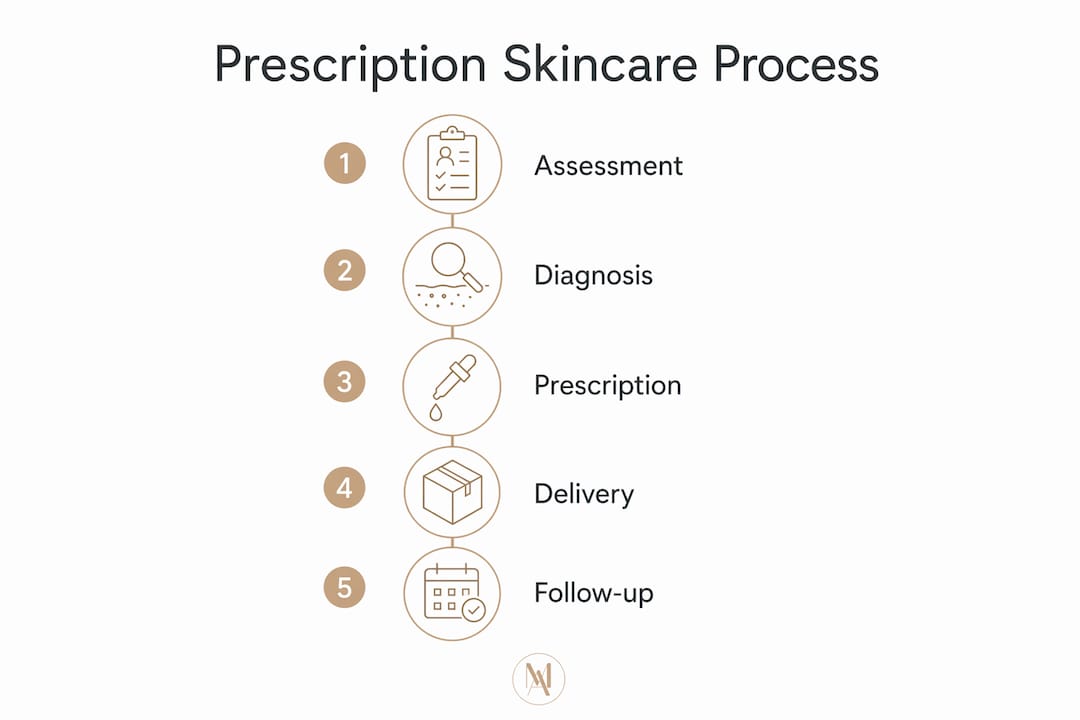
The process behind telehealth skincare solutions is more structured than most people expect. It begins with a detailed intake questionnaire covering your skin concerns, medical history, current medications, and known sensitivities. That data goes directly to a clinician, not an algorithm alone, who uses it to build a treatment plan tailored to your specific presentation.

AI-powered skin analysis tools have made the assessment stage considerably more precise. L’Oréal’s Skin Genius, for example, compares skin against 10,000+ clinically graded images to generate personalised recommendations. That level of reference data means the tool can predict clinical grading parameters with up to 97% accuracy. Accuracy at that scale is meaningful, but it is worth being clear: AI assessment supports clinical decision-making rather than replacing it.
What separates prescription skincare services from a one-off product recommendation is the ongoing clinician involvement. Well-designed platforms use a managed care approach where your skin’s initial reaction is tracked, product strength is adjusted over time, and you have access to a clinician throughout the process. This is not a set-and-forget model. It is a living treatment plan that responds to how your skin behaves.
Digital skincare consultations typically include:
- A comprehensive skin and health intake form
- AI-assisted or photo-based skin analysis
- Clinician review and prescription formulation
- Staged product introduction to minimise reaction risk
- Scheduled follow-up consultations to assess progress and adjust dosage
Pro Tip: Before your first virtual skincare assessment, photograph your skin in natural daylight without makeup. Consistent lighting and angles across follow-up photos give your clinician a far clearer picture of how your skin is responding to treatment.
At Them-ethod, we understand that personalised skincare recommendations built on clinical data produce results that generic routines simply cannot match. The technology is the starting point. The clinician is the constant.
Online prescription vs over-the-counter skincare: what is the difference?
The most direct answer is potency and oversight. Prescription skincare services give you access to actives that are not available without a clinician’s sign-off, and they pair those actives with professional monitoring to reduce the risk of misuse.
Prescription retinoids and hydroquinone are clinically proven for acne and pigmentation, consistently outperforming their OTC counterparts. This matters most for stubborn concerns like melasma, cystic acne, and accelerated photoageing, where OTC retinol or niacinamide simply do not reach the threshold needed for visible change.
| Feature | Prescription Skincare Services | Over-the-Counter Skincare |
|---|---|---|
| Ingredient strength | Prescription-grade actives (tretinoin, hydroquinone) | Cosmetic-grade actives (retinol, vitamin C) |
| Clinical oversight | Ongoing clinician review and dose adjustment | None |
| Personalisation | Based on medical history and skin assessment | Based on general skin type |
| Risk management | Monitored for adverse reactions and ingredient conflicts | User-managed |
| Results timeline | Measurable improvement in 8–12 weeks under supervision | Variable, often slower |
| Accessibility | Remote, via online dermatology services | Pharmacy or beauty retailer |
The convenience factor is also significant. Online dermatology services remove the need for a GP referral or a dermatology waiting list. You can access a clinician-reviewed treatment plan from home, receive products by post, and manage your follow-ups digitally. For people with demanding schedules or limited access to specialist clinics, this is a genuine shift in how clinical skincare is accessed.
What pitfalls should you avoid with prescription skincare?
The most common mistake is treating prescription skincare like a standard product launch. People add it to an existing ten-step routine, layer it with OTC acids, and then wonder why their skin is red and peeling within a fortnight.
Combining prescription retinoids or antibiotics with OTC AHAs or BHAs without professional guidance is a direct route to barrier damage. The skin becomes sensitised, inflamed, and paradoxically harder to treat. This is not a rare edge case. It is one of the most frequently reported issues in online prescription skincare.
The second pitfall is misreading your skin’s response. There is a meaningful difference between purging, which is a normal adjustment phase where congestion clears, and an adverse reaction that signals the treatment is wrong for your skin. Stopping treatment during a purge phase, or escalating the dose to push through it faster, both undermine the process.
Key pitfalls to avoid:
- Adding exfoliating acids (AHAs, BHAs) to a prescription retinoid routine without clinician approval
- Skipping SPF, which is non-negotiable when using photosensitising actives like tretinoin
- Expecting visible results before the 8–12 week mark and abandoning treatment early
- Increasing frequency or concentration without a clinician’s instruction
- Confusing skin purging with an allergic or inflammatory reaction
Consistency and simplicity outperform complexity every time. Dermatologists consistently recommend a targeted regimen of cleanser, prescription active, moisturiser, and SPF over any elaborate multi-step routine. That structure protects the skin barrier while allowing the prescription active to do its work.
Pro Tip: If your skin feels tight, dry, or reactive in the first two weeks of a prescription retinoid, apply your moisturiser first and the retinoid on top. This “buffering” technique slows absorption slightly and significantly reduces initial irritation without compromising efficacy.
Sustained use for 8–12 weeks is the minimum threshold for measurable improvement. Cellular turnover and pigment reduction are gradual biological processes. Prescription skincare accelerates them, but it does not bypass them.
How to get the most from online prescription skincare services
Engaging effectively with a prescription skincare platform is a skill in itself. The technology and clinical expertise are there. Your role is to use them correctly.
-
Complete your intake form with full honesty. Include every product you currently use, every supplement you take, and any history of skin reactions. Platforms like Perfec-Tone assess allergies and skin sensitivities to route you to the right formulation. Incomplete information leads to suboptimal prescriptions.
-
Follow staged product introductions. Your clinician will typically start you at a lower concentration and increase it as your skin adapts. Do not skip ahead. The staged approach exists to protect your barrier and build tolerance.
-
Learn to read your skin’s signals. Mild flaking and temporary dryness in the first few weeks are normal. Persistent burning, swelling, or a rash that spreads are not. Contact your clinician immediately if you experience the latter.
-
Communicate proactively at follow-ups. Do not wait until your next scheduled check-in if something feels wrong. Well-designed platforms offer clinician access between appointments for exactly this reason.
-
Commit to the timeline. Prescription skincare is not a short-term fix. The most effective results come from consistent use over months, not weeks. Set a realistic expectation before you begin and track your progress with photographs.
-
Avoid mixing incompatible products. If you are unsure whether an OTC product is safe to use alongside your prescription, ask your clinician before adding it. The AI-driven platforms that support these services handle large volumes of patient data, but clinical interpretation remains the safeguard against misuse.
Understanding why professional skin analysis matters is the foundation of getting prescription skincare right. The assessment is not a formality. It is the reason the treatment works.
Key takeaways
Online prescription skincare services deliver clinically meaningful results when AI-assisted assessment, prescription-strength actives, and ongoing clinician oversight are combined with patient consistency and a simplified routine.
| Point | Details |
|---|---|
| Clinical oversight is the differentiator | Prescription services pair potent actives with ongoing clinician monitoring, unlike OTC products. |
| AI assessment supports, not replaces, clinicians | Tools like Skin Genius reach up to 97% accuracy but require professional interpretation to be safe. |
| Simplicity protects results | A four-step routine of cleanser, active, moisturiser, and SPF outperforms complex layered regimens. |
| Patience is non-negotiable | Measurable improvement requires 8–12 weeks of consistent use before results become visible. |
| Active ingredient overlap causes harm | Combining prescription retinoids with OTC acids without guidance damages the skin barrier. |
Why i think we are only scratching the surface of prescription skincare online
I have watched the prescription skincare space shift considerably over the past few years, and what strikes me most is not the technology. It is the education gap that still exists around it.
The AI tools are genuinely impressive. Skin Genius-level accuracy in skin grading, combined with clinician-reviewed prescriptions delivered to your door, represents a real change in who can access clinical-grade skincare. That accessibility matters. But the technology only works when the person using it understands what they are signing up for.
The phrase “prescription strength” still carries a misleading connotation for many people. They hear it and assume more is better, faster is better, and stronger means quicker results. That thinking is exactly what leads to barrier damage, abandoned treatment plans, and the conclusion that prescription skincare “didn’t work.” It worked. The approach around it did not.
What I find genuinely exciting is where this is heading. Platforms are becoming more sophisticated at distinguishing between purging and adverse reactions in real time, at adjusting formulations based on photographic progress data, and at building treatment timelines that account for lifestyle factors. That level of personalisation, guided by both AI and clinical expertise, is what makes online dermatology services worth taking seriously.
My caution is this: do not let the convenience of digital access lower your standards for the quality of clinical oversight behind it. A well-designed platform will always make the clinician visible and accessible. If yours does not, look elsewhere.
— Jess
Discover prescription-strength skincare at Them-ethod
At Them-ethod, we work with clinically supported brands and offer virtual skin consultations with experienced clinicians who understand the difference between a product recommendation and a treatment plan. Whether you are managing acne, pigmentation, or accelerated ageing, our curated selection includes targeted solutions like the PCA Clearskin Acne Treatment Serum and the clinically backed NEOSTRATA collection, both formulated to deliver visible results under professional guidance. We ship internationally, and our online consultations make expert access straightforward wherever you are. If you are ready to move beyond general skincare and into a treatment plan built around your skin, we are here to help you do that properly.
FAQ
What is an online prescription skincare service?
An online prescription skincare service is a remote clinical programme where a qualified clinician assesses your skin via digital consultation and prescribes treatment-grade actives tailored to your specific concerns. It differs from standard e-commerce skincare by including ongoing medical oversight and prescription-only ingredients.
How long before prescription skincare shows results?
Measurable improvement typically requires 8–12 weeks of consistent use. Cellular turnover and pigment reduction are gradual processes that prescription actives accelerate but cannot bypass.
Can i use my existing skincare alongside a prescription plan?
Not always. Combining prescription retinoids or antibiotics with OTC exfoliating acids can cause barrier damage and inflammation. Always confirm compatibility with your clinician before adding any product to a prescription routine.
Are AI skin analysis tools accurate enough to trust?
AI tools like L’Oréal’s Skin Genius can reach up to 97% clinical grading accuracy. They are reliable as clinical aids, but they require professional interpretation to translate that data into a safe and effective prescription.
What is the difference between skin purging and an adverse reaction?
Purging is a temporary adjustment phase where congestion clears as cellular turnover increases. It typically resolves within four to six weeks. An adverse reaction involves persistent burning, spreading redness, or swelling and requires immediate clinician review.