





What is medical-grade skincare and why it works
You’ve likely encountered ‘medical-grade skincare’ while browsing premium products online or in clinic consultations. Despite its authoritative name, the term isn’t legally defined or regulated in the UK or elsewhere. This guide clarifies what medical-grade skincare genuinely means, how it differs from standard cosmetics, and why professional guidance maximises its benefits for concerns like ageing and pigmentation.
Table of Contents
- Introduction To Medical-Grade Skincare
- Scientific Foundations Of Medical-Grade Skincare
- Regulatory Framework And Legal Considerations
- Common Misconceptions About Medical-Grade Skincare
- Professional Guidance And Personalised Treatment
- Practical Application And Patient Expectations
- Conclusion: Making Informed Choices About Medical-Grade Skincare
- Explore Medical-Grade Skincare Solutions At The M-ethod
- Frequently Asked Questions About Medical-Grade Skincare
Key takeaways
| Point | Details |
|---|---|
| Higher potency formulations | Medical-grade skincare contains significantly higher concentrations of active ingredients than over-the-counter products. |
| No formal legal definition | The term ‘medical-grade’ lacks official regulatory status in the UK or Europe. |
| Professional guidance essential | Licensed practitioners ensure safe, personalised treatment plans tailored to individual skin needs. |
| MHRA oversight applies | Products making medicinal claims fall under regulatory scrutiny, though ‘medical-grade’ itself remains unregulated. |
| Gradual introduction required | Stepwise product adoption minimises irritation risks and optimises treatment outcomes. |
Introduction to medical-grade skincare
Medical-grade skincare represents clinically formulated products containing higher concentrations of pharmaceutical-grade active ingredients compared to standard cosmetics. These formulations undergo rigorous testing and validation, designed to penetrate deeper skin layers for targeted therapeutic effects.
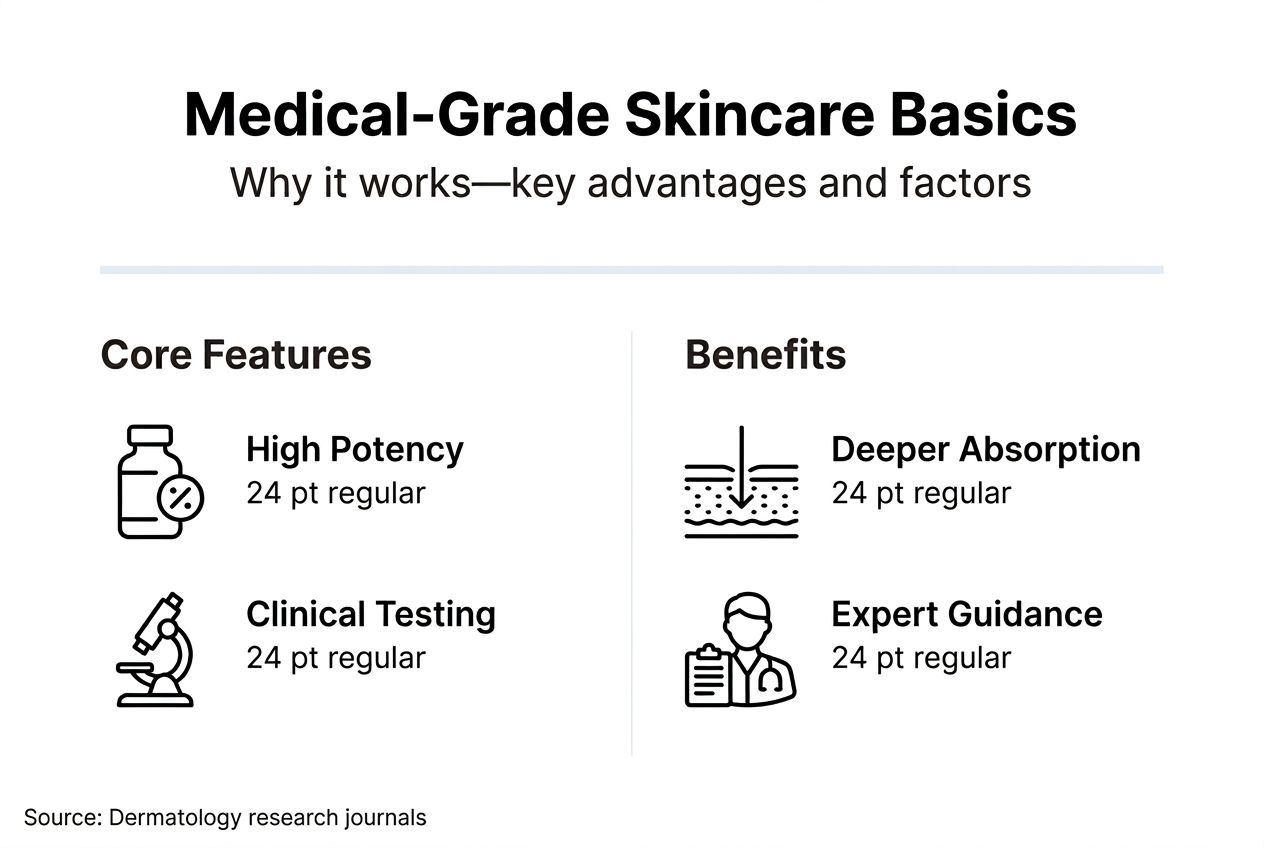
The distinction between medical-grade and over-the-counter products centres on three core factors. First, ingredient potency reaches clinical concentrations capable of producing measurable physiological changes. Second, formulations undergo clinical validation through controlled trials demonstrating safety and efficacy. Third, distribution typically occurs through licensed healthcare professionals who assess individual suitability.
Market demand for clinically effective skincare in UK and Greece is increasing for concerns like ageing and pigmentation. Consumers increasingly seek results-driven solutions beyond superficial cosmetic effects. This shift reflects growing awareness of ingredient science and desire for professional-grade treatments.
Medical-grade products address specific dermatological conditions more effectively than standard cosmetics:
- Reduce fine lines and wrinkles through collagen stimulation
- Fade pigmentation by inhibiting melanin production
- Control acne via antibacterial and anti-inflammatory mechanisms
- Repair sun damage through cellular regeneration
- Strengthen skin barrier function for sensitive conditions
Professional distribution channels reduce misuse risks significantly. When you consult a skincare expert for better outcomes, practitioners evaluate your skin type, existing conditions, and treatment goals before recommending specific formulations. This personalised approach ensures appropriate product selection and usage protocols.
The clinical backing distinguishes these products from marketing-driven cosmetics. Rather than superficial moisturisation, medical-grade formulations target specific cellular pathways to produce lasting improvements. However, higher potency demands careful introduction and ongoing monitoring to balance efficacy with safety.
Scientific foundations of medical-grade skincare
The scientific advantage of medical-grade skincare lies in pharmaceutical-grade ingredient sourcing and clinical concentration levels. Medical-grade skincare products often contain 2 to 5 times higher concentrations of active ingredients than over-the-counter products, enabling deeper skin layer penetration and measurable improvements.
Bioavailability determines how effectively active ingredients reach target skin layers. Medical-grade formulations optimise delivery systems through advanced technologies like liposomal encapsulation, time-release mechanisms, and pH-adjusted bases. These innovations ensure actives penetrate the epidermis to reach dermal structures where ageing and pigmentation originate.
Clinical validation separates evidence-based products from marketing claims. Reputable medical-grade brands conduct controlled trials measuring specific outcomes like wrinkle depth reduction, melanin index changes, or collagen density improvements. Published research in peer-reviewed journals provides objective evidence supporting product claims.
| Product type | Retinol concentration | Vitamin C concentration | Clinical trials |
|---|---|---|---|
| Over-the-counter | 0.1% to 0.5% | 5% to 10% | Limited or none |
| Medical-grade | 0.5% to 2% | 15% to 20% | Extensive documentation |
| Prescription | 0.025% to 0.1% tretinoin | N/A | FDA/MHRA approved |
Pharmaceutical-grade ingredients undergo stringent purity testing and quality control. Manufacturing standards ensure consistent potency across batches, eliminating the variability found in cosmetic-grade formulations. This reliability proves crucial for achieving predictable treatment outcomes.
Key scientific mechanisms include:
- Cellular turnover acceleration through retinoids and alpha hydroxy acids
- Antioxidant protection via stable vitamin C and E formulations
- Tyrosinase inhibition for melanin reduction using hydroquinone alternatives
- Peptide signalling for collagen synthesis stimulation
- Barrier repair through ceramides and essential fatty acids
Pro Tip: Always verify that products list specific ingredient concentrations and cite published clinical studies rather than relying solely on brand reputation or marketing language.
The deeper penetration capability creates both opportunity and responsibility. While enhanced efficacy addresses stubborn concerns effectively, it also increases potential for irritation if introduced improperly. Understanding this scientific foundation explains why clinical skincare science explained emphasises gradual adaptation protocols.
Regulatory framework and legal considerations
Despite its clinical associations, ‘medical-grade skincare’ lacks formal legal definition within UK or European regulatory frameworks. This absence creates confusion for consumers seeking genuinely effective products versus marketing terminology.
The UK MHRA regulates medicinal claims and prescription requirements for skincare products; however, ‘medical-grade’ itself remains an unregulated category. Products making specific therapeutic claims like treating acne or reducing hyperpigmentation fall under medicinal product regulations requiring evidence submission and approval. Cosmetic products, regardless of ingredient potency, face different oversight focused on safety rather than efficacy.
Key regulatory distinctions include:
- Prescription products require MHRA approval and licensed prescriber authorisation
- Professional-use products may be restricted to licensed practitioners without prescription requirements
- Over-the-counter medical-grade products available through authorised retailers or clinics
- Cosmetic products with no therapeutic claims face minimal regulatory barriers
The prescription versus non-prescription boundary depends on specific ingredients and concentrations. Tretinoin, hydroquinone above 2%, and certain corticosteroids require prescriptions due to potency and side effect profiles. Many effective medical-grade formulations containing retinol, vitamin C, or peptides remain accessible through professional channels without prescriptions.
No government body certifies or regulates the term ‘medical-grade skincare’ in the UK, making professional guidance essential for identifying genuinely effective formulations.
Marketing freedom allows brands to label products ‘medical-grade’ without regulatory approval or standardised criteria. This terminology serves promotional purposes rather than indicating formal certification. Discerning consumers must evaluate clinical evidence, ingredient lists, and professional recommendations rather than relying on labels alone.
Greece follows similar European Union cosmetic regulations, with medical devices and medicinal products requiring appropriate approvals. The lack of ‘medical-grade’ standardisation persists across member states, emphasising the importance of professional oversight regardless of location.
This regulatory landscape underscores why distribution through licensed professionals provides crucial safeguards. Practitioners understand which products genuinely merit clinical-grade designation through ingredient analysis and peer-reviewed evidence rather than marketing claims.
Common misconceptions about medical-grade skincare
Several persistent myths surround medical-grade skincare, creating confusion about its definition, availability, and efficacy. Clarifying these misconceptions helps you make informed purchasing decisions.
The most widespread misunderstanding assumes ‘medical-grade’ represents an officially certified category. ‘Medical-grade’ is an unregulated marketing term with no formal legal status; many products are sold without prescription, but safe use requires expert oversight. No government agency issues medical-grade certifications or maintains approved product lists.
Common false beliefs include:
- All medical-grade products require prescriptions for purchase
- Higher prices automatically indicate superior scientific formulation
- Medical-grade status guarantees results without professional guidance
- Any product labelled medical-grade meets standardised quality criteria
- Over-the-counter products cannot achieve clinical-level effectiveness
Prescription requirements apply only to specific regulated ingredients, not the medical-grade category broadly. Many highly effective formulations remain accessible through professional channels, clinics, or authorised online retailers without prescription mandates. The key differentiator lies in professional guidance rather than prescription status.
Price reflects brand positioning, packaging, and marketing expenses alongside formulation costs. Some expensive products justify their cost through clinical-grade ingredients and rigorous testing. Others rely on luxury branding without commensurate scientific backing. Evaluating ingredient concentrations and published research provides better value indicators than price alone.
Misuse risks emerge when potent formulations are applied without personalised assessment. Skin type, existing conditions, medication interactions, and treatment goals significantly influence appropriate product selection. What works excellently for one person may cause irritation or ineffectiveness for another.
Pro Tip: Seek consultations with accredited dermatologists or licensed aestheticians who analyse your specific skin needs and recommend evidence-based products rather than purchasing based solely on product claims or peer recommendations.
The importance of skincare expert consultation becomes clear when considering individual variables affecting treatment outcomes. Professional evaluation identifies contraindications, establishes realistic expectations, and creates stepwise introduction protocols that maximise benefits whilst minimising adverse effects.
Another misconception suggests combining medical-grade products with existing routines poses no challenges. However, ingredient interactions and cumulative potency require careful management. Layering multiple active ingredients without guidance increases irritation risk and may reduce overall effectiveness through chemical incompatibilities.
Professional guidance and personalised treatment
Licensed dermatologists and skincare professionals provide essential expertise for safely accessing and maximising medical-grade skincare benefits. Their involvement transforms potent formulations from potential irritants into targeted therapeutic tools.
Medical-grade skincare products are typically distributed through licensed healthcare professionals, ensuring personalised assessment and appropriate product recommendations for individual skin needs. Professional evaluation begins with comprehensive skin analysis examining texture, tone, hydration levels, sensitivity, and specific concerns like pigmentation or fine lines.
Personalised treatment plans consider multiple factors:
- Current skin condition and barrier function integrity
- Previous product experiences and tolerance levels
- Lifestyle factors affecting skin health
- Treatment goals and realistic timelines
- Budget considerations for sustainable regimens
Tailored approaches optimise efficacy whilst minimising adverse reactions. Rather than generic recommendations, professionals adjust product selection, concentration levels, and application frequency based on individual response patterns. This customisation proves particularly valuable for sensitive skin or complex concerns requiring multiple active ingredients.
Professional adoption follows structured steps:
- Comprehensive skin evaluation identifying specific concerns and contraindications
- Gradual product introduction starting with lower concentrations or less frequent application
- Regular monitoring appointments assessing progress and adjusting protocols
- Long-term maintenance planning for sustained results
Distribution through licensed channels reduces misuse risks significantly. Professionals educate clients about proper application techniques, realistic expectations, and warning signs requiring protocol adjustments. This ongoing support prevents common mistakes like excessive application, incompatible product combinations, or premature discontinuation.
Integration with existing routines requires careful orchestration. When you consult a skincare expert, they evaluate your current products for compatibility, identify redundancies, and sequence applications for optimal absorption. Some ingredients work synergistically whilst others neutralise effectiveness or increase irritation when combined.
Professionals also provide crucial context about treatment timelines and expected outcomes. Medical-grade products produce gradual improvements through cellular-level changes rather than instant cosmetic effects. Understanding this progression prevents premature judgement or unrealistic disappointment.
The professional relationship extends beyond initial consultation. Skin responds dynamically to formulation changes, seasonal variations, and physiological factors like hormones or stress. Regular check-ins allow protocol refinements maintaining optimal results whilst adapting to evolving needs.
Practical application and patient expectations
Successful medical-grade skincare adoption requires realistic expectations about timelines, gradual introduction protocols, and ongoing professional monitoring. Understanding these practical aspects maximises treatment success whilst minimising frustration.
Visible improvements in pigmentation and ageing typically manifest over 8 to 12 weeks with consistent use. Cellular turnover cycles and collagen remodelling occur gradually, requiring patience for cumulative effects to emerge. Some users notice initial texture improvements within 4 weeks, but significant changes like fine line reduction or melanin fading demand longer commitment.
Gradual introduction proves crucial for tolerating potent active ingredients. Starting with lower concentrations or less frequent application allows your skin barrier to adapt without overwhelming inflammation responses. This conservative approach prevents the discouragement that often follows aggressive initial use causing excessive dryness or irritation.
Safe transition steps include:
- Consult licensed practitioners for personalised product selection and protocols
- Start with one new product at lower concentration or alternate-day application
- Increase frequency gradually as tolerance develops over 2 to 4 weeks
- Add additional actives only after establishing baseline tolerance
- Schedule regular check-ups for professional monitoring for skincare treatments
Ongoing monitoring optimises regimen adjustments based on skin response. Practitioners assess progress, modify concentrations, or add complementary treatments ensuring continuous improvement toward goals. This dynamic approach acknowledges that optimal protocols evolve rather than remaining static.
Realistic expectation management centres on several key principles:
- Results accumulate progressively rather than appearing suddenly
- Individual response varies based on skin type, age, and concern severity
- Maintenance requires ongoing commitment beyond initial improvement phase
- Some concerns like deep wrinkles may require combined approaches including professional treatments
- Temporary adjustment periods involving mild flaking or redness are normal
Transitioning from over-the-counter products demands particular attention to cumulative active ingredient exposure. Your existing routine may already include retinol, acids, or vitamin C. Adding medical-grade versions without accounting for total active load risks barrier disruption. Professional guidance identifies which products to replace versus supplement.
Skin sensitivity varies throughout monthly hormonal cycles, seasons, and stress levels. Maintaining communication with practitioners allows protocol flexibility accommodating these fluctuations. Some users reduce application frequency during sensitive periods, then resume normal protocols when tolerance returns.
Patience ultimately determines success. The cellular processes driving visible improvements operate on biological timescales resistant to acceleration beyond certain limits. Trusting the process whilst adhering to professional guidance yields superior long-term outcomes compared to impatient product switching or excessive application.
Conclusion: making informed choices about medical-grade skincare
Medical-grade skincare offers clinically validated benefits for concerns like ageing and pigmentation, but requires careful selection and professional guidance for optimal outcomes. Understanding its scientific foundations, regulatory context, and practical application empowers informed decisions.
Key principles for successful medical-grade skincare adoption include:
- Prioritise clinical evidence and professional recommendations over marketing terminology
- Recognise that ‘medical-grade’ lacks formal legal definition despite suggesting clinical authority
- Seek personalised treatment plans from licensed practitioners rather than self-prescribing
- Allow adequate time for cumulative effects to manifest through consistent use
- Maintain realistic expectations about achievable outcomes and required commitment
The absence of standardised medical-grade certification makes scientific literacy and professional partnerships essential. Evaluating ingredient concentrations, reviewing published research, and consulting qualified practitioners separates genuinely effective products from clever marketing.
Individualised treatment plans maximise both safety and effectiveness. Your unique skin characteristics, existing conditions, and treatment goals demand customised approaches that generic product recommendations cannot provide. Professional assessment identifies optimal formulations, concentrations, and protocols for your specific needs.
Engaging trusted dermatologists or licensed aestheticians prior to starting treatment prevents common pitfalls like inappropriate product selection, excessive application, or incompatible combinations. Their expertise transforms potent formulations into targeted therapeutic tools rather than potential irritants.
Evidence-based approaches promote long-term skin health and satisfaction. Rather than chasing trending ingredients or succumbing to marketing hype, focus on clinically proven actives at therapeutic concentrations. This scientific foundation, combined with professional guidance, delivers the transformative results medical-grade skincare promises.
Explore medical-grade skincare solutions at The M-ethod
Discover professionally curated medical-grade skincare tailored to your unique needs at The M-ethod. Our selection features clinically proven formulations addressing ageing, pigmentation, acne, and sensitive skin concerns through evidence-based active ingredients.
Experience personalised consultations with licensed skincare experts who assess your specific conditions and recommend optimal treatment protocols. We offer premium brands like PCA Skin and NEOSTRATA combining pharmaceutical-grade potency with professional oversight.
Our personalised skincare services ensure safe, effective results through customised regimens and ongoing support. From initial assessment through long-term maintenance, we guide your journey toward healthier, more radiant skin using medical-grade formulations backed by clinical research.
Frequently asked questions about medical-grade skincare
Is ‘medical-grade’ an officially regulated term in the UK?
No, ‘medical-grade skincare’ lacks formal legal definition or government certification in the UK or Europe. The term serves marketing purposes rather than indicating regulatory approval. The MHRA regulates products making medicinal claims, but ‘medical-grade’ itself remains unregulated, making professional guidance essential for identifying genuinely effective formulations.
How can I determine if a medical-grade product is safe and effective?
Evaluate products by examining specific ingredient concentrations, reviewing published clinical trials in peer-reviewed journals, and verifying pharmaceutical-grade sourcing. Consult licensed dermatologists or aestheticians who assess formulation quality beyond marketing claims. Look for transparency regarding active percentages and evidence-based efficacy data rather than testimonials alone.
Why should I consult a professional before using medical-grade skincare?
Professional consultation ensures appropriate product selection based on your skin type, existing conditions, and treatment goals. Practitioners identify contraindications, establish gradual introduction protocols, and monitor for adverse reactions. Their expertise prevents common misuse patterns like excessive application or incompatible combinations that reduce effectiveness or cause irritation.
How long before I see visible improvements from medical-grade products?
Most users observe measurable improvements in pigmentation, texture, or fine lines after 8 to 12 weeks of consistent use. Initial changes may appear within 4 weeks, but significant results require patience as cellular turnover and collagen remodelling occur gradually. Individual response varies based on concern severity, product potency, and adherence to recommended protocols.
Can I combine medical-grade products with my current skincare routine?
Combining products requires careful evaluation of total active ingredient exposure and potential interactions. Some ingredients work synergistically whilst others neutralise effectiveness or increase irritation risk. Professional assessment identifies which existing products to replace versus supplement, preventing barrier disruption from cumulative potency. Gradual integration with monitoring optimises both safety and results.