



Sun Damage Treatment: What Works, What Doesn't, and Where to Start
Sun damage cannot be fully reversed, but much of what you can see, such as brown spots, rough texture, fine lines and uneven tone, can be made noticeably less obvious. The options range from prescription retinoids and chemical peels to light and laser treatments, microneedling and injectable skin boosters. The right mix depends on which signs bother you most, your skin tone and how much downtime you can accept. Below, we explain how each option works, what to expect, and how to protect the results.
TL;DR
- Sunburn heals, but some damaged cells can keep unrepaired mutations, so damage is reduced rather than erased. MD Anderson says procedures make changes less noticeable and that it is not too late to protect your skin.
- Dermatologist-led treatments include prescription retinoids, chemical peels, IPL, laser resurfacing, microdermabrasion and cryosurgery, chosen according to your signs.
- Darker skin tones carry a higher risk of post-inflammatory hyperpigmentation after energy-based treatments, so the choice of device and the preparation matter.
- Daily broad-spectrum sunscreen is part of the treatment, not an extra.
- Rough, scaly patches and any changing spot should be examined in person by a dermatologist before you treat anything cosmetically.
Table of Contents
- What sun-damaged skin looks like
- Can the skin recover from sun damage?
- Sun damage treatment options compared
- Treating different signs of sun damage
- Darker skin tones: extra care with energy-based treatments
- What you can do at home
- Protecting your skin during and after treatment
- Our perspective
- Start with a consultation
- FAQ
- Sources
What sun-damaged skin looks like
The American Academy of Dermatology lists wrinkles, age spots, loose skin, a blotchy or ruddy complexion, deep lines and dry, scaly actinic keratoses as typical signs of sun damage. Clinicians often call the whole picture photoaging.
In practice, most people notice a few patterns first:
- Pigment: freckle-like brown spots on the cheeks, nose, backs of the hands and chest, plus patchy or mottled colour.
- Texture: skin that feels rough, dry or leathery.
- Lines and laxity: fine lines that deepen, and skin that has lost some firmness.
- Redness: a flushed or ruddy look, sometimes with visible small vessels.
- Scaly patches: rough, dry spots that may be actinic keratoses.
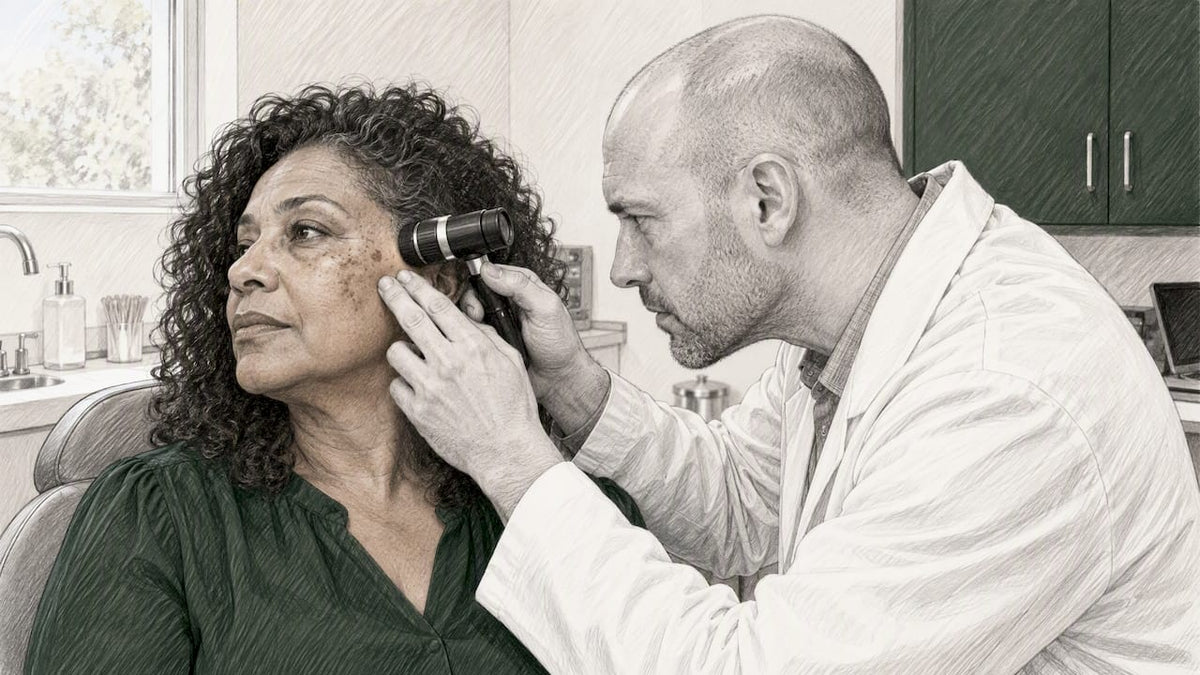
The last group is different from the rest. These are not cosmetic concerns. The AAD notes that treating precancerous growths can stop some from progressing to squamous cell carcinoma. If a spot is scaly, bleeding, growing, changing colour or simply looks different from its neighbours, have a dermatologist examine it in person first. A virtual consultation is a good way to plan a routine, but it does not replace a skin check for a suspicious lesion.
Can the skin recover from sun damage?
Partly. A sunburn heals, and the body can repair some UV-related DNA changes. But MD Anderson explains that surviving cells may retain unrepaired mutations that could eventually become cancerous. Healing on the surface does not mean the underlying damage has gone.
That gives two honest answers to the question “is it too late?”
- For appearance: no. Procedures and prescription skincare can make cosmetic changes less noticeable, even if they cannot undo the damage.
- For protection: no. Stopping further exposure gives the skin a chance to repair some of what has happened, and it lowers your risk going forward.
We would rather set that expectation at the start. Results are improvement, not erasure. For chronic pigmentation from the sun, guidance for clinicians says that complete clearance is desirable but often not possible, and that results are generally judged at around three months after treatment. A good clinician will tell you the same.
Sun damage treatment options compared
The AAD’s overview of how dermatologists treat sun-damaged skin names prescription retinoids, intense pulsed light, laser resurfacing, microdermabrasion, chemical peels and cryosurgery. It also stresses that board-certified dermatologists often combine therapies to address different signs together, aiming for a natural, healthy look rather than an overdone one.
This table is a simplified guide to what each option is generally used for. It is not a prescription for your skin.
| Treatment | Best suited to | Downtime to expect | Main consideration |
|---|---|---|---|
| Prescription retinoid (e.g. tretinoin) | Fine lines, rough texture, uneven tone | Dryness and irritation while the skin adjusts | Needs weeks of consistent use and strict sun protection |
| Chemical peel | Superficial pigment, dullness, texture | Peeling and redness, depending on depth | Deeper peels carry more risk in darker skin |
| IPL (light therapy) | Brown spots, redness | Usually short, with temporary darkening of spots | Needs an experienced operator and sun avoidance |
| Laser resurfacing | Deeper lines, texture, scarring | Longer, depending on the laser type | Highest risk of pigment change in darker skin types |
| Microneedling | Texture, fine lines, general skin quality | Short redness | Several sessions are typical |
| Skin boosters and injectables | Hydration, quality, firmness | Minimal | Support the skin rather than remove pigment |
| Cryosurgery | Individual age spots and rough spots | Local blistering or crusting | Done in a medical setting after assessment |
Prescription retinoids
A retinoid is the workhorse of sun damage treatment. You apply it at home, usually in the evening, and it works over weeks, not days. Topical prescription therapies are most useful when damage is spread over a broad area, because you treat the whole face rather than single spots.
Expect some dryness and sensitivity at first. Your clinician will usually build up frequency gradually. Retinoids also make sun protection non-negotiable. If you want to talk through whether a prescription cream suits you, that is a good use of an online skin consultation.
Chemical peels
Peels remove the upper layers of skin in a controlled way, which helps with dullness, uneven pigment and rough texture. Preparation matters. A peeling-society review reports that using topical tretinoin before peels can give more uniform frosting and faster healing, and that patients with Fitzpatrick skin types IV to VI should stop it one week before the peel. That is a detail for your practitioner to manage, which is why peels at home with strong acids are not a good substitute for a supervised treatment.
IPL and laser resurfacing
Intense pulsed light targets pigment and redness. Laser resurfacing uses high-energy light to remove the upper layers of damaged skin, and the University of Rochester Medical Center describes it as a way to minimise wrinkles and fine scars. Ablative lasers are the strongest option and the one with the most downtime and risk, particularly for pigment change in deeper skin tones (more on that below).
Microneedling
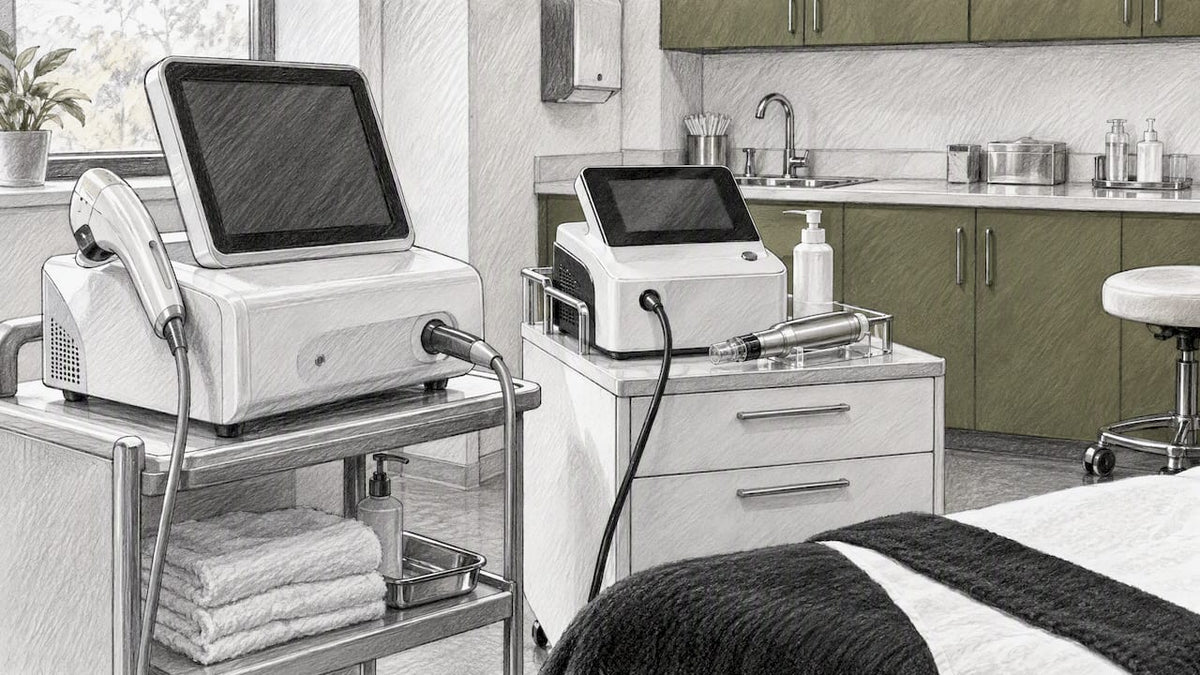
Microneedling creates tiny controlled channels in the skin to prompt the body’s own repair response and collagen production. It suits texture, fine lines and a tired look more than strong pigment. At our clinic, we offer SkinPen microneedling, an FDA-approved device, in London and Athens, delivered by a UK-trained doctor.
Skin boosters and injectables
Injectables do not remove sun spots. What they can do is improve how the skin looks and feels once the damage has been treated. Polynucleotides are used for skin quality and rejuvenation, and Profhilo is used to improve skin hydration and firmness. You can read about our polynucleotide treatment and see the rest of the clinic treatments. Where laxity is part of the picture, HIFU is a non-surgical option for lifting, and it is a different job from fading pigment.
Treating different signs of sun damage
Brown spots and uneven tone
Pigment is the most common reason people look for sun damage treatment. Usually a plan combines a prescription or medical-grade topical, a peel or light-based treatment if suitable, and daily protection. We cover the safe way to approach this in how to fade sun damage safely, and the broader background in our guide to hyperpigmentation causes and treatment options.
Lines, texture and loose skin
Retinoids, microneedling and, where appropriate, resurfacing address texture and fine lines. Skin quality treatments support the result, and HIFU may be considered for early laxity. Combining modalities, as the AAD describes, usually gives a more natural outcome than pushing one treatment hard.
Redness
A ruddy complexion can come from sun exposure, but redness has other causes too, including rosacea. Getting the cause right comes first, which is another reason for a proper assessment before buying treatments.
Darker skin tones: extra care with energy-based treatments
People with deeper skin tones can absolutely be treated for sun damage, but the margin for error is smaller. Post-inflammatory hyperpigmentation, where skin darkens after irritation or injury, is most likely with ablative laser treatments and darker skin types. One study reviewed in a 2025 periprocedural skincare paper found mild PIH in more than 90% of Asian patients with Skin Phototype IV after ablative fractional CO2 laser.
What this means in practice:
- Ask the practitioner how many patients with your skin type they treat, and which devices they choose for it.
- Expect gentler, staged treatment rather than one aggressive session.
- Prepare and protect: the same paper advises broad-spectrum SPF 50+ before and after energy-based procedures, with higher risk in darker skin types.
- Consider a tinted sunscreen. Clinical guidance recommends tinted sunscreens for high-energy visible light protection and camouflage, or broad-spectrum sunscreen followed by iron-oxide makeup if no suitable tint exists.
Our guides to post-inflammatory hyperpigmentation and hyperpigmentation in dark skin go deeper on this.
What you can do at home
After a sunburn
Fresh sunburn needs soothing, not treating. Harvard Health says redness generally fades within a few days, that some damage is permanent, and that moisturisers can help dry skin while acids should not be used on sunburned skin. The Mayo Clinic suggests cooling the skin, applying aloe vera or calamine, drinking extra water and leaving blisters intact, with nonprescription pain relief if needed. Hold off on retinoids, peels and exfoliating acids until the burn has settled.

For long-standing damage
Natural remedies can soothe, but nothing from the kitchen cupboard will remove established pigment or rebuild collagen. For long-term change, the evidence-backed home routine is simple:
- A gentle cleanser and a moisturiser that suits your skin.
- An antioxidant serum in the morning.
- A retinoid at night, if your clinician agrees.
- Sunscreen every single day.
You can browse medical-grade moisturisers, serums, cleansers and sunscreens in our shop.
Protecting your skin during and after treatment
Sun protection decides how long your results last. The AAD advises using it every day, even when it is overcast or cold, to reduce signs of sun damage and avoid side effects and poor results from treatment.
For Americans, the FDA advises broad-spectrum sunscreen with SPF 15 or higher, applied 15 minutes before exposure and reapplied at least every two hours. Around procedures, the periprocedural guidance above points to SPF 50+, so many clinicians recommend the higher number while skin is healing.
Two products we use for this:
- Obagi Sun Shield Tint SPF 50, a tinted broad-spectrum option that comes in warm and cool undertones.
- Senté Even Tone Mineral Sunscreen SPF 30, a mineral broad-spectrum option.
If you are unsure which finish suits you, our guide on choosing a tinted sunscreen will help.
Our perspective
We see the same pattern again and again. People arrive having bought a strong acid, a laser device or three new serums, hoping to erase years of sun in a month. The skin is irritated, the pigment is darker, and the plan is back to square one.

We approach sun damage as a sequence. First, rule out anything that needs a medical check. Second, calm and protect the skin. Third, treat the main concern with the gentlest method that can do the job, and review at around three months before adding anything else. Combining a prescription topical, a clinic treatment such as microneedling and diligent sunscreen use usually serves skin better than one aggressive intervention.
As a UK-based Obagi Ambassador Clinic with in-clinic treatments in London and Athens, we also see international patients who want a UK-trained doctor to guide the whole plan. Many begin with a virtual consultation, so the routine is set before any procedure is booked. Realistic goals matter most: clearer, smoother, healthier-looking skin that you protect, not a promise of skin that has never seen the sun.
— Jess
Start with a consultation
If you are not sure whether your concern is pigment, texture, redness or something that needs a skin check, begin with our online skin consultation with Dr Mandy. You will get a personalised plan for your skin tone and goals, whether that is a home routine or in-clinic treatment in London or Athens. For international patients considering treatment abroad, you can also see the clinic treatments we offer.
FAQ
Can sun-damaged skin be reversed?
Not completely. Sunburn heals and the body repairs some UV damage, but some cells may keep mutations. Treatments can make wrinkles, spots and rough texture less noticeable, and protection stops it getting worse.
How long does sun damage treatment take to work?
It depends on the method. Clinicians generally judge the results of photodamage treatment at about three months, and home prescription creams work over several weeks. Expect gradual improvement and, often, more than one session or step.
What is the best treatment for sun damage?
There is no single best option. Dermatologists often combine treatments, such as a retinoid with a peel, light therapy or microneedling, depending on your signs and skin tone. A consultation is the quickest way to find the right combination for you.
When should I see a dermatologist about sun damage?
See one in person for any scaly, rough, bleeding, growing or changing spot, because some are precancerous and treating them can stop progression. Cosmetic planning can come afterwards.
Sources
- How dermatologists treat sun-damaged skin, American Academy of Dermatology
- 5 facts about precancerous skin growths, American Academy of Dermatology
- What happens to your skin when you get a sunburn, MD Anderson
- Basic chemical peeling: superficial and medium-depth peels
- Treating aged or sun-damaged skin, University of Rochester Medical Center
- Recommendations on periprocedural skincare for energy-based treatments
- Melanin hyperpigmentation disorders: management guideline, Medscape
- Sun-damaged skin, Harvard Health
- Sunburn: diagnosis and treatment, Mayo Clinic
- Sunscreen: how to help protect your skin from the sun, FDA