




How to select dermatologist skincare: 2026 guide
TL;DR:
- Choosing dermatologist skincare involves selecting clinically validated products tailored to your skin type and concerns. Building a routine with sunscreen, gentle cleanser, and moisturizer is essential, then gradually adding targeted actives like retinoids or niacinamide while avoiding overloading your skin. Professional consultation is recommended for persistent issues like cystic acne, stubborn pigmentation, or significant aging signs to ensure precise diagnosis and treatment.
Selecting dermatologist skincare means choosing clinically validated products matched precisely to your skin type, concerns, and biology. The right routine for acne looks nothing like the right routine for pigmentation or ageing, and that distinction is where most self-directed skincare fails. Dermatologists recommend a baseline of broad-spectrum SPF 30+, a mild fragrance-free cleanser, and a targeted moisturiser as the non-negotiable foundation. Build from there with retinoids, ceramides, or niacinamide depending on your primary concern. This guide walks you through every step of that process, from identifying your skin type to preparing for a professional consultation.
How to select dermatologist skincare that fits your skin
Before you choose a single product, you need to understand what your skin is actually doing. Skin type and skin concern are two different things, and confusing them leads to routines that work against you.
Identifying your skin type is the first step. The four main categories are:
- Oily skin: Enlarged pores, persistent shine, and a tendency towards breakouts. Sebum production is high, which can be protective but also congesting.
- Dry skin: Tightness, flaking, and a dull complexion. The skin barrier is often compromised, making it reactive to active ingredients.
- Combination skin: Oily through the T-zone with drier cheeks. This type requires a targeted approach rather than one uniform product.
- Sensitive skin: Redness, stinging, or visible reactivity to new products. The barrier is fragile, and ingredient selection is critical.
Skin concerns sit on top of skin type. Acne presents as comedones, papules, or cysts. Pigmentation appears as post-inflammatory hyperpigmentation, melasma, or sun damage. Ageing manifests as fine lines, loss of elasticity, and uneven texture. Knowing which concern is primary helps you prioritise ingredients and avoid overloading your routine.
Clinical signs that warrant professional consultation include persistent cystic acne, rapidly spreading pigmentation, or skin that reacts to nearly every product you try. A dermatologist will assess your history, identify triggers, and may use diagnostic tools such as Wood’s lamp examination or dermoscopy to confirm a diagnosis. That level of precision is simply not available from a product label.

Which dermatologist-recommended ingredients actually work?
Dermatologist-approved routines for acne, pigmentation, and ageing share a common structure: protect, repair, and treat. The order matters, and so does the concentration.
- Apply broad-spectrum SPF 30+ every morning. Reapply every 2–3 hours when outdoors. UV exposure worsens every skin concern, from acne scarring to melasma, so sun protection is not optional.
- Introduce retinoids at low concentrations. Start at 0.025%–0.05% and apply 2–3 times per week initially. Retinoids accelerate cell turnover, reduce pigmentation, and stimulate collagen production. Jumping to higher strengths too quickly causes irritation that sets progress back by weeks.
- Use ceramides, niacinamide, and hyaluronic acid to support the barrier. Ceramides restore lipid structure in the skin. Niacinamide reduces redness and regulates sebum. Hyaluronic acid draws moisture into the epidermis. These three ingredients work across all skin types and concerns.
- Layer products from thinnest to thickest texture. The correct layering order is cleanser, toner, serum, moisturiser, then sunscreen in the morning or facial oil at night. This sequence maximises absorption and prevents active ingredients from being blocked by heavier formulations.
- Resist the urge to layer multiple actives at once. Overcomplicating your routine with acids, retinoids, and vitamin C simultaneously can trigger rebound acne or chronic sensitivity. Introduce one new active every 4–6 weeks and observe how your skin responds.
Pro Tip: If you are new to retinoids, apply your moisturiser first, then the retinoid on top. This “buffering” technique reduces irritation without significantly reducing efficacy.
Minimalist, consistent routines produce better long-term results than trend-driven product stacking. Patience is the most underrated ingredient in clinical skincare.
How do you evaluate and choose skincare products safely?
Choosing the right product requires reading beyond the front of the packaging. Marketing claims and clinical evidence are rarely the same thing.
Reading ingredient lists without the confusion
The dermatologist-recommended label on a product does not guarantee safety or efficacy. It is a marketing term, not a regulatory classification. What matters is the ingredient list. Avoid synthetic fragrances and harsh sulphates such as sodium lauryl sulphate, both of which are linked to irritation in sensitive or compromised skin. Look for active ingredients listed in the top third of the formula, as concentration decreases further down the list.
Comparing product types and clinical procedures
| Concern | Topical Products | Clinical Procedures |
|---|---|---|
| Acne | Salicylic acid cleansers, benzoyl peroxide, niacinamide serums | Chemical peels, SkinPen micro-needling, LED therapy |
| Pigmentation | Vitamin C serums, azelaic acid, SPF 50+ | Laser treatments, chemical peels, Obagi Nu-Derm protocols |
| Ageing | Retinoids, peptide moisturisers, hyaluronic acid | Clear + Brilliant laser, Profhilo, HIFU, polynucleotides |
| Sensitive skin | Ceramide creams, fragrance-free formulations | Barrier repair protocols, low-level light therapy |
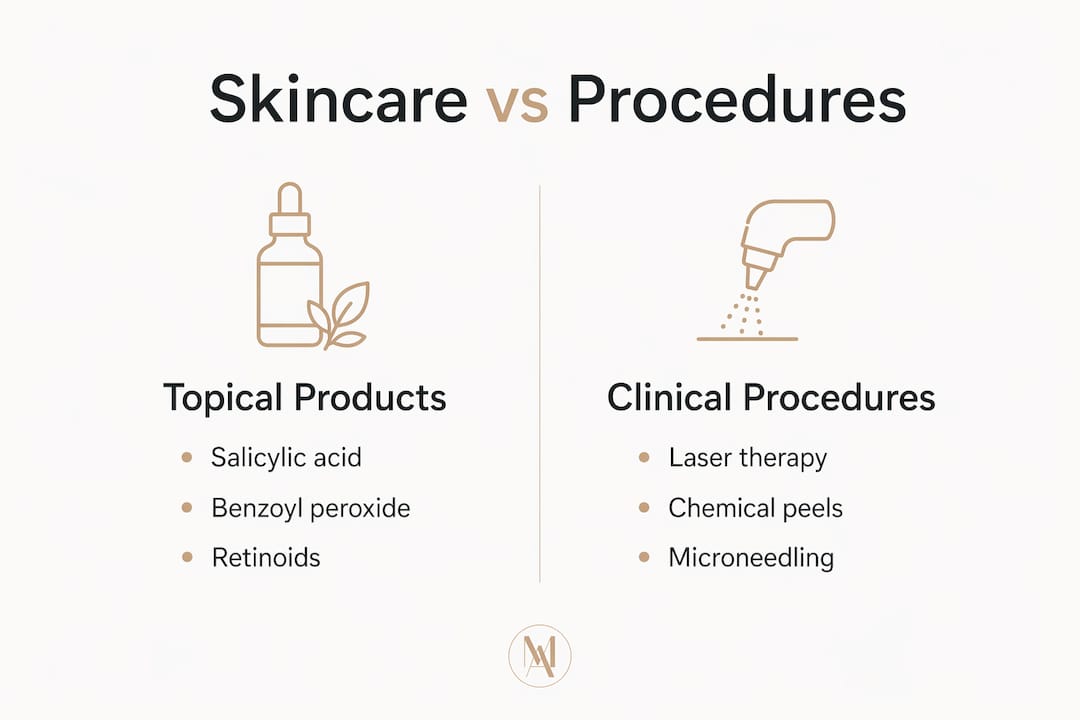
Professional procedures like Clear + Brilliant laser are advised once to twice yearly from the early thirties for ageing concerns. Laser efficacy depends on clinical variables including energy level, contact time, and device calibration. Improper settings can cause adverse effects, which is why professional administration is non-negotiable for any energy-based treatment.
Pro Tip: When trialling a new serum or treatment product, apply it to a small area of your inner arm for 48 hours before introducing it to your face. This patch-testing approach catches reactions before they affect a larger area.
Introduce only one active ingredient every 4–6 weeks to monitor tolerance. This is one of the most common patient pitfalls: adding three new products in a week and then having no way to identify which one caused a reaction.
When should you consult a dermatologist?
Knowing when to seek professional guidance is as important as knowing which products to use. Self-directed skincare has clear limits.
- Persistent acne: Seek professional consultation after several months of unsuccessful over-the-counter treatment. Cystic acne in particular requires prescription-strength options that are not available without clinical oversight.
- Spreading or stubborn pigmentation: Melasma and post-inflammatory hyperpigmentation often worsen with the wrong ingredients. A dermatologist can distinguish between types and prescribe targeted treatments.
- Accelerated ageing concerns: If you are noticing significant changes in skin texture, elasticity, or tone, a consultation in your early thirties gives you the most preventative options.
- Chronic sensitivity or reactivity: Skin that reacts to most products may have a compromised barrier or an underlying condition such as rosacea or eczema that requires diagnosis.
A clinical consultation typically runs 30–60 minutes and includes a detailed history, trigger identification, and a tailored treatment plan. That time investment pays dividends in avoided trial-and-error costs. You can read our consultation preparation checklist before your appointment to make the most of every minute.
When selecting a dermatologist, prioritise board certification and subspecialty focus over convenience or marketing. A Fellow of the American Academy of Dermatology (FAAD) or a UK-registered consultant dermatologist with a subspecialty in cosmetic or medical dermatology will give you a more precise treatment plan than a general practitioner offering aesthetic services. Ask them to explain the rationale behind every recommendation. If they cannot, that is a red flag.
Key takeaways
Selecting dermatologist skincare requires understanding your skin type, prioritising barrier-supporting ingredients, and introducing actives gradually under clinical guidance.
| Point | Details |
|---|---|
| Know your skin type first | Identify whether your skin is oily, dry, combination, or sensitive before choosing any product. |
| Build on a clinical foundation | SPF 30+, a fragrance-free cleanser, and a barrier-supporting moisturiser are non-negotiable daily steps. |
| Introduce actives one at a time | Add one new active ingredient every 4–6 weeks to identify reactions and avoid rebound sensitivity. |
| Read ingredient lists, not labels | The “dermatologist-recommended” label is marketing. Check for irritants like synthetic fragrance and sodium lauryl sulphate. |
| Consult a specialist for persistent concerns | Cystic acne, melasma, and significant ageing changes require professional diagnosis and prescription-grade treatment. |
The skincare advice i wish more people heard earlier
I have seen clients arrive with 14-step routines and skin that is angrier than when they started. The instinct to do more is understandable. Skincare marketing is built around it. But the clinical reality is that simplicity and consistency outperform complexity every time.
The most common mistake I see is people reaching for active ingredients before their barrier is ready. If your skin is reactive, flaky, or stinging, it is telling you that it needs repair, not treatment. Ceramides, niacinamide, and a gentle SPF are the right starting point. Once the barrier is stable, you can introduce retinoids or acids with far better tolerance and results.
The second mistake is treating a dermatologist consultation as a last resort. Regular check-ins, even when your skin looks fine, allow a clinician to catch early changes in pigmentation or texture before they become harder to address. Think of it the same way you think about a dental check-up. Prevention is always less costly than correction.
My honest advice: choose three products you understand, use them consistently for three months, and then reassess. You can explore our professional skincare regimen guide for a structured framework to build from. The results will speak for themselves.
— Jess
Explore dermatologist-backed skincare at Them-ethod
At Them-ethod, we work with clinicians and premium brands to bring you products that are grounded in evidence, not marketing. For acne-prone skin, the PCA Clearskin Acne Treatment Serum delivers targeted salicylic acid and soothing actives in a formula developed for clinical use. For pigmentation and ageing concerns, the NEOSTRATA collection offers science-based formulations built around polyhydroxy acids and antioxidants. Our virtual skin consultations connect you directly with top clinicians who can assess your skin, recommend the right products, and create a personalised treatment plan. If you are ready to move beyond guesswork, we are here to help you get it right.
FAQ
What is the first step in choosing dermatologist skincare?
Identify your skin type and primary concern before selecting any product. A dermatologist can confirm your skin type and recommend a targeted routine based on clinical assessment.
How do i know if a product is genuinely dermatologist-recommended?
The label alone is not enough. Check the ingredient list for clinically proven actives such as retinoids, niacinamide, or ceramides, and avoid synthetic fragrances and harsh sulphates.
When should i see a dermatologist for skincare advice?
Seek a consultation after several months of unsuccessful over-the-counter treatment for acne, or immediately for spreading pigmentation, cystic breakouts, or chronic skin sensitivity.
How often should i introduce new skincare actives?
Introduce one new active ingredient every 4–6 weeks. This allows you to monitor your skin’s response and identify any irritation before adding the next product.
Are professional procedures necessary for ageing skincare?
Not always, but treatments such as Clear + Brilliant laser or Profhilo, used once to twice yearly, significantly enhance results beyond what topical products alone can achieve for collagen production and skin texture.