


How to personalise skincare for targeted, lasting results
TL;DR:
- Personalized skincare routines outperform generic products by targeting individual skin needs.
- Effective personalization involves thorough assessment, evidence-based ingredients, and ongoing monitoring.
- Combining AI, clinical insights, and regular adjustments ensures better skin health outcomes.
If you have ever followed a well-regarded skincare routine for months and still seen no meaningful change, you are not alone. Generic products are formulated to suit the widest possible audience, which means they rarely address your unique biology, environment, or concerns with any real precision. Personalisation outperforms non-personalised routines for real skin results, and the evidence is growing. This guide walks you through every stage of building a bespoke regimen, from understanding what your skin actually needs, to choosing the right tools, monitoring visible progress, and adapting as your skin evolves.
Table of Contents
- What you need before you personalise your skincare routine
- Step-by-step: How to personalise your skincare for your individual needs
- Comparing personalisation approaches: Classic, AI, and genetics
- Personalising for complex, sensitive, or stubborn skin challenges
- Tracking your results and keeping your regimen effective
- The real story: Personalisation hype vs. what actually delivers
- Find your personal skincare solution with The M-ethod
- Frequently asked questions
Key Takeaways
| Point | Details |
|---|---|
| Tailor your routine | Personalised skincare considers your unique skin type, genetics, and environment for better outcomes. |
| Choose evidence-backed tools | AI analysis, dermatologist input, and tried-and-tested actives yield the most effective results. |
| Monitor and adjust regularly | Track changes and adapt your regimen every few weeks to address evolving skin needs. |
| Prioritise safety | Patch test, consult professionals, and use low-irritant formulas for sensitive or complex cases. |
What you need before you personalise your skincare routine
Before you change a single product, preparation matters enormously. Jumping straight into a new regimen without a clear picture of your skin is one of the most common reasons people fail to see results. Personalised skincare involves assessing skin type, genetics, and environment, drawing on methods such as AI analysis, dermatology consults, and 3D imaging to build a complete picture.
Start by writing down your skin type (oily, dry, combination, or sensitive), your primary concerns (acne, pigmentation, fine lines, redness), any known allergies or intolerances, and your non-negotiable goals. This baseline is essential.
Next, familiarise yourself with the main personalisation tools available today:
- AI skin analysis apps: Scan your skin via smartphone camera to identify texture, pores, and pigmentation patterns in minutes.
- Dermatologist or clinician consultations: Offer expert diagnosis and prescription-strength recommendations tailored to your profile.
- Genetic testing kits: Analyse DNA markers linked to collagen production, sensitivity, and antioxidant capacity.
- 3D imaging: Used in clinic settings to map skin topography with high precision.
- Online skin quizzes: A lower-cost starting point, best combined with a follow-up consultation.
Collect baseline photographs in consistent lighting before starting anything new. Note your typical UV exposure and pollution levels, as both directly influence skin behaviour. Compile a list of every product you currently use, including SPF, and be prepared to patch test anything unfamiliar.
| Preparation step | Why it matters |
|---|---|
| Skin type and concern audit | Prevents mismatched product choices |
| Baseline photography | Allows objective progress tracking |
| Allergy and ingredient review | Reduces risk of irritation or reaction |
| Environmental data (UV, pollution) | Informs antioxidant and SPF needs |
| Current product inventory | Identifies conflicts and gaps |
Pro Tip: Always check for clinical evidence behind any ingredient you plan to use. Concentration matters as much as the ingredient itself. A 0.1% retinol and a 0.5% retinol are very different propositions for your skin barrier.
If you are new to personalising your routine, starting with a structured assessment rather than product-hopping will save you both time and money.
Step-by-step: How to personalise your skincare for your individual needs
Once you have assembled the right information and tools, here is how to craft your bespoke routine step by step.
-
In-depth skin assessment. Use at least one objective method alongside your self-assessment. AI-powered skin scans, genetic analysis, dermatologist checklists, and evidence-based diagnostic frameworks all offer different layers of insight. A smartphone app may catch early pigmentation changes; a clinician will identify whether those changes need medical intervention.
-
Select evidence-backed ingredients for your profile. Retinoids (vitamin A derivatives) remain the gold standard for collagen stimulation and cell turnover. Azelaic acid suits sensitive or rosacea-prone skin. Niacinamide addresses pigmentation and barrier function simultaneously. Vitamin C is a potent antioxidant for environmental protection. Match your actives to your confirmed concerns, not to trends.
-
Build and implement your regimen. Start with the fewest actives possible and introduce one new product every two to three weeks. Order matters: apply thinnest to thickest consistency, and always finish with SPF 30 or higher in the morning. Document what you are using, when, and at what concentration.
-
Monitor and adapt. Keep a skin diary alongside your photographs. Note hydration, breakouts, texture changes, and any reactions. Adjust for hormonal shifts, seasonal changes, or new stressors.
Statistic: Clinical trials consistently show that bespoke routines improve hydration and elasticity measurably within 28 days when evidence-based actives are applied correctly and consistently.
Understanding the science behind personalisation helps you make smarter decisions at every stage, rather than simply following marketing claims.

Pro Tip: Revisit your routine every four to six weeks. Skin is dynamic, and what works in winter may need adjusting in summer.
Comparing personalisation approaches: Classic, AI, and genetics
With a practical foundation in place, you may wonder which personalisation method suits your needs best. Each approach carries distinct strengths and limitations.
| Approach | Best suited for | Limitations |
|---|---|---|
| Classic DIY | Mild, stable concerns | Less precise, relies on self-knowledge |
| AI skin analysis | Rapid pattern recognition, regular tracking | Requires data trust, varies in accuracy |
| Genetic testing | Complex, atypical, or hereditary concerns | Data still emerging, needs clinical oversight |
| Professional consultation | All types, especially complex cases | Higher cost, requires access to clinicians |
AI tools can analyse over 200 skin metrics, offering rapid feedback on texture, pigmentation, and sebum levels. That is genuinely useful for ongoing tracking. However, genetic data informs risk rather than guaranteeing outcomes, and the ethical implications of storing sensitive biological data deserve serious consideration before you commit.
Key considerations when choosing your approach:
- Data privacy: Who stores your images or genetic data, and for how long?
- Clinical validation: Is the tool backed by peer-reviewed research or just marketing?
- Cost versus precision: A professional consultation costs more upfront but may save money on ineffective products.
- Accessibility: AI apps are immediate; genetic kits take weeks to return results.
For mild concerns such as minor dryness or early fine lines, a classic or AI-assisted approach will usually suffice. For complex cases including persistent hyperpigmentation, inflammatory conditions, or unusual sensitivities, combining a clinician consultation with genetic insight offers the most results-driven personalisation. Supporting your regimen with targeted nutrition, including collagen support options, can further strengthen skin from within.
Personalising for complex, sensitive, or stubborn skin challenges
Certain skin challenges require extra vigilance and specialist input. Here is how to adapt your personalisation strategy safely.
If you are managing rosacea, eczema, contact dermatitis, or chronic acne, an expert diagnosis is non-negotiable before you build any regimen. Self-diagnosing inflammatory or allergic skin conditions and then layering actives on top is a reliable route to making things significantly worse.
For complex or sensitive skin, follow this checklist before introducing anything new:
- Confirm all known allergens and cross-check ingredient lists carefully.
- Verify the concentration of any active ingredient against your skin’s current tolerance level.
- Check that any devices (LED masks, microcurrent tools) are correctly fitted and clinically validated.
- Confirm vendor transparency: does the brand publish full ingredient lists and independent clinical data?
- Start with a single new product, not an entirely new routine at once.
For reactive or sensitive skin types, low-irritant actives are far safer starting points than high-potency options. Azelaic acid (10 to 20%) is anti-inflammatory, effective against pigmentation and mild acne, and well-tolerated by sensitive skin. Centella asiatica and ceramide-rich formulas support barrier repair without triggering reactivity.
Important: Patch test every new product on your inner arm for 24 to 48 hours before applying it to your face. If your skin does not respond to a well-structured personalised regimen within eight weeks, seek medical advice. Persistent or worsening symptoms always warrant professional assessment.
Refer to our expert tips for sensitivity for a deeper look at managing reactive skin safely.
Tracking your results and keeping your regimen effective
Once you have personalised your products, measuring and optimising results keeps your skin journey on track.
-
Photograph consistently. Take weekly or fortnightly photos in the same lighting, from the same angles. Subjective impressions are unreliable. Visual documentation shows changes in pigmentation, texture, and pore appearance that you simply cannot detect day to day.
-
Use apps and AI to track biometric changes. Several clinically developed apps now measure hydration levels, sebum production, and elasticity over time. These tools convert subjective feelings into objective data, helping you identify which products or habits are genuinely moving the needle.
-
Reassess monthly. Your skin’s needs shift with the seasons, your hormonal cycle, stress levels, and dietary changes. A regimen that worked beautifully in autumn may need adjustment by January. Build reassessment into your routine as a habit, not an afterthought.
Look for meaningful biometric improvements rather than immediate dramatic change. Bespoke routines improve hydration, elasticity, and hyperpigmentation measurably within 28 days when tracked consistently. That is a realistic and motivating timeframe. For guidance on what clinically validated results look like, explore dermatologist-backed outcomes in practice.
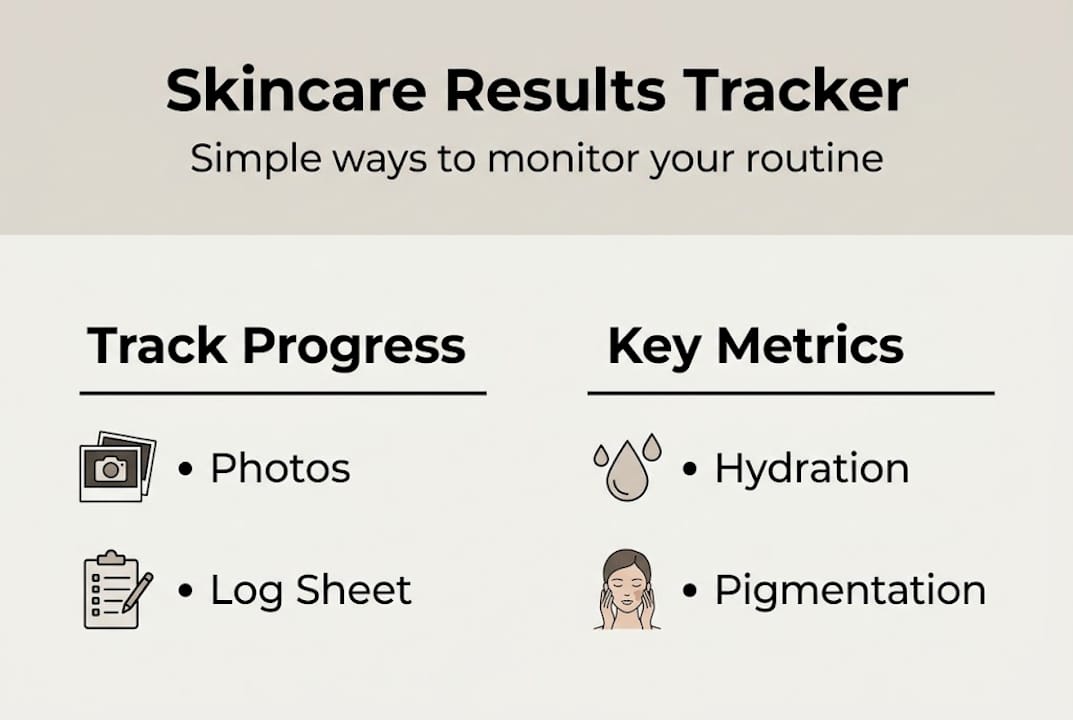
Pro Tip: Celebrate small, incremental wins. A 10% reduction in visible pigmentation at week four is meaningful progress. If results stall completely after eight weeks with no change, it is time to revisit your ingredient choices or seek a professional review.
The real story: Personalisation hype vs. what actually delivers
After covering the practical steps, it is worth pausing for an honest look at what personalisation actually delivers versus what the marketing suggests.
Hyper-personalisation technology is genuinely useful. AI and genetic tools are improving rapidly, and we at The M-ethod are enthusiastic about their potential. But they are not a substitute for sound fundamentals. Retinoids, broad-spectrum SPF, and evidence-based barrier support are still the bedrock of real, visible skin change. No algorithm changes that.
The hyper-personalisation trend can sometimes serve marketing interests as much as skin health. DNA-based products are marketed as revolutionary, yet for the majority of common concerns, the active ingredients in those formulas are the same ones that have decades of clinical backing. What is truly personalised is the concentrations, the sequencing, and the clinical oversight behind them.
Our view, drawn from years of working with clients across diverse skin types, is this: adopt innovation with discernment. Use AI tools to track progress, consider genetics when concerns are complex, but always anchor your choices in evidence and expert insights rather than in novelty alone.
Find your personal skincare solution with The M-ethod
If you are ready to move from DIY guesswork to professional, evidence-based personalisation, we are here to help. At The M-ethod, our clinician-led approach combines advanced diagnostics with prescription-strength and dermatologist-recommended products, designed to address your specific concerns with clinical precision. Whether you are targeting active acne, stubborn pigmentation, or age-related changes, our curated range is built on results. Explore our targeted Clearskin serum for congestion-prone skin, or browse our full NEOSTRATA clinical solutions range for advanced resurfacing and rejuvenation. Your most effective routine starts with the right expert guidance.
Frequently asked questions
What are the most effective tools for personalising skincare?
AI-powered skin analysis, dermatologist consultations, and genetic testing are the top evidence-backed tools for customising a skincare routine. Each offers a different level of detail, and combining approaches yields the most complete picture.
Are DNA-based skincare routines better than ingredient-centric ones?
For most common concerns, tried-and-tested actives such as retinoids and sunscreen are as effective as DNA-based products. Genetic analysis adds most value in complex or atypical cases where standard approaches have not worked.
How can I track if my personalised skincare routine is actually working?
Take regular photographs in consistent conditions, use tracking apps for biometrics, and reassess your regimen every few weeks. Objective data is far more reliable than daily impressions.
Is personalisation safe for people with sensitive skin?
Yes, provided you start with a dermatologist assessment, choose low-irritant actives, and patch test every product before full application. Slow and methodical introduction of new products is the safest strategy.
Will I need to keep changing my personalised routine?
Yes. Skin evolves with your environment, hormones, and lifestyle, so adjust your regimen every four to six weeks or whenever your primary concerns shift significantly.