


How to prepare for your skin consultation: expert checklist
TL;DR:
- Preparation, documentation, and honest communication are essential for effective skin consultations and personalized treatments.
- Avoid new active ingredients, skin trauma, or makeup on the day of the appointment to ensure accurate assessment.
- Asking the right questions and setting realistic expectations enhance results and safety of prescription skincare.
Many people arrive at a skin consultation with high hopes but little preparation, and the appointment ends up feeling rushed, generic, or disconnected from their real concerns. When prescription-strength treatments are involved, that gap between potential and outcome becomes even more significant. A well-prepared client gives their clinician the full clinical picture needed to make accurate, personalised recommendations. This guide walks you through exactly what to organise, what habits to adopt beforehand, which questions to ask, and how to avoid the most common pitfalls, so your next consultation delivers the results you are genuinely looking for.
Table of Contents
- What to gather and share before your consultation
- Steps to follow in the days before your session
- Maximising your consultation: questions to ask and expectations
- Typical mistakes and what to do if things go wrong
- Our take: preparing is more important than product
- Continue your skincare journey with expert-supported products
- Frequently asked questions
Key Takeaways
| Point | Details |
|---|---|
| Preparation is crucial | Gathering accurate history, product lists, and questions makes a tangible difference to your consultation outcome. |
| Avoid new treatments | Stop new products, picking, and certain procedures for several days before seeing your clinician. |
| Ask the right questions | Bring a list and don’t hesitate to discuss goals, risks, and next steps with your skincare expert. |
| Know common mistakes | Avoid common slips like hiding skincare routines or not updating medication lists for better, safer results. |
What to gather and share before your consultation
Once you understand why preparation makes a difference, knowing exactly what to organise and bring is the first step. Understanding the benefits of a skin consultation starts well before you walk through the door, or log on to a virtual appointment.
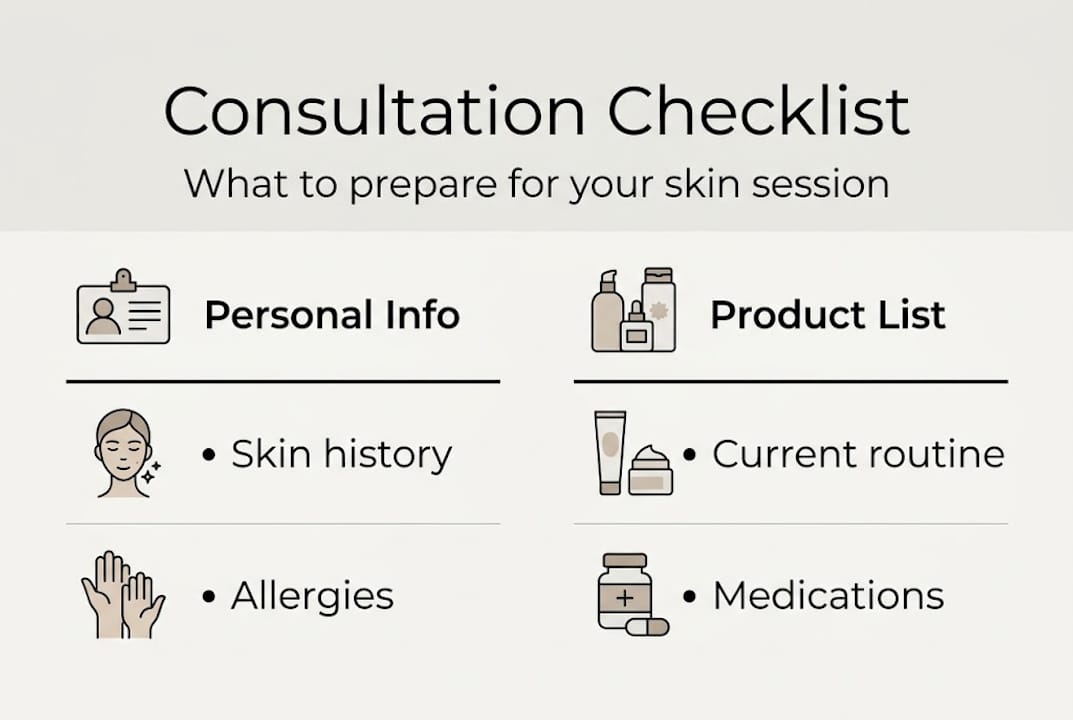
Your clinician needs a complete picture of your skin history, not just what is bothering you today. That means documenting current products, known allergies, medications (both topical and oral), and any previous cosmetic procedures or treatments. If your concern is a changing condition such as pigmentation, acne, or rosacea, a symptom log noting when flares occur, what seems to trigger them, and how long they last is genuinely valuable.
Cosmetic consultations often require additional preparation. Old photos or wish boards help clinicians understand your aesthetic goals and track how your skin has changed over time. Medical consultations, by contrast, focus more on clinical history and current symptoms. Both benefit enormously from clear, well-lit photographs taken without make-up.
Must-bring items for your consultation:
- A written list of all current skincare products, including SPF and make-up
- Prescription and over-the-counter medications, including supplements
- Details of known allergies or sensitivities
- A record of previous skin treatments, peels, injectables, or laser procedures
- Recent photographs of your skin concern, ideally taken in natural light
- Any wish-board images or reference photos for cosmetic goals
| Information to prepare | Why it matters |
|---|---|
| Current skincare routine | Prevents ingredient conflicts and duplication |
| Medication and supplement list | Identifies contraindications for prescription products |
| Allergy and sensitivity history | Guides safe formulation choices |
| Previous procedures and outcomes | Informs realistic expectations and treatment sequencing |
| Symptom log or photographs | Supports accurate diagnosis and progress tracking |
| Cosmetic goals or reference images | Aligns clinician recommendations with your expectations |
The more specific you are, the more targeted the advice you receive. Vague descriptions lead to generalised recommendations, which rarely produce the transformative results prescription-strength skincare can offer.
Steps to follow in the days before your session
Knowing what information to bring is only half the journey. Adopting optimal habits in the days beforehand can greatly affect your consultation outcome, both in terms of accurate assessment and your safety during any planned procedures.
Your pre-consultation timeline:
- Seven days before: Stop introducing any new skincare products or active ingredients. Your skin needs to settle so the clinician sees its genuine baseline, not a reaction to something new.
- Five days before: Pause exfoliating acids, retinoids, and abrasive scrubs. These can temporarily alter skin texture and sensitivity, skewing the clinical picture.
- Three days before: Avoid waxing, threading, or laser hair removal on the face. Skin trauma, even minor, affects how your clinician reads your skin.
- Two days before: Avoid picking or squeezing any lesions. This introduces infection risk and makes it harder to assess the underlying condition accurately.
- The day before: Focus on gentle cleansing and a simple, fragrance-free moisturiser. Hydrated skin reveals more than stripped or irritated skin ever will.
- On the day: Arrive make-up free if possible, or be prepared to remove it. Wear comfortable clothing if a body assessment is involved.
Review your skincare checklist before treatments to ensure nothing is overlooked, and consider how your clinical skincare workflow may need to be paused temporarily.
Safety note: If you are planning injectable treatments such as anti-wrinkle injections, Profhilo, or polynucleotides, avoid blood-thinning medications and supplements, including aspirin, ibuprofen, fish oil, and vitamin E, for at least five to seven days beforehand unless otherwise directed by your prescribing clinician. Always disclose any medications you cannot stop.
Pro Tip: In the week before your appointment, keep your routine as simple and consistent as possible. A gentle cleanser, a fragrance-free moisturiser, and SPF are all you need. This strips back the noise and shows your clinician exactly what your skin does on its own, which is the most useful starting point of all.
Maximising your consultation: questions to ask and expectations
Preparing your skin and information is important, but making the most of your clinician’s expertise relies on clear communication during the appointment itself. The quality of information you share and the questions you ask directly influences the tailored advice you receive.
Arrive with a shortlist of questions. It sounds simple, but in the moment, people often forget what they wanted to ask. Writing them down beforehand means nothing gets lost.
Smart questions to ask your clinician:
- What is the most likely cause of my skin concern, and what confirms that diagnosis?
- Which prescription-strength ingredients are most appropriate for my skin type and concern?
- How long before I can expect to see measurable results, and what does the adjustment period look like?
- What are the realistic risks or side effects of the recommended products or procedures?
- Are there any ingredients or treatments I should avoid while using what you prescribe?
- How often should I follow up, and what signs of progress should I look for?
- What happens if my skin reacts negatively?
Setting realistic expectations is essential, particularly with prescription-strength actives. Tretinoin, for example, typically requires a four to twelve week adjustment period before the skin acclimatises and results become visible. Patience is not optional; it is part of the protocol. Understanding this upfront prevents unnecessary alarm and premature abandonment of an effective treatment.
Be open about past disappointments. If a previous retinoid caused severe irritation, or a certain acid left your skin reactive for weeks, say so. Your clinician can only work around obstacles they know about. Honesty about frustrations, sensitivities, and failed attempts is not a sign of being a difficult client. It is the most useful data you can offer. This directly shapes consultation impact on results.
Pro Tip: At the end of your appointment, ask for a written or digital summary of all recommendations, including product names, application instructions, and follow-up timing. This removes ambiguity and makes it far easier to implement your new protocol correctly from day one.
Typical mistakes and what to do if things go wrong
Even with solid preparation, it is easy to stumble into familiar traps. Here is how to avoid the most common ones, and what to do if you need support afterwards.
Picking, trying new treatments, or failing to update your medical history are among the most frequent errors that hinder a safe and effective consultation.
| Common mistake | Best practice |
|---|---|
| Starting new actives the week before | Pause all new products at least seven days prior |
| Forgetting to list all medications | Write a complete list including supplements and OTC products |
| Omitting previous procedures | Disclose all treatments, even those done years ago |
| Concealing skin concerns with make-up | Arrive make-up free for accurate visual assessment |
| Not mentioning sensitivities or allergies | Share every known reaction, however minor |
| Leaving without a clear follow-up plan | Confirm next steps and contact details before you leave |
If something goes wrong after your consultation, act promptly and systematically.
- Stop using the product or treatment that appears to be causing the reaction immediately.
- Photograph the reaction in good lighting before it changes, to provide your clinician with accurate visual evidence.
- Contact your clinician directly rather than seeking advice from unqualified sources online. Most reputable clinics offer a post-consultation support channel.
- Do not self-treat with additional actives or over-the-counter remedies without guidance, as this can compound the problem.
- Keep a record of when the reaction started, what you applied, and how it has progressed. This information is critical for safe and effective troubleshooting.
Reviewing common skincare mistakes before your appointment can help you sidestep issues that are entirely preventable with a little foresight.
Our take: preparing is more important than product
Having covered the practical side, it is worth reflecting on what truly makes a difference in real clinic outcomes. We have seen this pattern repeatedly: clients invest significantly in premium, prescription-strength products, yet plateau because the consultation itself was not used well.
Real breakthroughs rarely come from products alone. Transformation starts with detailed sharing, honest communication, and a genuine partnership with your clinician. The best real-world results from consultations we observe consistently involve clients who arrive prepared, speak candidly about their history, and ask the right questions.
Many clients assume preparation simply means turning up. But the clients who see the most significant, lasting change are those who treat the consultation as a clinical exchange, not a shopping appointment. They bring documentation. They disclose everything. They ask about adjustment periods and follow-up protocols.
Clinicians can only work with the details they are given. Hidden allergies, incomplete histories, or actively changing routines create blind spots that waste precious consultation time and, in some cases, lead to avoidable adverse outcomes. Preparation is not a formality. It is the foundation on which every effective prescription-strength protocol is built.
Continue your skincare journey with expert-supported products
If you are ready to put your consultation plan into action, The M-ethod Skin is here to support every step. Our curated range of prescription-strength and dermocosmetic solutions is selected by expert clinicians to complement personalised treatment protocols. Explore targeted options such as the PCA Clearskin serum for blemish-prone skin, the science-backed NEOSTRATA collection for resurfacing and renewal, or the clinician-trusted PCA Retinol Night 0.5% for progressive anti-ageing results. From first consultation to long-term skin health, we provide the expert-led continuity your skin deserves.
Frequently asked questions
What should I avoid before a skin consultation?
Avoid starting new treatments, picking your skin, shaving or waxing, and taking blood-thinning medications unless directed by your clinician. These steps protect both the accuracy of your assessment and your safety during any planned procedures.
Should I stop using my skincare products before the appointment?
Continue your usual skincare routine unless your clinician advises otherwise, but pause any new products or active ingredients a few days prior so your clinician can assess your skin’s true baseline.
What documents or information should I bring?
Bring a written list of all skincare products, medications and supplements, known allergies, and details of any previous skin procedures. For cosmetic consultations, old photographs or reference images can also be very useful.
Can I wear make-up before my consultation?
Arrive make-up free where possible, or be prepared to remove it during the appointment, so your clinician can properly assess your skin without any barrier to accurate visual diagnosis.