



What is a skin consultation? 5 key benefits explained
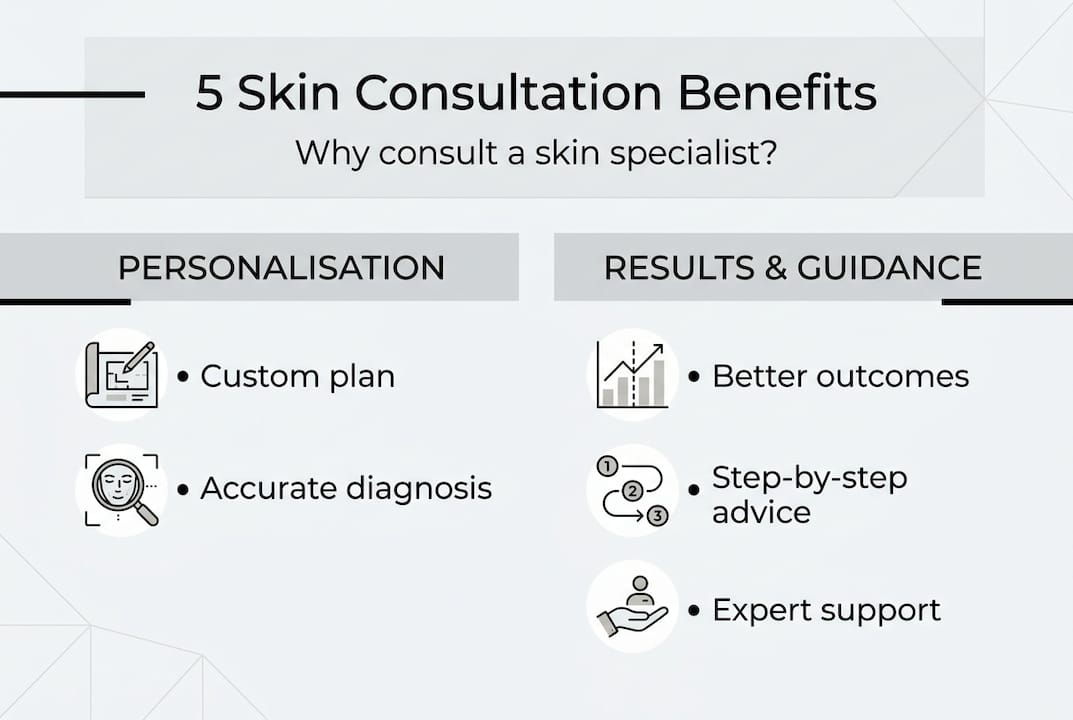
Many people assume that a well-chosen serum or an online skin quiz is enough to address persistent acne, uneven pigmentation, or visible signs of ageing. It rarely is. Complex skin concerns require a detailed expert assessment, not a one-size-fits-all solution. A professional skin consultation goes far beyond product recommendations — it uncovers the root causes of your concerns, maps your skin’s unique biology, and produces a treatment plan built entirely around you. In this article, we walk you through exactly what a skin consultation involves, how the process works, and why the expert difference is so significant.
Table of Contents
- What is a skin consultation? The fundamentals explained
- How does a professional skin consultation work? Step-by-step
- Targeting specific concerns: Ageing, pigmentation, and acne
- Nuance and advanced tools: High-end consultations vs. the rest
- Why true expertise and personalisation matter more than trends
- Experience expert consultation with proven results
- Frequently asked questions
Key Takeaways
| Point | Details |
|---|---|
| Personal touch matters | A bespoke skin consultation delivers deeper results than any generic solution. |
| Advanced tools, expert hands | Modern technology like AI and 3D imaging supports, but never replaces, an expert clinician’s judgement. |
| Targeted treatment plans | Every concern from wrinkles to pigmentation to acne is evaluated with unique criteria for the best care. |
| Prepared equals empowered | Arriving makeup-free and ready to talk history makes consultations more effective. |
What is a skin consultation? The fundamentals explained
A skin consultation is a structured, clinical evaluation of your skin conducted by a qualified professional. This could be a dermatologist, an aesthetic doctor, or a specialist clinician at a results-driven clinic. What sets it apart from beauty counter advice or an online quiz is the rigour and personalisation involved.
Unlike generic recommendations, a consultation drives skincare success by combining your medical history, lifestyle factors, and a physical examination of your skin to reach meaningful clinical conclusions. The clinician is not simply matching your skin type to a product range. They are identifying underlying causes, assessing risk factors, and designing a protocol that responds to your specific biology.
A comprehensive evaluation by expert clinicians typically includes medical history review, physical examination, diagnostic tools, and a personalised treatment plan. This is a fundamentally different experience from anything available over the counter.
“The most effective skincare journeys begin with a thorough clinical assessment — not a shelf of products.”
Here is what typically happens during a professional skin consultation:
- Medical and lifestyle history review: Your clinician will ask about diet, stress levels, medications, and previous skin treatments.
- Visual skin examination: A trained eye assesses texture, tone, pore size, hydration levels, and visible damage.
- Diagnostic tool use: Devices such as dermatoscopes or imaging systems are used to examine the skin at a deeper level.
- Concern prioritisation: The clinician identifies which issues are primary and which are secondary or interconnected.
- Personalised treatment planning: A bespoke protocol is created, often combining topical treatments, professional procedures, and lifestyle adjustments.
How does a professional skin consultation work? Step-by-step
Knowing the steps involved helps you prepare and get the most from your appointment. The process at a high-end clinic is methodical and thorough.
- Preparation: Arrive with clean, bare skin. No foundation, concealer, or SPF. This allows for an honest, unobstructed assessment.
- History taking: Your clinician reviews your skin history, current routine, medications, hormonal factors, and any previous treatments.
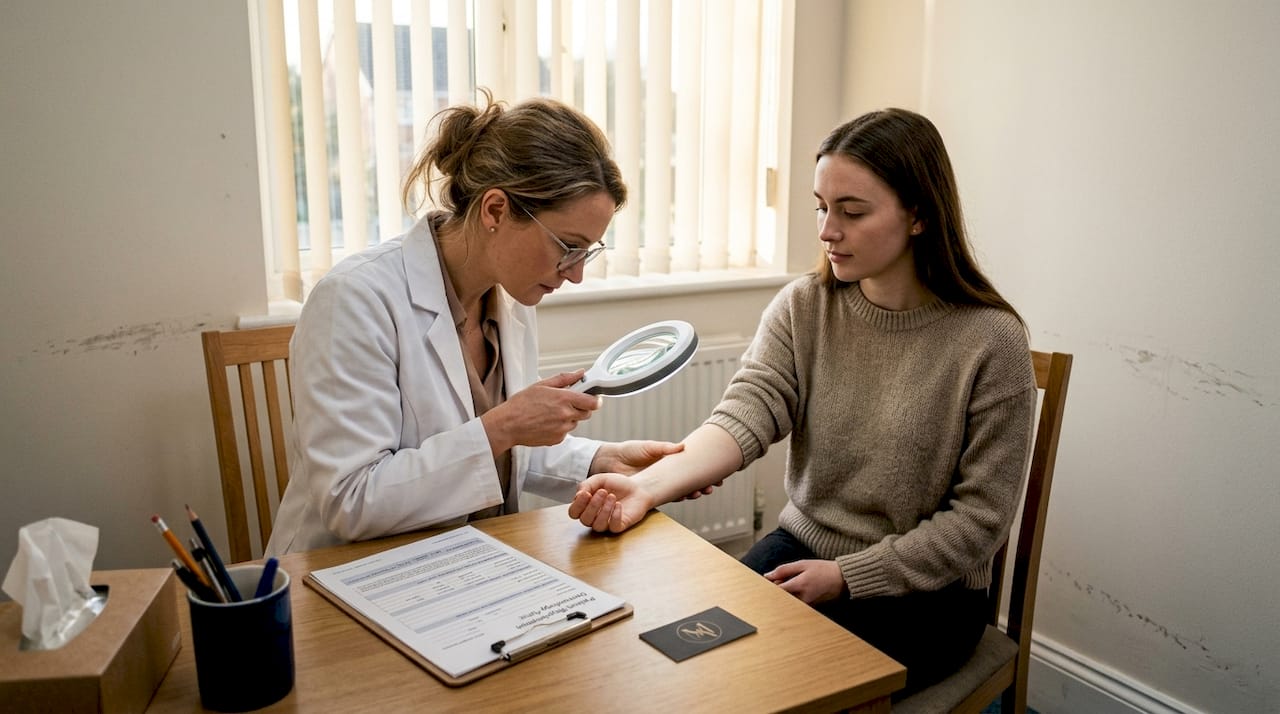
- Physical skin assessment: The clinician examines your skin under specialised lighting and magnification, noting texture, pigmentation, vascular patterns, and signs of photodamage.
- Advanced diagnostics: Tools such as VISIA analysis, 3D mapping, and digital imaging allow for precise, data-driven skin evaluation that goes far beyond what the naked eye can detect.
- Treatment planning: Based on all findings, a personalised protocol is recommended, which may include prescription-strength topicals, in-clinic procedures, or device-based treatments.
Pro Tip: Always arrive makeup-free to your consultation. Even a light tinted moisturiser can obscure pigmentation irregularities, redness, or early signs of sun damage that are critical for accurate assessment.
The future of skincare consultations is increasingly shaped by advanced imaging tools, which now allow clinicians to detect sub-surface changes invisible to the human eye. These technologies, combined with advanced skincare routines, produce measurably better outcomes.
| Feature | Standard consultation | High-end consultation |
|---|---|---|
| Tools used | Visual exam only | VISIA, 3D mapping, dermoscopy |
| Time frame | 15 minutes | 30 to 60 minutes |
| Outcome | General advice | Bespoke clinical protocol |
| Follow-up | Rarely included | Structured review process |
| Prescription access | Limited | Full prescription capability |
Targeting specific concerns: Ageing, pigmentation, and acne
Understanding the steps is vital, but it is the personalised approach to specific conditions that sets expert consultations apart. Each concern has its own clinical profile, and a skilled clinician knows exactly what to look for.
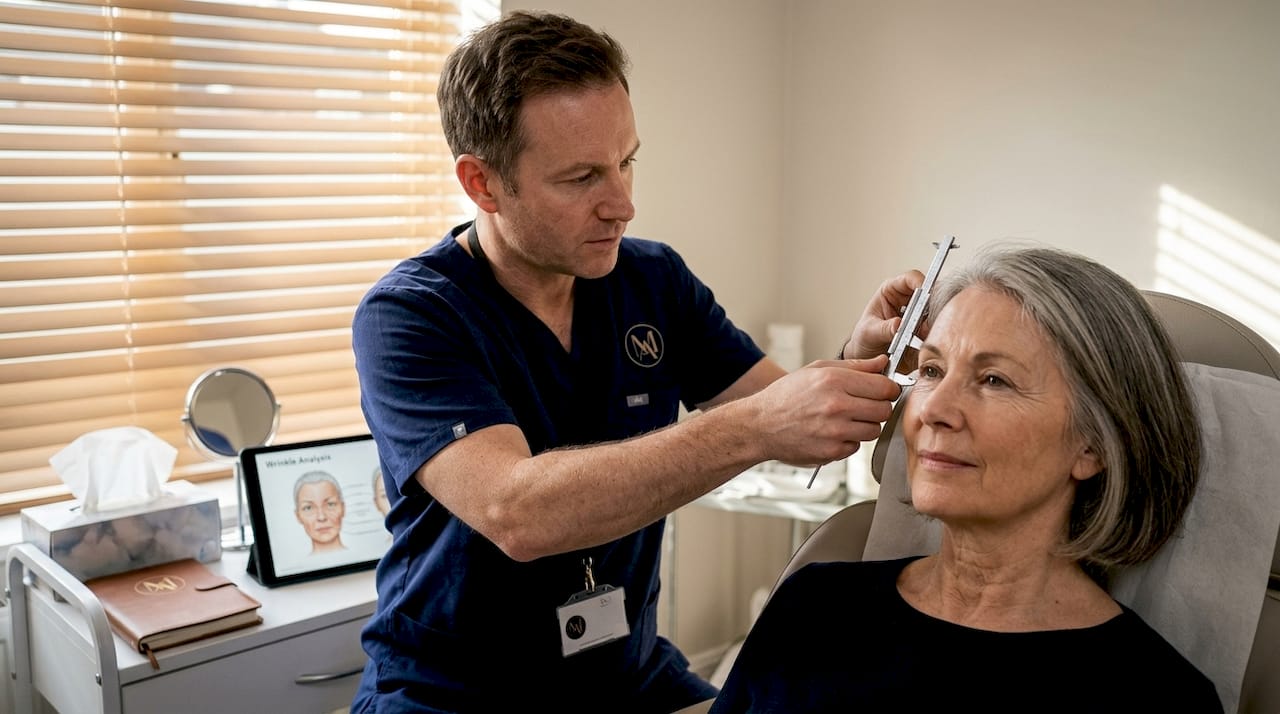
Ageing: Clinicians assess wrinkle depth, skin elasticity, volume loss, and sagging. Beyond surface-level wrinkles, skin ageing phenotypes explain more than 46% of variance in principal component analysis studies, meaning the full picture of ageing is far more complex than lines alone. Retinoids, peptides, and collagen-stimulating procedures are commonly recommended.
Pigmentation: The clinician differentiates between melasma, post-inflammatory hyperpigmentation, solar lentigines, and other irregularities. Each has a distinct cause and requires a different treatment pathway. Hydroquinone, azelaic acid, and targeted chemical peels are standard clinical tools.
Acne: Breakout patterns, comedone types, scarring, and hormonal triggers are all assessed. Notably, 26% of adult women between 31 and 40 experience acne, making adult acne a significant clinical concern that differs considerably from teenage breakouts.
| Concern | Key clinical indicators | Common diagnostics | Typical solutions |
|---|---|---|---|
| Ageing | Elasticity loss, wrinkles, volume | Visual, 3D mapping | Retinoids, injectables, devices |
| Pigmentation | Uneven tone, melasma, spots | VISIA, Wood’s lamp | Hydroquinone, peels, lasers |
| Acne | Breakouts, scarring, oiliness | Visual, hormonal review | Topicals, prescription treatments |
What to expect when seeking help for each concern:
- Ageing: A full facial assessment including neck and décolletage, with recommendations spanning topical actives and in-clinic procedures.
- Pigmentation: A detailed history of sun exposure, hormonal changes, and previous treatments, followed by a layered treatment approach.
- Acne: A review of dietary triggers, hormonal patterns, and current product use, leading to a targeted prescription or clinical protocol. See the full regimen guide for ageing skin for further clinical benchmarks.
Nuance and advanced tools: High-end consultations vs. the rest
To understand what differentiates premium services, it is essential to look at the technology and expertise powering high-end consultations. The gap between a basic skin assessment and a truly advanced consultation is considerable.
High-end consultations use 3D mapping, VISIA, and AI-assisted analysis to build a detailed picture of your skin’s current state and its trajectory over time. These tools detect sub-surface pigmentation, vascular irregularities, and early photodamage that would otherwise go unnoticed. The TADA dermoscopy approach achieves 94.8% sensitivity for lesion identification, illustrating just how precise modern diagnostic tools have become.
However, technology is only as effective as the clinician interpreting it. Representative dermatology image datasets and AI tools can flag patterns, but they cannot replace the nuanced judgement of a seasoned professional who understands the full context of your health, lifestyle, and skin history.
“AI and advanced imaging are powerful assets in the consultation room, but clinical wisdom remains the cornerstone of accurate diagnosis and effective treatment.”
Pro Tip: App-based skin analysis tools can be a useful starting point, but relying on them without expert oversight risks misidentifying conditions. Rosacea is frequently confused with acne, and melasma is often mistaken for general hyperpigmentation. Always seek qualified clinical review. You can explore virtual aesthetic consultations and the role of skincare technology trends in modern practice.
Five questions to ask about technology when booking a consultation:
- Which diagnostic tools does the clinic use, and what do they measure?
- How are imaging results interpreted and communicated to you?
- Is AI-assisted analysis used, and how is it validated clinically?
- Can results be tracked over time to measure treatment progress?
- Does the clinician have specialist training in interpreting advanced diagnostics?
Why true expertise and personalisation matter more than trends
We have seen a wave of innovation in skincare diagnostics, and it is genuinely exciting. But we want to be honest about something: the most transformative results we witness are never driven by technology alone. They come from expert clinicians who listen carefully, think critically, and build protocols that account for the whole person, not just the presenting concern.
Trends come and go. A new device or AI platform will always generate interest. But advanced imaging findings require clinician interpretation to be clinically meaningful. Without that human layer of expertise, even the most sophisticated scan produces little more than data without direction.
We consistently recommend combining technology with holistic consultation because the two are not interchangeable — they are complementary. A VISIA scan tells you what is happening. A skilled clinician tells you why, and more importantly, what to do about it. That distinction is everything.
Personalisation is not a luxury in skincare. It is the mechanism through which real, lasting change occurs. The evidence behind consultation effectiveness consistently points to one conclusion: bespoke, expert-guided care outperforms generic approaches every time.
Experience expert consultation with proven results
If you are ready to move beyond guesswork and invest in your skin with genuine clinical precision, we are here to guide you. At The M-ethod Skin, our expert clinicians offer virtual and in-person consultations tailored to your unique concerns, whether that is acne, pigmentation, or visible ageing. For those targeting breakouts, the PCA Clearskin serum is a clinician-approved option worth exploring. For ageing concerns, PCA Retinol Night delivers prescription-strength results. Explore our full range of NEOSTRATA advanced treatments for clinically validated solutions across all skin types.
Frequently asked questions
How long does a professional skin consultation take?
Most consultations last between 15 and 45 minutes, though high-end appointments involving advanced diagnostics may extend to 60 minutes depending on the complexity of your concerns.
Should I avoid wearing makeup to a skin consultation?
Yes, attending makeup-free allows for clearer assessment and more accurate recommendations, as even light coverage can obscure key clinical indicators such as redness, pigmentation, and texture irregularities.
Are skin consultations suitable for men and women?
Absolutely. Consultations address both male and female skin concerns, with protocols tailored to hormonal differences, skin thickness, and individual lifestyle factors across all genders.
How are advanced tools like AI and 3D imaging used in consultations?
AI and 3D imaging enhance expert assessment by detecting sub-surface changes and tracking skin progression over time, but they are always interpreted alongside a clinician’s clinical judgement for accurate, meaningful results.