

Why multi-step skincare regimens deliver superior results
Multi-step skincare regimens can improve skin concerns by over 60%, challenging the widespread belief that simpler routines work better. Research demonstrates that layering specific active ingredients in the correct order produces measurably superior outcomes for ageing, pigmentation, and acne compared to minimalist approaches. This article explores the scientific mechanisms behind multi-step regimens, presents clinical evidence of their effectiveness, and explains how personalised routines maximise benefits whilst minimising irritation risks. You will discover why dermatologist-supported layering strategies deliver transformative results that single-product routines cannot match.
Table of Contents
- How Multi-step Regimens Enhance Skin Health
- Scientific Evidence Supporting Multi-step Skincare Efficacy
- Personalising Multi-step Skincare For Your Skin Concerns
- Explore Tailored Skincare Solutions At The M-ethod
- Frequently Asked Questions
Key takeaways
| Point | Details |
|---|---|
| Multi-step regimens target multiple concerns | Layering active ingredients addresses ageing, pigmentation, and acne simultaneously with clinically proven efficacy. |
| Proper application order matters | Applying products from thinnest to thickest consistency maximises ingredient penetration and effectiveness. |
| Personalisation reduces irritation | Dermatologist-guided regimens tailored to skin type increase satisfaction by 40% and minimise adverse reactions. |
| Clinical evidence supports efficacy | Studies show 70% improvement in fine lines and 145% collagen increase with multi-product regimens over 12 weeks. |
| Ingredient compatibility is essential | Incorrect mixing of actives like AHAs and retinol without buffering can compromise skin barrier health. |
How multi-step regimens enhance skin health
The foundation of effective multi-step skincare lies in strategic layering, a technique that maximises ingredient penetration by applying products from thinnest to thickest consistency. This approach ensures that lightweight serums containing potent actives reach deeper skin layers before heavier creams create an occlusive barrier. When executed correctly, layering allows multiple concerns to be addressed simultaneously rather than forcing you to choose between hydration, pigmentation correction, or anti-ageing benefits.
Multi-step regimens typically incorporate several categories of active ingredients working synergistically. Retinoids stimulate collagen production and accelerate cell turnover, peptides signal skin repair processes, antioxidants neutralise free radical damage, and humectants bind moisture to the epidermis. Clinical data reveals that combining retinoids and peptides produces 70% improvement in fine lines over 12 weeks, a result unattainable with single-ingredient approaches. This synergy occurs because different actives target distinct cellular pathways, creating complementary effects that amplify overall outcomes.
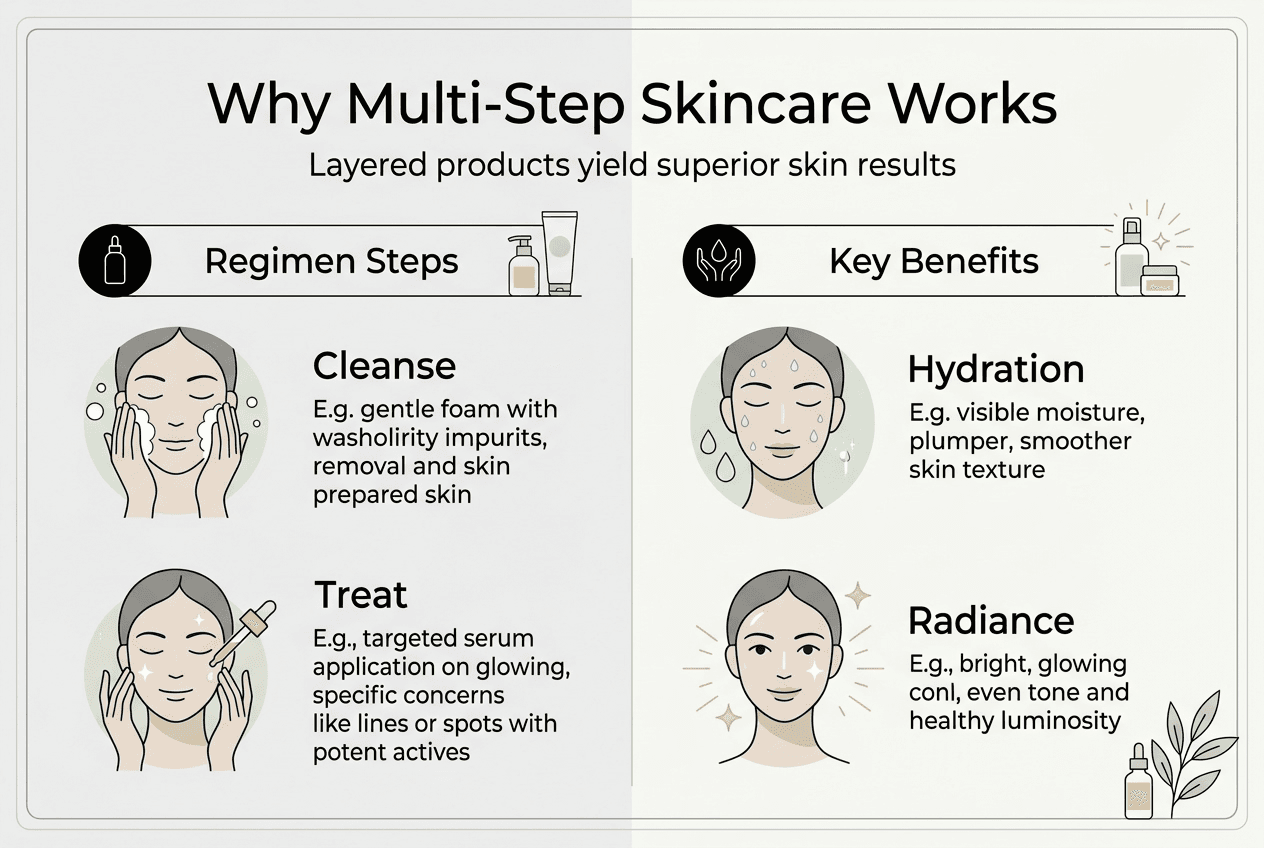
The multi-step approach follows a logical sequence:
- Cleanse to remove impurities and prepare skin
- Apply treatment serums with active ingredients
- Layer targeted treatments for specific concerns
- Seal with moisturiser to lock in benefits
- Protect with SPF during daytime routines
Pro Tip: Never combine AHAs with retinol in the same application without buffering, as this combination can severely compromise your skin barrier. Instead, alternate these actives on different evenings or use a hydrating serum between layers to reduce irritation whilst maintaining efficacy.
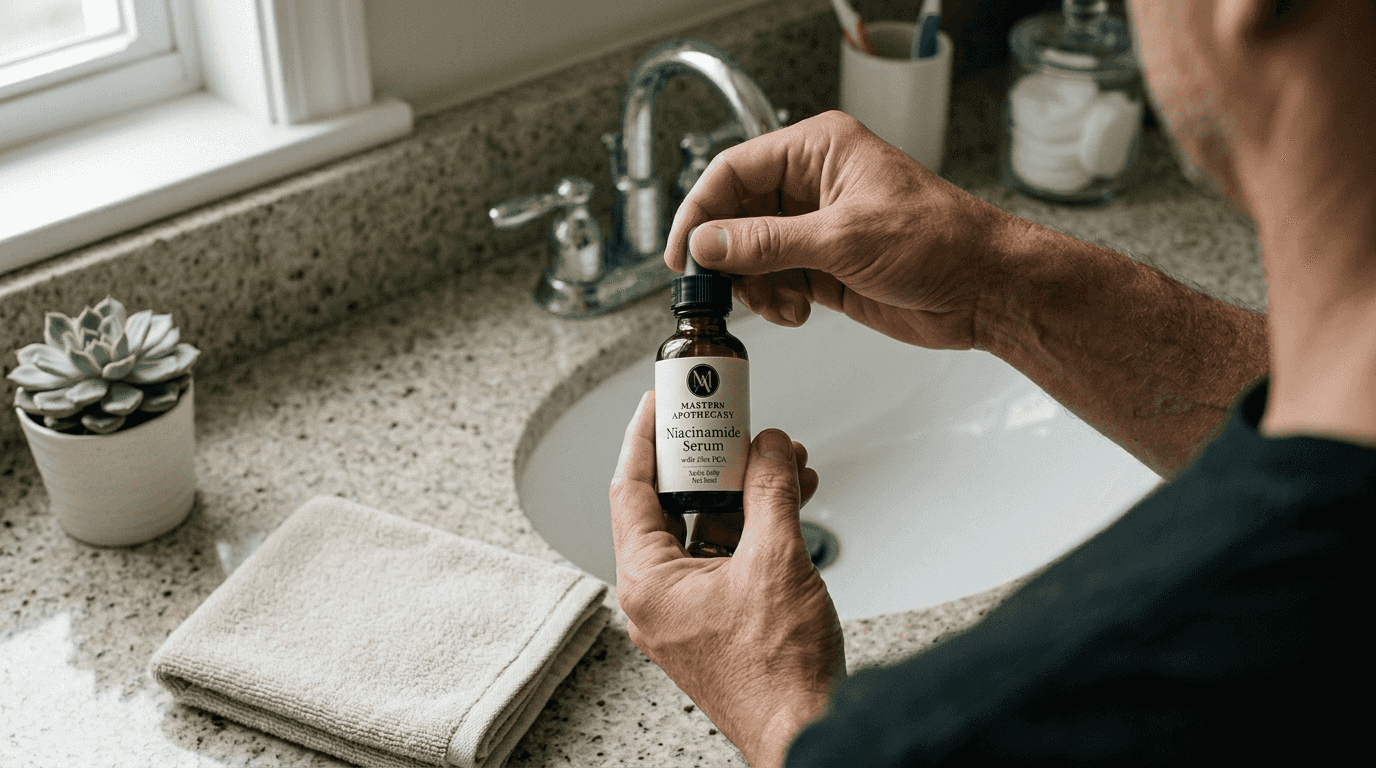
Niacinamide deserves special attention as a multifunctional active ingredient ideal for multi-step regimens. This vitamin B3 derivative reduces hyperpigmentation by inhibiting melanosome transfer whilst simultaneously improving inflammation and regulating sebum production. Its compatibility with most other actives makes niacinamide an excellent middle-layer treatment in comprehensive routines. Unlike some ingredients that require careful timing or separation, niacinamide enhances the performance of surrounding products without causing conflicts, making it invaluable for those managing multiple skin concerns concurrently.
The professional skincare regimen guide demonstrates how dermatologist-supported layering strategies transform skin health by addressing root causes rather than surface symptoms. This targeted approach explains why multi-step regimens consistently outperform minimalist routines in clinical settings, delivering measurable improvements across multiple skin quality parameters simultaneously.
Scientific evidence supporting multi-step skincare efficacy
Robust clinical trials validate the superior performance of multi-product skincare regimens over simplified approaches. A landmark study examining a six-product facial regimen showed significant improvements in photodamage and hyperpigmentation over 24 weeks with no efficacy plateau, meaning benefits continued accumulating throughout the study period. Participants experienced consistent enhancement in skin texture, tone uniformity, and overall radiance, with improvements becoming more pronounced at each assessment interval.
The synergistic effects of combining specific products produce results exceeding the sum of individual components. Research on the eVCS and RSB combination demonstrated a synergistic reduction in melanin and 145% collagen increase, far surpassing outcomes achieved with either product alone. This synergy occurs because different actives trigger complementary cellular responses, creating a cascade of beneficial effects that amplify skin regeneration and repair processes.
Clinical data consistently demonstrates that multi-step regimens deliver measurable improvements across diverse skin concerns:
| Study Duration | Key Improvement | Tolerance | Product Focus |
|---|---|---|---|
| 24 weeks | Significant photodamage and hyperpigmentation reduction | Excellent, no plateau | Six-product facial regimen |
| 12 weeks | 145% collagen increase, melanin reduction | Well tolerated | eVCS-RSB antioxidant combination |
| 8 weeks | Enhanced hydration, volume, and elasticity | High acceptance | Alastin Restorative Complex |
| 12 weeks | 70% fine line improvement | Minimal irritation | Retinoid-peptide combination |
The Alastin Restorative Skin Complex Serum improves facial skin quality, hydration, volume, and boosts collagen and elastin production through its proprietary TriHex Technology. This peptide-based formulation works by clearing damaged elastin and collagen fragments whilst supporting the production of new, healthy extracellular matrix components. The clinical evidence demonstrates that strategic ingredient combinations produce cellular-level changes that translate to visible improvements in skin appearance and function.
Pro Tip: Patience proves essential when following multi-step regimens, as most clinical studies show peak efficacy between 12 and 24 weeks. Resist the temptation to abandon your routine prematurely or constantly switch products, as cellular turnover and collagen remodelling require consistent stimulation over extended periods to produce lasting results.
The clinical skincare trends for 2026 reflect growing recognition that evidence-based, multi-product approaches deliver superior outcomes compared to marketing-driven minimalist routines. Dermatologists increasingly recommend layered regimens because clinical data overwhelmingly supports their efficacy, safety, and ability to address multiple concerns simultaneously without compromising skin barrier function.
Personalising multi-step skincare for your skin concerns
Tailoring multi-step regimens to your specific skin type and primary concerns transforms generic routines into powerful, personalised treatment protocols. Generic approaches often fail because they ignore individual variations in skin sensitivity, concern severity, and tolerance to active ingredients. Matching your regimen to your unique needs prevents irritation whilst maximising effectiveness, explaining why dermatologist-supported platforms consistently produce superior outcomes compared to trial-and-error methods.
Common skin concerns requiring personalised multi-step approaches include:
- Ageing signs such as fine lines, wrinkles, loss of volume, and decreased elasticity
- Pigmentation issues including melasma, post-inflammatory hyperpigmentation, and sun damage
- Acne ranging from comedonal breakouts to inflammatory lesions and post-acne marks
- Sensitivity characterised by reactivity, redness, and compromised barrier function
Different concerns demand specific active ingredients and application strategies:
| Concern | Primary Actives | Key Benefits | Application Notes |
|---|---|---|---|
| Ageing | Retinoids, peptides, growth factors | Stimulate collagen, reduce wrinkles, improve firmness | Start low concentration, increase gradually |
| Pigmentation | Niacinamide, vitamin C, tranexamic acid | Inhibit melanin production, brighten tone | Layer antioxidants under SPF |
| Acne | Salicylic acid, benzoyl peroxide, niacinamide | Unclog pores, reduce inflammation, control oil | Avoid over-drying, maintain barrier |
| Sensitivity | Ceramides, centella asiatica, azelaic acid | Strengthen barrier, calm inflammation, gentle exfoliation | Introduce one active at a time |
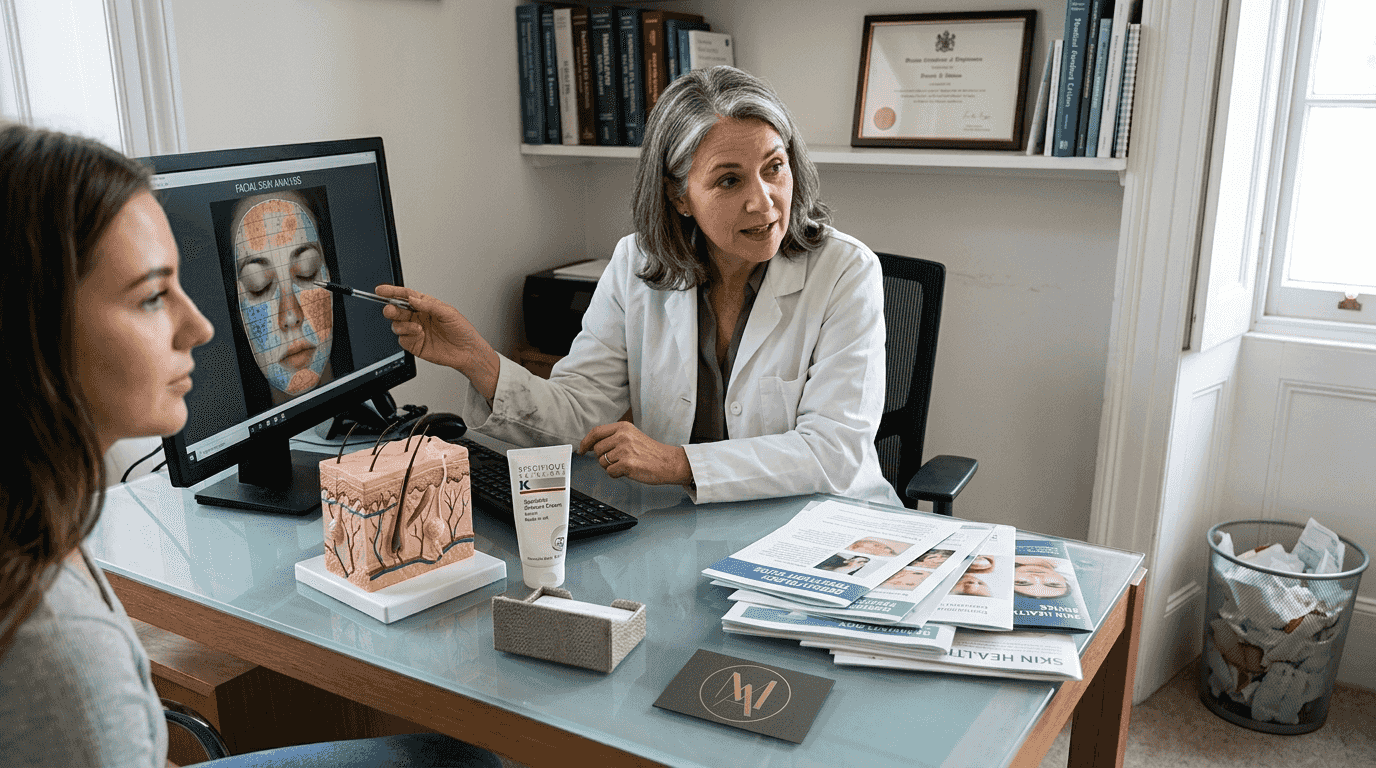
The role of dermatologists in skincare prescription becomes crucial when designing personalised regimens, as professional guidance identifies optimal ingredient combinations whilst avoiding problematic interactions. Dermatologist-supported platforms analyse your skin type, concern severity, current routine, and sensitivity patterns to recommend evidence-based product sequences that deliver results without causing adverse reactions. This expertise proves invaluable because seemingly minor adjustments in product selection or application order can dramatically impact outcomes.
Pro Tip: When introducing multiple new actives, start with one product every two weeks whilst monitoring your skin’s response. This gradual approach allows you to identify which ingredients benefit your skin and which cause irritation, enabling precise regimen refinement. Always patch test new products on your inner forearm or behind your ear for 48 hours before applying to your face.
Clinical evidence demonstrates that personalised multi-step regimens yield 40% higher patient satisfaction and significantly reduce irritation risks compared to generic protocols. Furthermore, studies document impressive improvements: 60% hydration increase, 40% acne lesion reduction, and 30% wrinkle depth decrease after 12 weeks of personalised routines. These statistics underscore why customisation matters, as tailored approaches address your specific concerns with appropriate ingredient concentrations and application frequencies.
The professional skincare regimen guide provides comprehensive frameworks for building personalised multi-step routines that target ageing, pigmentation, and acne effectively. By following evidence-based personalisation principles, you transform multi-step skincare from overwhelming complexity into a strategic, results-driven approach that delivers measurable improvements in skin health and appearance.
Explore tailored skincare solutions at the M-ethod
The M-ethod offers expertly curated multi-step skincare solutions designed by dermatologists to address ageing, pigmentation, and acne concerns with clinical precision. Our platform combines premium, prescription-strength products with personalised guidance, ensuring you build effective regimens tailored to your unique skin profile. Explore targeted treatments like Clearskin acne treatment serum for blemish-prone skin, intensive eye therapy for periorbital ageing signs, and exfoliating wash to refine texture and clarity. Our dermatologist-supported approach removes guesswork from multi-step skincare, providing you with evidence-based product selections and application protocols that deliver transformative results safely and effectively.
Frequently asked questions
Are multi-step skincare regimens suitable for sensitive skin?
Yes, but personalisation and proper layering prove essential to avoid irritation and adverse reactions. Dermatologist guidance helps select gentle yet effective actives suitable for sensitive skin, such as niacinamide, azelaic acid, and ceramides, whilst avoiding known irritants. Starting with lower concentrations and gradually increasing frequency allows sensitive skin to adapt to active ingredients without compromising barrier function.
How long does it take to see results from a multi-step regimen?
Most improvements appear within 12 weeks, with continued benefits accumulating up to 24 weeks or longer depending on concern severity. Consistency and patience prove essential for optimal results, as cellular processes like collagen remodelling and melanin reduction require sustained stimulation over extended periods. Visible changes in texture and hydration may emerge within four to six weeks, whilst deeper structural improvements develop more gradually.
Can I combine all active ingredients in one regimen?
Not all actives prove compatible, as some combinations may cause irritation or reduce efficacy through chemical interactions. Proper layering order and buffering techniques help safely incorporate multiple actives, as demonstrated by clinical protocols combining retinoids, antioxidants, and exfoliants. Dermatologist guidance ensures your regimen balances effectiveness with tolerability, avoiding problematic combinations whilst maximising synergistic benefits.
Why is dermatologist guidance important in multi-step skincare?
Dermatologists tailor regimens to your specific skin type and concerns, minimising risks like irritation, barrier damage, and ingredient conflicts. Personalised advice from dermatologist skincare guidance improves satisfaction and effectiveness over generic routines by selecting appropriate ingredient concentrations, application frequencies, and product sequences. Professional expertise proves invaluable when managing complex concerns or introducing prescription-strength actives that require careful monitoring and adjustment.