

Six Week Rule: Clinician Checklist to Tell Purging From Breakouts
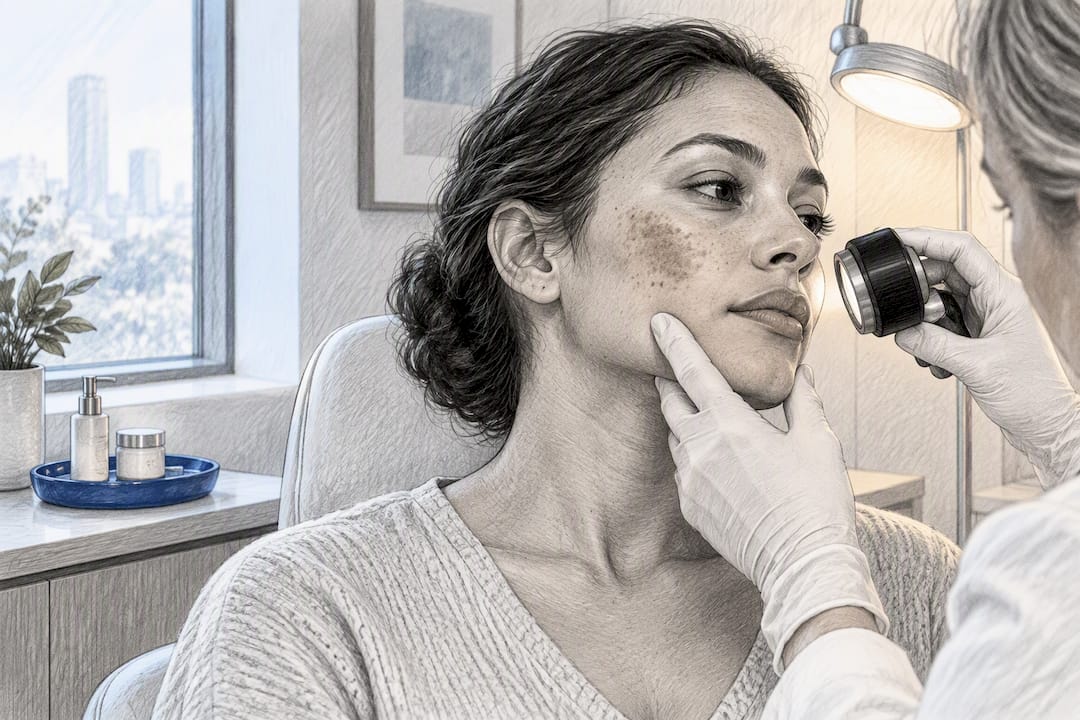
If your skin flared up shortly after starting a retinoid, an AHA or a BHA, and the spots sit in your usual acne zones, you are most likely purging. Continue the product if the reaction stays mild, but stop and speak to a clinician if it spreads to new areas, feels intensely hot or itchy, or has not settled by six to eight weeks. Those checkpoints, at four to six weeks and again at twelve, are what clinicians actually use to judge progress.
TL;DR:
- Purging typically starts within the first two weeks of using active ingredients like retinoids, AHAs, or BHAs and usually resolves within four to six weeks.
- It appears in the same areas as existing microcomedones and manifests as small whiteheads, blackheads, or fine bumps, unlike true breakouts which can occur in new areas and look more inflamed.
- Most purging symptoms are mild, predictable, and stay within a two to six-week window, while persistent or worsening symptoms beyond this indicate a possible allergic reaction or breakouts.
- Avoid increasing application frequency or layering additional actives during purging, as overuse risks irritation without speeding up the process.
- Seek professional advice if severe irritation, spreading, or no improvement occurs after six to eight weeks to rule out other causes and adjust treatment.
Table of Contents
- What is skin purging and what counts as a true breakout?
- Timeline, location and lesion clues that separate the two
- How long does purging last, and what should you expect at each stage?
- Caring for purging skin versus treating a genuine breakout
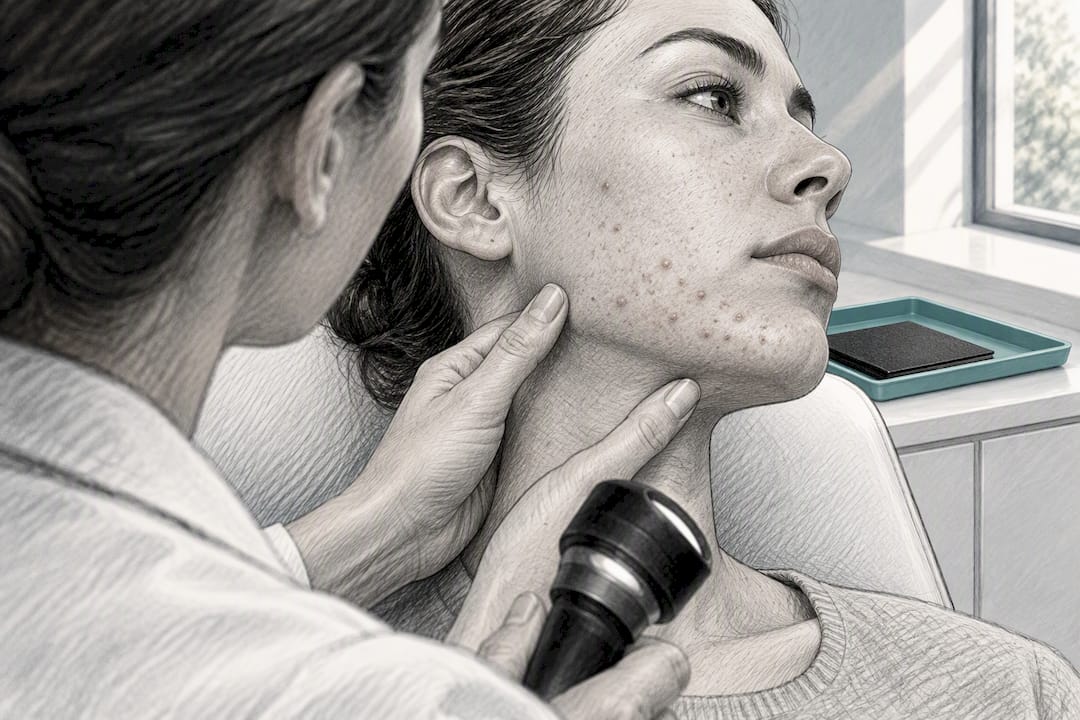
- Warning signs that mean it is time to see a dermatologist
- Where a skincare platform fits into your skin’s adjustment period
- Why the six-week rule matters more than most advice you’ll read
- Sources
- FAQ
What is skin purging and what counts as a true breakout?
Purging happens when an active ingredient speeds up skin cell turnover, pushing microcomedones (the tiny, invisible clogs already forming under the surface) up and out faster than they would naturally emerge. The RETIN-A MICRO prescribing information describes this as an initial apparent worsening of inflammatory acne lesions early in therapy, and notes that if the treatment is otherwise tolerated, this worsening should not be a reason to stop. “Purging” is the popular term for what prescription labelling calls initial exacerbation.
A true breakout is different: it is new or persistent acne that is not tied to accelerated turnover. Its causes are broader and can include:
- Hormonal fluctuations around the menstrual cycle, puberty or conditions such as PCOS.
- Comedogenic ingredients in a moisturiser, sunscreen or makeup blocking pores.
- Bacterial overgrowth or inflammation unrelated to any new active ingredient.
- Physical triggers such as friction from masks, phones or unwashed pillowcases.
The distinction matters because the right response to each is almost opposite: patience for one, a change of product or routine for the other.
Timeline, location and lesion clues that separate the two
The clearest signals are timing and geography. Purging tends to begin within the first couple of weeks of starting a new active and to follow a predictable arc, whereas a breakout can appear at any point and often lingers or worsens without a clear pattern.
- Timeline: purging typically starts early and settles within four to six weeks; a breakout has no fixed endpoint and can persist or intensify.
- Location: purging surfaces in the same areas you already tend to break out, since it is bringing existing microcomedones forward; a breakout often appears in new or unusual spots.
- Lesion type: purging usually looks like smaller whiteheads, blackheads or fine bumps; breakouts can include larger, deeper or more inflamed cysts and nodules.
- Triggers: purging is linked to ingredients that accelerate cell turnover, including retinoids, AHAs and BHAs, according to Banner Health; breakouts are more often triggered by comedogenic products, irritation or hormonal shifts.
Severity is a useful tiebreaker too. Purging tends to stay relatively mild and predictable, while a breakout or a genuine irritant reaction is more likely to bring swelling, spreading or intense discomfort that does not fit the pattern of your normal acne.
How long does purging last, and what should you expect at each stage?
Purging generally runs for two to six weeks, with most people noticing clearer skin by the four to six week mark. Clinicians typically monitor a new treatment across six to twelve weeks before drawing firm conclusions, which lines up with American Academy of Dermatology guidance that acne treatment often takes six to twelve weeks to show visible improvement.
Four checkpoints help you judge whether you are on track:
- Week 2: some new bumps may still be surfacing; this is expected and not yet a cause for concern.
- Week 4: you should start seeing early signs of settling, with fewer new lesions appearing.
- Week 6: most purging has resolved; skin that is still worsening at this point deserves a closer look.
- Week 12: this is the point by which a tolerated treatment should show its fuller effect; persistent, unexplained breakouts beyond this window suggest the product may not suit your skin, rather than ongoing purging.
Judging a retinoid on a shorter, internet-driven timeline is one of the more common reasons people give up too soon.
Caring for purging skin versus treating a genuine breakout
The right response depends on which one you are dealing with, but the daily habits that support purging skin are worth adopting regardless.
- Keep the rest of your routine simple: a gentle cleanser, a supportive moisturiser and daily sunscreen.
- Apply the new active as directed rather than more often, since DailyMed’s tretinoin label advises gradual introduction and warns against exceeding the recommended frequency to limit irritation.
- If irritation appears, cut back to every second or third night rather than stopping outright, a staged approach outlined in our guide to starting tretinoin at night.
- Hold off on layering other exfoliating actives, such as additional acids or retinol, while your skin adjusts, as covered in our piece on layering retinol safely.
Adding more products or applying an active more frequently will not speed up purging. FDA labelling on topical retinoids specifically notes that overuse increases the risk of irritation without improving results, so restraint is the more effective strategy.
If the pattern points to a genuine breakout, the approach changes. Treatment usually means targeting the actual cause, whether that is a comedogenic product to remove from your routine, a hormonal factor to discuss with a doctor, or a prescription-strength active better suited to your skin type. This is where a tailored assessment matters more than trial and error.
Pro Tip: Patch-test any new active on a small area for a few days, and pause other actives while your skin settles into a new routine.

Warning signs that mean it is time to see a dermatologist
Most purging is uncomfortable rather than dangerous, but certain signs cross the line from expected adjustment into something that needs professional input.
- Severe burning, stinging or visible blistering rather than mild redness.
- Intense peeling that goes beyond light flaking.
- Breakouts spreading to entirely new areas of the face or body.
- No improvement, or visible worsening, beyond six to eight weeks of consistent use.
A clinician can adjust the dose or frequency of your current active, swap it for a gentler alternative, or introduce a different therapy entirely. FDA guidance on topical retinoids advises interrupting therapy if irritation becomes severe, rather than pushing through discomfort in the hope it will resolve on its own.
Where a skincare platform fits into your skin’s adjustment period
Some skincare providers work with clinician-led, prescription-strength and dermatologist-recommended products precisely because getting the introduction phase right matters more than the product itself. Our approach draws on the same principles that FDA labelling and American Academy of Dermatology guidance set out: tolerated treatments are usually worth continuing, and the goal is to monitor rather than panic at the first sign of change.
- For step-by-step relief while your skin adjusts, our guide on calming retinoid irritation covers practical products and habits.
- If you are choosing between prescription and over-the-counter options, our comparison of tretinoin versus adapalene explains how each behaves during the adjustment period.
- When symptoms sit outside the expected pattern, a personalised assessment is more reliable than comparing notes with a forum thread.
Why the six-week rule matters more than most advice you’ll read
The advice that gets skipped over most often is also the simplest: give a tolerated product six weeks before judging it, and twelve before writing it off entirely. Too much guidance online treats any flare as an emergency, which pushes people to abandon treatments that were working exactly as intended.

The flip side is just as important. Persistent worsening past six to eight weeks is not something to push through out of stubbornness, and it is not “just purging” if the pattern does not fit, new areas, unusual severity, no let-up by week six. The mistake is not being too cautious or too patient; it is applying the wrong instinct to the wrong situation.
If there is one thing worth prioritising, it is tracking your skin against a calendar rather than a feeling. Photograph it weekly, note when you started the product, and let the timeline do the judging instead of the mirror on a bad day.
— Jess
This article is general information, not a substitute for advice from a qualified doctor. Consult a qualified healthcare professional about your own circumstances before acting on anything here.
Sources
- RETIN-A MICRO prescribing information (FDA)
- Acne: Diagnosis and treatment (American Academy of Dermatology)
- How to tell if your skin is breaking out or purging (Banner Health)
- DailyMed: Tretinoin label
FAQ
What is the hardest type of acne to get rid of?
Deep, inflamed lesions such as cystic and nodular acne tend to be the most persistent and are more likely to need prescription-strength treatment or in-clinic care rather than over-the-counter products alone. These forms sit deeper in the skin and often require a tailored plan rather than a single ingredient change.
Does skin usually look better after purging ends?
Yes, once purging resolves, skin generally looks clearer than it did before starting the active, since the ingredient has cleared out existing microcomedones rather than created new ones. Most people see this improvement by the four to six week mark.
Should I pop pimples that appear during purging?
No, popping lesions during purging raises the risk of scarring and further inflammation without speeding up the process. Leaving them to resolve on their own, alongside a gentle routine, is the safer approach.
Will skin purging clear up without any treatment change?
In most cases, yes: purging is a temporary response to an active ingredient and settles on its own within the two to six week window as long as the product is tolerated. If it persists well beyond six to eight weeks or worsens, that points away from purging and towards a reaction worth reviewing with a clinician.