

Bespoke skincare: tailored solutions for radiant skin
TL;DR:
- Bespoke skincare delivers measurable, personalized improvements in hydration, pigmentation, and elasticity within 28 days.
- It involves detailed skin assessment, biometric diagnostics, and formula adjustment tailored to individual needs.
- This approach benefits those with stubborn, multiple, or sensitive skin concerns, offering scientifically-supported results.
In 28 days, a personalised skincare programme delivered significant improvements in hydration, pigmentation, elasticity, and sebum secretion. That is not a marketing claim. It is a measured, biometric outcome from a clinical case study. Yet most people still reach for the same off-the-shelf moisturiser, hoping it will somehow address their unique combination of concerns. Bespoke skincare challenges that assumption entirely. It is formulated around you, not the average consumer. This article explains what bespoke skincare actually involves, how personalised routines are built, what the science tells us about results, and how to decide whether this approach is right for your skin.
Table of Contents
- What is bespoke skincare?
- How bespoke skincare is created
- Evidence: What results can you expect?
- Is bespoke skincare right for you?
- Why bespoke skincare is evolving the industry
- Explore tailored solutions with The M-ethod
- Frequently asked questions
Key Takeaways
| Point | Details |
|---|---|
| True personalisation matters | Bespoke skincare adapts to your unique skin, delivering better results than standard products. |
| Evidence supports bespoke | Clinical studies show notable improvements in elasticity, pigmentation, and hydration after bespoke treatments. |
| Consultation is crucial | Professional assessment and ongoing adjustment are essential for maximising bespoke skincare benefits. |
| Not just luxury | Bespoke skincare is practical for anyone with stubborn, sensitive, or therapy-affected skin, not just luxury seekers. |
What is bespoke skincare?
Bespoke skincare is exactly what the name suggests: a skincare regimen designed specifically for one individual. Rather than selecting from a shelf of products formulated for broad skin types, a bespoke approach begins with a detailed assessment of your skin’s unique characteristics, concerns, and goals. Nothing is assumed. Everything is measured.
The core philosophy is straightforward. Your skin is not identical to anyone else’s. Your sebum production, pigmentation patterns, barrier function, hydration levels, and sensitivity all interact in ways that a generic formula simply cannot address. A product designed for “combination skin” or “mature skin” is, by definition, a compromise. Bespoke skincare removes that compromise.
Customisation in bespoke skincare typically involves several layers:
- Ingredient selection: Choosing actives that target your specific concerns, such as retinoids for collagen stimulation, azelaic acid for pigmentation, or ceramides for barrier repair.
- Concentration adjustment: Calibrating the strength of each ingredient to your skin’s tolerance and condition.
- Formulation texture: Adapting the vehicle, whether gel, serum, or cream, to suit your skin type and climate.
- Treatment protocols: Structuring the order, frequency, and layering of products to maximise efficacy and minimise irritation.
- Ongoing refinement: Adjusting the formula as your skin responds and evolves over time.
This is fundamentally different from mass-market skincare, where one formula must serve millions of different skin profiles. Research confirms that bespoke skincare delivers measurable improvements in key skin health parameters that generic products consistently fail to match.
“The skin is a dynamic organ. Treating it with a static, one-size-fits-all formula ignores the biological reality of individual variation.”
The parameters most commonly assessed in a bespoke approach include hydration (water content in the stratum corneum), elasticity (the skin’s ability to return to its resting state), pigmentation (distribution of melanin), and sebum secretion (oil production). Each of these responds differently to different ingredients and concentrations. A well-structured bespoke skincare regimen accounts for all of them simultaneously, rather than addressing one concern at the expense of another.
The result is a routine that works with your biology, not against it.
How bespoke skincare is created
Now that we have defined bespoke skincare, let us explore how these personalised routines are actually crafted. The process is methodical and evidence-led, not intuitive or guesswork-based.
- Initial skin assessment: A clinician or trained skincare specialist evaluates your skin type, concerns, medical history, lifestyle factors, and environmental exposures. This is the foundation of everything that follows.
- Biometric diagnostics: Objective measurements are taken using dermatological tools. These assess hydration levels, sebum output, elasticity, pigmentation, and redness. Numbers replace assumptions.
- Goal setting: You and your clinician agree on realistic, prioritised outcomes. Whether the focus is reducing hyperpigmentation, improving barrier function, or addressing acne, the goals shape the formula.
- Custom formula creation: Ingredients are selected and concentrations determined based on your diagnostic data. This may involve prescription-strength actives, cosmeceutical compounds, or a combination of both.
- Ongoing review: A 28-day bespoke programme is a common initial review period, during which results are measured and the formula adjusted if needed. This iterative process is what separates bespoke from standard skincare.
For personalised skincare insights that go deeper into how dermatologists approach individual skin concerns, it is worth exploring the clinical reasoning behind ingredient choices and protocol design.
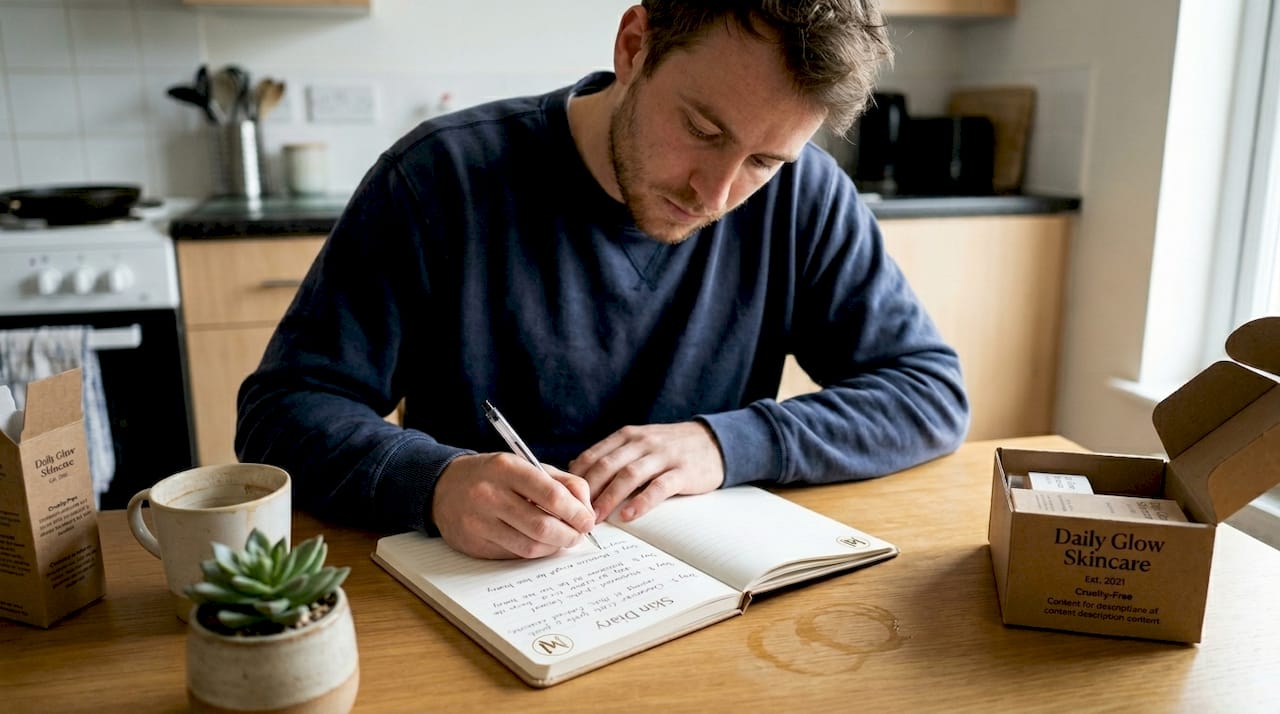
Pro Tip: Keep a skin diary throughout your bespoke programme. Note changes in texture, tone, sensitivity, and hydration daily. This data is invaluable when your clinician reviews your formula and makes adjustments. Small observations often reveal patterns that biometric tools alone cannot capture.
The process is not a one-time event. Skin changes with seasons, hormones, stress, and age. A genuinely bespoke approach evolves alongside those changes, which is why the relationship with your clinician matters as much as the formula itself.
Evidence: What results can you expect?
With the creation process understood, let us examine what the science actually shows. The evidence for bespoke skincare is not anecdotal. A published clinical case study measured biometric skin improvements after 28 days of a personalised cosmetic programme, and the outcomes were striking.
| Skin parameter | Baseline | After 28 days | Change |
|---|---|---|---|
| Sebum secretion | Low | Doubled | +100% |
| Hyperpigmentation | 7.2% | 2.3% | Reduced by 68% |
| Skin elasticity | 25% | 44% | Improved by 76% |
| Erythema (redness) index | Elevated | Reduced | Decreased by 8% |
These are not marginal gains. A 76% improvement in elasticity and a near-70% reduction in hyperpigmentation within four weeks represent outcomes that most generic skincare products simply cannot replicate.
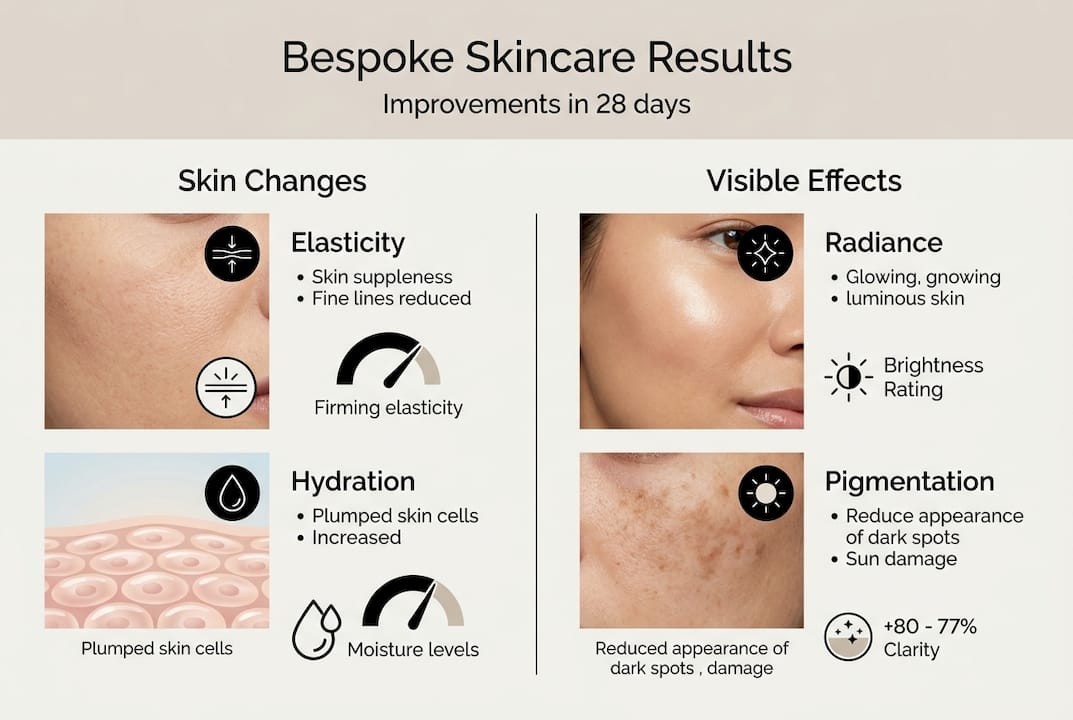
Statistic to note: Hyperpigmentation dropped from 7.2% to 2.3% in just 28 days. That is a clinically significant reduction achieved through targeted, personalised formulation.
To optimise skin health effectively, understanding what each parameter means is important. Sebum secretion affects barrier function and moisture retention. Elasticity reflects collagen and elastin integrity. Pigmentation is driven by melanin activity, which responds well to targeted inhibitors. Erythema indicates inflammation, which personalised formulations can calm without over-stripping the skin.
Generic skincare products may improve one or two of these parameters modestly. Bespoke formulations address all of them simultaneously, because the formula is built around the full picture of your skin. For broader skin health tips and context on how these parameters interact, our journal offers a wealth of clinically grounded guidance.
Realistic expectation management matters here. Bespoke skincare is evidence-backed, but it requires commitment. Consistency with application, adherence to the protocol, and engagement with review appointments all influence outcomes. Results are not passive. They are earned.
Is bespoke skincare right for you?
Having seen compelling results, let us assess whether bespoke skincare is genuinely suited to your needs. Not everyone requires a fully customised formulation, but certain profiles benefit most significantly.
Who benefits most from bespoke skincare:
- Those with persistent, stubborn concerns that have not responded to standard products
- Individuals with therapy-affected skin, such as post-chemotherapy or post-radiation skin, where barrier function is compromised
- Mature skin experiencing reduced collagen production, elasticity loss, and increased pigmentation
- Those with multiple concurrent concerns, for example acne alongside hyperpigmentation or rosacea alongside dehydration
- Individuals with sensitive skin who react to common ingredients in standard formulations
Research confirms that bespoke skincare improves epidermal renewal, hydration, and elasticity particularly well for therapy-affected and mature skin profiles.
| Scenario | Generic skincare | Bespoke skincare |
|---|---|---|
| Mild, single concern | Often sufficient | Beneficial but not essential |
| Multiple concurrent concerns | Limited efficacy | Highly recommended |
| Therapy-affected or sensitive skin | Risk of irritation | Precisely calibrated for safety |
| Mature skin with elasticity loss | Modest improvement | Targeted collagen and elastin support |
| Stubborn hyperpigmentation | Slow, inconsistent | Faster, measurable reduction |
Bespoke skincare is not without limitations. The cost is higher than off-the-shelf alternatives, and it requires access to professional support. It is not a self-directed process. The value lies precisely in the clinical expertise behind the formula, which means skipping the consultation undermines the entire approach.
For those concerned about signs of ageing solutions, bespoke skincare offers a particularly strong case. Addressing elasticity loss, pigmentation, and barrier thinning simultaneously, with ingredients calibrated to your skin’s current state, produces outcomes that no general anti-ageing product can match.
Why bespoke skincare is evolving the industry
Here is something the broader beauty industry is slow to acknowledge: most “personalised” products are not truly personalised. They are segmented. You answer a quiz, receive a product from a pre-existing range, and call it bespoke. That is not bespoke. That is targeted marketing.
True bespoke skincare begins with biometric data, not a questionnaire. It involves clinicians, not algorithms. And it evolves based on measured outcomes, not customer satisfaction surveys. The gap between these two approaches is significant, and it matters enormously for your skin.
We have seen this play out repeatedly at The M-ethod. Clients arrive having tried numerous “personalised” ranges with limited success. Once they undergo genuine skin diagnostics and receive a clinically formulated regimen, the difference is immediate and measurable. The industry is shifting, but slowly. Many brands use the language of personalisation without the science to support it.
Our perspective is clear: demand evidence. Ask for biometric data. Ask what parameters were measured and how the formula was derived. A bespoke skincare transformation should be traceable back to your specific skin profile, not a generalised skin type category.
Pro Tip: Before investing in any bespoke skincare programme, ask the provider for scientific data on their methodology. A credible programme will measure your skin before and after, giving you objective proof of progress.
Explore tailored solutions with The M-ethod
At The M-ethod, we believe that genuinely personalised skincare begins with clinical expertise, not guesswork. Our virtual skin consultations connect you with top clinicians who assess your skin biometrically and design protocols around your specific concerns. Whether you are managing persistent acne, hyperpigmentation, or the visible signs of ageing, we have the tools and expertise to help. Explore our acne treatment serum for targeted blemish control, or browse our NEOSTRATA skin solutions for clinically proven resurfacing and renewal. For a fully tailored experience, visit our bespoke skincare services and take the first step towards measurable, lasting skin transformation.
Frequently asked questions
How does bespoke skincare differ from generic products?
Bespoke skincare is custom-formulated for your individual skin profile, while generic products offer standardised formulas designed for broad audiences. Measurable improvements in hydration, pigmentation, and elasticity consistently distinguish bespoke outcomes from those achieved with standard products.
How long does it take to see results from bespoke skincare?
Clinical data shows that a 28-day bespoke programme can deliver significant improvements in hydration, pigmentation, and elasticity, making four weeks a realistic and evidence-backed timeframe for initial results.
Is bespoke skincare suitable for sensitive or therapy-affected skin?
Yes. Bespoke formulations are particularly well suited to sensitive and therapy-affected skin because ingredients and concentrations are calibrated precisely to your skin’s tolerance, reducing the risk of irritation while improving epidermal renewal and barrier function.
Do you need professional guidance for bespoke skincare?
Professional consultation is essential. Custom formula creation and ongoing clinical review ensure that your regimen is both safe and effective, maximising results in a way that self-directed approaches cannot replicate.