





Why invest in professional skincare devices for real results
TL;DR:
- Professional skincare devices meet strict regulatory standards and deliver targeted, scientifically validated results.
- Consistent use over months, not weeks, is essential for meaningful skin improvements.
- Safety, proper protocols, and personalization are crucial for effective and safe device treatments.
Many of us have spent years reaching for the next promising serum or cream, only to find that the results simply do not match the expectations set by glossy campaigns and glowing testimonials. The truth is that topical products, however well-formulated, can only penetrate so far. When concerns such as deep-set pigmentation, loss of firmness, or persistent acne continue despite a diligent routine, it is a strong signal that your skin needs something more targeted. Professional-grade skincare devices offer a clinically supported answer, working at a cellular level to deliver measurable change where creams alone cannot reach.
Table of Contents
- What makes professional skincare devices different?
- How do professional skincare devices work?
- Are the results worth the investment?
- Key safety, contraindications, and what to know before buying
- Why most people misunderstand professional skincare technology
- How to get started with professional skincare solutions
- Frequently asked questions
Key Takeaways
| Point | Details |
|---|---|
| Clinical technology matters | Devices that meet professional standards deliver more precise, reliable results than standard consumer gadgets. |
| Consistent use is essential | Regular, guided application of professional devices leads to cumulative benefits you can see and feel. |
| Safety isn’t optional | Choosing reputable, appropriately regulated technology safeguards your skin health and investment. |
| Results are gradual | The greatest changes emerge over months of consistent, correct use—don’t expect instant transformation. |
What makes professional skincare devices different?
The term “professional device” is used liberally in the beauty industry, which creates genuine confusion for consumers trying to make informed decisions. In the strictest sense, a professional device is one that meets rigorous regulatory and clinical standards, is independently validated through controlled trials, and operates at output levels or frequencies that consistently drive biological change in the skin. These are not the same as standard consumer gadgets that use marketing language to suggest clinical credibility without the evidence to support it.
The clearest distinction lies in regulatory compliance. Devices that carry superior skin device results are typically those backed by FDA clearance or IEC (International Electrotechnical Commission) compliance. As experts in the field consistently advise, you should prioritise FDA-cleared, IEC-compliant devices with robust clinical backing, because consistency in use will always outperform intensity alone for sustained results. This is a principle we return to throughout this article.
Here is a clear comparison of what separates professional from consumer-grade options:
| Feature | Professional-grade device | Consumer-grade device |
|---|---|---|
| Regulatory clearance | FDA cleared, IEC compliant | Often unverified |
| Clinical evidence | Peer-reviewed trials | Frequently absent |
| Output precision | Calibrated, targeted delivery | Variable, lower efficacy |
| Safety protocols | Built-in safeguards | Limited or none |
| Adaptability | Adjustable to skin concerns | Fixed, general settings |
| Longevity | Built for sustained results | Short-term visible effects |
Key features that define a truly professional device include:
- Precision calibration: Delivering exact energy levels to specific skin layers without unnecessary trauma
- Versatility: Addressing multiple concerns including laxity, pigmentation, or acne within the same technology
- Clinical reproducibility: Results that can be replicated across diverse skin types and tones
- Safety engineering: Automatic cut-offs, skin sensors, and validated treatment protocols
If you are exploring home peeling technology as part of your device-based routine, it is worth understanding that even gentle at-home exfoliation methods benefit from clinical context and professional guidance to optimise results and minimise risk.
How do professional skincare devices work?
Now that we understand what makes a device professional, let us decode how these technologies actually renew skin at a cellular level. The three most established categories are microcurrent, LED (light-emitting diode) therapy, and radiofrequency. Each works through a distinct mechanism, targeting different skin concerns with impressive clinical evidence behind them.
Microcurrent technology delivers low-level electrical current, closely mimicking the body’s own bioelectrical signals. This re-educates and contracts the facial muscles, while simultaneously stimulating ATP (adenosine triphosphate) production, the cellular fuel that powers collagen and elastin synthesis. Research indicates that microcurrent builds cumulative effects with daily use, providing genuine muscle toning and lifting without inducing fatigue, provided the device uses the correct waveform. The key word here is cumulative. Microcurrent rewards those who commit to regular sessions rather than those seeking a one-off fix.
LED therapy operates through photobiomodulation, the process by which specific wavelengths of light are absorbed by chromophores within the skin cells. Red light (typically 630 to 700 nanometres) stimulates fibroblasts to produce collagen, reducing fine lines and improving skin texture. Near-infrared light penetrates deeper to accelerate tissue repair. Blue light (around 415 nanometres) targets the bacteria responsible for acne by generating reactive oxygen species that disrupt bacterial membranes. Clinical trials have shown consistent improvements in acne severity, post-inflammatory hyperpigmentation, and skin tone with twice-weekly LED treatments over an eight to twelve week period.
Radiofrequency (RF) delivers thermal energy into the dermis, inducing controlled collagen denaturation and triggering a wound-healing response that stimulates fresh collagen production. The results are firmer, smoother skin with improved elasticity. RF is particularly effective for skin laxity concerns and can be paired with microneedling in clinic settings for amplified collagen induction.

For a clear overview of device mechanisms and their primary applications, see the table below:
| Technology | Mechanism | Primary concerns addressed | Recommended frequency |
|---|---|---|---|
| Microcurrent | Bioelectrical muscle re-education, ATP stimulation | Laxity, contouring, fine lines | Daily to 5x per week |
| LED (red and near-infrared) | Photobiomodulation, collagen stimulation | Ageing, redness, wound healing | 3 to 5x per week |
| LED (blue) | Antimicrobial photobiomodulation | Active acne, breakout management | 3x per week |
| Radiofrequency | Thermal collagen remodelling | Laxity, deep wrinkles, texture | 1 to 3x per week |
The device clinical results we see across these technologies are most impressive when devices are used consistently, within the validated protocols, and in combination with targeted topical skincare. The right pairing of ingredients and device technology accelerates outcomes meaningfully.
Pro Tip: When choosing advanced skincare devices, prioritise devices that specify their output parameters, such as current intensity in microamperes or light wavelength in nanometres, on their packaging or in their clinical documentation. Vague claims without measurable specifications are a red flag.
Are the results worth the investment?
With technical knowledge in hand, the natural next question is whether these devices truly justify their investment, both financially and in terms of outcome. The short answer is yes, but with important nuance.
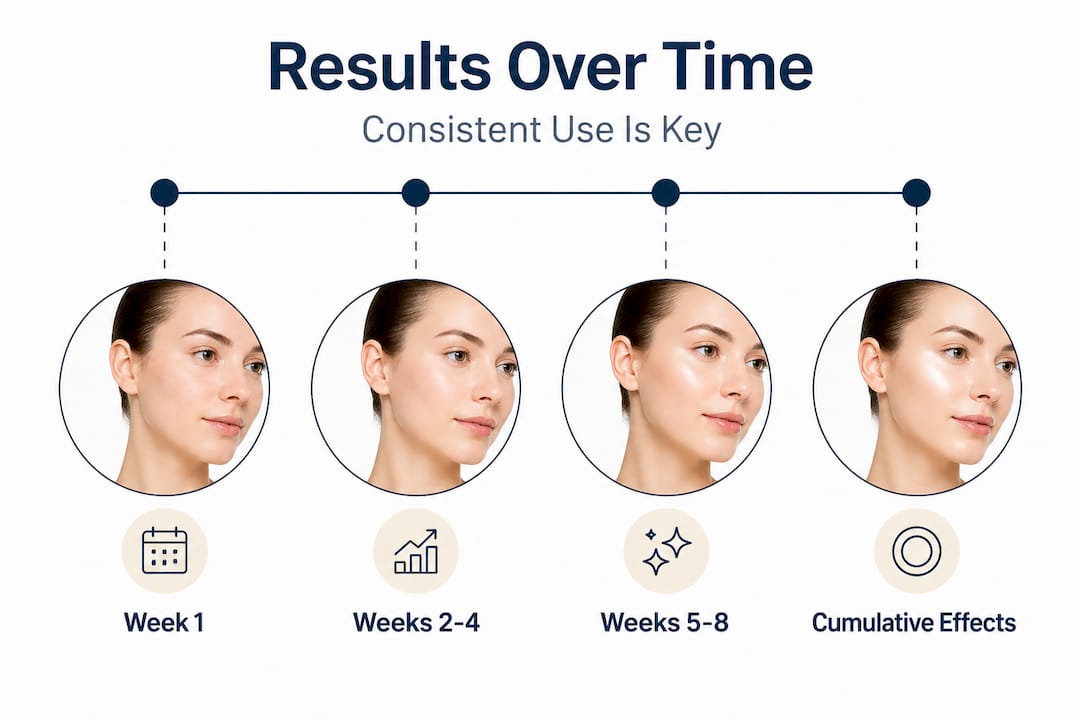
Realistic timelines matter enormously here. Most users begin to notice initial improvements in tone, texture, and hydration within four to six weeks of consistent use. However, the structural changes that address real concerns, specifically measurable collagen increase, reduction in hyperpigmentation depth, or meaningful lifting, typically become visible at the three to six month mark. This mirrors the timeline for visible skincare protocols that combine devices with prescription-strength actives. Expecting dramatic transformation after two weeks is a recipe for disappointment and abandonment of a genuinely effective tool.
From a cost-benefit perspective, the comparison to in-clinic treatments is instructive:
- A single professional RF treatment in a London clinic typically costs between £150 and £400 per session, with courses of six recommended for optimal results
- A high-quality RF home device costs between £250 and £600 as a one-off investment, with results that accumulate over months and years of use
- LED panel treatments at clinics are priced at £50 to £150 per session; a quality at-home LED mask starts from £200 and allows daily use indefinitely
The true value of investing in premium skincare technology lies in the ability to maintain results between clinic visits and to compound gains that would otherwise plateau.
“Consistency is the most powerful variable in professional device outcomes. A calibrated device used correctly three times per week will always outperform a premium device used sporadically. Build the habit before you buy the device.”
Common pitfalls that reduce return on investment include:
- Irregular usage: The single greatest factor in poor outcomes is inconsistency
- Using without conductivity gel or serum: Microcurrent and RF devices require a medium to conduct energy safely and effectively
- Ignoring skin preparation: Clean, properly prepared skin dramatically improves device efficacy
- Combining incompatible technologies: Some devices should not be used on the same day as active exfoliants such as AHAs or retinoids
As research confirms daily microcurrent builds cumulative lifting effects over time, the discipline of regular use is the true investment, not simply the purchase price.
Key safety, contraindications, and what to know before buying
Before making a purchase, it is essential to ensure safety and appropriateness for your individual situation. Professional devices are powerful precisely because they interact with your biology at meaningful levels. That power demands respect.
Important contraindications to understand before you begin:
- Microcurrent: Not suitable for individuals with pacemakers, epilepsy, or during pregnancy. Metal implants in the treatment area and active skin infections also preclude use
- LED therapy: Those with photosensitivity conditions or taking photosensitising medications (including certain antibiotics and retinoids prescribed at high doses) should approach LED with caution. As clinical sources confirm, photosensitivity contraindications for LED are a genuine and important safety consideration
- Radiofrequency: Active rosacea flares, open wounds, and areas with known vascular abnormalities require avoidance. Those with a history of keloid scarring should seek professional guidance before commencing RF at home
When evaluating any device for purchase, use this checklist:
- Does it carry FDA clearance or CE marking for your specific country of use?
- Is there peer-reviewed clinical evidence published for this specific device, not just the technology category?
- Does the brand provide clear protocols including contraindication guidance?
- Is technical support and guidance available post-purchase?
- Are replacement parts, such as probe heads or filters, accessible and reasonably priced?
Understanding how technology transforms skincare also means understanding that preparation is foundational. Before any device session, proper cleansing is non-negotiable. Double cleansing prior to device use removes the residual SPF, makeup, and sebum that would otherwise impede energy transmission and increase the risk of surface irritation. This step is so commonly skipped, yet it materially affects both safety and outcome.
When in doubt, consult a qualified clinician before investing in any device, particularly if you have active skin concerns or underlying health conditions. The peace of mind and the personalised guidance are worth every moment of that conversation.
Why most people misunderstand professional skincare technology
Let us step back and consider why so many consumers get professional skincare technology fundamentally wrong, even those who are otherwise well-informed and serious about their skin.
The most widespread misunderstanding is the expectation of an immediate, visible “wow” effect after the first session. This expectation is fuelled by brand marketing that foregrounds before-and-after photographs without context, and by influencer content that conflates the flush of improved circulation immediately post-treatment with actual structural skin change. That initial glow is real but transient. It is not the result you are working towards.
The genuine value of professional devices lies in accumulation. Every correctly executed session deposits a small biological stimulus into your skin. Collagen synthesis, ATP production, and cellular repair are slow, compounding processes. They are not dramatic events. The person who uses their LED mask faithfully four times a week for six months will look materially different at the end of that period than someone who used it intensely for three weeks then abandoned it. That is not a metaphor. That is the actual biology.
The second misunderstanding is that higher intensity means faster results. We see this play out constantly: consumers crank devices to maximum settings in the hope of accelerating outcomes, and instead they compromise the skin barrier, trigger inflammation, and ultimately set their progress back. Clinical protocols are calibrated for a reason. Respecting them is not timidity; it is scientific literacy.
We also believe that personalisation is the true differentiator that most people overlook. A long-term skin investment in devices only pays off when the technology is matched precisely to your skin’s concerns, type, and biology. A generalised approach treats your skin like a category rather than an individual. The most sophisticated users are those who integrate device protocols with prescription-strength topicals and regular professional assessment, adjusting as their skin evolves across seasons and life stages. That is the approach that genuinely changes skin over the years.
Progress over perfection is not a platitude here. It is the operating principle of every successful device user we have worked with.
How to get started with professional skincare solutions
If you are ready to take your skin beyond what topical products alone can achieve, we are here to guide that journey with evidence at every step. At The M-ethod Skin, we have curated a portfolio of clinically proven solutions for the concerns that matter most to our clients, from active acne to structural ageing. Our targeted acne solutions are formulated alongside device protocols to address breakouts at the source, while our range of science-backed skincare ensures that your topical routine works in harmony with the technology you use. We also offer virtual consultations with our expert clinicians, so your device and product choices are always grounded in professional assessment rather than guesswork. Because the best results come from the right combination, not the most expensive one.
Frequently asked questions
Are professional skincare devices safe for all skin types?
Most professional-grade devices are safe for the majority of users, but important contraindications exist for technologies including microcurrent and LED, particularly for those with photosensitivity or certain medical conditions. Always review contraindication guidance thoroughly and consult a professional if you have any doubt.
How long does it take to see results with professional devices?
Initial improvements in skin tone and texture are often visible within four to six weeks, but meaningful structural results require consistent use over several months. Daily microcurrent use builds cumulative effects over time, which illustrates why patience and regularity are the most important factors in any device protocol.
How do I choose a reputable professional skincare device?
Select devices that carry FDA clearance or IEC compliance, have peer-reviewed clinical evidence, and come with clear usage protocols. Experts consistently advise to prioritise devices with clinical backing, as regulatory credentials and consistent use together deliver the most reliable results.
Can I use devices at home or do I need a clinic treatment?
Many professional-grade devices are now validated for safe and effective home use when instructions are followed carefully. Combining home device protocols with periodic in-clinic treatments, such as those offered in our London and Athens clinics, typically delivers the most comprehensive and lasting outcomes.