





What is the staged skincare approach?
TL;DR:
- The staged skincare approach introduces products in three phases: Habit, Prevention, and Correction, to build skin tolerance gradually. It emphasizes patience, proper order, and individual adaptation to improve efficacy and reduce irritation. Following this method helps achieve healthier skin by respecting biological and ingredient compatibility.
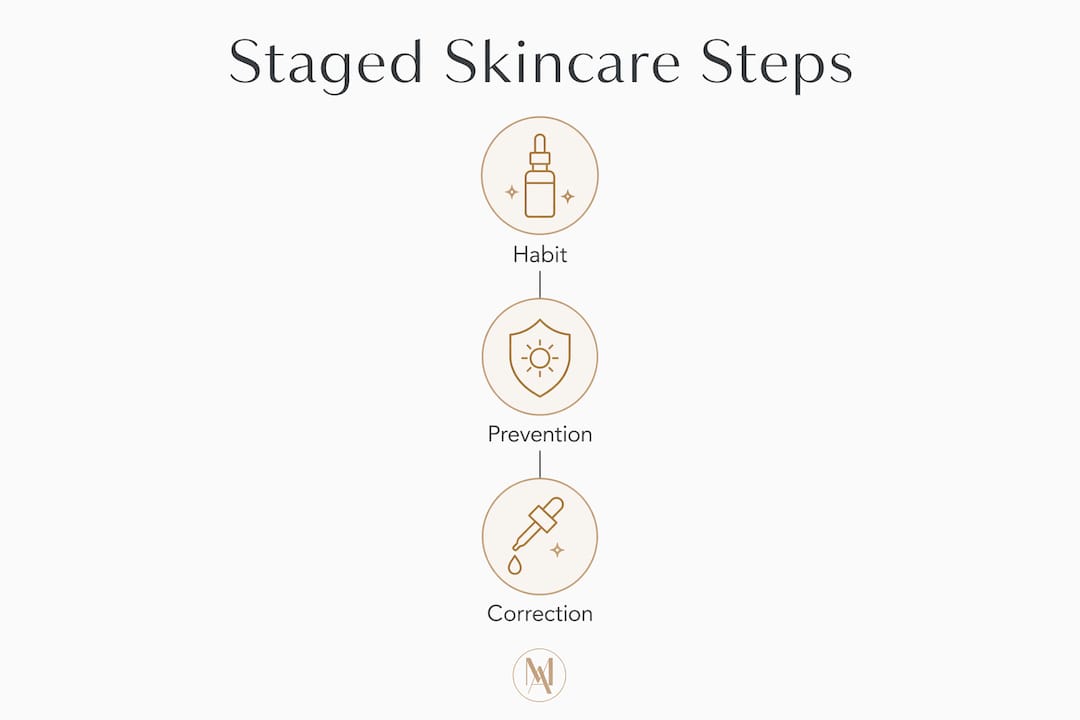
The staged skincare approach is a phased method of introducing skincare products in a deliberate sequence: Habit, Prevention, and Correction. Rather than loading your skin with actives from day one, this method builds a strong foundation first, then adds targeted treatments progressively. Dermatological guidelines support this model, noting it reduces irritation and confusion compared to complex multi-step routines. The result is a skincare regimen that your skin can actually absorb, tolerate, and respond to over time.
What is the staged skincare approach and how does it work?
The staged skincare approach is defined as a structured, sequential method of building a skincare routine in three distinct phases. Each phase introduces a new layer of complexity only once the previous one is established. This prevents your skin from being overwhelmed by too many actives at once, which is one of the most common causes of redness, breakouts, and product confusion.
The three stages are:
- Habit: The foundation. This stage covers the non-negotiables: a gentle cleanser, a hydrating moisturiser, and a broad-spectrum SPF. You follow this routine consistently for 8–12 weeks before moving on. The goal is to stabilise your skin barrier and establish a daily discipline.
- Prevention: Once your skin is settled, you introduce antioxidants such as vitamin C, enhanced sun protection, and barrier-supporting ingredients like niacinamide. These products protect against environmental damage and slow the visible signs of ageing before they take hold.
- Correction: The final stage introduces targeted actives. Retinoids, chemical exfoliants such as AHAs and BHAs, and pigmentation treatments fall here. These are added one at a time, with rest days built in to monitor your skin’s response.
The logic behind the sequence is straightforward. Your skin needs a functioning barrier before it can tolerate correction actives. Introducing retinol onto a compromised or reactive skin barrier leads to peeling, sensitivity, and frustration. The staged method removes that risk by design.
Pro Tip: Give each new product a full 8–12 weeks before judging its effectiveness. Skin cell turnover takes approximately four weeks, so meaningful results require patience, not speed.

Why does staging skincare products actually matter?
Staging matters because product order and timing directly affect how well ingredients penetrate and perform. Dermatologists confirm that layering from thinnest to thickest texture ensures better penetration and efficacy. Applying a thick moisturiser before a water-based serum creates a physical barrier that blocks the serum from reaching the skin. That means expensive actives simply sit on the surface and do nothing.
There is also the question of pH compatibility. Vitamin C serums work best at a low pH, while retinoids perform optimally at a neutral pH. Applying them back-to-back without a waiting period can neutralise both. Staging your routine gives each ingredient the conditions it needs to function properly.
The science behind retinol timing illustrates this perfectly. The Retinol Staging method applies cleanser and moisturiser earlier in the evening, then introduces retinol later. This sequence boosts absorption and reduces the peeling and redness that put so many people off retinol entirely. The ingredient has not changed. The timing has.
Staged routines also function as a form of precision skincare. Rather than following a rigid protocol year-round, precision skincare adjusts product intensity and selection based on your skin’s feedback and seasonal changes. What works in summer may need recalibrating in winter. A staged approach builds in that flexibility from the start.
“Layering products without logic, ignoring texture order, renders serums ineffective. The sequence is not a preference. It is the mechanism by which products work.”
The numbered principles that underpin effective staging are:
- Apply products from lowest to highest viscosity (water-based serums before oils and creams).
- Respect pH windows. Allow 20–30 minutes between low-pH actives and other treatments.
- Introduce one new product at a time to isolate any reaction.
- Observe your skin for at least four weeks before adding the next product.
- Adjust for season. Richer textures in winter, lighter formulations in summer.
How to implement a staged skincare routine for your skin concerns
Building a staged routine starts with an honest assessment of your skin’s current condition. Before you introduce any actives, you need to know your baseline. Is your skin barrier intact? Are you dealing with active breakouts, sensitivity, or dehydration? The answers determine where you start and how quickly you progress.
Here is how to build your staged skincare routine step by step:
- Start with the Habit stage. Choose a gentle cleanser, a moisturiser suited to your skin type, and a broad-spectrum SPF 30 or higher. Use this trio morning and evening for 8–12 weeks. Do not add anything else during this period.
- Assess your skin at the 8-week mark. If your skin feels balanced, hydrated, and calm, you are ready to move to Prevention. If it is still reactive, extend the Habit stage.
- Introduce Prevention products one at a time. Start with a vitamin C serum in the morning. Use it for four weeks before adding anything else. Then consider a niacinamide product or a more targeted SPF.
- Add Correction actives carefully. Begin with the mildest option available. A low-concentration retinol (0.25% or 0.5%) two nights per week is a sensible starting point. Increase frequency only when your skin tolerates it without reaction. Structured skincare systems consistently show superior outcomes over uncoordinated product collections.
- Track changes over an 8–12 week cycle. Photograph your skin in consistent lighting at the start of each new stage. This removes the guesswork and gives you real evidence of progress.
- Adjust seasonally. Skin behaves differently across the year. Heavier moisturisers in colder months, lighter textures in summer. Staged routines are designed to adapt, not stay fixed.
Professional consultations add significant value at the Correction stage. A clinician can identify whether your skin concerns require prescription-strength actives, in-clinic treatments such as microneedling or chemical peels, or a combination of both. Professional treatments timed to complement at-home routines build cumulative benefits that products alone cannot achieve.
Pro Tip: Keep a simple skin diary. Note the date you introduced each product, any reactions within 48 hours, and your overall skin condition at the four-week mark. This makes troubleshooting straightforward and removes the guesswork entirely.
How does staged skincare compare to other routine approaches?
The staged approach is not the only method people use, but it is the one most supported by dermatological evidence. Understanding where it sits relative to other popular approaches helps clarify why it works.
| Routine type | Structure | Personalisation | Irritation risk | Long-term results |
|---|---|---|---|---|
| Staged (Habit, Prevention, Correction) | Sequential, phased | High. Adapts to skin feedback | Low. Products introduced gradually | Strong. Builds cumulative improvement |
| Multi-step complex routine (10+ products) | Layered but often random | Low. Fixed product order | High. Too many actives at once | Variable. Difficult to isolate what works |
| Minimalist routine (2–3 products, no actives) | Simple | Moderate | Very low | Limited for specific concerns |
| Medical-grade system | Protocol-driven | Very high. Clinician-guided | Low. Professionally managed | Highest. Combines products and treatments |
The multi-step approach, popularised by Korean skincare culture, is not inherently wrong. The problem is that most people adopt the product count without the underlying logic. Applying ten products in the wrong order, or without understanding ingredient compatibility, reduces the effectiveness of even the most expensive serums.
The minimalist approach works well for maintaining healthy skin but falls short when addressing specific concerns like hyperpigmentation, acne, or visible ageing. It lacks the correction phase that drives real change.
The staged skincare method sits between these extremes. It is structured enough to deliver results, flexible enough to adapt, and evidence-based enough to trust.
Key takeaways
A staged skincare routine, built across Habit, Prevention, and Correction phases, delivers better results than random product layering because it respects skin biology, ingredient compatibility, and your skin’s capacity to adapt.
| Point | Details |
|---|---|
| Three-phase structure | Habit, Prevention, and Correction stages introduce products progressively to protect the skin barrier. |
| Patience is non-negotiable | Allow 8–12 weeks per stage before assessing results or adding new products. |
| Order affects efficacy | Apply products from thinnest to thickest texture to maximise ingredient absorption. |
| Seasonal adaptation | Adjust product intensity and texture based on your skin’s response across the year. |
| Professional guidance amplifies results | Clinician-led correction stages and timed treatments build outcomes beyond products alone. |
What I have learned from watching people rush the correction stage
I have seen the same pattern repeat itself more times than I can count. Someone builds a solid Habit routine, their skin looks the best it has in years, and then they add three actives in the same week because they are impatient for results. Within a fortnight, they are dealing with a compromised barrier, sensitivity flares, and no idea which product caused the problem.
The staged approach is not just a framework. It is a discipline. The Habit stage feels underwhelming because nothing dramatic happens. That is the point. You are building the foundation that makes everything else work. Skipping it, or rushing through it, is the single most common mistake I observe.
The other thing worth saying plainly: consistency beats complexity every time. A three-product routine used faithfully for twelve weeks will outperform a ten-product routine used sporadically. Skin responds to regularity. It does not reward ambition without commitment.
If you are in the Correction stage and your skin is reacting, the answer is almost never to add more products. It is to strip back to Habit, let your barrier recover, and reintroduce actives more slowly. Listening to your skin is a skill. The staged method teaches you how to develop it. You can read more about building a skincare regimen that genuinely works for your skin type and concerns.
— Jess
Staged skincare at Them-ethod: products built for every phase
Them-ethod curates its product selection with staged routines in mind. For the Habit stage, the cleanser collection includes gentle, hydrating formulations that cleanse without stripping the skin barrier. For the Correction stage, the PCA Clearskin Acne Treatment Serum targets active breakouts with clinically tested actives, making it a precise choice for those addressing acne in their correction phase. The NEOSTRATA collection offers advanced exfoliants and antioxidants suited to both Prevention and Correction stages. Every product at Them-ethod is selected for clinical efficacy and compatibility with structured, phased routines.
FAQ
What is the staged skincare approach in simple terms?
The staged skincare approach is a method of building a routine in three phases: Habit, Prevention, and Correction. Each phase introduces new products only after the previous stage has been established and tolerated.
How long should each stage of a skincare routine last?
Dermatological guidelines recommend spending 8–12 weeks on the Habit stage before progressing. Each new product added in later stages should also be observed for at least four weeks.
Can I use retinol in the Habit stage?
Retinol belongs to the Correction stage, not the Habit stage. Introducing it too early, before the skin barrier is stable, increases the risk of peeling, redness, and sensitivity.
Why does the order of skincare products matter?
Applying products from thinnest to thickest texture ensures each ingredient penetrates properly. Applying a thick cream before a serum blocks the serum from reaching the skin, reducing its effectiveness.
Is the staged skincare method suitable for sensitive skin?
The staged approach is particularly well suited to sensitive skin. Starting with a minimal three-step Habit routine allows the skin barrier to strengthen before any actives are introduced, significantly reducing the risk of irritation.