




The role of sunscreen in anti-aging: 2026 guide
TL;DR:
- Sunscreen is the most scientifically supported tool for preventing premature skin aging by blocking UVA and UVB rays that damage collagen and DNA. Consistent use of broad-spectrum SPF 30 or higher significantly reduces molecular signs of aging, including epigenetic age acceleration. Applying sufficient quantities daily, indoors or outdoors, enhances skin health and supports other anti-aging treatments, making sunscreen an essential foundation for youthful skin.
Sunscreen is the single most evidence-backed tool for preventing premature skin aging, a process dermatologists call photoaging. While chronological aging is driven by genetics and time, photoaging is caused by cumulative ultraviolet radiation exposure and accounts for up to 90% of visible skin changes including wrinkles, pigmentation, and loss of elasticity. The role of sunscreen in anti-aging is not cosmetic folklore. It is grounded in molecular science, FDA guidance, and a growing body of clinical research that confirms daily UV protection preserves collagen, genomic integrity, and skin cell function at every age.
How does ultraviolet radiation contribute to skin aging?
Ultraviolet radiation reaches the skin in two primary forms: UVA and UVB. UVB rays are shorter in wavelength and responsible for surface-level sunburn, while UVA rays penetrate deeper into the dermis, breaking down collagen and elastin fibres over time. This distinction matters because most people associate sun damage with visible burning, when the more insidious aging process is happening silently beneath the surface every day.
At the molecular level, UV exposure triggers a cascade of damage. DNA double-strand breaks, oxidative stress from reactive oxygen species, and the activation of matrix metalloproteinases (enzymes that degrade collagen) all accumulate with repeated exposure. The result is a skin structure that loses its scaffolding faster than it can rebuild it.
“Photoaging is not a single event but a cumulative biological debt. Each unprotected exposure adds to a molecular burden that eventually surfaces as visible aging.”
Photoaging differs from chronological aging in one critical way: it is largely preventable. Chronological aging reflects intrinsic biological decline. Photoaging reflects environmental insult. Research published in Scientific Reports in 2026 confirms that UV-induced epigenetic changes alter DNA methylation patterns linked to accelerated biological aging, a process measured by markers such as GrimAge. This means UV exposure does not just damage the surface. It rewrites the skin’s biological clock.
Key mechanisms of UV-driven skin aging include:
- Collagen degradation: UVA activates enzymes that break down Type I and Type III collagen, reducing skin firmness.
- DNA damage: UVB creates pyrimidine dimers that impair cellular repair and increase mutation risk.
- Oxidative stress: Both UVA and UVB generate free radicals that destabilise cell membranes and mitochondrial function.
- Epigenetic disruption: Repeated UV exposure alters gene expression patterns governing skin repair and immune response.
What features make sunscreen effective for anti-aging protection?
Not all sunscreens offer equal anti-aging protection. The most important distinction is broad-spectrum coverage. SPF ratings measure UVB protection only, meaning a product labelled SPF 50 without broad-spectrum certification leaves you fully exposed to the UVA rays responsible for collagen breakdown and photoaging. For anti-aging purposes, broad-spectrum is the non-negotiable specification.
Chemical vs mineral sunscreens for anti-aging
| Feature | Chemical sunscreens | Mineral sunscreens |
|---|---|---|
| Active ingredients | Avobenzone, octinoxate, oxybenzone | Zinc oxide, titanium dioxide |
| Mechanism | Absorb UV and convert to heat | Reflect and scatter UV rays |
| UVA coverage | Varies by formula | Broad, especially zinc oxide |
| Skin sensitivity | May irritate reactive skin | Generally well tolerated |
| Texture | Lighter, easier to layer | Can leave white cast; improving with newer formulas |
| Best for | Daily urban use under makeup | Sensitive, post-procedure, or reactive skin |
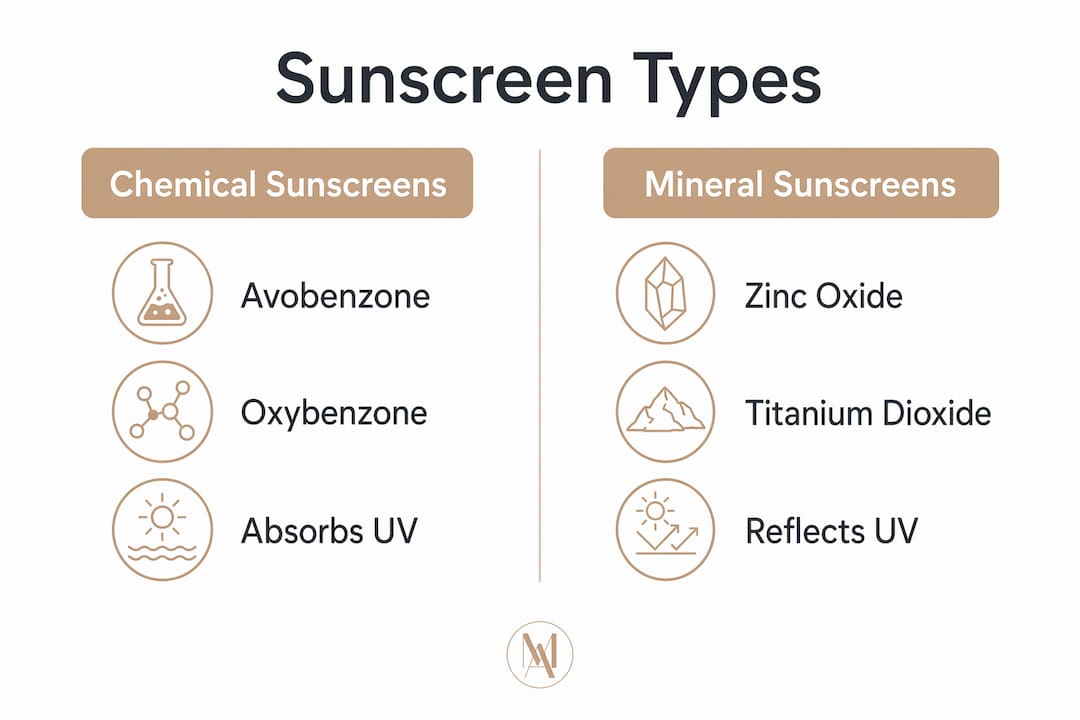
Both categories can deliver effective anti-aging protection when formulated correctly. The best sunscreen for aging skin is the one you will apply consistently and in sufficient quantity. Mineral formulas containing zinc oxide are particularly favoured by dermatologists for post-treatment skin or those using active ingredients like retinoids.
SPF 30 blocks approximately 97% of UVB rays, while SPF 50 blocks around 98%. The difference sounds marginal, but for daily use over decades, that incremental protection compounds meaningfully. The FDA recommends SPF 30 or higher as the baseline for effective photoaging prevention, applied in sufficient quantity and reapplied every two hours during sun exposure.
Pro Tip: Apply your sunscreen as the final step of your morning skincare routine, after serums and moisturiser, to avoid diluting the active UV filters.
What does recent research reveal about sunscreen’s molecular anti-aging effects?
The most compelling evidence for sunscreen’s anti-aging role now comes from molecular biology rather than observational dermatology. A landmark 2026 study published in Scientific Reports examined the effect of SPF 30 application on the skin’s transcriptome and epigenome under repeated UV exposure.
“SPF 30 application substantially constrains UV-induced gene expression changes and DNA methylation shifts, preserving the molecular architecture of healthy skin.”
The findings were striking. Participants who applied SPF 30 consistently showed significantly reduced epigenetic age acceleration compared to unprotected skin, as measured by GrimAge, one of the most validated biological age clocks in current research. This means sunscreen does not merely delay visible wrinkles. It actively prevents the upstream molecular events that drive them.
| Molecular marker | Effect without sunscreen | Effect with SPF 30 |
|---|---|---|
| DNA methylation (GrimAge) | Accelerated biological aging | Largely preserved baseline |
| Transcriptome disruption | Widespread gene expression changes | Substantially constrained |
| Collagen-related gene activity | Suppressed repair pathways | Maintained near-normal function |
| Immune response genes | Dysregulated | Stabilised |
The study also confirmed that SPF 30 stabilises the skin’s epigenome, protecting cellular signalling and DNA repair mechanisms that govern how skin ages at a biological level. For anyone investing in retinoids, peptides, or professional treatments, this research reinforces a fundamental truth: those treatments work on a foundation that UV damage actively erodes. Sunscreen protects that foundation.
How should sunscreen be used in daily anti-aging skincare routines?
Correct application is where the science meets real-world results. Most people apply far less sunscreen than clinical studies use, which means the SPF on the label is rarely the SPF on their skin. Under-application reduces effective SPF substantially, undermining the anti-aging benefits you are counting on.
Follow these steps to maximise protection:
- Apply the right quantity. Use approximately one ounce (roughly a shot glass) for full body coverage. For the face and neck alone, a generous pea-sized amount is insufficient. A five-pence coin-sized amount is closer to the mark.
- Time your application correctly. Apply sunscreen 15 to 30 minutes before sun exposure to allow chemical filters to bind to the skin or mineral filters to settle.
- Reapply every two hours. UV filters degrade with sun exposure, sweat, and physical contact. Reapplication is not optional for sustained anti-aging protection.
- Use it year-round, including indoors. UVA rays penetrate standard glass, meaning office windows and car windscreens expose you to photoaging-level radiation daily. UCHealth advises daily sunscreen regardless of season or weather conditions.
- Layer with antioxidant serums. Vitamin C serums, for example, neutralise free radicals that UV filters do not fully block. Combining antioxidants with sunscreen creates a synergistic defence against photoaging.
Pro Tip: If you use retinoids or other photoactive ingredients at night, daily SPF use is not optional. Retinoids increase photosensitivity, and unprotected UV exposure will directly counteract the collagen-building work those ingredients are doing.
Patients using prescription-strength retinoids or chemical exfoliants must prioritise sunscreen use to protect sensitised skin and preserve the benefits of their treatment. This is a point we emphasise consistently at Them-ethod when advising clients on addressing ageing early.
Common misconceptions that reduce sunscreen’s anti-aging effectiveness
Several persistent myths lead people to use sunscreen incorrectly, significantly reducing its protective value. Understanding these is as important as knowing the science.
- “A high SPF number is enough.” SPF measures UVB protection only. Without broad-spectrum coverage, UVA rays continue to break down collagen and accelerate photoaging regardless of how high the SPF number is. Broad-spectrum is the key metric for anti-aging, not SPF alone.
- “I don’t need sunscreen indoors.” UVA penetrates glass. Sitting near a window for several hours each day accumulates meaningful UV exposure over months and years.
- “Cloudy days don’t require sunscreen.” Up to 80% of UV radiation passes through cloud cover. Overcast conditions offer no reliable protection against photoaging.
- “I applied it this morning, so I’m covered all day.” UV filters degrade. Without reapplication every two hours, protection drops significantly by mid-morning for most people.
- “The texture bothers me, so I use less.” Applying a thin layer to avoid the feel of sunscreen is one of the most common ways people inadvertently reduce their effective SPF. Finding a formula you genuinely enjoy wearing is a practical anti-aging decision, not a luxury.
The solution to most of these issues is finding a sunscreen formulation that suits your skin type and lifestyle. Lightweight fluid SPF 50 formulas, tinted mineral options, and SPF-infused moisturisers all make daily compliance far more achievable.
Key takeaways
Daily broad-spectrum sunscreen is the most evidence-backed intervention for preventing photoaging, protecting collagen, and preserving the skin’s molecular integrity against UV-driven biological age acceleration.
| Point | Details |
|---|---|
| Broad-spectrum is non-negotiable | SPF alone does not protect against UVA, the primary driver of collagen breakdown and photoaging. |
| Molecular protection is proven | 2026 Scientific Reports research confirms SPF 30 prevents epigenetic age acceleration and preserves skin cell function. |
| Quantity and consistency matter | Under-application and skipped days reduce real-world SPF significantly, undermining anti-aging benefits. |
| Indoor and year-round use is necessary | UVA penetrates glass and cloud cover, making daily application essential regardless of season or setting. |
| Sunscreen supports other treatments | Retinoids and antioxidant serums deliver better results when UV damage is actively prevented each day. |
Why sunscreen is the anti-aging investment most people underestimate
By Jess
After years of working with clients across a wide range of skin concerns, the pattern I see most consistently is this: the people who have invested heavily in serums, treatments, and professional procedures but skipped daily SPF are often the ones whose results plateau fastest. Sunscreen is not a supporting player in an anti-aging routine. It is the foundation everything else is built on.
What surprises most clients is the molecular evidence. They expect sunscreen to prevent sunburn. They do not expect it to preserve their skin’s biological age at the epigenetic level. When I share the 2026 Scientific Reports findings, the conversation shifts. This is not about avoiding a tan. It is about protecting the cellular machinery that keeps skin functioning like younger skin.
My honest observation is that adherence is the real challenge, not knowledge. Most people know they should wear SPF. The gap is in daily follow-through, especially on grey days or when working from home. The solution is not willpower. It is finding a formula you actually want to apply. At Them-ethod, we guide clients towards textures and formulations that suit their skin type precisely because compliance is where the anti-aging benefit lives. You can read more about SPF in daily skincare and why the research now makes it non-negotiable.
— Jess
Build your anti-aging routine with Them-ethod
At Them-ethod, we curate sunscreens and complementary treatments specifically for clients who take their skin health seriously. Our selection includes broad-spectrum SPF 30 and SPF 50 formulas suited to different skin types, alongside the active ingredients that work best alongside daily UV protection. The Medik8 Advanced Day Ultimate Protect SPF 50 is a clinic favourite for its antioxidant-rich formula that goes beyond basic UV filtration. For night-time repair, PCA Retinol Night 0.5% pairs with daily SPF to address collagen loss from both directions. Explore the full NEOSTRATA collection for science-led anti-aging support that complements your sunscreen routine at every step.
FAQ
What is the role of sunscreen in anti-aging?
Sunscreen prevents photoaging by blocking UVA and UVB radiation that breaks down collagen, causes DNA damage, and accelerates epigenetic biological aging. Daily broad-spectrum SPF use is the most evidence-backed method for preserving youthful skin structure over time.
Does SPF 30 actually make a difference at the molecular level?
Yes. A 2026 Scientific Reports study confirmed that SPF 30 application constrains UV-induced gene expression changes and DNA methylation shifts, preserving the skin’s epigenome and slowing biological age acceleration measurably.
Do I need sunscreen indoors or on cloudy days?
UVA rays penetrate standard glass windows and up to 80% of UV radiation passes through cloud cover, so indoor and overcast-day exposure still drives photoaging. Dermatologist Dr. Anjali Mahto recommends daily sunscreen regardless of weather or setting.
How much sunscreen should I apply for anti-aging benefits?
The FDA advises approximately one ounce for full body coverage. Applying less than the recommended quantity reduces the effective SPF significantly below the labelled figure, directly reducing anti-aging protection.
Can sunscreen replace other anti-aging treatments?
Sunscreen prevents UV damage but does not reverse existing signs of aging. It works best as the foundation of a routine that also includes retinoids, antioxidant serums, and professional treatments, each of which delivers better results when UV damage is actively controlled.