




Step by step skin analysis: Achieve personalised results
TL;DR:
- Proper skin analysis is crucial for personalized skincare success, beyond just product quality.
- Combining visual and tactile assessments with history helps identify true skin concerns.
- Professional imaging and expert guidance offer deeper insights than consumer apps, ensuring effective treatments.
Spending a small fortune on premium skincare products only to watch persistent breakouts, uneven pigmentation, or fine lines continue to deepen is one of the most frustrating experiences in modern self-care. The issue is rarely the quality of the products. More often, it is the absence of a proper skin analysis. Without understanding your skin’s true needs, even the most sophisticated formulas can miss the mark entirely. This guide walks you through a structured, evidence-backed approach to skin analysis, helping you identify what your skin actually requires so you can build a routine that delivers real, measurable results.
Table of Contents
- What you need for a thorough skin analysis
- Step by step: Performing an effective skin analysis
- Interpreting results and avoiding common mistakes
- From analysis to action: Personalising your skincare programme
- Why most skin analyses fail: A practitioner’s view
- Take your skin results further with expert solutions
- Frequently asked questions
Key Takeaways
| Point | Details |
|---|---|
| Preparation matters | Having the right tools and clean skin ensures more accurate skin analysis results. |
| Stepwise approach works | Following a structured analysis helps target ageing, pigmentation, and acne more effectively. |
| Professional insight counts | Expert consultation and imaging catch issues that self-assessment can easily miss. |
| Personalisation drives improvement | Tailoring your routine to your unique findings delivers better and faster skincare results. |
What you need for a thorough skin analysis
Before diving into the analysis steps, make sure you have everything in place for best results. A skin analysis is only as accurate as the conditions in which you perform it. Rushing through it with a dirty face under poor lighting is likely to lead you in the wrong direction.
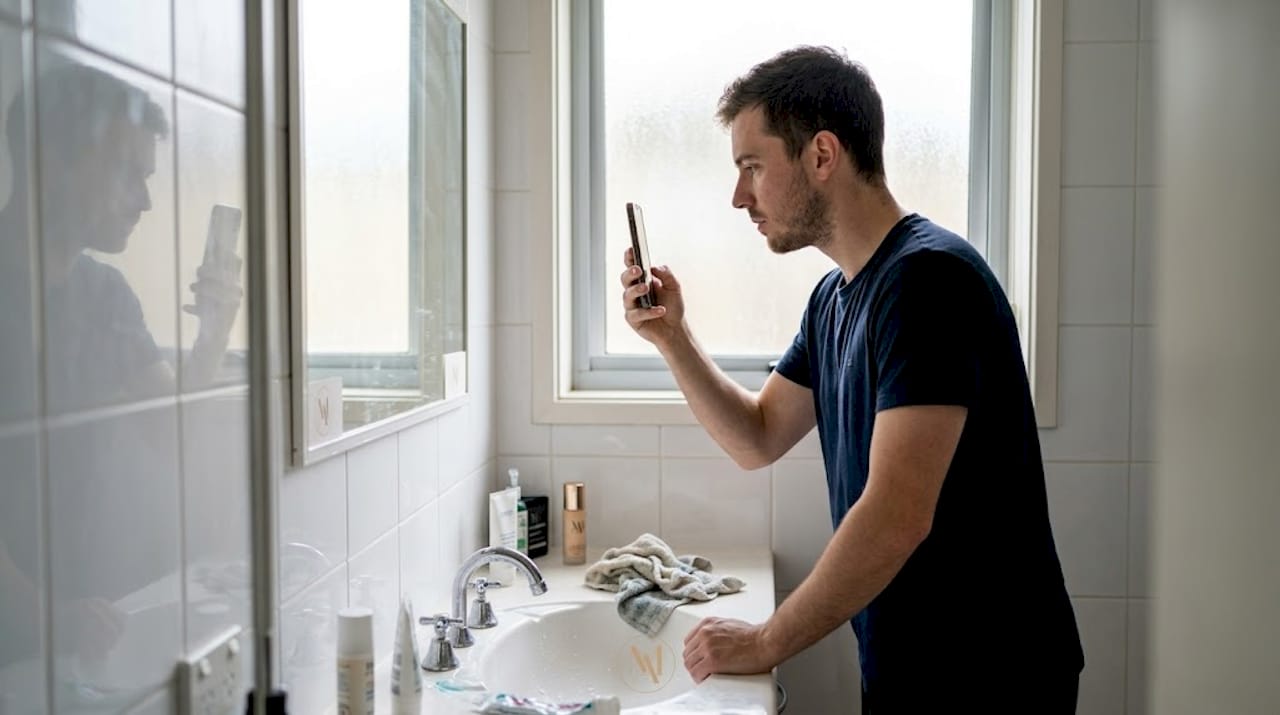
Start with the basics. Your face should be freshly cleansed with no makeup, SPF, or product residue. Natural daylight or bright, neutral artificial lighting works best. A magnifying mirror gives you far more detail than a standard bathroom mirror. Handle your skin gently throughout; aggressive pressing or stretching distorts what you are trying to observe.
Before you begin, record the following:
- Skin history: Previous conditions, sensitivities, past reactions to specific ingredients
- Current products: Everything you are using, including cleansers, serums, moisturisers, and SPF
- Known allergies or intolerances: Both skincare and dietary
- Lifestyle factors: Sleep quality, hydration, diet, and stress levels
This background context shapes how you interpret what you see on the skin’s surface.
| Assessment type | Tools required | Detail level |
|---|---|---|
| Home self-assessment | Mirror, daylight, clean skin | Surface level |
| AI skin analysis app | Smartphone camera | Moderate |
| Professional VISIA imaging | Clinical device | Deep, subsurface |
| Expert consultation | Clinician + imaging | Comprehensive |
The benefits of a professional skin consultation become especially clear when you consider that professional digital imaging systems such as VISIA can detect UV damage, vascular patterns, and subsurface pigmentation that the naked eye simply cannot perceive.
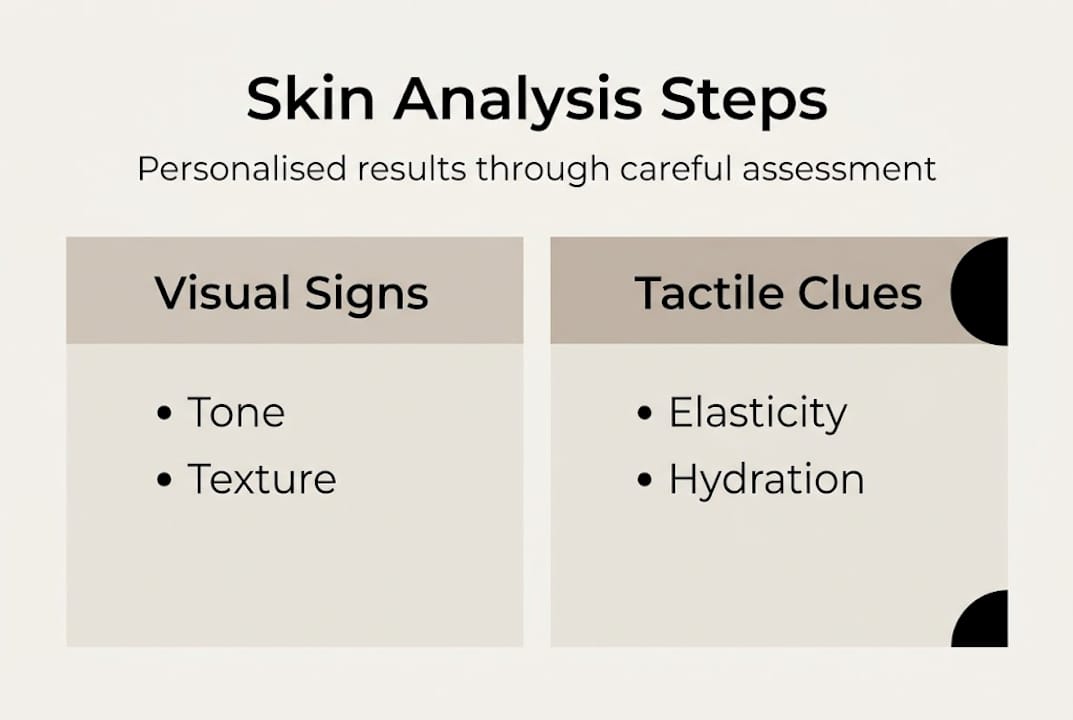
A thorough skin analysis typically covers visual inspection of tone, texture, pigmentation, pores, and wrinkles; tactile assessment for hydration, oiliness, and elasticity; skin type identification across oily, dry, combination, and normal categories; and concern evaluation including fine lines, dark spots, melasma, and comedones.
Pro Tip: Do your self-analysis at the same time of day on each occasion. Skin behaves differently in the morning compared with the evening, particularly regarding oiliness and hydration.
Step by step: Performing an effective skin analysis
With your preparation complete, follow these core steps for a truly effective analysis.
- Visual inspection: In bright lighting, observe your overall skin tone. Note any redness, sallowness, or uneven colour. Look for visible spots, pigmentation patches, or post-inflammatory marks. Examine texture by looking across the surface at an angle to catch roughness, flakiness, or enlarged pores.
- Tactile assessment: Using clean fingertips, gently press different areas of the face. Does skin feel tight and dry? Is there visible shine or an oily film? Press lightly and release to test elasticity. Healthy, well-hydrated skin should spring back promptly.
- Skin type identification: Oily skin presents with visible shine and enlarged pores. Dry skin feels tight and may show flaking. Combination skin is typically oily across the T-zone with drier cheeks. Normal skin is balanced with minimal concerns.
- Concern identification: This is where you specifically map ageing signs such as fine lines and loss of firmness, pigmentation including sunspots and melasma, and acne in the form of active breakouts or comedones.
The APIA scientific methodology structures this process into four phases: Assessment using instruments and history, Programme creation for a personalised plan, Implementation, and Accompany for progress tracking. It specifically targets ageing, pigmentation, and acne using measurable hydration and elasticity metrics.
| Concern | Key visual signs | Tactile clues |
|---|---|---|
| Ageing | Fine lines, laxity, dullness | Low elasticity, thin skin |
| Pigmentation | Dark spots, melasma, redness | Usually smooth to touch |
| Acne | Papules, comedones, inflammation | Texture irregularities |
For preparing for a skin consultation, documenting your findings with photographs in consistent lighting is invaluable. It gives both you and any clinician a reliable reference point from which to track change.
Pro Tip: Use a clean white tissue pressed gently to your T-zone 30 minutes after cleansing. If it picks up oil, that area is genuinely oily rather than reactive or dehydrated.
Interpreting results and avoiding common mistakes
Once you have your initial findings, knowing what they mean and what to do next is essential. This is where many people stumble. A result is only useful if it is interpreted correctly.
The most common mistake is relying solely on a consumer AI app or a brief online quiz. These tools offer speed and accessibility, but consumer AI tools are consistently less precise than professional VISIA systems and routinely miss subsurface concerns such as UV damage that is silently fuelling pigmentation deeper in the dermis.
Key pitfalls to avoid:
- Confusing dehydration with dryness: Dehydrated skin lacks water and can affect any skin type. Dry skin lacks oil. Treating one as the other leads to product mismatch.
- Misreading redness: Redness can signal rosacea, sensitivity, post-inflammatory hyperpigmentation, or active acne. Each requires a different approach.
- Over-relying on pore appearance: Pore size is largely genetic and does not change dramatically with any topical product regardless of marketing claims.
- Ignoring the deeper picture: What appears as surface pigmentation may have subsurface origins requiring retinoids or prescription-strength actives rather than brightening serums alone.
“Personalised skincare based on detailed history combined with scientific imaging consistently prevents product mismatches and accelerates clinical outcomes.”
When your findings point to multiple overlapping concerns, this is typically the right moment to seek professional input. Personalised skincare best practices indicate that expert assessment dramatically reduces both time and cost compared with trial-and-error product cycling.
Subsurface concerns are particularly easy to miss at home. UV damage, for instance, frequently presents as even-looking skin to the naked eye while driving significant pigmentation and collagen degradation beneath the surface.
From analysis to action: Personalising your skincare programme
Now that you can interpret your skin analysis, it is time to use those insights to build a high-performing routine. An analysis without action is simply information. The real value lies in what you do with your findings.
Build your routine around your primary concern, then layer secondary needs beneath it:
- For ageing: Prioritise a retinoid-based approach to stimulate collagen production, alongside peptides and an antioxidant-rich vitamin C serum in the morning. SPF is non-negotiable and should always form the final step in your daytime routine.
- For pigmentation: Incorporate tyrosinase inhibitors such as kojic acid, tranexamic acid, or azelaic acid. Advanced cases often benefit from prescription-strength hydroquinone under clinical supervision.
- For acne: Salicylic acid cleansers, niacinamide, and targeted benzoyl peroxide spot treatments form the backbone of most effective regimes. Managing inflammation is as important as targeting the acne itself.
Tracking progress every four to six weeks with consistent photographs allows you to see genuine improvement rather than relying on day-to-day perception, which is prone to bias.
The clinical evidence here is compelling. A study using the APIA methodology (n=74) recorded significant improvements (p<0.05) across multiple markers: acne absence in 77% of participants, pigmentation absence in 55%, and ageing reduction in 78%, with measurable gains in hydration, smoothness, and elasticity.
Pro Tip: Introduce active ingredients one at a time, allowing at least two weeks between additions. This makes it far easier to identify what is working and what is causing a reaction.
When DIY adjustments plateau, that is usually the signal to step up to clinical skin protocols and expert-guided treatment, where prescription actives and professional devices can achieve what over-the-counter products cannot.
Why most skin analyses fail: A practitioner’s view
From a clinical perspective, the most significant gap in consumer-led skin analysis is not technology. It is context. A skin analysis without a detailed personal history is like diagnosing a medical condition from a photograph alone. You might get close, but you will miss the full picture.
Consumer apps and self-tests are improving rapidly, but they still cannot account for the nuanced interplay between hormonal fluctuations, medication history, dietary patterns, and environmental exposure. These factors directly influence whether a dark spot is melasma, post-inflammatory hyperpigmentation, or solar lentigines, each requiring a fundamentally different treatment pathway. For ageing, professional imaging identifies elasticity and tone changes via eight-colour spectrum analysis in ways no app replicates. We see this repeatedly with clients who arrive having used the wrong actives for months because a self-test classified their concern incorrectly. Expert-guided analysis informed by dermatologist personalisation insights is not a luxury. It is the most efficient path to skin that genuinely changes.
Take your skin results further with expert solutions
If your analysis has surfaced complex concerns or you want faster, more reliable results, we are here to support the next step. At The M-ethod Skin, our virtual consultations connect you directly with leading clinicians who combine detailed skin history reviews with science-forward protocols to create bespoke treatment plans. Whether you are targeting persistent acne, stubborn pigmentation, or signs of ageing, our curated range of medical-grade products provides the clinical strength your skin needs. Explore the advanced acne treatment serum for a results-driven approach to breakout control, or browse our full NEOSTRATA science solutions collection for clinically evidenced brightening and resurfacing treatments. Expert guidance transforms a skin analysis from information into genuine, lasting change.
Frequently asked questions
Can I do a professional-level skin analysis at home?
A home assessment offers a useful starting point, but consumer tools miss subsurface concerns such as UV-driven pigmentation that professional imaging captures with far greater precision.
What is the main benefit of a step by step skin analysis?
It ensures your routine is built around your actual skin profile rather than assumptions, with personalised history and imaging preventing the product mismatches that waste time and money.
Which skin concerns benefit most from personalised analysis?
Ageing, pigmentation, and acne respond best, with the APIA clinical study recording acne absence in 77% of participants and ageing reduction in 78% following a personalised protocol.
How often should I repeat a full skin analysis?
Every three to six months is the ideal interval, allowing you to track genuine progress and adjust your routine as your skin naturally evolves with seasons, age, and lifestyle changes.