





How to select skincare devices: a 2026 guide
TL;DR:
- Selecting skincare devices involves matching proven technology to specific skin concerns, ensuring safety, and committing to consistent use over at least 60 days. Understanding the distinct mechanisms, such as microcurrent, LED, RF, microneedling, and ultrasound, helps in choosing the most effective tool for your goal. Prioritizing safety certifications, proper preparation, and realistic expectations ensures optimal results and skin health improvement.
Selecting skincare devices means matching clinically proven technology to your specific skin concerns, lifestyle, and safety requirements. The consumer device market now spans microcurrent tools, LED light therapy masks, radiofrequency (RF) devices, and microneedling systems, each acting on distinct skin layers and biological mechanisms. Knowing how to choose skincare tools correctly separates genuine results from expensive disappointment. This guide cuts through the noise and gives you a clear, evidence-backed framework for making the right choice.
What are the main types of skincare devices and how do they work?
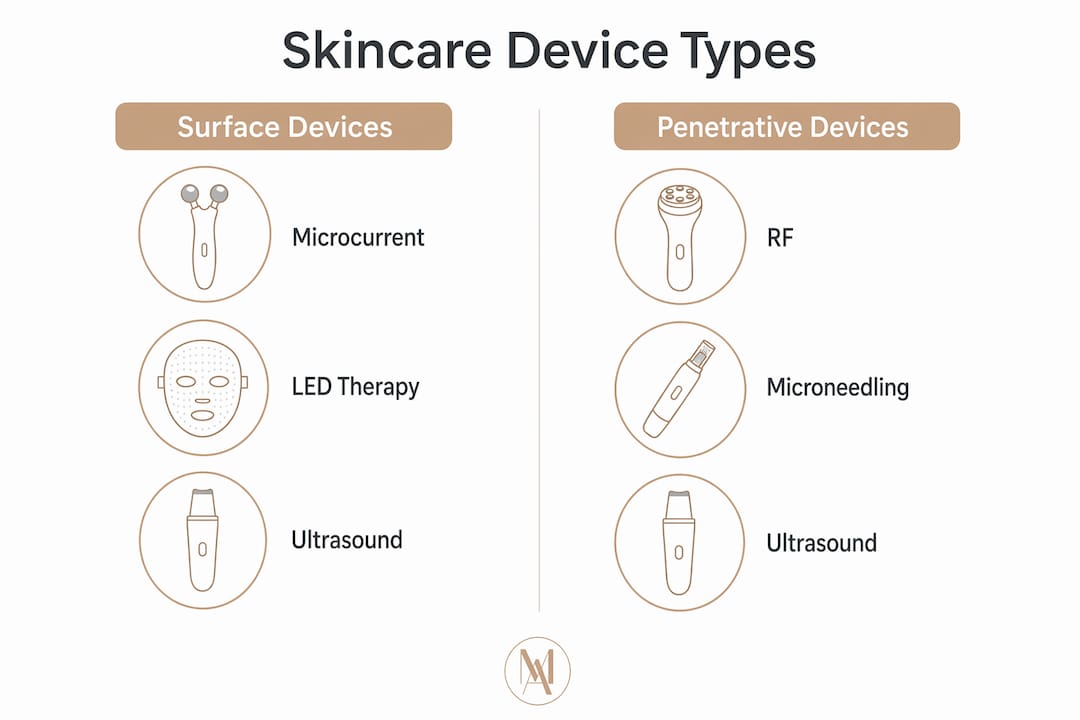
Different skincare device technologies act on distinct skin layers and mechanisms, which means choosing the wrong category for your concern will produce little to no benefit. Understanding the core technologies is the first step in any skincare device buying guide.
Microcurrent devices
Microcurrent devices deliver low-level electrical currents, typically between 100–600 microamps, to stimulate facial muscles and encourage ATP (adenosine triphosphate) production at a cellular level. ATP fuels collagen and elastin synthesis, which is why microcurrent is associated with firming and lifting effects. These devices require a water-based conductive gel to work properly. Without gel, the current cannot travel efficiently through the skin, and results drop significantly.
LED light therapy devices
LED therapy uses specific light wavelengths to trigger different biological responses in the skin. Red light (around 630–660 nm) stimulates collagen production. Blue light (around 415–450 nm) targets acne-causing bacteria. Near-infrared light penetrates deeper to reduce inflammation and support tissue repair. When choosing an LED device, prioritise irradiance of 30–50 mW/cm² over brand marketing claims. Flexible LED masks provide more uniform light coverage than rigid panels or wands, making them a stronger choice for full-face treatment.
Pro Tip: When comparing LED masks, request the irradiance specification from the manufacturer. If they cannot provide it, treat that as a red flag.
RF, microneedling, and ultrasound devices
- Radiofrequency (RF): Delivers thermal energy to the dermis to stimulate collagen remodelling. Best suited to skin laxity and deeper wrinkles. Requires careful use to avoid burns at high settings.
- Microneedling: Creates controlled micro-injuries to trigger the skin’s wound-healing response. Consumer-grade devices use shorter needle depths (0.2–0.5 mm) than professional tools. Ideal for texture, scarring, and product absorption.
- Ultrasound: Uses sound wave energy to temporarily increase skin permeability, improving the absorption of active serums. Often used as a complement to other treatments rather than a standalone solution.
- Cold therapy (cryotherapy tools): Reduces inflammation, puffiness, and redness by constricting blood vessels. Particularly useful for reactive or post-procedure skin.
Each technology targets a different concern and skin depth. Matching the mechanism to your goal is the foundation of smart device selection.
How to match skincare devices to your specific skin concerns
The most common mistake in choosing skincare tools is selecting a device based on popularity rather than mechanism. Consumers must distinguish device mechanisms rather than follow marketing hype. LED treats surface-level issues, microcurrent targets muscle tone, and cold therapy reduces inflammation. These are not interchangeable.
| Skin concern | Recommended device type | Mechanism |
|---|---|---|
| Fine lines and wrinkles | Microcurrent, RF | Muscle stimulation, collagen remodelling |
| Skin laxity and sagging | RF, microcurrent | Thermal tightening, ATP production |
| Acne and breakouts | Blue LED, cold therapy | Bacteria reduction, inflammation control |
| Dullness and uneven texture | Red LED, microneedling | Collagen stimulation, cell turnover |
| Puffiness and redness | Cold therapy, near-infrared LED | Vasoconstriction, inflammation reduction |
| Pigmentation | Red LED, microneedling (with caution) | Cell renewal, melanin disruption |
Realistic expectations matter as much as device choice. Consistent usage over at least 60 days is necessary to see stable skin improvements from consumer-grade devices. Sporadic use produces only temporary effects. Think of LED therapy in particular as a long-term investment. LED therapy works cumulatively over time and should not be approached as a quick fix.
Pro Tip: Set a 90-day calendar reminder when you start using a new device. Photograph your skin in consistent lighting every two weeks. This removes guesswork and keeps you motivated through the early weeks when changes are subtle.
If you are uncertain whether an LED device suits your skin type, our detailed breakdown of LED mask effectiveness covers the key considerations by skin type and concern.
What practical factors should you consider before buying a skincare device?
The best device is the one you will actually use. Consumers should evaluate their lifestyle realistically, because a sophisticated device left unused in a drawer delivers zero results. Before committing to a purchase, assess the following:
- Safety certifications: Look for CE marking (European conformity) or FDA clearance. These indicate the device has been tested to minimum safety standards. Devices without certification carry unknown risk.
- Adjustable intensity settings: Skin sensitivity varies by individual and by skin condition on any given day. Devices with multiple intensity levels allow you to start conservatively and progress gradually, reducing the risk of irritation.
- Treatment time: Most effective consumer devices require 5–20 minutes per session. If your routine cannot accommodate that consistently, choose a faster option or a simpler device.
- Consumables and maintenance: Microcurrent devices require conductive gel. Microneedling devices require replacement cartridges. Factor these ongoing costs into your budget.
- Ease of cleaning: Devices that are difficult to sanitise between uses introduce infection risk, particularly microneedling tools.
“The most effective skincare device is not the most technologically advanced one. It is the one that fits your skin, your schedule, and your commitment level.”
Skipping conductive gel when using microcurrent devices can reduce efficacy by more than 50% and cause skin irritation. This is one of the most frequently overlooked instructions in consumer device use. Using appropriate consumables, specifically water-based, fragrance-free conductive gels, is crucial for device efficiency and user comfort. Read the manufacturer’s protocol before your first session, not after.
Step-by-step guidance for selecting and starting a skincare device
A structured approach to choosing and beginning use of a skincare device reduces the risk of wasted investment and skin irritation. Follow these steps before and after purchase.
-
Identify your primary skin concern. Choose one. Trying to address ageing, acne, and pigmentation simultaneously with multiple devices increases complexity and reduces adherence. Start with your most pressing concern.
-
Research the device category that addresses it. Use the comparison table above as a starting point. Then look for clinical studies or dermatologist-reviewed evidence supporting the specific device or technology you are considering.
-
Evaluate brand reputation and clinical data. Prioritise brands that publish irradiance specifications, needle depth ranges, or clinical trial data. Vague claims like “clinically inspired” without supporting data are a warning sign.
-
Check safety certifications. CE marking or FDA clearance is non-negotiable for devices that penetrate the skin or deliver energy into it.
-
Prepare your skin correctly before each session. Cleanse thoroughly. Apply any required conductive medium. Avoid using active ingredients such as retinol or AHAs immediately before or after treatments that increase skin sensitivity.
-
Follow the usage protocol precisely. Consumer-grade devices should be used alongside a clear routine that includes skin preparation and avoids stacking multiple treatments on the same day initially. Introduce one device at a time.
-
Track and adjust. Photograph your skin regularly. If irritation occurs, reduce frequency before reducing intensity. If no improvement is visible after 60 days of consistent use, reassess whether the device category is correctly matched to your concern.
Pro Tip: Professional-grade devices deliver results faster than consumer versions, but consumer devices can achieve comparable outcomes over time with correct technique. Patience and consistency are the real differentiators.
For a deeper look at getting the most from your device once you have chosen it, Them-ethod’s guide on using skincare devices effectively covers protocols, timing, and product pairing in detail.

Key takeaways
The most effective approach to selecting skincare devices is to match proven technology to your primary skin concern, verify safety certifications, and commit to consistent use for a minimum of 60 days.
| Point | Details |
|---|---|
| Match technology to concern | LED, microcurrent, RF, and microneedling each target different skin layers and issues. |
| Prioritise irradiance over branding | LED devices should deliver 30–50 mW/cm²; flexible masks provide more uniform coverage. |
| Never skip consumables | Omitting conductive gel from microcurrent use reduces efficacy by more than 50%. |
| Commit to 60 days minimum | Stable results from consumer devices require consistent use over at least two months. |
| Safety certification is non-negotiable | Only purchase devices carrying CE marking or FDA clearance for verified safety standards. |
My honest view on the device market in 2026
I have seen a consistent pattern over the years: people invest in three or four devices, use each one sporadically, and then conclude that “home devices don’t work.” The problem is rarely the technology. It is the approach.
A simpler, regularly used device outperforms complex, rarely used gadgets every time. I would rather see a client use a well-chosen LED mask four times a week for three months than rotate between five different tools with no clear protocol. The cumulative effect of consistent treatment is where real change happens.
What I find most underestimated is how much skin biology varies between individuals. Two people using the same microcurrent device at the same settings will not get the same results, because muscle tone, skin thickness, hydration levels, and baseline collagen density all differ. This is why I always recommend starting with a virtual skin consultation before investing in a device. Understanding your skin’s specific characteristics means you choose the right tool from the start, rather than learning by trial and error over six months.
The market is also flooded with devices that carry impressive-sounding specifications but no clinical backing. Irradiance figures, needle depths, and frequency ranges should be published and verifiable. If a brand leads with aesthetics and lifestyle imagery rather than data, that tells you something important about where their priorities lie.
Choose one device. Use it correctly. Give it time. That is the formula that actually works.
— Jess
Explore clinically backed skincare at Them-ethod
Devices work best when paired with the right topical products. At Them-ethod, we curate clinically effective skincare that complements your device routine at every stage. For acne-prone skin, PCA Clearskin serum targets breakouts and post-inflammatory marks without disrupting the skin barrier. For anti-ageing support, PCA Retinol Night 0.5% accelerates cell turnover and works synergistically with microcurrent or LED treatments used earlier in the day. Our NEOSTRATA collection supports overall skin health with science-led formulations suited to a range of concerns. Browse our full range and book a virtual consultation to build a personalised routine around your chosen device.
FAQ
What is the safest skincare device for beginners?
LED light therapy devices are the safest starting point for most people, as they carry no risk of physical injury and require no consumables beyond the device itself. Look for CE-marked or FDA-cleared options with published irradiance specifications.
How long does it take to see results from a home skincare device?
Consistent usage over at least 60 days is required to see stable improvements from consumer-grade devices. Sporadic use produces only temporary effects and does not reflect the device’s true potential.
Can I use multiple skincare devices at the same time?
Avoid stacking multiple treatments on the same day when you are starting out. Introduce one device at a time, establish a consistent protocol, and only add a second device once your skin has adapted and you can assess each tool’s contribution clearly.
Do I need conductive gel for all skincare devices?
Conductive gel is specifically required for microcurrent devices. Skipping it reduces efficacy by more than 50% and can cause irritation. Other device types, such as LED masks or cold therapy tools, do not require gel but may benefit from clean, product-free skin before use.
How do I know if a skincare device is clinically backed?
Look for published clinical data, verifiable technical specifications such as irradiance or frequency range, and recognised safety certifications including CE marking or FDA clearance. Brands that rely solely on before-and-after imagery without supporting data should be approached with caution.