



Artikel: When to See a Clinician After a 12 Week Retinol vs Bakuchiol Trial
When to See a Clinician After a 12 Week Retinol vs Bakuchiol Trial
For most people chasing smoother, firmer skin, retinol remains the better-evidenced choice, backed by decades of dermatological research into photoageing and acne. Bakuchiol earns its place as a gentler alternative with genuinely promising short-term results, particularly for sensitive or redness-prone skin. Choose retinol when you want maximum potency and proven versatility; choose bakuchiol when tolerability matters more. If you’re pregnant or breastfeeding, avoid retinoids altogether and don’t assume bakuchiol is automatically safe, ask a clinician first.
TL;DR:
- Retinol has a well-established, robust evidence base showing efficacy in improving photoageing and acne, while bakuchiol’s supporting research is smaller and less consistent.
- Both ingredients show measurable skin improvements within 12 weeks, but retinol tends to cause more irritation and requires nighttime use due to its light sensitivity.
- Bakuchiol is better suited for sensitive, redness-prone skin, or those who cannot tolerate retinol’s peeling and stinging effects, especially during pregnancy or breastfeeding.
- Proper introduction involves gradual build-up, moisturizing, and daily sun protection, with patience being key to avoiding irritation.
- Consulting a dermatologist is recommended for personalized advice, especially for complex cases or pregnancy considerations.
Table of Contents
- Quick comparison: retinol vs bakuchiol at a glance
- What retinol is and how it works
- What bakuchiol is and how it works
- Head-to-head clinical evidence and what it really shows
- Who should choose which, including during pregnancy
- How to introduce retinol or bakuchiol into your routine
- Bottom line and what to do next
- The M-ethod Skin perspective
- How The M-ethod Skin can help you choose
- Sources
- FAQ
Quick comparison: retinol vs bakuchiol at a glance
Retinol is a vitamin A derivative that speeds up skin cell turnover and boosts collagen production. Bakuchiol is a plant-derived compound from Psoralea corylifolia that mimics some of retinol’s effects on gene expression without being chemically related to it.
- Evidence depth: retinol has decades of robust clinical data; bakuchiol’s evidence base is newer and thinner.
- Irritation risk: retinol causes more scaling and stinging; bakuchiol is generally gentler on the skin barrier.
- Speed of results: both showed measurable improvement within 12 weeks in head-to-head testing.
- Photostability: bakuchiol stays stable in daylight; retinol degrades and works best at night.
- Pregnancy safety: retinol and all retinoids are advised against; bakuchiol lacks the safety data to assume it’s risk-free.
Best for sensitivity: bakuchiol. Best for proven potency: retinol.
What retinol is and how it works
Retinol belongs to the retinoid family, a group of vitamin A derivatives that accelerate skin cell turnover and stimulate collagen production in the dermis. Once absorbed, retinol converts to retinoic acid, the active form that binds to retinoid receptors and influences how skin cells behave, from shedding dead cells faster to rebuilding the extracellular matrix that keeps skin firm.
Cosmetic retinol, sold over the counter, is a milder precursor compared with prescription retinoids like tretinoin, marketed as Retin-A Micro. The FDA prescribing information for Retin-A Micro sets out specific dosing instructions and warns of common adverse effects including dryness, redness and peeling, underlining that prescription-strength retinoids carry their own safety guidance distinct from cosmetic formulas.
The clinical evidence for retinol’s benefit in treating photoageing and acne is substantial, making it the ingredient most dermatologists reach for first when potency and proven results matter more than comfort during the adjustment period.

What bakuchiol is and how it works
Bakuchiol comes from the seeds and leaves of the babchi plant, long used in Ayurvedic and Chinese medicine.
Reported benefits include improved skin texture, reduced fine lines, antioxidant activity and anti-inflammatory effects, alongside a practical advantage: bakuchiol is photostable, meaning it doesn’t break down in sunlight the way retinol does.
The caveat worth holding onto is that much of this evidence comes from small trials, combination formulas that pair bakuchiol with other actives, or studies with inconsistent methods. That makes it hard to say how a single bakuchiol serum, on its own, will perform compared with the more tightly controlled retinol research. Formulation, concentration and what else is in the bottle all shape the outcome.
Head-to-head clinical evidence and what it really shows
The most cited comparison is a 12-week randomised, double-blind trial testing 0.5% bakuchiol applied twice daily against 0.5% retinol applied once daily. Both groups saw similar improvements in wrinkle surface area and hyperpigmentation by week 12, with assessments taken at baseline and weeks four, eight and twelve across 44 evaluable participants. The meaningful difference wasn’t efficacy, it was comfort: the retinol group reported more scaling and stinging throughout the trial.

That result fuelled much of bakuchiol’s popularity, but a 2024 systematic review of human bakuchiol trials urges caution. It identified 15 trials overall but judged them heterogeneous, with a high risk of bias and many testing combination products rather than bakuchiol alone, which made it impossible to pool the results into a confident efficacy conclusion.
Put together, the honest reading is this: bakuchiol has shown real parity with retinol on specific cosmetic endpoints in at least one well-designed trial. However, the overall body of bakuchiol research is smaller, less consistent and often muddied by combination formulas. Retinol and prescription retinoids still carry the deeper, more reproducible evidence base. That doesn’t make bakuchiol ineffective, it makes it a promising option with less certainty attached.
Who should choose which, including during pregnancy
Your skin type and life stage matter as much as the evidence itself.
- Bakuchiol tends to suit sensitive skin, rosacea-prone skin, or anyone who’s tried retinoids before and couldn’t tolerate the peeling or stinging; for helpful advice on caring for sensitive or eczema-prone skin, see gentle cleansing and moisturizing tips.
- Retinol suits readers who want the strongest evidence behind their routine, especially for treating acne or more advanced photoageing, where a prescription retinoid may eventually be the right call.
- If you’re pregnant or breastfeeding, the American Academy of Dermatology advises avoiding retinoids entirely and discussing any active skincare ingredient with your obstetrician or dermatologist. Bakuchiol has not been proven safe in pregnancy either, so the same conversation applies before using it.
- Patch-test any new active on your inner forearm for a few days before applying it to your face, and watch for redness, itching or swelling that could signal contact dermatitis.
Pro Tip: If irritation shows up within the first two weeks of starting either ingredient, stop immediately and speak to a dermatologist before restarting, rather than pushing through discomfort.
How to introduce retinol or bakuchiol into your routine
Both ingredients reward patience. Rushing concentration or frequency is the most common reason people give up on them.
- Start retinol every other night, applying a pea-sized amount to dry skin, then build to nightly use over several weeks as tolerance improves.
- Follow your bakuchiol product’s own instructions. Many are formulated for daytime use given their photostability, but patch-testing first is still wise.
- Always moisturise afterwards and avoid layering either active with strong exfoliating acids while your skin adjusts.
- If irritation appears, pause for a few nights, moisturise generously, then restart at a lower frequency. For practical restart steps, ease back in gradually rather than resuming full strength.
- Wear a broad-spectrum sunscreen every morning, since both ingredients increase how reactive your skin is to UV exposure over time.
Bottom line and what to do next
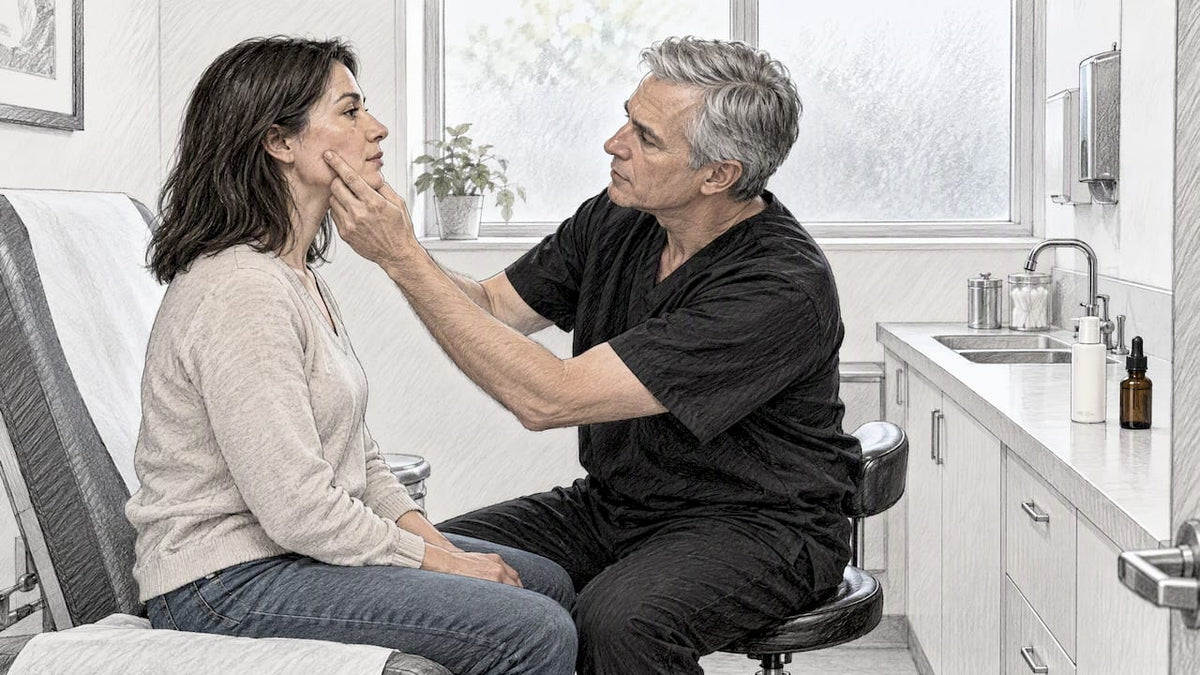
For most readers, retinol remains the ingredient with the deeper evidence base, while bakuchiol is a credible choice when tolerability is the priority. If you’re newly pregnant, have persistent acne, visible photodamage or simply haven’t found the right formula after trying both, that’s the point to book a consultation rather than keep guessing.
The M-ethod Skin perspective
We approach this comparison the way we approach everything: weigh the trial data, then match it to what your skin can actually tolerate. Our skin boutique offers curated, dermatologist-recommended skincare and virtual consultations with clinicians, so if you’re unsure which active fits your skin, a professional review is one booking away.
— Jess
How The M-ethod Skin can help you choose
Working out whether retinol or bakuchiol suits your skin is easier with a clinician looking at your actual history, not just a product label. Our online skin consultation gives you tailored advice and, where appropriate, access to prescription-strength options.
- Book a virtual consultation for personalised guidance on retinoids, bakuchiol, or combining both safely.
- Browse our curated medical-grade skincare, including retinol formulations selected for different skin types.
- Explore in-clinic options like Profhilo, microneedling and HIFU for readers dealing with more advanced photoageing.
Sources
- Prospective, randomized, double‐blind assessment of topical bakuchiol and retinol for facial photoageing
- Human clinical trials using topical bakuchiol formulations for the treatment of skin disorders: a systematic review
- Dermatologist-approved pregnancy skin care
- RETIN-A MICRO (tretinoin) prescribing information
This article is general information, not a substitute for advice from a qualified doctor. Consult a qualified healthcare professional about your own circumstances before acting on anything here.
FAQ
What should you not mix bakuchiol with?
There’s no strong evidence that bakuchiol clashes badly with other common actives, which is part of its appeal. That said, introducing it alongside strong exfoliating acids or retinol at the same time can increase irritation risk, so it’s sensible to space them out while your skin adjusts.
Does bakuchiol actually work?
Clinical trial data suggests bakuchiol can improve wrinkles and pigmentation in ways comparable to retinol over 12 weeks, though the broader evidence base remains smaller and more inconsistent than retinol’s. It appears effective for many people, particularly those seeking a gentler option, but results vary by formulation.
What works 11 times faster than retinol?
No reputable clinical source, including the trials and reviews referenced here, supports a specific multiple like this for bakuchiol or any other retinol alternative. Treat marketing claims using precise speed multipliers with scepticism and look for peer-reviewed trial data instead.
Do Koreans use bakuchiol?
Bakuchiol appears in skincare formulations sold across many markets, including South Korea, as part of a broader global interest in gentler retinol alternatives. There’s no dedicated research cited here establishing regional usage patterns, so this is best treated as a general market observation rather than a documented trend.