




What is a prescription skincare consultation?
TL;DR:
- A prescription skincare consultation is a medical assessment by a licensed clinician to determine appropriate, regulated treatments for skin conditions. It involves a detailed skin examination, medical history review, and follow-up reviews to monitor progress and adjust treatment plans. Such consultations provide access to evidence-based prescription actives and prevent skin damage caused by misuse of over-the-counter products.
A prescription skincare consultation is a formal medical assessment by a licensed clinician who evaluates your skin condition and determines whether high-potency, regulated treatments are appropriate for you. Unlike a standard beauty appointment, this process sits firmly within the medical sphere. The clinician examines your skin, reviews your health history, and prescribes treatments that over-the-counter products simply cannot replicate. Understanding what a prescription skincare consultation involves is the first step towards making genuinely informed decisions about your skin health.
What happens during a prescription skincare consultation?
A structured skin consultation typically begins with a thorough clinical assessment lasting around 60 minutes, covering your skin concerns, medical history, current medications, allergies, and lifestyle factors. That depth of intake is deliberate. Skin conditions rarely exist in isolation, and factors like diet, stress, hormonal shifts, and sleep patterns all influence how your skin behaves and responds to treatment.
The consultation process follows a clear sequence:
- Intake review. The clinician collects your full medical and skincare history, including any previous treatments and known sensitivities.
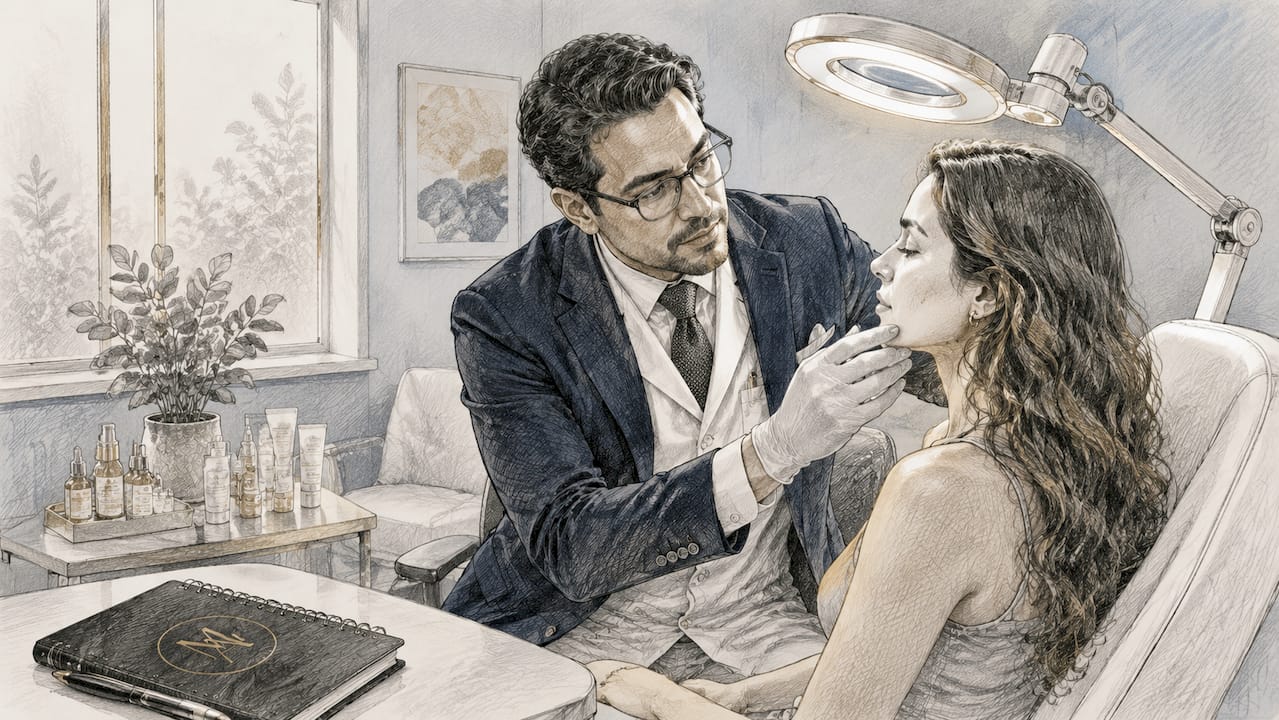
- Clinical skin examination. Using specialised diagnostic tools, the clinician examines skin closely to assess texture, tone, pore structure, pigmentation, and signs of barrier compromise.
- Skin type and condition classification. The clinician formally categorises your skin type and identifies any active conditions such as acne, rosacea, or melasma.
- Treatment planning. Based on the findings, the clinician recommends prescription-strength actives, protocols, and supporting products tailored to your specific diagnosis.
- Follow-up scheduling. Progress reviews are typically arranged at six weeks, twelve weeks, and six months to monitor outcomes and manage any side effects.
That follow-up structure is what separates a prescription consultation from a one-off beauty appointment. Your clinician tracks how your skin responds and adjusts the regimen accordingly.
Pro Tip: Before your appointment, photograph your skin in natural daylight from multiple angles. These images give your clinician a useful baseline and help track progress at each follow-up.
Why does prescription skincare require professional supervision?
Prescription skincare products are regulated in the same way as pharmaceutical drugs. Common prescription actives include tretinoin, hydroquinone, and topical antibiotics, each targeting conditions like acne and hyperpigmentation at concentrations that require clinical oversight. These are not ingredients you can safely self-prescribe.
The reasons professional supervision matters are clear:
- Concentration and potency. Prescription actives work at levels that can cause irritation, photosensitivity, or barrier damage if used incorrectly. A clinician calibrates the dose and application method to your skin’s tolerance.
- Side effect monitoring. Tretinoin, for example, commonly causes an initial purging phase and increased sun sensitivity. Without guidance, many people abandon treatment prematurely or cause lasting damage.
- Avoiding barrier compromise. Trial-and-error use of potent actives is one of the leading causes of a damaged skin barrier, a condition that takes months to repair and makes all subsequent skincare less effective.
- Regulatory compliance. Prescription treatments are subject to rigorous clinical efficacy reviews before reaching patients. That regulatory standard does not apply to most consumer skincare products.
- Early detection. A clinician examining your skin may identify conditions that warrant further investigation, including early signs of skin cancer or autoimmune skin disorders.
“Persistent or severe skin conditions unresponsive to OTC treatments typically require board-certified dermatologist consultation for medical-grade treatment plans. Such tailored approaches help prevent permanent skin damage and support long-term skin health.”
Self-diagnosis carries real risk. The internet offers no substitute for a trained clinician examining your skin in person.
Benefits of a prescription skincare consultation over standard routines
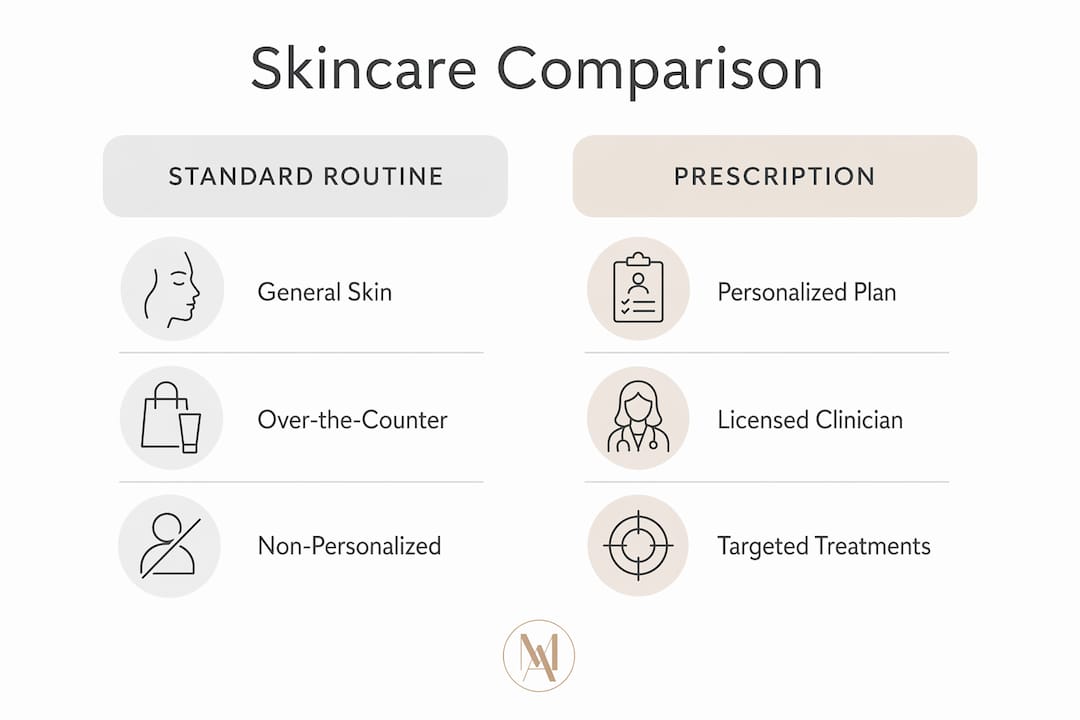
The clearest advantage of a personalised skincare treatment plan is precision. A clinician does not guess at your skin type or recommend products based on general categories. They diagnose, then prescribe.
| Benefit | Standard skincare routine | Prescription consultation |
|---|---|---|
| Treatment basis | General skin type categories | Clinical diagnosis of your specific condition |
| Active ingredient access | OTC concentrations, typically below 1% | Prescription-strength, clinically validated doses |
| Product selection | Consumer-led, often influenced by marketing | Evidence-based, matched to your diagnosis |
| Progress monitoring | Self-assessed | Clinician-reviewed at structured intervals |
| Long-term approach | Product-by-product purchasing | Evolving treatment partnership |
One detail that surprises many people: active ingredients listed late in an ingredient list are typically present at concentrations below 1%. That means the vitamin C serum you paid a premium for may contain a fraction of the active needed to produce visible results. Prescription formulations do not have this problem. Their concentrations are specified, tested, and clinically justified.
Professional consultations remove guesswork and prevent the financial waste that comes from cycling through ineffective products. Clinicians aim to build long-term treatment partnerships rather than sell one-off solutions. That distinction matters enormously when you are dealing with a condition like melasma or cystic acne, where consistency and clinical adjustment are what drive results.
Pro Tip: Ask your clinician to explain the mechanism of each prescribed ingredient. Understanding why you are using a product significantly improves adherence, and adherence is what produces results.
How to prepare for and choose a prescription skincare consultation
Choosing the right consultation starts with verifying credentials. Your clinician should be a licensed medical professional, such as a dermatologist, aesthetic doctor, or nurse prescriber, with demonstrable experience in medical skincare. A beauty therapist, however skilled, cannot legally prescribe.
Before your appointment, gather the following:
- A list of all current skincare products, including cleansers, SPF, and any actives you are already using.
- Details of any medications you take, including oral contraceptives and supplements, as these affect skin behaviour and treatment compatibility.
- A record of previous skin treatments, including chemical peels, laser, or injectables, and how your skin responded.
- Photographs of your skin concerns taken in consistent lighting over several weeks, if possible.
- A clear description of your goals, whether that is clearing acne, reducing pigmentation, addressing signs of ageing, or managing a chronic condition like rosacea.
Questions worth asking during the consultation include: What is the expected timeline for visible results? What side effects should I anticipate and when should I contact you? Are there lifestyle changes that will support this treatment? How will we measure progress?
Skin renews roughly every 28 days, which is why most clinicians recommend assessing new treatments over a 4–6 week period before drawing conclusions. Realistic expectations about timelines protect you from abandoning a regimen that is actually working.
On the question of in-person versus online consultations: in-person assessments typically provide the most thorough evaluation, particularly for complex or multifactorial conditions. Online consultations offer genuine convenience and are well-suited to follow-up appointments or straightforward concerns. For a first consultation involving an undiagnosed or persistent condition, in-person remains the gold standard.
Key takeaways
A prescription skincare consultation is the most clinically reliable way to address persistent or complex skin conditions, because it replaces guesswork with diagnosis, and consumer products with regulated, evidence-based treatments.
| Point | Details |
|---|---|
| Medical assessment, not beauty appointment | A licensed clinician diagnoses your skin condition and prescribes regulated treatments. |
| Structured process with follow-ups | Consultations include a 60-minute assessment and reviews at six, twelve, and twenty-six weeks. |
| Prescription actives are clinically validated | Tretinoin, hydroquinone, and topical antibiotics work at concentrations unavailable in consumer products. |
| Preparation improves outcomes | Bringing your product history, medication list, and skin photographs helps your clinician prescribe accurately. |
| Online vs. in-person | In-person consultations offer the most thorough evaluation for complex or undiagnosed conditions. |
Why I think most people wait too long to seek a prescription consultation
The most common mistake I see is people spending years cycling through consumer products before seeking a proper clinical assessment. They try one serum, then another, then a different cleanser, and the condition persists. The skin barrier takes damage along the way. By the time they sit in front of a clinician, they are dealing with both the original concern and the consequences of misguided self-treatment.
There is a widespread assumption that prescription skincare is only for severe cases. That is not accurate. A clinician can prescribe low-dose tretinoin for early signs of ageing, or a targeted hydroquinone protocol for mild pigmentation, long before a condition becomes difficult to treat. Early intervention produces better outcomes with less disruption to the skin.
The other misconception worth addressing is that a prescription consultation is a one-time event. It is not. Your skin changes with age, hormones, seasons, and stress. A good clinician reviews your regimen regularly and adjusts it as your skin evolves. That ongoing relationship is where the real value lies. A single consultation gives you a starting point. The follow-up appointments give you results.
If you are unsure whether your concerns warrant a prescription consultation, the answer is almost always yes. The worst outcome is a clinician confirming that your current routine is appropriate. The best outcome is a targeted regimen that finally works. You can read more about how consultation drives skincare success for adults navigating changing skin needs.
— Jess
Them-ethod’s approach to prescription skincare
Them-ethod brings together clinically validated products and expert-led virtual consultations in one place, making prescription-grade skincare genuinely accessible. For those managing acne, the PCA Clearskin acne serum offers a targeted, clinician-recommended treatment that complements a prescribed regimen. For concerns around pigmentation and skin texture, the NEOSTRATA collection delivers science-backed formulations with a strong clinical track record. Them-ethod’s virtual consultations connect you directly with top clinicians who can assess your skin, recommend appropriate prescription options, and support your progress over time. The platform also ships internationally, so expert-led skincare is not limited by geography.
FAQ
What is a prescription skincare consultation?
A prescription skincare consultation is a clinical assessment by a licensed medical professional who evaluates your skin condition and prescribes regulated, high-potency treatments. It differs from a standard beauty consultation because the clinician can legally prescribe actives such as tretinoin or hydroquinone.
How long does a prescription skincare consultation take?
An initial consultation typically lasts around 60 minutes, covering your medical history, lifestyle, and a detailed clinical skin examination. Follow-up appointments are shorter and focus on monitoring progress and adjusting the treatment plan.
Can I have a prescription skincare consultation online?
Online consultations are available and work well for straightforward concerns or follow-up appointments. For complex or undiagnosed conditions, an in-person assessment with a dermatologist or aesthetic clinician provides the most thorough evaluation.
What skin conditions benefit most from prescription skincare?
Conditions including acne, melasma, hyperpigmentation, rosacea, and early signs of photoageing respond well to prescription treatments. Persistent conditions unresponsive to OTC products are the clearest indication that a clinical consultation is needed.
How soon will I see results from prescription skincare?
Most clinicians assess results after 4–6 weeks, aligned with the skin’s natural renewal cycle of approximately 28 days. Significant improvement in conditions like acne or pigmentation typically becomes visible between the six-week and twelve-week follow-up appointments.