

How to Cleanse Rosacea Prone Skin Without Flares
A cleanser can be the quiet trigger behind skin that looks increasingly reactive: the tightness after rinsing, the sudden warmth across the cheeks, the redness that lingers long after your evening routine. Learning how to cleanse rosacea prone skin is less about finding the most active formula and more about protecting a barrier that is already working harder than most.
For rosacea-prone skin, cleansing should leave the complexion comfortable, calm and ready to receive treatment - not squeaky-clean, polished or tingling. That distinction matters. A dramatic, stripped-clean feeling may be satisfying in the moment, but it can intensify dryness, sensitivity and visible flushing over time.
Why cleansing can aggravate rosacea
Rosacea is a chronic inflammatory skin condition with a range of presentations, from persistent central facial redness and visible vessels to flushing, bumps, dryness and stinging. Its triggers are individual, but heat, friction, harsh surfactants, fragranced formulas and over-cleansing are frequent contributors to a compromised-looking complexion.
The skin barrier is central to the equation. When cleansing removes too much of the lipids and water-retaining components that support it, moisture escapes more readily and irritants can penetrate more easily. Rosacea-prone skin may then respond with discomfort, roughness or a flare of redness. This is why a cleanser that suits a friend with oily skin can be entirely wrong for a reactive complexion.
There is a trade-off to manage. Sunscreen, make-up, pollution and excess oil still need to be removed thoroughly, particularly if you use prescription skincare or high-performance corrective products. The answer is not to cleanse less effectively. It is to cleanse with precision, using the least disruptive method that achieves a clean, comfortable finish.
How to cleanse rosacea prone skin: the barrier-first method
Begin with lukewarm water. Hot water can prompt facial flushing, while very cold water can feel stimulating on sensitised skin. Keep the temperature comfortably neutral and avoid rinsing under a powerful shower stream, which adds unnecessary heat and pressure.
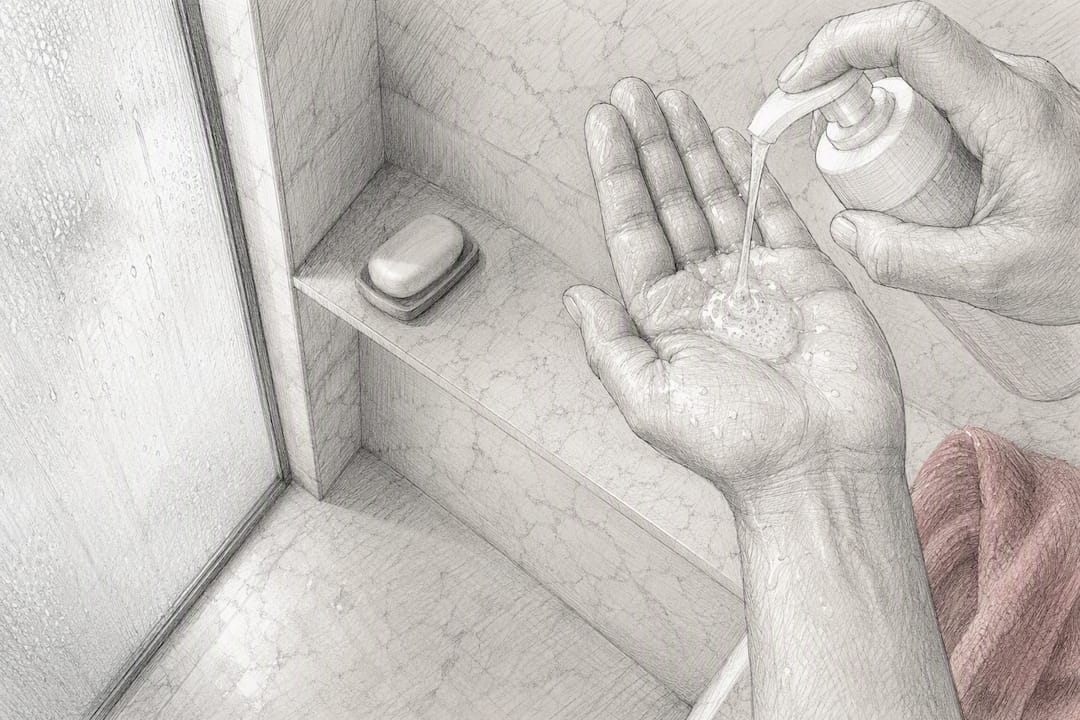
Apply a small amount of a fragrance-free, low-foaming cream, lotion or gel cleanser to damp skin. Use the pads of your fingertips rather than a flannel, cleansing brush or silicone device. Massage with exceptionally light pressure for around 20 to 30 seconds. Your goal is to loosen daily residue, not to exfoliate or stimulate circulation.
Rinse fully with lukewarm water, then pat the face dry with a soft, clean towel. Do not rub, drag or repeatedly blot the skin. Follow promptly with a moisturiser suited to reactive skin, especially if your cheeks tend to feel dry or tight. Applying moisturiser while the skin is still slightly damp can help reduce water loss without creating a heavy finish.
In the morning, one gentle cleanse may be appropriate if you wake with oiliness, use a rich overnight treatment or simply prefer the ritual. For very dry or highly reactive skin, a light rinse with lukewarm water can be enough on some mornings. It depends on your skin, your climate and the treatment products you use. Comfort and consistency are better indicators than rigid rules.
At night, cleanse to remove sunscreen and make-up. If you wear long-wear foundation, water-resistant SPF or a full eye look, a carefully considered double cleanse can be useful. Start with a gentle, emulsifying cleansing balm, milk or oil that is free from fragrance and essential oils, then follow with a mild water-based cleanser. If you wear only a light SPF and no make-up, one thorough cleanse is often sufficient. More steps are not inherently more effective.
Choose a cleanser for tolerance, not trends
A premium cleanser earns its place in a rosacea routine by respecting the barrier while delivering dependable removal. Look for a creamy or low-lather texture, a short and purposeful ingredient profile, and skin-supportive humectants or lipids where appropriate. Ceramides, glycerin, squalane and soothing ingredients can be welcome additions, although even excellent ingredients must be judged by how your individual skin responds.
Be cautious with formulas designed to create a ‘deep clean’. Strong foaming agents, scrubs, cleansing acids and high concentrations of denatured alcohol can be too aggressive for many people with rosacea. Fragrance, including botanical fragrance and essential oils, is also a common source of avoidable irritation. Natural is not automatically gentle.
Micellar water can be convenient for travel or a minimal make-up day, but it is not universally ideal as a leave-on cleansing step. The surfactants that lift make-up remain on the skin unless rinsed away and may be irritating for some. If you use it, treat it as a first step and rinse before your usual gentle cleanser.
Likewise, exfoliating cleanser is rarely the best place to introduce acids when redness and sensitivity are active. A clinician may recommend azelaic acid or another targeted treatment for rosacea concerns, but these should be introduced thoughtfully and kept separate from an unnecessarily aggressive cleansing routine. Clinical results depend on a calm foundation.
The habits that make a gentle cleanser less gentle
Even a beautifully formulated cleanser can become problematic when technique is too forceful. The most common issue is duration: prolonged massage is not a facial treatment and does not improve removal. Over-cleansing is another. Washing three or four times a day in response to shine, heat or a perceived flare can strip the barrier further.
Pay attention to water temperature around exercise, bathing and hair washing. A hot shower, followed by rubbing the face with a towel and applying multiple active products, can create the conditions for redness even when the cleanser itself is well chosen. Cleansing at the basin with lukewarm water offers more control.
It is also wise to avoid testing several new products at once. If your skin becomes hot, itchy, increasingly dry or develops more bumps, stop the newest addition and return to the simplest routine that you know your skin tolerates. Reintroduce products one at a time, allowing several days between changes. This makes it far easier to identify what is helping and what is not.
Build the rest of the routine around calm skin
Cleansing is only one part of rosacea management, but it sets the tone for everything that follows. After cleansing, prioritise a barrier-supportive moisturiser and broad-spectrum daily SPF. Sun exposure is a common trigger for visible redness, and regular protection is essential even on overcast British days or when working near windows.
If you are using retinoids, exfoliating acids, vitamin C or pigment-correcting treatments, the frequency and formula matter. Some rosacea-prone complexions can tolerate carefully selected active skincare; others need a slower approach, reduced frequency or clinician-led guidance. A burning sensation is not evidence that a product is working. It is feedback worth respecting.
Persistent flushing, eye irritation, painful bumps, swelling or a sudden change in symptoms deserves medical assessment. Ocular rosacea in particular should not be managed through skincare alone. A dermatologist or qualified prescribing clinician can confirm the diagnosis and discuss treatment options alongside a supportive home regimen.
The most refined rosacea routine is rarely the busiest one. Choose a cleanser that respects your skin’s limits, use it with a light hand, and let comfort after rinsing become your non-negotiable standard. When the skin feels calm enough to recover, radiance has room to return.