




Clinical skin protocols: results for clearer, firmer skin
TL;DR:
- Clinical skin protocols are evidence-based treatments with structured assessment, targeted actives, and personalized aftercare.
- Visible results typically appear within 8 to 12 weeks with consistent clinic visits and diligent homecare.
- Tailored protocols use safety-guided steps, devices, and actives optimized for specific concerns like aging, pigmentation, or acne.
Many people assume that a clinic facial is simply a spa treatment with a higher price tag. It is not. Clinical skin protocols are standardised, step-by-step treatment procedures built on dermatological evidence, designed to produce measurable outcomes for concerns like ageing, pigmentation, and acne. They follow a defined sequence: assessment, treatment, and structured aftercare, each stage informed by clinical data rather than preference. In this article, we break down exactly what these protocols involve, how they are personalised to your skin, and what to look for when choosing a reputable clinic or skincare service.
Table of Contents
- What defines a clinical skin protocol?
- Key elements and process: Inside a clinical protocol
- Personalisation for ageing, pigmentation, and acne
- What makes protocols effective? Evidence, safety, and what to expect
- Beyond textbook protocols: The nuances most clinics miss
- Discover evidence-driven skincare solutions
- Frequently asked questions
Key Takeaways
| Point | Details |
|---|---|
| Standardised clinical care | Clinical skin protocols rely on rigorous, evidence-based steps for safe and consistent results. |
| Customised for your needs | Protocols are tailored to your specific concerns, from ageing to pigmentation and acne, using the latest clinical evidence. |
| Results you can measure | Visible improvements typically appear within 8–12 weeks due to professional-guided, prescription-strength regimens. |
| Expert guidance matters | Success depends on skilled clinical review, ongoing adjustments, and committed aftercare. |
What defines a clinical skin protocol?
A clinical skin protocol is not a menu of relaxing steps. It is a structured, reproducible framework designed to achieve specific skin outcomes. Where a standard spa facial relies on the therapist’s intuition and product availability, a clinical protocol follows a defined pathway grounded in science. Every decision, from which active ingredients are applied to the order of device use, is evidence-led.
The foundation of any reputable protocol rests on three pillars. First, a thorough skin assessment. Second, the use of prescription-strength actives and clinic-grade modalities. Third, a structured aftercare plan that extends the treatment’s effect at home. This is what separates a clinical outcome from a cosmetic one.
To make this distinction clearer, consider the following comparison:
| Feature | Spa facial | Clinical skin protocol |
|---|---|---|
| Assessment | Visual, informal | Standardised tools, global scales |
| Products used | Cosmetic-grade | Prescription-strength actives |
| Devices | Optional, low-intensity | Medical-grade (laser, microneedling) |
| Aftercare plan | Generic advice | Tailored homecare protocol |
| Measurable outcomes | Rarely tracked | Benchmarked at follow-up |
Clinical protocols also deliver results that are tracked. Clinicians use validated scales and photography to monitor progress, which means your improvement is not subjective. You can see the data. This accountability is one of the most compelling reasons to choose a clinical pathway over a cosmetic one.
Key benefits of clinical protocols include:
- Reproducibility: The same protocol delivers consistent results across different patients with similar presentations.
- Safety: Standardisation reduces the risk of misuse of potent actives.
- Efficacy: Evidence-backed steps target the root cause of a concern, not just surface symptoms.
Understanding how science powers results in this context helps explain why clinical protocols consistently outperform their cosmetic counterparts.
Key elements and process: Inside a clinical protocol
Walking into a clinic for a protocol-based treatment is a very different experience from a spa visit. The process is methodical, and every step has a purpose.
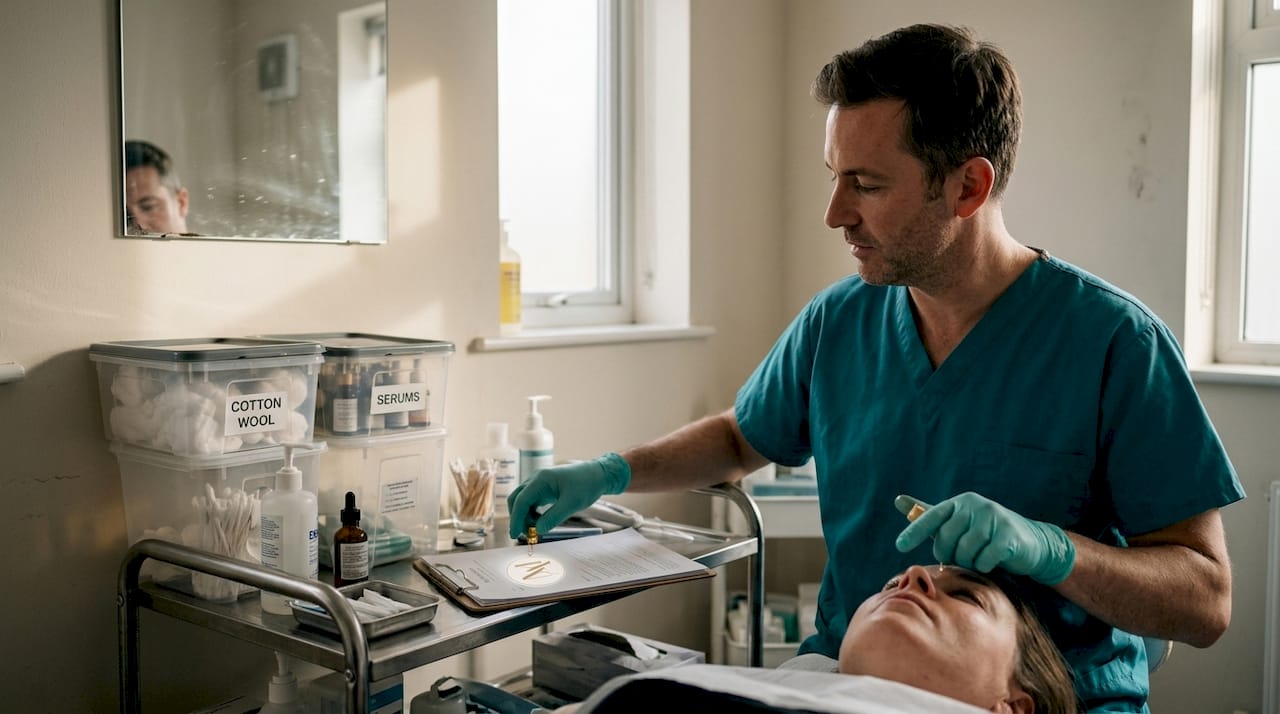
Assessment tools such as the Wood’s lamp, which highlights pigmentation, dehydration, and bacterial activity beneath the skin’s surface, allow the clinician to make objective decisions before a single product is applied. Global assessment scales further quantify the severity of concerns like acne or photodamage, creating a baseline for comparison at follow-up appointments.
A typical clinical protocol follows a structured sequence:
- Cleansing and skin preparation to remove surface debris and prime the skin for active penetration.
- Exfoliation using chemical agents such as AHAs, BHAs, or enzymatic preparations tailored to skin type.
- Active infusion of targeted serums or prescription-strength topicals, often aided by devices like iontophoresis or ultrasound.
- Device treatment such as microneedling, LED therapy, or radiofrequency, depending on the concern being addressed.
- Mask or occlusive phase to seal in actives and support barrier recovery.
- Finishing and SPF application to protect the skin post-treatment.
As iS Clinical’s protocol framework demonstrates, protocols outline both in-clinic steps and coordinated homecare, because what you do between appointments is just as important as what happens in the treatment room.
Coordinated homecare is frequently underestimated. The actives applied in-clinic need to be supported and maintained at home to produce lasting change. Retinoids, antioxidants, and barrier-supporting ingredients prescribed for home use extend the protocol’s effect across the full treatment cycle.
Pro Tip: Consistency between clinic visits is where most results are won or lost. Following your prescribed post-procedure aftercare routine diligently is not optional; it is the other half of the protocol.
“A protocol is only as effective as the compliance that surrounds it. In-clinic treatments initiate change; homecare sustains it.”
Personalisation for ageing, pigmentation, and acne
No two skin concerns are identical, and clinical protocols reflect this. The actives, devices, and treatment lengths vary significantly depending on whether you are addressing fine lines, uneven tone, or breakout-prone skin.
For ageing, protocols typically centre on stimulating collagen production and accelerating cellular turnover. Retinoids remain the gold standard, supported by topical vitamin C for antioxidant protection and brightening. Devices like microneedling create controlled micro-injuries that trigger the skin’s natural repair response, producing firmer, more even-textured results over a course of treatments.
For pigmentation, the approach depends on the type. Melasma, sun damage, and post-inflammatory hyperpigmentation each require distinct strategies. Lasers and intense pulsed light target melanin deposits, while topical agents such as hydroquinone, kojic acid, and tranexamic acid suppress melanin production. Different concerns require different actives, devices, and protocol lengths, which is why a thorough assessment before treatment is non-negotiable.
For acne, combination therapy is standard. Retinoids regulate sebum and cell turnover, benzoyl peroxide targets the bacteria responsible for breakouts, and in some cases oral or topical antibiotics are incorporated under medical supervision. The protocol also addresses post-acne pigmentation, which often outlasts the breakouts themselves.
| Concern | Key actives | Common devices | Typical protocol length |
|---|---|---|---|
| Ageing | Retinoids, vitamin C, peptides | Microneedling, radiofrequency | 8–12 weeks |
| Pigmentation | Hydroquinone, tranexamic acid | IPL, laser | 10–16 weeks |
| Acne | BPO, retinoids, antibiotics | LED, chemical peels | 12–16 weeks |
Special populations require additional care. Darker skin tones carry a higher risk of post-inflammatory hyperpigmentation, so protocols must use melanin-safe actives and avoid aggressive resurfacing. Pregnant or breastfeeding clients require modified protocols that exclude retinoids and certain acids. Explore a detailed skincare regimen for ageing and pigmentation to understand how these adaptations work in practice, and review clinical skincare trends for 2026 for the latest evidence-backed approaches.
What makes protocols effective? Evidence, safety, and what to expect
One of the most common questions we hear is: how long before I see results? The honest answer is that meaningful, measurable change takes time. Visible improvements typically emerge within 8 to 12 weeks of consistent protocol adherence, with some concerns requiring longer courses.
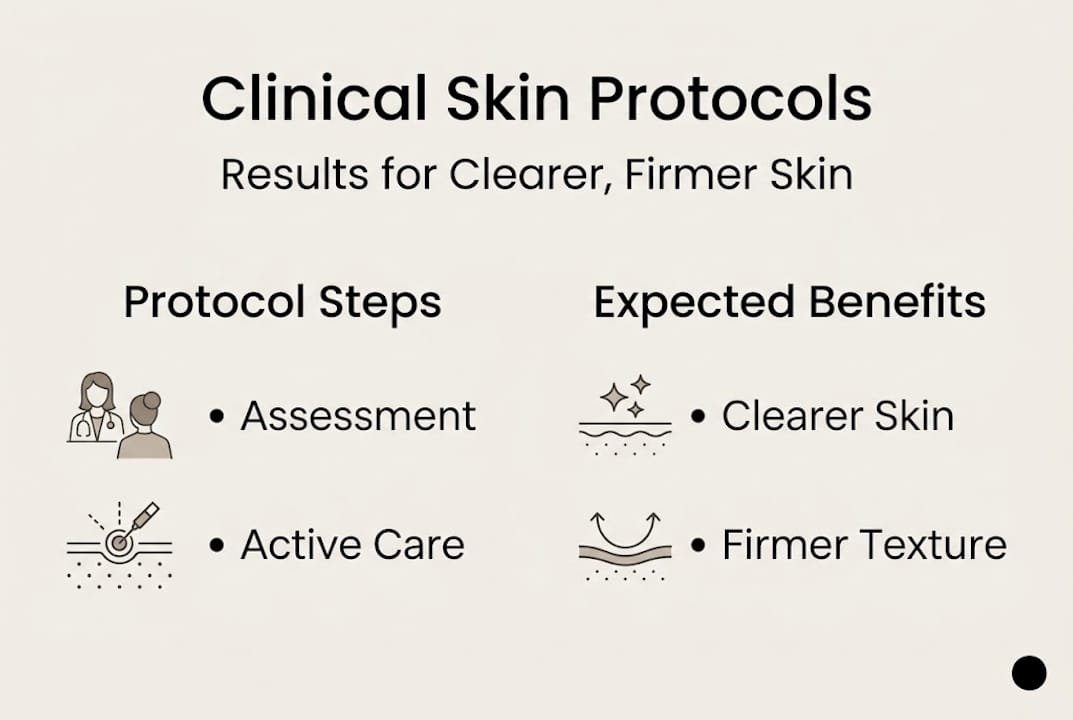
Standardisation is a critical safety mechanism. When a protocol is followed correctly, the risk of misusing potent actives is significantly reduced. Pretreatment assessment identifies contraindications before they become problems. Barrier support is built into every stage, because compromising the skin’s protective function with aggressive treatment is one of the most common clinical mistakes.
What to expect during a protocol course:
- Weeks 1 to 3: Skin may purge or show initial sensitivity as actives begin to work.
- Weeks 4 to 6: Texture and tone begin to improve; breakouts reduce in frequency.
- Weeks 8 to 12: Measurable improvements in target concerns, confirmed at follow-up assessment.
- Beyond 12 weeks: Maintenance protocols sustain results and prevent regression.
Common patient pitfalls that protocols are designed to prevent include over-exfoliation, skipping SPF post-treatment, and introducing new actives without clinical guidance. Each of these can undermine weeks of progress.
Pro Tip: Treat your clinical team as partners, not just service providers. Sharing honest feedback about how your skin is responding allows them to adapt the protocol in real time, which is where the real advantage of safeguarding your results lies.
SPF is not a finishing touch. It is a clinical requirement. Without daily broad-spectrum protection, many actives become counterproductive, and pigmentation concerns in particular will not resolve.
Beyond textbook protocols: The nuances most clinics miss
Here is something we observe consistently: many clinics invest heavily in devices and underinvest in the quieter, less glamorous elements that actually determine outcomes. Barrier support, homecare compliance, and ongoing protocol review rarely feature in a clinic’s marketing, yet they are often the deciding factors between a good result and a great one.
A written protocol is a starting point, not a guarantee. No two patients respond identically to the same actives or devices. Skin is dynamic, and a protocol that works well in weeks one to four may need adjustment by week eight. This is where clinical judgement becomes irreplaceable. Knowing when to pause a retinoid, when to introduce a new active, or when to switch device modalities requires experience that no algorithm can replicate.
We also challenge the assumption that more intensive always means more effective. Some of the most significant improvements we see come from protocols that prioritise barrier restoration and gradual active introduction over aggressive resurfacing. The skin responds better when it is supported, not overwhelmed. For a deeper look at expert protocol application in practice, the difference between a textbook approach and a truly personalised one becomes clear.
Discover evidence-driven skincare solutions
At The M-ethod Skin, we bring clinical protocol thinking directly to your skincare routine. Whether you are managing persistent acne, stubborn pigmentation, or the early signs of ageing, we offer access to prescription-strength actives and professional guidance that aligns with the same evidence-based principles outlined here. Products like PCA Clearskin are formulated to complement in-clinic protocols and support your homecare between appointments. Our wider range of Neostrata solutions delivers clinically validated results for resurfacing and renewal. Explore our curated collections and book a virtual consultation with our expert team to build a protocol that is genuinely tailored to your skin.
Frequently asked questions
Are clinical skin protocols safe for sensitive or darker skin tones?
Yes, reputable clinics tailor protocols to suit sensitive or deeper skin, using melanin-safe actives and minimising post-inflammatory hyperpigmentation risk through careful active selection and phased introduction.
How soon will I see results from a clinical skin protocol?
Most clients begin to see visible improvements within 8 to 12 weeks when consistency is maintained across both in-clinic treatments and homecare.
Do I need a dermatologist’s prescription for clinical skin protocols?
Prescription-strength ingredients often require a dermatologist or skin clinic recommendation, as clinical protocols are delivered in controlled settings with appropriate supervision for safety and effectiveness.
Can I combine home skincare with clinical protocols?
Absolutely. Coordinating clinic treatments with your home routine is standard practice, and homecare products prescribed as part of the protocol are essential for maximising and maintaining your results between appointments.