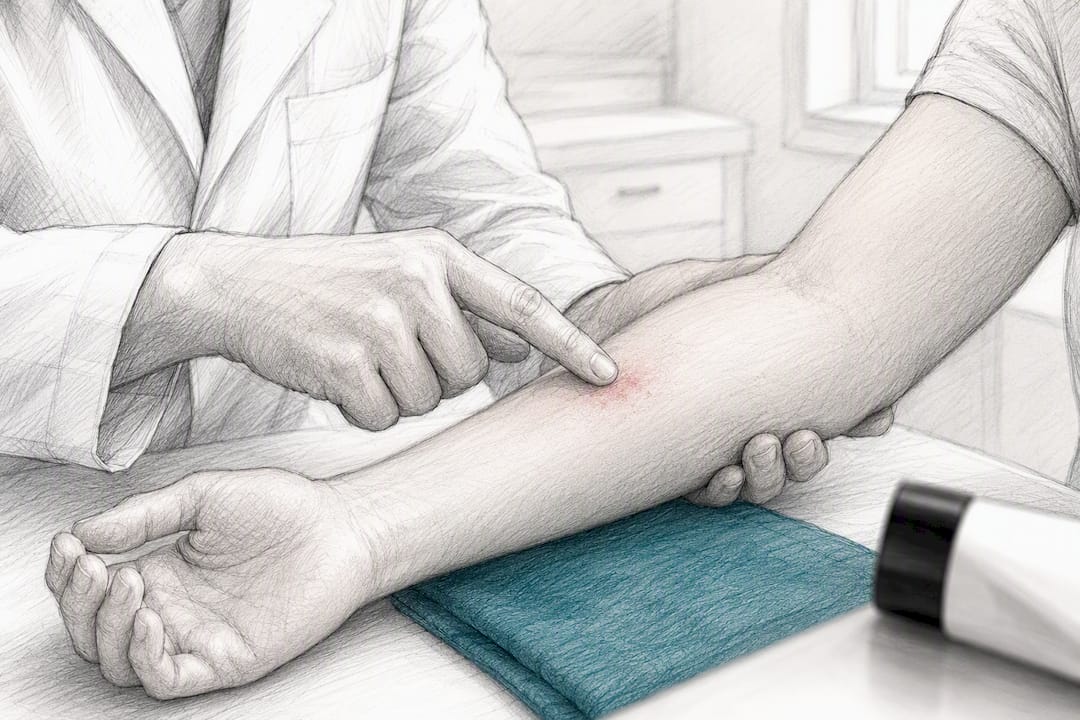


Fix Dry Skin With Slugging: Clinician Backed 1–3x/Week Plan
Slugging can genuinely help dry and barrier-damaged skin, but only as the final step in a routine, never as a standalone fix. It works by trapping the moisture already on your face, so applying it over bare, dry skin just seals in the dryness. The main caveat: skip it over active irritants like retinoids or acids, and stop immediately if you notice congestion. Patch-test first, then try spot slugging a few times per week before committing to nightly use.
TL;DR:
- Slugging locks in moisture already present on your skin and is most effective when paired with a hydrating serum or cream underneath.
- It is suitable for very dry, dehydrated, or barrier-compromised skin, but should be avoided by oily or acne-prone skin, especially in humid climates.
- Use a thin, even layer of a non-irritating occlusive, like petrolatum or ceramide-based products, and test on a small area before full-face application.
- Frequencies of one to three times weekly are recommended, with longer gaps after applying active ingredients like retinoids or acids to prevent irritation.
- Proper removal involves gentle cleansing with lukewarm water and double cleansing to avoid trapping residues that could cause breakouts or irritation.
Table of Contents
- What is slugging and how does it work?
- Who benefits from slugging and who should avoid it
- How to slug properly: the damp-skin rule and routine order
- Choosing the right occlusive: what to look for on the label
- Troubleshooting and when to stop
- How Them-ethod clinicians advise using slugging for dry skin
- Removing slugging layers and cleansing your skin afterwards
- What to expect and how to tell if it is working
- Common myths about slugging
- Alternatives if slugging is not right for you
- Adjusting slugging for the season
- What the research actually supports
- Sources
What is slugging and how does it work?
Slugging means applying an occlusive as the final layer of your evening routine, usually a petroleum-based balm, worn overnight and washed off in the morning. The term comes from the slug-like sheen it leaves on the skin, but the mechanism behind it is straightforward dermatology, not a beauty industry invention.
Your skin constantly loses water to the air around it, a process called transepidermal water loss (TEWL). An occlusive layer sits on top of the skin and physically blocks that evaporation, which is why national dermatology sources describe slugging as a cosmetic version of the occlusive dressings used clinically to treat compromised or post-procedure skin. The seal works from the outside in.
That single fact changes how you should use it. Slugging traps whatever moisture is already sitting on your skin. It does not add hydration, so applying it as the only product in your routine leaves you locking in a dry face rather than a hydrated one. This is why pairing it with a humectant matters more than the occlusive itself.
- Occlusives (petrolatum, mineral oil) reduce TEWL by forming a physical barrier
- Humectants (hyaluronic acid, glycerin) draw and hold water in the skin
- Emollients (ceramides, fatty acids) help repair the lipid barrier between skin cells
Layer a hyaluronic acid serum or a hydrating cream underneath, and slugging then locks that moisture in rather than sealing in nothing. Skip that step, and you are simply wrapping dry skin in plastic wrap.
Who benefits from slugging and who should avoid it
Slugging suits people with genuinely dry, tight, or flaking skin, particularly during winter months or after over-exfoliating. It also works well for anyone recovering from a compromised barrier, whether from harsh actives, cold weather, or ageing skin that produces less of its own oil.
Good candidates for slugging include:
- Very dry or dehydrated skin that flakes or feels tight after cleansing
- A barrier weakened by over-exfoliation, retinoid purging, or harsh cleansers
- Skin recovering from cold, dry winter air or heated indoor environments
- Mature skin with reduced natural oil production
People who should avoid or limit slugging:
- Oily or acne-prone skin, where trapping oil and sweat can worsen breakouts
- Anyone prone to folliculitis, since occlusion can trap bacteria around hair follicles
- Skin that is actively infected, inflamed, or weeping
- Those in hot, humid climates, where trapped heat and sweat increase discomfort
Pure petrolatum itself is non-comedogenic, so it will not clog pores on its own. The problem is the environment it creates underneath: trapped heat, sweat, and bacteria can aggravate skin that is already prone to breakouts or irritation, even though the product itself is not the direct cause.
Pro Tip: Before committing to a full-face routine, test slugging on your jawline or forearm for two nights running. If you wake up with heat rash, tiny bumps, or extra oiliness, that is your skin telling you to stick to spot treatment instead.
How to slug properly: the damp-skin rule and routine order
Getting the order right matters more than the product you choose. Follow these steps for a standard slugging session.
- Cleanse thoroughly. Remove all makeup, SPF, and daily grime. Slugging over unremoved product traps everything underneath it.
- Apply your treatment serum. If you use a retinoid or exfoliating acid that night, apply it now, but see the frequency notes below before layering an occlusive over it.
- Apply a hydrating serum or cream while skin is still slightly damp. This is the damp-skin rule: applying a humectant, such as HYDR8 B5™ intense, to slightly damp skin helps it draw in more water before you seal everything with an occlusive.
- Apply a thin, even layer of your occlusive. A pea-sized amount for spot slugging on cheeks or under-eyes, roughly a dime-sized amount spread thinly for full-face coverage. Clinicians recommend a modest, thin coat rather than a thick, goopy layer, since a thin film reduces TEWL just as effectively while feeling far more tolerable overnight.
- Protect your pillowcase. Use an old pillowcase or lay a thin towel over your pillow, since petrolatum-based balms will transfer.
Frequency guidance: dermatology centres generally recommend slugging one to three times a week for most people, reserving daily use for severely dry or barrier-damaged skin. If you use retinoids or AHAs/BHAs, leave a 24 to 48 hour buffer before slugging over the same area, since occluding fresh actives increases both irritation and penetration.
Spot slugging around the nose, cheeks, or under-eyes is the safer starting point for anyone new to the technique or unsure how their skin will react. Full-face application is worth trying only once you know spot treatment sits comfortably overnight.
Choosing the right occlusive: what to look for on the label
The classic slugging products are the ones dermatologists already recommend for dry, cracked skin, and for good reason: they have decades of clinical use behind them.
Vaseline (100% pure petroleum jelly) is the benchmark occlusive. Triple-purified petrolatum products like Vaseline Healing Jelly carry clinical evidence supporting barrier repair and are widely used for cracked, chapped skin, which is why several carry eczema association seals.
Aquaphor Healing Ointment blends petrolatum with glycerin and panthenol, giving it a slightly lighter feel while still forming a strong occlusive seal. Some users prefer it over pure Vaseline because the added humectants make it feel less heavy.
CeraVe Healing Ointment takes a similar petrolatum base and adds ceramides, aiming to combine occlusion with barrier-repair ingredients in one product. It suits anyone who wants the sealing effect of slugging alongside lipids that support the skin barrier directly.
For readers who want to avoid petrolatum entirely, plant-based balms containing shea butter or squalane offer a lighter occlusive effect, though generally less powerful at blocking TEWL. When choosing any option, look for:
- Fragrance-free formulations, since fragrance is one of the most common irritants under occlusion
- Short, simple ingredient lists with no added actives
- Dermatologist or National Eczema Association seals where present
If you have diagnosed eczema or a severely compromised barrier, ask a dermatologist whether a prescription emollient would serve you better than an over-the-counter balm, since prescription options are formulated for more severe barrier repair.
Troubleshooting and when to stop
Occlusion changes how everything underneath it behaves, including your active ingredients. Sealing a retinoid or an AHA/BHA under an occlusive layer increases both irritation and how deeply the active penetrates, which is why clinicians recommend waiting 24 to 48 hours after using a strong active before slugging over the same skin.
Watch for these warning signs:
- New breakouts, small bumps, or heat rash appearing where you slugged
- Increased redness, stinging, or burning the morning after
- A greasy, congested feel that does not improve after a few uses
- Any sign of infection, such as pus, spreading redness, or warmth
If any of these appear, stop slugging that area immediately, cleanse thoroughly, and patch-test a different spot before trying again. Persistent dryness that does not respond to slugging and humectants, visible signs of infection, or severe eczema flares are all reasons to book time with a dermatologist rather than continuing to self-treat, since prescription-strength therapy may be what your skin actually needs.
How Them-ethod clinicians advise using slugging for dry skin
Clinicians approach slugging as a supporting technique, not a standalone treatment. The damp-skin rule sits at the centre of that advice, alongside patch-testing before full-face use and a conservative frequency of one to three sessions a week for most skin types.
- Apply a humectant or hydrating serum first, while skin is still slightly damp, before any occlusive layer
- Patch-test on the jawline or forearm for 48 hours before trying a new occlusive on your whole face
- Pair persistent or severe dryness with a prescription-strength emollient rather than relying on slugging alone
For skin that needs more than an over-the-counter balm, a virtual consultation with a Them-ethod clinician can identify whether medical-grade moisturisers or a targeted barrier-repair protocol would serve you better than cosmetic slugging on its own.
Removing slugging layers and cleansing your skin afterwards
Rinsing with water alone will not shift petrolatum. Occlusive balms are formulated to resist water, which is exactly why they trap moisture so effectively, and it is also why a splash-and-go morning routine leaves a greasy residue behind.
Start by gently wiping away the bulk of the product with a soft cloth or cotton pad, this removes most of the excess before water even touches your skin. Follow with a gentle, non-stripping cleanser, ideally an oil-based or balm cleanser first if you are wearing a thick layer, then a cream or gel cleanser as a second step to make sure nothing lingers in your pores. Double cleansing works better than a single rinse when you have slugged overnight, since one wash usually leaves a faint film behind, particularly around the hairline and jaw.

Avoid hot water. It feels satisfying against greasy skin but strips more of the barrier you just spent the night trying to repair, undoing much of the point of slugging in the first place. Lukewarm water paired with a gentle cleanser removes the occlusive layer without stripping the lipids underneath it.
Once your skin is clean, resume your normal morning routine: antioxidant serum, moisturiser, and SPF. Skin that has been slugged overnight often feels noticeably softer and more supple once cleansed properly, which is the entire point of doing it in the first place.
What to expect and how to tell if it is working
Most people notice softer, less tight-feeling skin after just one or two sessions, since the occlusive effect on TEWL happens immediately rather than building up gradually. That immediate softness is not the same as long-term barrier repair, though, and the two get confused constantly.
Real barrier improvement, meaning less redness, fewer flare-ups, and skin that holds moisture well even without an occlusive, tends to show over two to four weeks of consistent, correctly layered use. If you are still seeing tightness or flaking after a month of slugging one to three times a week paired with a humectant, the technique itself is not failing. Something else in your routine, whether an active ingredient, a harsh cleanser, or an unaddressed skin condition, is likely working against you.
Signs things are improving: less flaking by morning, makeup sitting more smoothly the next day, and reduced sensitivity to products that used to sting. Signs things are going wrong: new bumps, ongoing greasiness that never settles, or skin that looks fine but feels increasingly reactive to everything you put on it. The second pattern usually means it is time to reduce frequency or stop entirely rather than push through.
Common myths about slugging
Myth: Slugging hydrates your skin. It does not. Slugging is purely occlusive, meaning its entire job is trapping water that is already there. Applied over bare, dry skin, it seals in dryness rather than fixing it, which is why pairing it with a humectant is the single most important step in the whole routine.
Myth: More product means better results. A thick, goopy layer is not more effective than a thin one. Clinicians consistently recommend a modest coat because it reduces TEWL just as well while feeling far more tolerable and reducing the trapped heat and sweat that cause discomfort.
Myth: Slugging works for every skin type. It does not. Oily and acne-prone skin generally does worse under occlusion, since trapped oil and bacteria can worsen breakouts even though petrolatum itself is non-comedogenic.
Myth: You need petroleum jelly specifically. Petrolatum is the most studied and clinically supported option, but healing ointments with added ceramides or humectants, and even plant-based balms for lighter coverage, all achieve a version of the same occlusive effect.
Myth: Slugging replaces moisturiser. It is a final seal, not a substitute for the hydrating steps underneath it. Skip the moisturiser and you have skipped the part that actually does the hydrating.
Alternatives if slugging is not right for you
Slugging is one tool among several for dry skin, and it is not the only route to a stronger barrier. If the trapped heat or heaviness does not suit you, a few alternatives achieve similar goals through different mechanisms.
Ceramide-rich moisturisers rebuild the skin’s lipid barrier directly rather than just sealing moisture on top of it. These suit people who find occlusion uncomfortable but still need serious barrier support.
Overnight sleeping masks offer a lighter, gel-based alternative that hydrates without the heavy, greasy finish of pure petrolatum, useful for combination skin that cannot tolerate full occlusion.
Humectant layering without an occlusive, meaning multiple thin layers of hyaluronic acid or glycerin-based serums applied to damp skin, can meaningfully improve hydration for people whose skin is dry but not severely compromised.
Prescription-strength emollients, used under clinical guidance, are the appropriate step up for eczema-prone or severely barrier-damaged skin where over-the-counter balms are not enough. This is the context where occlusive strategies have the strongest clinical backing, because they are paired with targeted prescription therapy rather than used alone.
A dedicated barrier-repair routine, built around lipids and reduced actives, addresses the root cause for chronically dry skin rather than managing it nightly.

Adjusting slugging for the season
Dry winter air pulls moisture from your skin faster, and indoor heating makes it worse. This is when slugging tends to earn its place most consistently, and daily use during particularly harsh winter stretches is more defensible than it would be the rest of the year.
Summer changes the calculation. Higher humidity means the air itself is holding more moisture, so your skin loses less water to begin with, and trapping heat under an occlusive layer becomes genuinely uncomfortable rather than merely optional. Most people do well dropping to spot slugging only, or skipping it most weeks in favour of a lighter humectant-only routine.
Air conditioning and heating both dry the air indoors regardless of season, so someone in a heavily air-conditioned climate through summer might still benefit from occasional slugging even while the general seasonal advice points the other way. Pay attention to your actual environment rather than the calendar. Travel is another trigger worth planning for: aeroplane cabins are notoriously dehydrating, and a single spot-slugging session the night before a long flight is a reasonable, low-risk way to arrive with your skin in better shape.
What the research actually supports
The evidence behind slugging is more modest than the trend suggests, and that gap is worth sitting with. Slugging has real mechanistic backing: occlusion reduces TEWL, and that is measurable, clinically understood dermatology. What it does not have is evidence that it does anything beyond that single function. The internet has turned a basic occlusive technique into something closer to a skincare cure, and the research simply does not support that leap.
Where conventional advice falls short is frequency. Plenty of content pushes nightly slugging as the goal, when the more defensible position, and the one dermatology centres actually recommend, is one to three times a week for most people. Daily use belongs to genuinely severe cases, not general maintenance.
If you take one thing from this: prioritise what goes underneath the occlusive, not the occlusive itself. A humectant on damp skin, sealed thinly, beats a thick layer of balm on dry skin every time. The order matters more than the product.
— Jess
Ready to build a barrier-repair routine around real hydration, not just occlusion? Explore medical-grade moisturisers and actives from NEOSTRATA, or speak with a Them-ethod clinician about whether your skin needs more than a nightly balm to recover properly.