



Seborrheic Dermatitis on the Face: A Calm, Effective Care Routine
Facial seborrheic dermatitis is best managed with a gentle, consistent routine: a mild cleanser, a fragrance-free moisturiser, mineral sunscreen, and, when flares appear, a medicated treatment chosen with a clinician. It is a common, recurring condition, not a hygiene problem, and it responds well when you stop fighting your skin and start supporting it. Below we cover how to recognise it, what to put on your face (and what to leave off), which treatments exist, and when it is time to get professional help.
TL;DR
- Facial seborrheic dermatitis shows up as red patches with greasy, yellowish scales around the nose folds, eyebrows and nasal bridge.
- A gentle cleanser twice a day, a fragrance-free moisturiser and a mineral sunscreen form the base of care, and harsh, fragranced or alcohol-heavy products tend to make flares worse.
- Prescription options include antifungal creams, short courses of low-potency corticosteroids and calcineurin inhibitors, each with its own safe-use rules.
- Because psoriasis, rosacea and contact dermatitis can look similar, a persistent rash deserves a proper diagnosis from a board-certified dermatologist.
Table of Contents
- What facial seborrheic dermatitis looks and feels like
- How it is diagnosed, and what it can be confused with
- The daily routine: a gentle foundation
- What “Malassezia-safe” skincare really means
- Treatment options and how to use them safely
- Lifestyle habits that make a difference
- Perspective
- Take the guesswork out of your routine
- When to seek medical advice
- FAQ
- Sources
What facial seborrheic dermatitis looks and feels like
According to the American Academy of Family Physicians, facial seborrheic dermatitis appears as symmetric, poorly defined red patches with oily, yellow scales, often affecting the nasolabial folds (the lines from nose to mouth), the upper eyebrows and the bridge of the nose. The word to notice is symmetric: the same areas tend to be affected on both sides of the face.
Most people describe it in a similar way:
- Flaking that returns in the same spots, even after it seems to clear
- Redness alongside a slightly shiny or greasy look
- Itching or a mild burning sensation, especially after using a strong product
- Flares that come and go, with many people noticing worse skin in cold, dry months
That last pattern is common enough that a seasonal routine helps. We cover winter adjustments in our guide to nourishing your skin in cold weather.
How it is diagnosed, and what it can be confused with
Diagnosis is clinical, which means a trained professional recognises it by its appearance and pattern. DermNet lists psoriasis, rosacea and contact dermatitis among the conditions to rule out, and a biopsy can be done if the picture is uncertain.
This matters because the care routines differ. A rash that is really contact dermatitis needs you to find and remove the trigger. Rosacea has its own triggers and treatments. The American Academy of Dermatology advises that you seek evaluation from a board-certified dermatologist for an accurate diagnosis, especially as the rash can mimic other skin conditions.
If you have never had a diagnosis, or the rash behaves differently from what you expect, a consultation is the sensible first step. Our online skin consultation with Dr Mandy is designed to give you a personalised assessment of your skin and routine without a trip to a clinic.

The daily routine: a gentle foundation
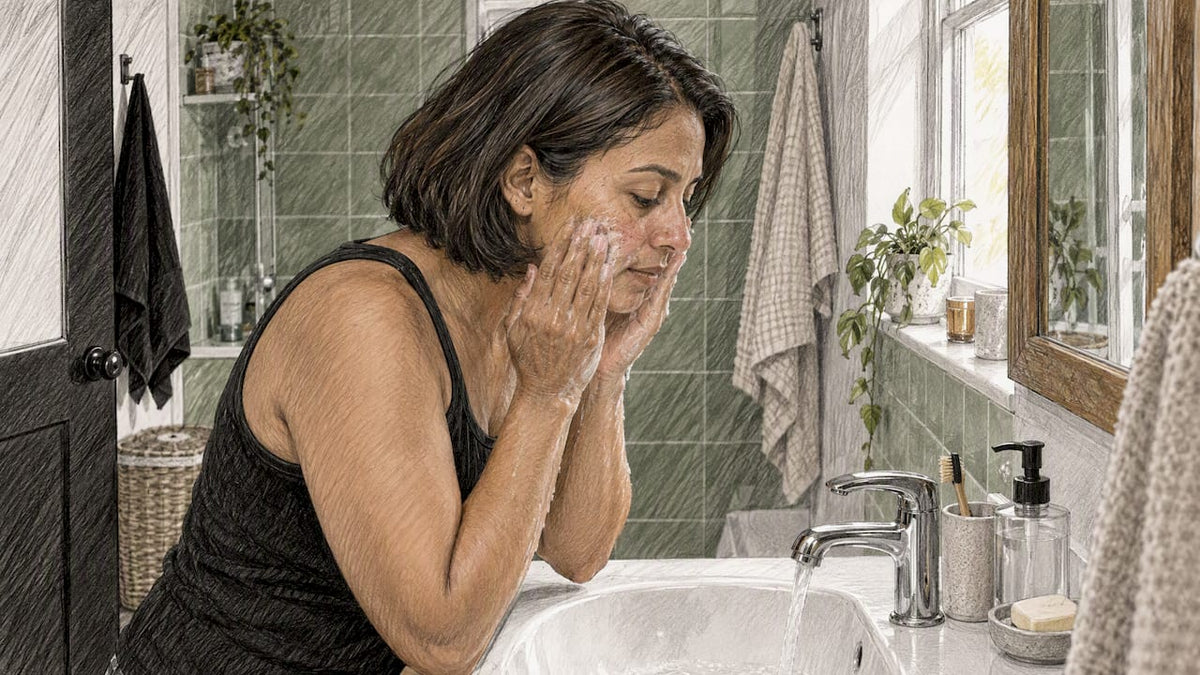
The American Academy of Dermatology’s self-care guidance is refreshingly simple. It recommends that you wash your face twice daily with a gentle cleanser, use a fragrance-free moisturiser and alcohol-free skin and hair products, avoid deodorant soaps and fragranced products, and manage stress.

Here is how that translates into a routine.
Morning
- Cleanse with lukewarm water and a mild, non-stripping cleanser. Pat dry; do not rub.
- Moisturise with a fragrance-free formula while the skin is still slightly damp.
- Protect with a broad-spectrum sunscreen (more on this below).
Evening
- Cleanse again, removing sunscreen and the day’s build-up.
- Apply any prescribed treatment to the affected areas exactly as directed.
- Moisturise over or after it, following your clinician’s instructions on order.
Choosing the cleanser
The goal is to remove excess oil and scale without leaving skin tight, because a damaged barrier tends to react more. Look for a soft, fragrance-free formula for sensitive skin. Our Esse Sensitive Cleanser is a probiotic cleanser made for sensitive skin, and it sits well in this kind of routine. Avoid bar and deodorant soaps and anything with a heavy scent.
Choosing the moisturiser
It is tempting to skip moisturiser when skin looks oily. But flaking and tightness are signs the barrier needs support. Choose a light, fragrance-free cream or lotion, and patch-test new products on a small area near the jaw for a few days before using them across the face. You can browse our moisturisers, serums and cleansers to compare formulas.
Sunscreen without the sting
The AAD notes that sunscreen for the face should ideally contain zinc oxide or titanium dioxide, which are less likely to irritate skin than other options. Check the active ingredients on the label. If you want a mineral option designed for everyday facial wear, see our Even Tone Mineral Sunscreen SPF 30 by Senté. For a deeper comparison, our guides explain mineral versus chemical sunscreen and how to choose by skin type.
What “Malassezia-safe” skincare really means
Seborrheic dermatitis is linked to Malassezia, a yeast that lives naturally on skin and feeds on skin oils. “Malassezia-safe” has become a popular label for products that avoid ingredients believed to feed that yeast, typically certain oils and fatty esters.
The evidence is more limited than the marketing. A 2023 paper notes that oils such as olive and coconut oil applied to the scalp may promote Malassezia growth, and also that clinical studies of hair oils’ effects on seborrheic dermatitis have not been done. So a cautious approach is reasonable, rather than a rigid rule.
Practical ways to apply this:
- Be wary of rich plant oils and heavy balms on the affected areas, especially if you notice a flare after starting them.
- Introduce one new product at a time, so you can tell what helps and what does not.
- Keep hair products off the face. Oils, pomades and styling products that run onto the forehead, brows and hairline can reach the areas most prone to flaking.
- Treat the label as a starting point. Read the full ingredient list and watch your own skin’s response.
If you want a second pair of eyes on your ingredient list, that is exactly what a personalised consultation is for.
Treatment options and how to use them safely
Care products keep skin comfortable, but active flares often need medication. The AAFP states that facial seborrheic dermatitis can be treated with antifungal creams, corticosteroid creams or ointments, and calcineurin inhibitors. The right choice depends on severity, your skin and your history.
| Treatment type | What it does | Safe-use points |
|---|---|---|
| Antifungal creams | Reduce the Malassezia yeast load | Follow the directions; stop and tell your clinician if burning or irritation develops |
| Low-potency corticosteroids | Calm inflammation and redness | Short, intermittent courses only |
| Calcineurin inhibitors | Calm inflammation without a steroid | Recommended when other treatments fail or to avoid long-term corticosteroid use |
| Supportive non-drug ingredients | May help recovery and fewer flares | Work best alongside, not instead of, medical advice when the rash is active |
Corticosteroids: short and intermittent
Low-potency topical corticosteroids may be used for short, intermittent courses, but the AAFP discourages long-term use because of risks including skin thinning. The facial skin is thin, so never extend a steroid course beyond what your prescriber advised.
Antifungal products and irritation
Ketoconazole is a common antifungal. Its US prescribing information for the 2% shampoo states that it can cause itching, burning, irritation and hypersensitivity, including severe reactions. If you use any antifungal near the face, keep it away from the eyes, stop if you react, and speak to your clinician or pharmacist about the right product for facial skin.
Supportive ingredients
A 2019 review found that non-pharmacological ingredients such as zinc, piroctone olamine, biosaccharide gum-2 and stearyl glycyrrhetinate have shown potential to support recovery and reduce flare-ups. The authors’ perspective is that such products may help manage facial seborrheic dermatitis and reduce reliance on long-term drug use. They are a useful part of a maintenance plan once the skin has calmed.
Lifestyle habits that make a difference
Stress is one of the factors the AAD asks people to manage, and many people find flares follow demanding periods. Sleep, regular movement and simple wind-down habits help. Weather matters too: cold wind and indoor heating dry the skin, and our partners have a useful angle on protecting your skin during winter, including stress and harsh weather.
A few other habits are worth building in:
- Use lukewarm rather than hot water on the face.
- Wash pillowcases and anything that touches your face regularly.
- Keep fingers away from scaly areas; picking prolongs irritation.
- Give a new routine several weeks before judging it, unless it stings or worsens the rash, in which case stop and seek advice.
Perspective
At the M-ethod Skin, we see many people who have cycled through harsh “oil-control” cleansers, strong actives and heavily scented creams, only to find their redness and flaking worsen. Our view is that facial seborrheic dermatitis rewards precision and restraint rather than more products.
We believe in starting with an accurate assessment, because the skin around the nose and brows is also where rosacea, contact dermatitis and psoriasis can appear. From there, we build a routine around a gentle cleanser, a fragrance-free moisturiser and mineral sun protection, and we reserve active treatment for when it is needed. Our clinician-led approach, led by a UK-trained doctor, is designed to give each person a plan that fits their skin, climate and lifestyle.
This is why we offer one-to-one online consultations alongside a curated range of medical-grade skincare: the guidance and the products work together, and we can adjust the plan as your skin changes through the seasons.
Jess
Take the guesswork out of your routine
If your skin keeps flaring, or you are unsure whether it is seborrheic dermatitis at all, we can help you build a plan. Book an online skin consultation for a personalised review of your skin and products, or browse our medical-grade skincare range for gentle cleansers, moisturisers and sunscreens. We ship internationally, including to the United States.
When to seek medical advice
Self-care is a reasonable start for mild flaking, but see a board-certified dermatologist or your doctor if:
- The rash does not improve after a few weeks of gentle care
- It keeps returning quickly after treatment
- The skin is painful, cracked, weeping or crusted, or looks infected
- It spreads, or the look of the rash changes, which may suggest another condition
- You are unsure of the diagnosis, since psoriasis, rosacea and contact dermatitis can look alike
- You are relying on a steroid cream for more than a short course
Seek urgent care for swelling of the face or lips, or signs of a severe reaction after using any product.
FAQ
What can treat seborrheic dermatitis on the face?
Options include antifungal creams, short courses of low-potency corticosteroids and calcineurin inhibitors, according to the AAFP. Calcineurin inhibitors are recommended when other treatments fail or to avoid long-term steroid use. A clinician should choose the product and the length of use.
Is seborrheic dermatitis the same as having dirty or unwashed skin?
No. It is linked to a yeast that naturally lives on skin and to the skin’s reaction to it, not to poor hygiene. In fact, the AAD advises washing the face twice daily with a gentle cleanser, while avoiding harsh or deodorant soaps that can irritate.
Should I use oils on skin affected by seborrheic dermatitis?
Be cautious. Research notes that oils such as olive and coconut oil may promote Malassezia growth on the scalp, although clinical studies are lacking. Try fragrance-free lotions or creams first, and add any new product one at a time.
Which sunscreen is best for facial seborrheic dermatitis?
The AAD suggests sunscreens containing zinc oxide or titanium dioxide, as they are less likely to irritate than other ingredients. Choose a broad-spectrum SPF 30 or higher, and patch-test before applying it across the face.
Sources
- Seborrheic Dermatitis: Diagnosis and Treatment, American Family Physician (2025)
- Seborrheic dermatitis: Self-care, American Academy of Dermatology
- Seborrheic dermatitis: Overview, American Academy of Dermatology
- Seborrheic dermatitis: Causes and treatment, DermNet
- Hair Oils May Worsen Seborrheic Dermatitis in Black Patients, PMC (2023)
- Topical Non-Pharmacological Treatment for Facial Seborrheic Dermatitis, PMC (2019)
- Nizoral (ketoconazole) 2% shampoo label, FDA