



Red Light Therapy for Wrinkles: What the Evidence Shows
Red light therapy can soften fine lines and wrinkles, but only modestly, and only with consistent use. The best evidence comes from trials of red and near-infrared LED light around the eyes and across the face, where wrinkle depth and skin texture improved over several weeks. The results are not permanent, they are gentler than injectables or in-clinic energy treatments, and they depend heavily on the device and the protocol you follow.
Below we explain how it works, what the studies measured, how to use it, who should be cautious and when a different treatment makes more sense.
TL;DR
- Red (around 660 nm) and near-infrared LED light has real clinical support for reducing the look of fine lines, with the strongest data around the eyes.
- Expect gradual change over weeks, not days, and expect it to fade if you stop.
- “FDA cleared” for a home device speaks to safety, not to proof that it removes wrinkles.
- Photosensitising medications or conditions, and rosacea with visible vessels, call for a professional opinion first.
- Deeper lines and loss of firmness usually need in-clinic options such as micro-needling, polynucleotides, Profhilo or HIFU.
Table of Contents
- How red light is thought to smooth skin
- What the clinical studies found
- Why results differ so much between devices
- How to use it for the best chance of results
- Who should be careful
- Red light compared with in-clinic treatments
- Our perspective
- Want advice on your own skin?
- FAQ
- Sources
How red light is thought to smooth skin
Red light therapy, also called photobiomodulation, uses low-level red or near-infrared light that is absorbed by skin cells without heating or cutting the skin. The American Academy of Dermatology describes it as a non-invasive treatment, and notes that a few dermatologists offer it for signs of ageing such as wrinkles, as well as acne and hair loss.
The working theory, as explained by Stanford Medicine dermatologists, is that light encourages blood vessels to widen, which increases blood flow and nutrient delivery, while fibroblasts are stimulated to make more collagen and elastin. More collagen and elastin means a slightly plumper, smoother surface. The same Stanford piece says wrinkle reduction is among the applications with fairly robust evidence, unlike claims about athletic performance, which lack data.
Note what this does not do. It does not paralyse the muscles that crease your forehead, it does not fill volume, and it does not lift sagging tissue. It nudges the skin’s own repair machinery, which is why the changes are subtle.
What the clinical studies found
Wrinkles around the eyes
The most quoted result is a randomised controlled trial comparing red and amber LED protocols at the same light dose. Ten sessions of 660 nm red light over four weeks produced a 31.6% reduction in periocular wrinkle volume. The same research reported patient satisfaction of up to 79.6% after treatment.

Two cautions apply. The area studied was the skin around the eyes, where lines are fine and respond best, so you cannot assume the same percentage for deep forehead or nasolabial folds. And “wrinkle volume” is a measured quantity under controlled conditions, not a promise about how your mirror will look.
Frequency matters
Another randomised, sham-controlled, double-blind trial enrolled 95 women aged 45 to 60 and tested how often a red LED mask (660 nm) should be applied for facial rejuvenation. The fact that researchers are testing frequency at all tells you something practical: the schedule is part of the treatment, and a mask used once in a while is not the same as one used on a plan.
If you want a broader look at what people typically report visually, this guide to red light therapy before and after results covers typical outcomes and treatment schedules.
At-home devices
A 2026 systematic review of at-home LED devices found statistically significant improvements in facial ageing measures, including wrinkle depth, texture and elasticity, particularly with red and near-infrared wavelengths. Results generally needed consistent use over several weeks. Adverse events were rare, mild and temporary, limited to short-lived redness or irritation.
A note on safety and cancer worries
People often ask whether stimulating cells with light could be risky. A systematic review of oncologic safety found no clinical evidence linking red or near-infrared photobiomodulation to new or recurrent malignancies. That is reassuring, but it is a review of existing studies, not a licence to ignore the medical history questions below.
Why results differ so much between devices
Dermatologists point to one big problem: there is no standard protocol. Studies use different devices, intensities and durations, so results cannot be compared directly. The AAD’s guidance stresses that more is not always better, and that following the protocol validated for your specific device is the only reliable way to reproduce clinical results at home.
When you compare masks and panels, look for:
- Wavelength: the trials above used red light around 660 nm, sometimes with near-infrared.
- Published testing: evidence on that device or that wavelength and dose, not generic claims about “LEDs”.
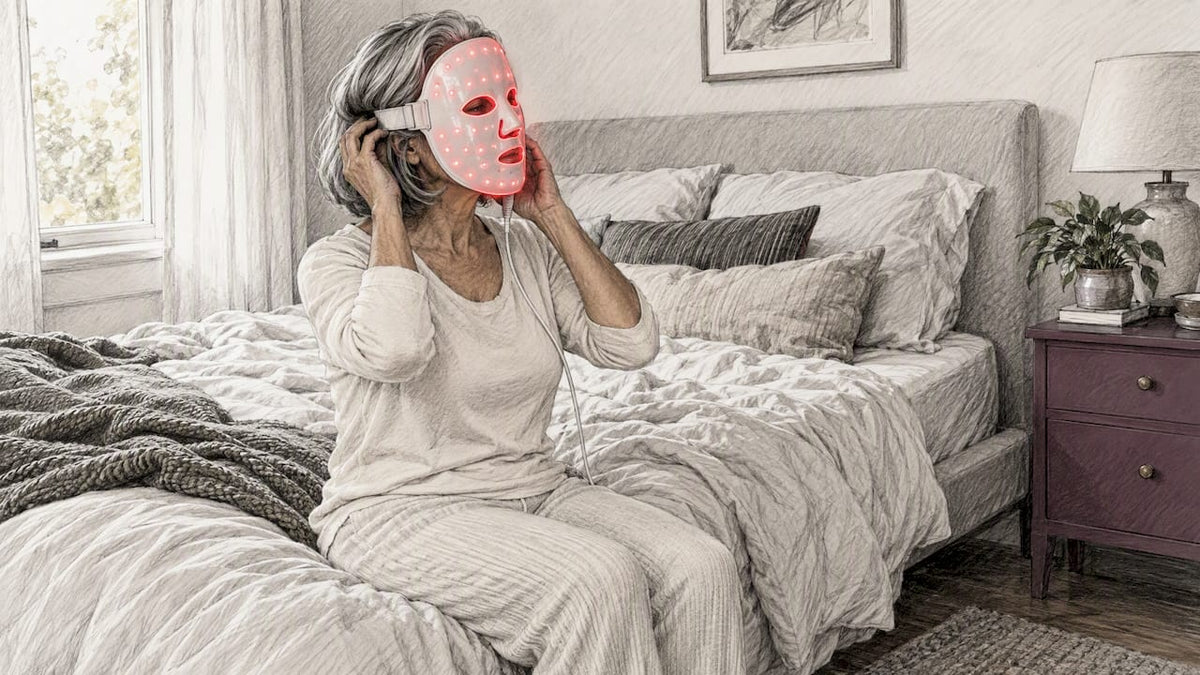
- Coverage and fit: a mask that sits close to the face delivers light more evenly than a handheld wand passed over the skin.
- Manufacturer schedule: session length and frequency should be stated, and you should follow them.
We go deeper on this in our guides on how to select an LED mask, whether LED masks work and whether an LED mask is worth it.
What “FDA cleared” really means
In the US you will see “FDA cleared” on many home devices. According to the AAD, clearance for consumer red light devices focuses on safety, meaning the device is unlikely to cause harm such as burns under normal use, not on proof that it reduces wrinkles. “FDA approved” is not the right term for these devices at all. Treat clearance as a minimum safety check, then look at the evidence behind the specific wavelength and dose.
How to use it for the best chance of results
- Start with clean, dry skin. Remove makeup and active products your clinician has told you to avoid before light.
- Protect your eyes as the device instructions direct, using the supplied goggles or shields.
- Follow the device’s own schedule. Do not extend sessions or add days because you want faster results. The trial that produced the 31.6% figure used ten sessions across four weeks, and that is a good reminder that structured, finite courses are what were tested.
- Photograph your skin under the same lighting every two weeks. Subtle changes are easy to miss day to day.
- Judge at around eight to twelve weeks, not after a handful of sessions. Most trials ran several weeks at least.
- Plan for maintenance. According to Stanford’s summary, benefits depend on ongoing use and tend to regress when you stop. Think of light as a routine like a topical, not a one-off procedure.
If you want a plain-language overview of where light fits next to actives and sun protection, read the role of LED therapy in your skincare regimen. For a specific home option, our write-up on the Omnilux Contour Face LED mask explains how that mask is used.
Who should be careful
Red light is not one-size-fits-all. The AAD notes that people with photosensitising conditions such as lupus, or who take medicines that increase light sensitivity, can see symptoms worsen or skin reactions. Talk to a dermatologist or an experienced aesthetic clinician before starting if that describes you, and bring your full medication list, including any prescription retinoids or antibiotics.
Rosacea and visible vessels. LED light is sometimes used for general redness, but the AAD says laser and specialised light treatment of rosacea-related visible vessels should be done by a board-certified dermatologist, because inexperienced use can cause burns or lasting pigment changes. If redness is your main concern, see our explainer on redness relief for skin and speak to a clinician rather than buying a device to treat established vessels.
Stopping too soon. Not a safety issue, but a common reason people feel it “didn’t work”. Without a continuing schedule the skin drifts back.
Red light compared with in-clinic treatments
LED light is a low-intensity, low-downtime option. Clinical treatments act more strongly or in a different way. Here is how we explain the difference to patients.
| Approach | What it mainly does | Best for | Maintenance |
|---|---|---|---|
| Red light (LED) | Gently stimulates collagen and elastin, improves texture | Fine lines, early ageing, gradual change | Ongoing sessions |
| Micro-needling (SkinPen) | Controlled micro-injury to trigger collagen renewal | Texture, scarring, fine lines | Courses of treatments |
| Polynucleotides | Injectable skin conditioner aimed at quality and hydration | Crepey, thin or tired-looking skin | Courses of treatments |
| Profhilo | Injectable hydrating treatment for skin laxity | Loss of bounce and fine lines | Courses of treatments |
| HIFU | Focused ultrasound for non-surgical lifting | Mild to moderate sagging | Periodic repeat treatments |
These options are not rivals. Many people use LED at home between in-clinic courses, and a clinician can tell you which combination suits your skin.
Our perspective
We sell and recommend medical-grade skincare, and we also treat patients in clinic, so we see both ends of this conversation. Our view is simple. Red light is a worthwhile supporting step for people who want gradual smoothing and who will actually stick to the schedule. It is not a substitute for sunscreen, a good retinoid or antioxidant routine, or a medical treatment for deeper lines.
The mistake we see most often is buying a device first and asking questions later. A mask that does not suit your skin, medication list or concern is wasted money, and that is exactly what dermatologists warn about. A short conversation about your skin, goals and history usually saves time and cost.
We would rather you set realistic expectations: subtle, cumulative change, tracked with photographs, with sun protection and prescription-strength actives doing much of the heavy lifting. If after twelve weeks the lines are still what bothers you, that is the point to look at in-clinic options.
— Jess
Want advice on your own skin?
If you are unsure whether LED, prescription skincare or a clinic treatment suits your lines, start with our online skin consultation with Dr Mandy, available to international clients. We also offer Profhilo, micro-needling, HIFU and polynucleotides in London and Athens with a UK-trained doctor, and you can browse medical-grade serums, moisturisers and sunscreen to support any light routine.
FAQ
Does red light help wrinkles?
Yes, for fine lines and texture, with the strongest evidence around the eyes. One randomised trial found a 31.6% reduction in periocular wrinkle volume after ten sessions over four weeks. Results are modest and depend on the device and a consistent schedule.
Does light therapy reduce wrinkles on the whole face?
Systematic review evidence on at-home LED devices shows improvement in wrinkle depth, texture and elasticity with red and near-infrared wavelengths. This usually takes several weeks of regular use. Deeper folds and sagging respond less, and may need an in-clinic treatment.
Are the results permanent?
No. The stimulation of collagen and blood flow depends on continued treatment, so improvements typically regress if you stop. Plan on a maintenance routine rather than a finite course.
Is red light therapy safe?
For most healthy people, side effects in studies were rare, mild and temporary, such as brief redness. A review of the oncologic literature found no evidence linking it to cancer. If you take photosensitising medication or have a condition such as lupus, check with a dermatologist first.
Is LED light good for rosacea?
It may help general redness for some people, but it is not the main clinical choice for established visible vessels. The AAD advises that laser and specialised light treatments for rosacea be done by a board-certified dermatologist.
Sources
- AAD: Is red light therapy right for your skin?
- Stanford Medicine: Red light therapy, what the science says
- PubMed: Photobiomodulation and periocular wrinkle volume, randomised controlled trial
- PubMed: Photobiomodulation application frequency in facial rejuvenation
- Aesthetic Plastic Surgery: At-home LED photobiomodulation, systematic review
- PMC: Oncologic safety of low-level light therapy for skin rejuvenation
- AAD: Rosacea diagnosis and treatment