

Articolo: Clinician Picks: Microneedling (3–5 Sessions) or Microdermabrasion
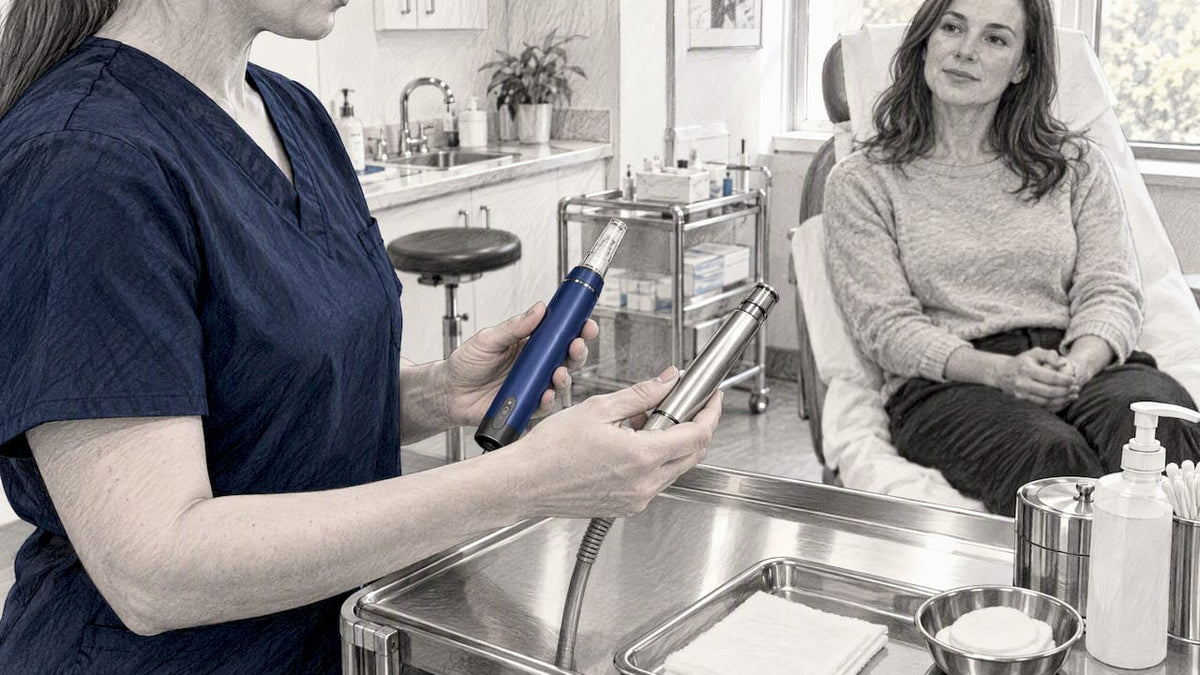
Clinician Picks: Microneedling (3–5 Sessions) or Microdermabrasion
Microdermabrasion suits surface concerns like dullness, uneven tone, mild texture and enlarged pores, with minimal downtime. Microneedling works deeper, stimulating collagen for atrophic acne scars and more stubborn texture loss, though it needs longer recovery and a trained provider. Radiofrequency microneedling carries extra risk, so provider selection matters more than ever; understanding red light therapy contraindications can help clarify the safety considerations of related light-based adjuncts.
TL;DR:
- Microdermabrasion effectively improves surface concerns like dullness and enlarged pores but does not impact deeper scarring or pigmentation.
- Microneedling stimulates collagen production in the dermis, making it more suitable for atrophic scars, deeper textures, and lasting remodelling.
- Microneedling involves more downtime, with redness and pinpoint bleeding lasting up to three days, and requires professional-grade equipment and technique.
- RF-microneedling poses higher risks like burns and scarring and should only be performed by licensed, trained providers.
- Both treatments are best matched to specific skin concerns and should be selected after individual assessment and consultation.
Table of Contents
- What is microdermabrasion and how does the treatment work?
- How does microneedling work and what should you expect from treatment?
- Microdermabrasion vs microneedling: key differences in results, downtime and cost
- Who should choose which treatment: a practical decision guide
- What happens during treatment and how to recover afterwards
- Risks, contraindications and what the regulators say
- The M-ethod Skin perspective: how we assess suitability and run treatments
- What the evidence actually supports, and where conventional advice falls short
- Book a professional assessment with The M-ethod Skin
- FAQ
- Sources
What is microdermabrasion and how does the treatment work?
Microdermabrasion uses a crystal or diamond-tipped device paired with gentle suction to lift away the outermost layer of dead skin cells. The mechanism is purely mechanical: there is no injury below the epidermis, which is why recovery is so quick.
A typical session runs 30 to 60 minutes, and most protocols call for a course of treatments rather than a single visit. According to StatPearls, courses are often structured as multiple weekly sessions, depending on the device and the skin concern being addressed.
- Immediate effect: smoother texture and a brighter complexion straight after treatment.
- Limitation: results are confined to the epidermis, so deeper scarring or significant pigment issues will not respond.
- Who performs it: trained aestheticians or clinicians, reflecting its lower procedural complexity compared with microneedling.
Because it only addresses the surface, we tend to recommend microdermabrasion for maintenance and glow rather than as a primary fix for structural skin damage.
How does microneedling work and what should you expect from treatment?

Microneedling, also called collagen induction therapy, creates controlled micro-injuries in the dermis using fine needles. The body responds to this injury by producing new collagen and elastin, which is what drives the longer-term remodelling effect that microdermabrasion cannot achieve.
Device choice changes the clinical picture considerably:
- Manual rollers: the least precise option, with inconsistent needle depth and higher risk of uneven results.
- Medical-grade dermapens: allow controlled depth adjustment and sterile, single-use tips, which is why clinics favour them.
- RF-microneedling devices: add thermal energy to the mechanical injury, intensifying remodelling but also raising the risk profile.
According to the American Academy of Dermatology, a standard course runs a standard course of treatments spaced weeks apart, giving the skin time to lay down new collagen between sessions. Full remodelling continues for months after the final appointment. Sterile technique and professional-grade equipment matter enormously here: this is an invasive procedure, and at-home rollers are not a safe substitute for clinical devices.
Microdermabrasion vs microneedling: key differences in results, downtime and cost
The two treatments differ most in depth of action, and that difference drives everything else.
- Mechanism and depth: microdermabrasion polishes the epidermis; microneedling triggers a wound-healing response in the dermis, which is why it reaches scarring that microdermabrasion cannot touch.
- Best indications: microdermabrasion suits dullness, mild texture and enlarged pores; microneedling is better suited to atrophic acne scars, deeper texture irregularities and enhancing absorption of topical actives.
- Downtime and pain: microdermabrasion causes mild redness that fades within hours and is usually done without numbing; microneedling causes redness and pinpoint bleeding that can last 2 to 3 days, and topical anaesthesia is common.
- Session count and timeline: microdermabrasion courses often run 4 to 6 weekly sessions; microneedling typically needs 3 to 5 sessions at 2 to 4 week intervals, with visible improvement building over several months.
- Cost: microdermabrasion is generally the more affordable option per session given its lower complexity, while microneedling commands a higher price reflecting its clinical oversight and equipment.
Some practices use microdermabrasion to prep the skin before a deeper procedure, briefly improving topical penetration. That combined approach can be useful, but it does not replace microneedling’s collagen-building effect where scarring is the main concern.
Who should choose which treatment: a practical decision guide
Matching the treatment to the complaint is the single most useful thing you can do before booking anything.
- Dullness, mild texture, uneven tone or enlarged pores: microdermabrasion is usually the sensible first step.
- Atrophic acne scars or deeper textural damage: microneedling is the better match, since it works below the surface where the scarring actually sits.
- Darker skin tones: both treatments carry some risk of post-inflammatory hyperpigmentation, so a patch test and a cautious, gradual approach matter more than the choice of device itself.
- Recent isotretinoin use, active infection or a history of keloid scarring: these are red flags for either procedure and warrant a clinical assessment first, as noted by StatPearls.
Before booking, ask your provider what device they use, how many sessions they recommend for your specific concern, and what the follow-up and aftercare plan looks like.
Pro Tip: Bring photos of your skin in different lighting to your consultation. It helps your clinician judge texture and pigment more accurately than a single in-room assessment.
What happens during treatment and how to recover afterwards
Microdermabrasion feels like a firm, scratchy massage and is over quickly, with no real preparation needed beforehand. Microneedling involves a numbing cream applied around 20 to 30 minutes before the needling itself, and most people describe the sensation as a vibrating scratch rather than sharp pain.
- Immediate side effects: mild redness after microdermabrasion, usually gone within a few hours; redness, tightness and pinpoint bleeding after microneedling, typically settling over 2 to 3 days.
- Sun protection: essential after both treatments, since freshly treated skin is more vulnerable to UV damage.
- Active ingredients: avoid retinoids and exfoliating acids for several days after microneedling until the micro-channels have closed.
- When to seek review: persistent swelling, pus, or fever after microneedling warrants prompt medical attention.
Risks, contraindications and what the regulators say
Both treatments are generally safe when performed correctly, but they are not risk-free, and the risk profile differs meaningfully between them.
- Shared contraindications: active skin infections, recent isotretinoin use, a tendency to keloid scarring and immunosuppression.
- Microdermabrasion: lower procedural risk overall, though caution is advised for those with rosacea or visible telangiectasia, according to StatPearls.
- Microneedling: more invasive by nature, carrying higher infection and scarring risk if performed with poor technique.
The FDA has reported that radiofrequency microneedling devices have been linked to serious complications including burns, scarring, fat loss and nerve damage, and recommends these procedures only be performed by licensed, trained providers, according to the FDA’s safety communication. This distinction matters: standard microneedling and RF-microneedling are not interchangeable from a safety standpoint, and choosing a provider who understands that difference is one of the most important decisions you will make.
The M-ethod Skin perspective: how we assess suitability and run treatments
We operate as a high-end, international online skincare boutique specialising in prescription-strength and dermatologist-recommended skincare products, treatments and consultations. When we assess someone for microneedling, we look at scarring depth, skin tone, medical history and realistic goals before recommending a device or protocol. We use professional equipment, including SkinPen technology, and build aftercare into every plan to reduce complication risk. Where surface concerns are the main issue, we often recommend starting conservatively rather than reaching straight for a more invasive option, and our online consultations help triage which route suits you before you commit to an in-clinic visit.
What the evidence actually supports, and where conventional advice falls short
Most comparisons treat microdermabrasion and microneedling as competing options, as if one simply outperforms the other. That framing misses the point. They solve different problems, and the real skill lies in matching the treatment to the complaint rather than chasing whichever one sounds more advanced.

Microneedling’s reputation for scar treatment is well earned. Reviews and trials consistently show meaningful improvement in atrophic acne scars after a handful of sessions, with mild and transient side effects in most cases, as summarised in a systematic review of microneedling for atrophic scars. What gets underappreciated is how much the device and the provider’s technique shape that outcome. Two people having “microneedling” can have very different experiences depending on needle depth, passes, and whether radiofrequency is involved.
What we think readers should prioritise first is not which treatment sounds more impressive, but which provider demonstrates genuine clinical judgement. A good consultation should talk you out of an unnecessary procedure as readily as it recommends one.
— Jess
Book a professional assessment with The M-ethod Skin
Choosing between microdermabrasion and microneedling depends on details only a proper skin assessment can reveal. We offer online skin consultations to help you work out which route fits your skin, alongside in-clinic microneedling and related treatments delivered using professional medical devices. Book a consultation to get a personalised skincare plan.
This article is general information, not a substitute for advice from a qualified doctor. Consult a qualified healthcare professional about your own circumstances before acting on anything here.
FAQ
Is microneedling good for eczema?
Microneedling is not generally recommended on skin with active eczema flare-ups, since the controlled micro-injuries can aggravate inflamed or compromised skin barriers. A clinician should assess the area and confirm it is free of active flare before considering treatment.
What are the benefits of microneedling?
Microneedling stimulates collagen and elastin production, which can improve atrophic acne scars, fine lines and overall skin texture over a course of sessions. It can also temporarily enhance how well topical products absorb into the skin.
Is there anything better than microneedling for acne scars?
For atrophic acne scars specifically, microneedling has strong support from randomised trials and systematic reviews, and it is often combined with adjuncts like chemical peels for added benefit, as outlined in research on atrophic scar treatment. Whether another option works better depends on scar type and skin tone, which is why a professional assessment matters more than a generic ranking.
Is microdermabrasion good for acne scars?
Microdermabrasion works on the epidermis only, so it is better suited to surface texture and dullness than to deeper atrophic acne scars. For true scar remodelling, microneedling reaches the dermal layer where that damage actually sits.
Sources
- Microneedling: What to know | American Academy of Dermatology (AAD)
- Potential risks with certain uses of radiofrequency (RF) microneedling devices | FDA
- Microdermabrasion - StatPearls - NCBI Bookshelf
- Microneedling in the treatment of atrophic scars: systematic review (PMC)