



Global skincare consultation access: what it means for you
TL;DR:
- Global skincare consultation access allows people worldwide to receive personalized advice from skin experts, regardless of location. Technology enables remote assessments, helping bridge the gap caused by shortages of dermatologists in underserved regions. Virtual consultations improve skin health literacy and access, but limitations include variable quality and the need for medical diagnosis in complex cases.
Global skincare consultation access is defined as the ability of individuals worldwide to receive personalised, expert advice on skin health through virtual or in-person professional services. The industry term for this model is “teledermatology” when delivered digitally, though the broader concept covers everything from video consultations with aesthetic doctors to app-based skin assessments. Demand for this kind of access has grown sharply as people recognise that generic skincare advice rarely addresses their specific concerns. Them-ethod sits at the centre of this shift, offering virtual skin consultations with top clinicians to clients across the globe, regardless of where they live.
What is global skincare consultation access and why does it matter?
Global skincare consultation access describes the full range of services, platforms, and systems that allow people to connect with qualified skin experts anywhere in the world. The core promise is personalisation: a clinician assesses your specific skin type, concerns, history, and goals, then builds a plan around you rather than a generic skin category.
The scale of unmet need makes this concept urgent. Over 3.5 billion people live in regions with fewer than one dermatologist per 100,000 people, far below the WHO-recommended four per 100,000. That gap means billions of people with conditions such as acne, pigmentation, rosacea, and eczema have no realistic path to specialist care through traditional routes.
Technology has changed that equation. Video consultations, AI-assisted skin analysis, and international e-commerce platforms now make it possible to receive a clinician-reviewed skincare plan from London, Athens, or anywhere else with an internet connection. The result is a genuinely global market for expert skin advice, one that rewards providers who combine clinical rigour with digital accessibility.
Why is access to skincare advice so uneven globally?
The disparity in dermatology access is not simply a matter of geography. Financial constraints, cultural stigmas, and systemic barriers all contribute to what researchers now call “dermatology deserts”: regions where specialist skin care is effectively unavailable to most of the population.
The populations most affected include:
- Rural communities in sub-Saharan Africa, South Asia, and parts of Latin America, where dermatologist density is critically low
- Low-income urban populations who cannot afford private consultations even when specialists are nearby
- Communities where skin conditions carry cultural stigma, reducing the likelihood of people seeking help
- Elderly and disabled individuals who face physical barriers to attending in-person clinics
“Skin diseases affect two billion people globally, yet access to dermatological care remains one of the most neglected areas of health equity. Making skin health a universal right requires training, technology, and sustained investment.”
The L’Oréal Act for Dermatology is investing 20 million euros over five years to address this gap through training programmes and locally adapted solutions, in collaboration with the WHO. That level of institutional investment signals how serious the access problem has become.
Beyond specialist scarcity, the systemic issues run deep. Many healthcare systems do not fund dermatology consultations, leaving people to self-diagnose using unreliable online sources. Training non-specialist frontline providers, such as nurses and pharmacists, to identify and treat common skin conditions is one strategy experts advocate to close the gap in underserved areas. This approach, known as task-shifting, is already showing results in pilot programmes across several low-income countries.
How do virtual skincare consultations increase global accessibility?
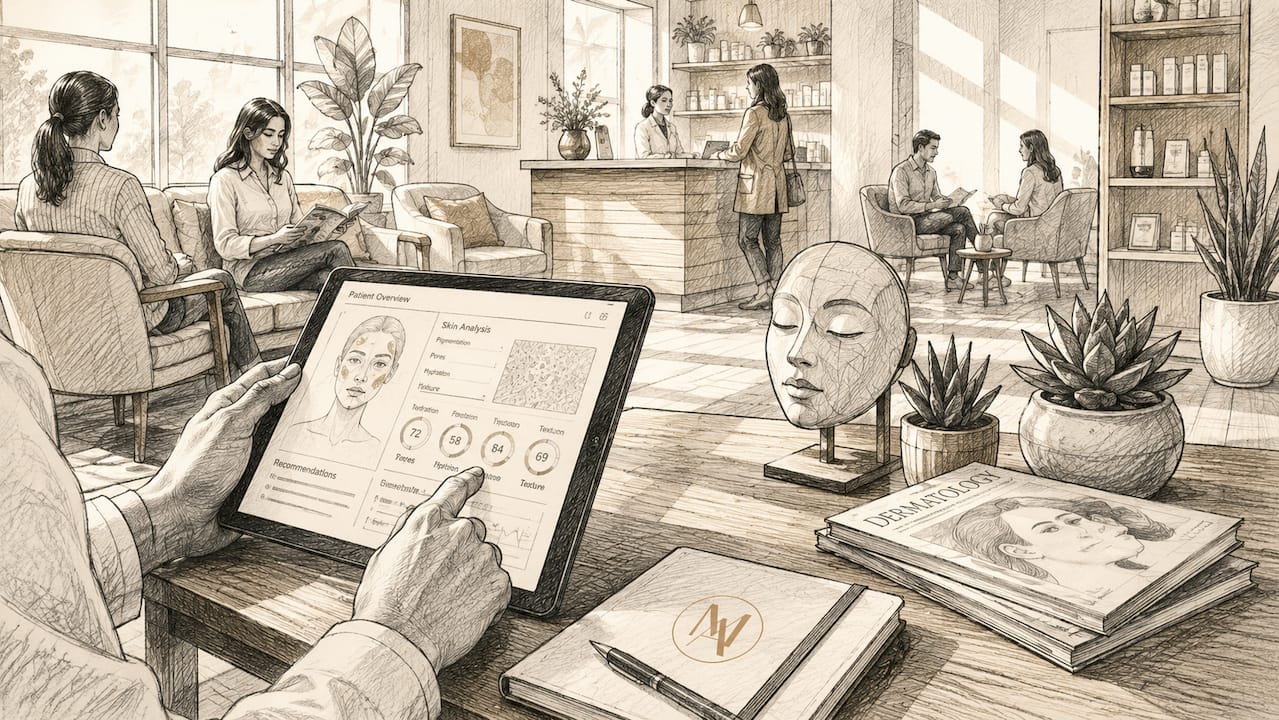
Virtual skincare consultations are professional skin assessments conducted remotely, typically via video call, a dedicated app, or a structured questionnaire reviewed by a clinician. They remove the need for physical travel and allow clients to access expertise that would otherwise be geographically or financially out of reach.
The format varies by provider and client need. A standard virtual consultation process typically runs as follows:
- Initial intake: You complete a detailed questionnaire covering skin history, lifestyle factors, current products, and specific concerns such as pigmentation, acne, or sensitivity.
- Photo submission: You upload clear, well-lit, makeup-free photographs from multiple angles so the clinician can assess your baseline skin condition.
- Clinician review: A qualified skin expert analyses your intake data and photos, often using diagnostic tools that measure hydration, sebum levels, pore size, and skin temperature.
- Consultation session: A live video call or written report delivers personalised recommendations, including product choices, application techniques, and lifestyle adjustments.
- Follow-up: The clinician schedules a review to assess how your skin has responded and refine the plan accordingly.
Virtual consultations typically last 20–45 minutes, with pricing ranging from complimentary entry-level sessions to £350 or more for premium expert assessments. That range reflects the significant difference in clinician expertise, diagnostic technology used, and depth of the plan provided.
Advanced diagnostic technology now allows clinicians to measure skin hydration, sebum, and pore size objectively, producing data-driven reports that compare your skin against normative benchmarks. This removes much of the subjectivity from remote assessment and gives clients a clear picture of their skin health over time.
Pro Tip: Before your virtual consultation, photograph your skin in natural daylight without makeup, from the front and both sides. This gives your clinician the clearest possible baseline and leads to more targeted recommendations.
The advantages of virtual access extend well beyond convenience. Clients in countries with no local dermatology provision can now receive the same quality of assessment as someone living in central London. For people managing chronic conditions such as acne or rosacea, the ability to access expert skincare advice without repeated clinic visits also reduces the time and cost burden significantly.
What to expect during a global skincare consultation
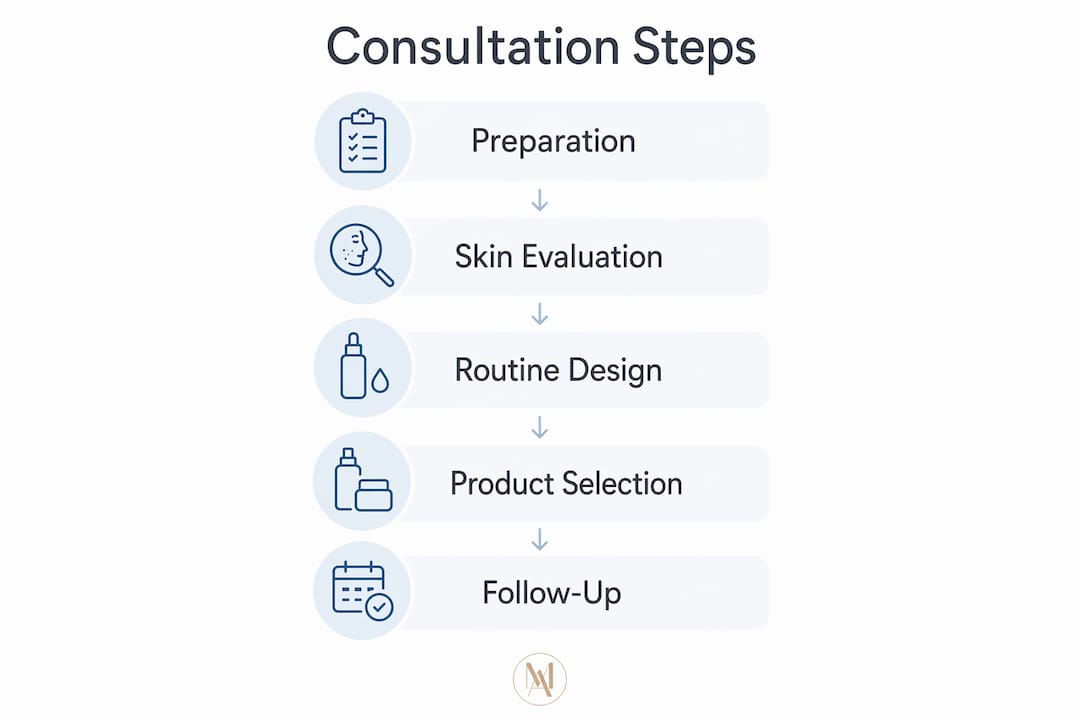
A well-structured global skincare consultation follows a clear sequence, and knowing what to expect helps you get the most from it. The clinician’s first priority is understanding your skin’s history: previous conditions, treatments tried, allergic reactions, and how your skin behaves across different seasons or environments.
Preparation makes a measurable difference to the quality of advice you receive. Clear, makeup-free photos from multiple angles and a list of your current products give the clinician the data needed to make genuinely tailored recommendations rather than generic suggestions. Bring your full product list, including ingredients if possible, because interactions between actives such as retinol, vitamin C, and AHAs are a common source of skin irritation that clinicians need to account for.
The consultation itself typically moves through three stages: skin evaluation, routine design, and product selection. Your clinician will explain the reasoning behind each recommendation, which is where the educational value of the session becomes clear. You leave not just with a product list but with an understanding of why each step matters for your specific skin type.
Pro Tip: Write down your top three skin concerns before the session and rank them by priority. Clinicians work more efficiently when clients can articulate their goals clearly, and you are less likely to leave the session without addressing what matters most to you.
Experienced clinicians treat consultations as ongoing processes, not one-off events. Skin responds to new products over four to twelve weeks, and a follow-up appointment allows the clinician to assess what is working, adjust actives, and prevent the common mistake of abandoning a routine too early. For concerns such as pigmentation or acne, this iterative approach is what separates meaningful results from frustrating plateaus.
What are the benefits and limitations of global skincare consultations?
Global skincare consultations deliver clear, measurable benefits, but they also have defined limits that every client should understand before booking.
| Benefit | Limitation |
|---|---|
| Personalised product and routine recommendations based on your specific skin type and concerns | Cannot replace a formal medical diagnosis for complex, suspicious, or systemic skin conditions |
| Access to clinician expertise regardless of your geographic location | Quality varies significantly between providers; credentials and experience matter |
| Educational value: you learn why each product and step is chosen for your skin | Some providers have commercial interests that may influence product recommendations |
| Objective diagnostic data on hydration, sebum, and skin texture when advanced tools are used | Technology-based assessments cannot replicate a hands-on clinical examination |
| Ongoing follow-up and routine refinement over time | Access and pricing vary considerably by region and provider |
Virtual consultations are educational and cosmetic in scope and do not replace clinical diagnosis for conditions that require biopsy, prescription medication, or specialist medical intervention. Reputable providers state this clearly at the outset. If a clinician identifies anything that warrants medical investigation, the appropriate response is a referral to a dermatologist or GP, not a skincare product recommendation.
The commercial dimension is worth acknowledging. Some consultation services are structured primarily to sell products, with the “consultation” serving as a guided sales process rather than an independent clinical assessment. The clearest signal of a trustworthy provider is transparency: clear clinician credentials, honest scope-of-practice statements, and recommendations that include products from multiple brands rather than a single proprietary range.
For people in regions with limited international skincare access, even a well-structured virtual consultation represents a significant step forward in skin health literacy and self-care capability. The educational component alone, understanding your skin type, learning to read ingredient labels, and building a consistent routine, produces lasting benefits that extend well beyond any single product recommendation.
Key takeaways
Global skincare consultation access is most valuable when it combines qualified clinician expertise, objective diagnostic tools, and an ongoing follow-up process rather than a single one-off session.
| Point | Details |
|---|---|
| Access remains deeply unequal | Over 3.5 billion people live in regions with fewer than one dermatologist per 100,000 people. |
| Virtual consultations close the gap | Video and app-based formats allow expert skin advice to reach clients regardless of location. |
| Preparation improves outcomes | Makeup-free photos, product lists, and clear goals help clinicians make more targeted recommendations. |
| Follow-up is part of the process | Skin responds over weeks; iterative consultations produce better results than single sessions. |
| Know the scope | Virtual consultations are educational and cosmetic and do not replace formal medical diagnosis. |
My view on where global skincare access is heading
The most significant shift I have observed is not the technology itself. It is the change in expectation. People now assume they can access expert skin advice from wherever they are, and that expectation is entirely reasonable. The infrastructure to deliver it exists. What lags behind is awareness, particularly in communities where skin health has historically been deprioritised or stigmatised.
Task-shifting, training nurses, pharmacists, and community health workers to handle common skin conditions, is underused and undervalued. It is not a compromise on quality. It is a practical response to a real shortage, and the evidence from pilot programmes supports it. The conversation about global access needs to include these non-specialist pathways alongside the premium virtual consultation market.
The ethical dimension also deserves more attention. As virtual consultations become more commercial, the line between clinical advice and guided retail can blur. Clients deserve providers who are transparent about their credentials, their scope, and their commercial relationships. That transparency is what builds genuine trust, and it is what separates a consultation that changes your skin from one that simply changes your shopping basket.
— Jess
Personalised skincare consultations at Them-ethod
Them-ethod offers tailored virtual consultations with experienced clinicians who assess your skin using advanced diagnostic tools and build a personalised plan around your specific concerns, whether that is acne, pigmentation, sensitivity, or ageing. Every recommendation is grounded in clinical evidence, not commercial convenience. For clients managing active breakouts, the PCA Clearskin acne serum is a clinician-recommended treatment that addresses blemishes, excess sebum, and post-inflammatory marks within a structured routine. Them-ethod ships internationally, making expert-led skincare genuinely accessible wherever you are.
FAQ
What is global skincare consultation access?
Global skincare consultation access is the ability of individuals worldwide to receive personalised expert advice on skin health through virtual or in-person professional services, regardless of their geographic location.
How long does a virtual skincare consultation typically last?
Virtual skincare consultations typically last 20–45 minutes, with pricing ranging from complimentary entry-level sessions to £350 or more for premium expert assessments.
Can a virtual consultation replace a dermatologist appointment?
Virtual skincare consultations are educational and cosmetic in scope and do not replace formal medical diagnosis. For complex or suspicious skin conditions, a referral to a dermatologist or GP remains necessary.
How should I prepare for a global skincare consultation?
Prepare clear, makeup-free photographs from multiple angles in natural daylight, and compile a full list of your current skincare products including key ingredients. These steps allow the clinician to make more accurate and personalised recommendations.
Why is access to dermatology so unequal globally?
Over 3.5 billion people live in regions with fewer than one dermatologist per 100,000 people, well below the WHO-recommended four per 100,000. Financial barriers, cultural stigma, and systemic gaps in healthcare funding compound the shortage of specialists.