




Does Skincare Expire After Opening? What to Know
A high-performance serum that no longer performs is more than an expensive disappointment. It can quietly undermine the results of an otherwise well-designed routine - particularly when you are treating pigmentation, acne, sensitivity or visible signs of ageing. So, does skincare expire after opening? Yes. Once oxygen, light, warmth and everyday contact are introduced, a formula begins a new countdown.
The good news is that premium skincare is formulated and tested for stability when stored correctly. The less welcome truth is that opening a product, dipping into a jar with wet fingers or keeping it on a sunny bathroom shelf can shorten its useful life considerably. Knowing what to look for protects both your skin and your investment.
Does skincare expire after opening? Understanding PAO
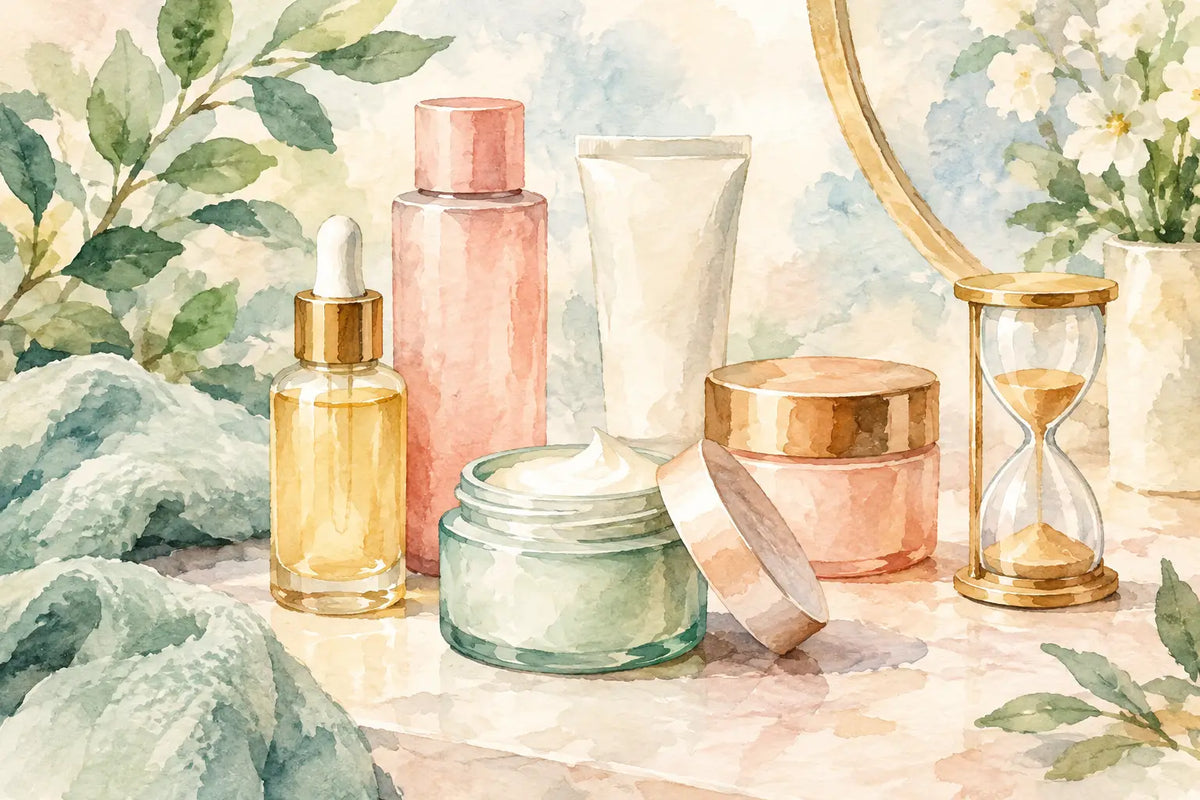
Most skincare carries two pieces of shelf-life information. The first may be a printed expiry date, often shown with an hourglass symbol. This is the final date at which the manufacturer guarantees the unopened product meets its stated standards when stored as directed.
The second is the Period After Opening, or PAO. Look for the small open-jar icon marked with a number and the letter M, such as 6M, 12M or 24M. This indicates how many months the product is designed to remain stable and suitable for use after it has first been opened. A 12M moisturiser, for example, should ideally be used within 12 months of opening, not 12 months from purchase.
PAO is not an arbitrary suggestion. It reflects preservative testing, packaging design and the known behaviour of the formula’s ingredients. Every opening exposes a product to air, possible microbes and shifting humidity. Over time, antioxidants can oxidise, emulsions can separate and preservatives may become less effective.
For products with an unusually short use period, especially certain professional or freshly activated systems, follow the brand’s instructions over any general rule. If a product has been decanted, transferred into a different container or stored outside its original packaging, its PAO may no longer be reliable.
Why opening changes a formula
The bottle or tube is part of the product’s performance. Airless pumps, opaque packaging and single-use capsules are not simply luxury details. They help protect unstable actives from oxygen and light, while limiting repeated contact with fingers and bathroom air.
Vitamin C is the classic example. L-ascorbic acid can oxidise after opening, particularly in a dropper bottle exposed to heat and sunlight. A pale, clear or faintly straw-coloured serum may gradually deepen to orange or brown. That change does not always make it instantly harmful, but it is a clear sign the antioxidant may no longer deliver the brightening and collagen-supporting benefits you purchased it for.
Retinoids also demand care. Retinol and retinal can degrade with light and air exposure, reducing their ability to support refined texture, clarity and firmer-looking skin. This matters when your routine is targeting acne, photodamage or uneven tone: reduced potency can look like your skin has plateaued, when the issue may be the product rather than your skin.
Water-based formulas are more susceptible to microbial contamination than dry powders, balms or anhydrous oils. Cleansers, gels, creams and masks all depend on a carefully balanced preservation system. A product does not need to smell unpleasant to have passed its best, so the PAO should remain your primary guide.
Which skincare products need the closest attention?
SPF deserves the least flexibility. Sunscreen is a regulated protective product, and its stated SPF and UVA protection depend on a stable formula. Do not use a sunscreen beyond its expiry date or persist with one that has separated, changed texture or been repeatedly overheated in a car, beach bag or sunny windowsill. If you cannot identify when it was opened, replacing it is the more considered choice.
Antioxidant serums, retinoids, acne treatments and exfoliating acids also warrant close attention because their efficacy is central to the results you expect. Benzoyl peroxide, for instance, can become less reliable over time, while vitamin C and retinoids are especially vulnerable to poor storage. With clinical skincare, a formula may still look acceptable while offering less of the active performance your regimen depends upon.
Eye products and jarred creams require excellent hygiene. The skin around the eyes is delicate, and a jar that has been routinely touched with unwashed fingers carries a greater contamination risk than a sealed pump. Use a clean spatula where supplied, close lids promptly and avoid adding water to a product to make it feel more fluid.
Cleansers and body products are often lower-risk once opened, provided they remain within PAO and have been stored well. Yet they are not exempt. A cleanser used in the shower faces heat, steam and repeated contact with water, all of which can affect a formula over time.
Signs that skincare has passed its best
Your senses are useful, although they do not replace the printed guidance. Discard a product if it has developed a notably different odour, changed colour, separated and will not remix, become grainy, curdled, unusually watery or difficult to dispense. A pump that suddenly splutters may indicate a packaging issue, but it can also mean the product has thickened or destabilised.
Be more cautious if a product now stings, burns or causes unexplained redness when it was previously well tolerated. This can happen for many reasons, including a compromised skin barrier or overuse of actives, so do not assume the formula is automatically at fault. Stop using it until you can assess the change. Continuing with an altered product simply because it was premium-priced is rarely worth the risk of irritation or a flare in post-inflammatory hyperpigmentation.
Some changes are normal. Natural variations in colour can occur between batches of botanical formulas, and a product may settle slightly during storage. The question is whether the difference is substantial, new and paired with a change in smell, feel or performance.
Store your routine like a professional
The bathroom cabinet is convenient, but it is not always the best environment. Heat and steam accelerate degradation, especially for antioxidant and retinoid formulas. A cool, dry drawer or cupboard away from direct sunlight is generally a better choice. Keep caps tightly closed, wipe excess product from nozzles and do not leave applicators exposed on the counter.
There is no need to refrigerate every product. For many formulas, refrigeration offers no meaningful benefit and can alter texture, particularly in emulsions or oils. However, a consistently cool environment can be useful for heat-sensitive products if the manufacturer permits it. Avoid temperature swings above all else: a product that repeatedly moves from a cold room to a hot car is under more stress than one stored at a moderate, stable temperature.
Make opening dates visible. A small label on the base of a bottle, or a note in your phone, removes the guesswork six months later. This is particularly valuable for products used intermittently, such as corrective masks, peels and targeted treatments.
Buy for your real routine, not an imaginary one
Larger sizes can offer better value, but only if you will finish them within the recommended period after opening. A generous bottle of active serum is not a saving if its final third sits unused until it has oxidised. For a multi-step routine, smaller formats may be the more intelligent investment, especially when you are trialling a new active or alternating treatments.
This is also where a tailored regimen matters. If you are layering an antioxidant serum, retinoid, pigment-correcting treatment, moisturiser and SPF, each product should have a defined role and realistic frequency of use. Opening several similar serums at once may feel indulgent, but it increases waste and makes it harder to identify what is truly delivering results.
At The M-ethod Aesthetics, we view product longevity as part of clinical-grade skincare discipline. The right formula, properly stored and used consistently within its active window, gives your skin the best opportunity to respond.
When in doubt, prioritise safety over sentiment. Your skincare should look, smell and perform as the formula intended - and every application should feel like a considered step towards healthier, more luminous skin.