



Άρθρο: Pigmentation Types: How to Tell Them Apart and What to Do
Pigmentation Types: How to Tell Them Apart and What to Do
Skin pigmentation falls into three groups: too much melanin (hyperpigmentation), too little (hypopigmentation) and none at all (depigmentation). Within the dark group, melasma, sun spots, freckles and post-inflammatory hyperpigmentation look alike but behave very differently, and treating one like another can make it darker. Getting the type right comes before choosing any product or procedure, and that is why we start every pigmentation plan with an assessment.
TL;DR
- Pigment problems are either darker than normal (hyperpigmentation), lighter (hypopigmentation) or completely white (depigmentation).
- Melasma is symmetric and driven by hormones plus sun. Sun spots are discrete and come from UV. Freckles are small and fade in winter. PIH follows inflammation such as acne.
- Treating melasma like a sun spot, for example with an aggressive device, can cause rebound darkening.
- A new or changing dark spot needs a doctor’s assessment before any cosmetic treatment.
- A personalised assessment tells you which type you have and which routine suits it.
Table of Contents
- The three main pigmentation groups
- The common types of hyperpigmentation
- Melasma vs sun spots vs freckles vs PIH at a glance
- Why the right diagnosis matters
- When to see a doctor first
- Perspective
- Next steps with us
- FAQ
- Sources
The three main pigmentation groups
Skin gets its colour from melanin, made by cells called melanocytes. MedlinePlus explains that skin with too much melanin is hyperpigmented, skin with too little is hypopigmented and skin with none is depigmented.
| Group | What it means | Typical examples |
|---|---|---|
| Hyperpigmentation | Darker than surrounding skin | Melasma, sun spots, freckles, PIH |
| Hypopigmentation | Lighter, with some pigment left | Pityriasis alba, tinea versicolor, post-inflammatory hypopigmentation |
| Depigmentation | Complete loss of pigment, white skin | Vitiligo |
The Merck Manual draws the same line: in hypopigmentation pigment is decreased, in depigmentation it is completely lost. A clinical review lists vitiligo, pityriasis alba, tinea versicolor and postinflammatory hypopigmentation as the common acquired lighter conditions.
Hyperpigmentation versus hypopigmentation
If your patch is darker, you are in hyperpigmentation territory, which is what most people searching this topic mean. If it is lighter, the cause is often different: a past injury or inflammatory skin condition, a fungal infection or an autoimmune process. Lighter patches deserve a doctor’s diagnosis, because the treatments for dark and light patches are not interchangeable.
The common types of hyperpigmentation
The American Academy of Family Physicians lists the typical dark conditions as post-inflammatory hyperpigmentation, melasma, solar lentigines (sun spots), ephelides (freckles) and café-au-lait macules. Most are benign. Here is how to read each one.
Melasma
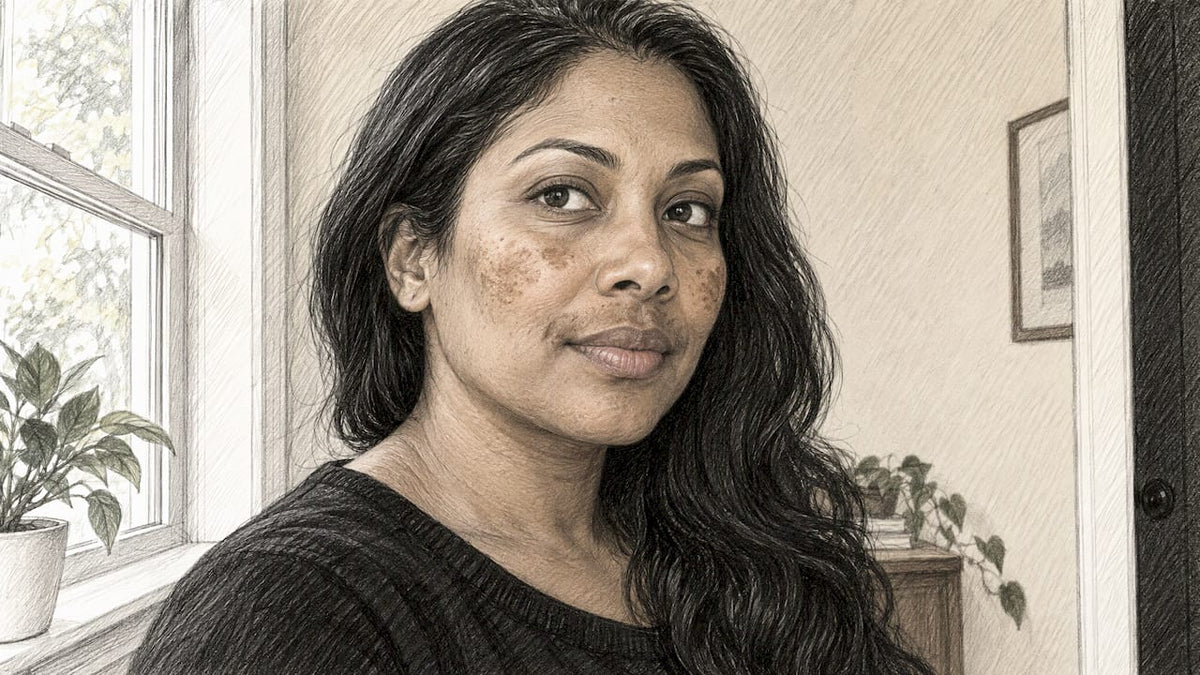
Melasma appears as dark brown, roughly symmetric patches with irregular borders, usually on the forehead, temples, cheeks, upper lip or nose. The Merck Manual notes it occurs mainly in pregnant women and women taking oral contraceptives, is more common and lasts longer in people with dark skin, and can be aggravated by thyroid disorders and photosensitising medicines. It fades slowly and incompletely after childbirth or stopping hormones, and it tends to relapse.
The pattern to remember: symmetric, hormone-linked, worsened by sun, chronic.

Sun spots (solar lentigines)
Sun spots are flat, well-defined tan-to-brown patches. According to the AFP review, they measure 1 to 3 cm, range from light yellow to dark brown and appear on the face, hands, forearms, chest, back and shins after acute or chronic UV exposure. They usually first appear in middle age and persist until treated.
Freckles (ephelides)
Freckles are much smaller: the same AFP table describes them as sharply defined 1 to 2 mm red or tan-to-light-brown spots that begin in childhood in sun-susceptible people and fade in winter. Harvard Health adds that they darken with sun and heat.
Post-inflammatory hyperpigmentation (PIH)
PIH is the dark mark left after skin is inflamed or injured: acne, burns, wounds, eczema or psoriasis. A 2023 review describes the skin looking more discoloured after the lesion itself heals. The AFP notes it is seen primarily in darker skin types and can persist for months or years. We cover causes and care in more detail in our guide to post-inflammatory hyperpigmentation.
Melasma vs sun spots vs freckles vs PIH at a glance
| Feature | Melasma | Sun spots | Freckles | PIH |
|---|---|---|---|---|
| Pattern | Symmetric patches | Discrete, well-defined spots | Tiny, scattered | Follows the site of earlier inflammation |
| Size | Large, irregular | 1 to 3 cm | 1 to 2 mm | Varies with the injury |
| Main trigger | Hormones and sun | Cumulative UV | UV in susceptible people | Acne, wounds, rashes, burns |
| Course | Chronic, relapsing | Persists until treated | Fades in winter | Often fades over time, can last years |
Why the right diagnosis matters
The types differ in how they respond to treatment. A 2026 dermatology editorial notes that treating melasma like a sun spot with an aggressive device is a recognised cause of rebound darkening, and that lasers, peels and energy devices carry a higher PIH risk in Fitzpatrick III to VI skin (medium to deep skin tones), so settings must be conservative.
That is the practical reason a diagnosis comes first. A sun spot can be targeted. Melasma needs sun protection and a steady, gentle routine. Our article on melasma versus hyperpigmentation explains why a tinted SPF50 sits at the centre of that approach, and our guide to the best sunscreen for hyperpigmentation covers what to look for.
A worked example
Two patients each have brown cheeks. One is 34, started a hormonal contraceptive two years ago and has symmetric patches across both cheeks and the upper lip: the pattern points to melasma. The other is 58, with a few sharply edged brown spots on the backs of the hands and cheekbones after decades of sun: those are typical sun spots. The first needs strict sun protection and maintenance. The second can usually be treated spot by spot. Same colour, opposite plans.
When to see a doctor first
Most pigment changes are harmless, but not all. The AFP stresses that history, examination and sometimes biopsy are used to exclude melanoma and its precursors. Medical News Today advises seeing a doctor if a dark spot appears suddenly, itches, tingles, bleeds or changes colour or size. A new, changing or unusual lesion should be assessed before any cosmetic treatment.
Perspective
Most pigmentation questions we hear are really two questions: what is this, and what will not make it worse? Sun spots, melasma and PIH can sit side by side on one face, and each asks for a different pace.
Our approach is to identify the type first, then build a routine around it: daily broad-spectrum, tinted sun protection, prescription-strength options such as tretinoin or hydroquinone where appropriate, and procedures only where the pigment type allows. As a UK-based Obagi Ambassador Clinic, we work with medical-grade skincare designed for this kind of structured plan.
That is why a one-to-one consultation beats guessing from a product label. You get a plan built around your skin tone, history and goals.
Jess
Next steps with us
If you are unsure which type you have, our online skin consultation with Dr Mandy is open to international clients, and we ship medical-grade skincare abroad with customs handled. You can browse our skincare categories, or read the BRIGHT SKY protocol for pigmentation and melasma. For in-clinic treatments with a UK-trained doctor in London or Athens, see the M-ethod Skin Clinic treatments, including SkinPen microneedling.
FAQ
What is the difference between melasma and sun spots?
Melasma is symmetric, usually on the cheeks, forehead and upper lip, and is driven by hormones as well as sun. Sun spots are discrete, well-defined patches from cumulative UV exposure. Melasma relapses; sun spots persist until treated.
What is the difference between freckles and sun spots?
Freckles are tiny, usually start in childhood and fade in winter. Sun spots are larger, appear later in life and do not fade with the seasons.
How is post-inflammatory hyperpigmentation different from melasma?
PIH follows a specific injury or inflammation, such as acne, so it sits where the skin was irritated. Melasma is symmetric and hormone-linked. PIH often fades with time, while melasma is chronic.
What is the difference between hyperpigmentation and hypopigmentation?
Hyperpigmentation means extra melanin and darker skin. Hypopigmentation means reduced melanin and lighter skin. If melanin is absent entirely, as in vitiligo, it is called depigmentation.
Sources
- Abnormally dark or light skin, MedlinePlus
- Overview of Pigmentation Disorders, Merck Manual Professional
- Hyperpigmentation, Merck Manual Professional
- Common pigmentation disorders, PubMed
- Pigmentation Disorders: Diagnosis and Management, AFP
- Demystifying hyperpigmentation, Harvard Health
- Skin Pigmentation Types, Causes and Treatment, PMC
- Facial hyperpigmentation: melasma, PIH, or sun spots?, DermatologyNews
- Dark spots on the skin, Medical News Today