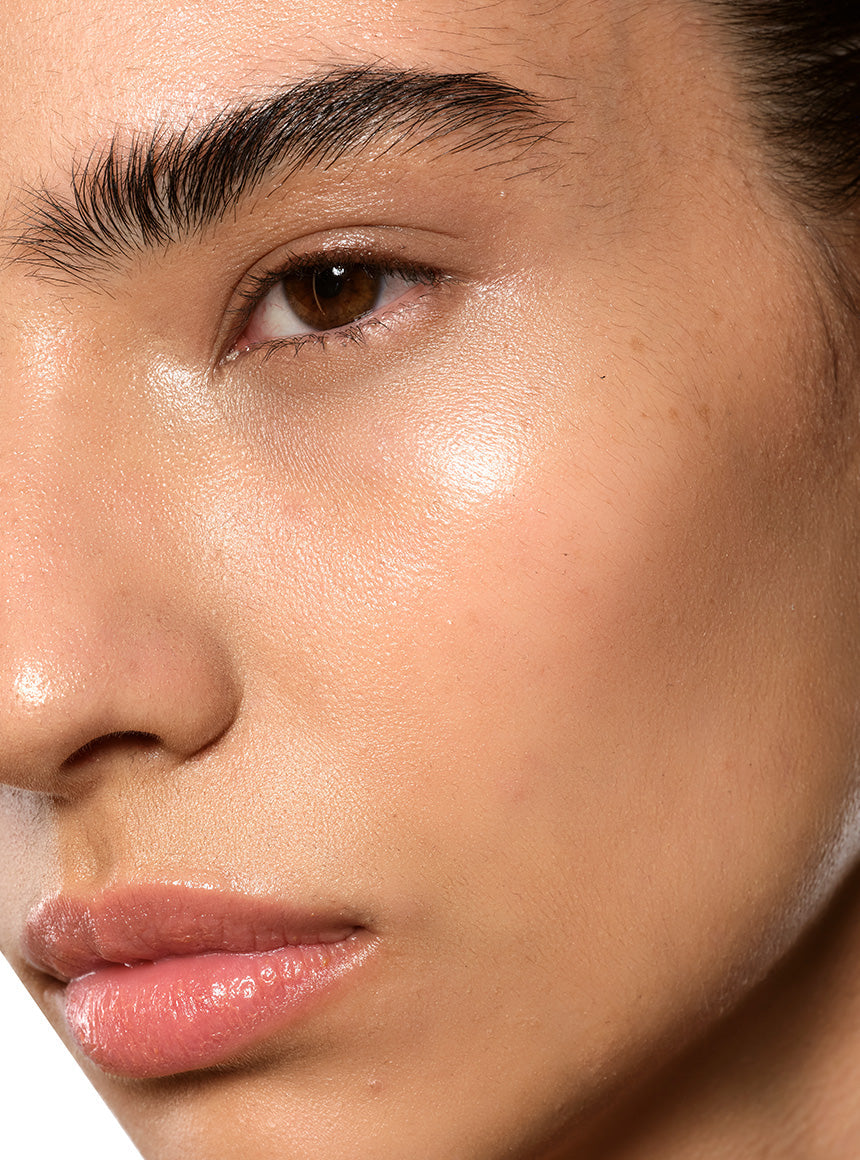




Άρθρο: A Combination Skin Routine That Balances Oily and Dry Areas

A Combination Skin Routine That Balances Oily and Dry Areas
The best routine for combination skin is a short one: a gentle cleanser, a light hydrating layer, a moisturiser matched to each zone, and a daily broad-spectrum sunscreen, with exfoliation and active ingredients added slowly. The aim is balance. You want to hydrate the dry areas without feeding the oily ones, and de-grease the T-zone without stripping the cheeks. Below, we set out how to identify your skin, the exact order of steps for morning and evening, how to use exfoliants and retinoids safely, and what to leave out.
TL;DR
- Combination skin is oily in some areas (often forehead, nose and chin) and normal or dry in others (often cheeks), so one product rarely suits the whole face.
- Keep the base simple: gentle foaming cleanser, hydrating serum, light moisturiser, and SPF 30 or higher every morning.
- Treat zones differently: lighter, water-based textures on oily areas, creamier ones on dry areas, and targeted actives only where you need them.
- Introduce exfoliants and retinoids one at a time, and never skip sunscreen, because both can increase sun sensitivity.
- If your skin keeps fighting you, a personalised plan from a clinician is faster than trial and error.
Table of Contents
- What combination skin actually looks like
- Why combination skin needs a different approach
- The morning routine, step by step
- The evening routine, step by step
- Exfoliation and retinoids without the irritation
- Adjusting for acne, sensitivity and ageing
- What combination skin should avoid
- Do not forget what you eat and drink
- Our perspective
- Get a routine built around your face
- FAQ
- Sources
What combination skin actually looks like
Combination skin means different parts of your face behave like different skin types. According to Cleveland Clinic, it can show up as an oily forehead, nose and chin alongside dry cheeks or a dry eye area.
You do not need a lab to find out which you have. Two simple checks work:
- The wait test. Wash your face, pat it dry, apply nothing, and wait 30 minutes. Then notice which areas look shiny or feel greasy and which feel tight or flaky. Cleveland Clinic describes this same observation approach.
- The blotting test. Press blotting papers on your T-zone and then your cheeks. The amount of oil each sheet picks up shows you how different the zones are, as Cleveland Clinic also notes.
Two cautions. First, your skin changes with the seasons, hormones, stress and the products you use, so a result in winter may not match one in summer. Second, there is no single test or one regimen for everyone with this skin type, so treat any routine, including ours, as a starting point you adjust.
Why combination skin needs a different approach
Most routines are written for one extreme. Oily-skin products are built to remove oil, which can leave dry cheeks tight and flaky. Dry-skin products are rich and occlusive, which can leave a T-zone shiny and congested. Combination skin sits between the two, and the work is about balancing what are sometimes described as opposing forces: hydrating the dry zones while controlling grease in the oily ones.
That is why the principles below matter more than any specific bottle:
- Be gentle first. Harsh products tempt you because oil looks like the enemy. In practice, stripping the skin often makes dry areas worse.
- Hydrate everywhere. Oily skin still needs water. A lightweight humectant layer suits every zone.
- Customise only where it counts. Use richer or more active products on the specific areas that need them.
- Add one change at a time. If you start three new products in one week, you will not know which one caused a reaction.
The morning routine, step by step
Keep the morning short. The priorities are a clean, comfortable base and protection from the sun.
Step 1: Cleanse
For oily or combination skin, a foaming cleanser is a sensible choice, and Cleveland Clinic recommends exactly that. Look for a fragrance-free formula that rinses clean without a squeaky, tight feeling. If your skin feels tight after washing, the cleanser is too strong. If you cleanse a second time in the morning, you rarely need more than lukewarm water and a gentle wash.
We stock options in this category in our facial cleansers collection, including a gentle foaming cleanser designed for balanced, easily irritated skin.
Step 2: Hydrating serum
A water-based serum gives dry zones moisture without adding heaviness to oily ones. For drier areas, a hyaluronic-acid serum is a typical pick for replenishing moisture. You can see our PCA hyaluronic acid serum as an example of the type.
Apply it to slightly damp skin, all over, then let it settle for a minute.
Step 3: Moisturise by zone
This is where combination skin differs most from other types. A common approach is to use lighter, water-based moisturisers on oily areas and creamier ones on dry areas. If that sounds like two jars, it can be. Many people manage with one light gel-cream overall and a second layer of the same product, or a richer one, on cheeks only.

If you wear an antioxidant product in the morning, a vitamin C formula with built-in sun protection, such as Daily Radiance Vitamin C SPF 30, can combine two steps. Remember that it does not replace correct sunscreen application unless you apply enough of it.
Step 4: Sunscreen, every day
Sunscreen is the one step that does not change with skin type. The Skin Cancer Foundation recommends a nickel-sized amount for the face alone, reapplied every two hours or right after sweating or swimming. Choose broad-spectrum SPF 30 or higher.
For combination skin, finish matters. A shiny T-zone does better with a lightweight, fluid or matte-finish formula, while dry cheeks can handle something more cushioned. Two options we carry:
- Sunscreen + Powder Broad Spectrum SPF 30, a powder format that is handy for reapplying over an oily T-zone during the day.
- Even Tone Mineral Sunscreen SPF 30, a broad-spectrum mineral option.
The evening routine, step by step
Evening is when you remove the day and, if you use them, apply treatments.
- Cleanse. Use the same gentle foaming cleanser. If you wore waterproof makeup or a heavy sunscreen, a first oil-based cleanse can help, but Cleveland Clinic experts say double cleansing is not necessary for everyone. If a single wash leaves your skin clean and comfortable, stop there.
- Treat (some nights). This is the slot for exfoliating acids or a retinoid, covered in the next section. Use only one of these on a given evening while you are starting out.
- Hydrating serum. Repeat the water-based layer from the morning.
- Moisturise by zone. Use your lighter texture across the face and a creamier layer on the dry areas. Dry cheeks often take a richer night cream well, while the T-zone may need nothing more than the serum and a thin layer of gel.
Exfoliation and retinoids without the irritation
Combination skin often has congested pores in the T-zone and flaking on the cheeks, so the temptation is to scrub. Resist it. The American Academy of Dermatology notes that how often to exfoliate depends on your skin type and method, and that exfoliating while using retinoid products may worsen dry skin or cause breakouts. It also advises gentle exfoliation, because over-exfoliating causes redness and irritation, and aggressive exfoliation can increase pigmentation in darker skin tones.
A practical way to start:
- Week one to two: exfoliate once a week with a mild chemical exfoliant, and use it on the T-zone first.
- Week three onward: add a second night only if your skin shows no stinging, redness or flaking.
- If you add a retinoid: keep it on separate evenings from your acid, and start with a couple of nights a week.
- Dry cheeks: skip the exfoliant there on nights they feel tight.
For more detail, our journal covers exfoliation tips for beginners and how to combine an AHA with retinol.
One safety point belongs right where you act. Retinol, AHAs and BHAs can make skin more sensitive to the sun, so the Skin Cancer Foundation advises broad-spectrum sunscreen of SPF 30 or higher every day. Many AHA and BHA products also carry a sunburn warning for this reason. If you are pregnant, breastfeeding, or have a skin condition such as eczema or rosacea, speak to your doctor or dermatologist before starting a retinoid or acid.
Adjusting for acne, sensitivity and ageing
Your base routine stays the same, and you layer one targeted step on top.
Breakouts and blackheads
For blackheads or pore congestion, a salicylic-acid treatment is the usual choice. Apply it only to the T-zone or the specific areas that clog, not across dry cheeks. Stress matters too: the American Academy of Dermatology notes that stress can cause flare-ups of conditions including acne and eczema, so sleep and stress management are part of the routine. Persistent, painful or scarring acne needs a clinician, and prescription options such as tretinoin are available only through one.
Sensitivity and redness
If your skin stings with most products, pare back to cleanser, a simple hydrating serum, moisturiser and mineral sunscreen for a few weeks. Reintroduce actives one at a time. Redness that does not settle, or that comes with flushing or bumps, deserves a professional assessment, since rosacea can look like sensitivity.
Fine lines and dullness
A retinoid in the evening, an antioxidant in the morning and consistent sunscreen are the foundation. Hydration helps here too, since dry cheeks tend to show fine lines first. Beyond skincare, clinic treatments can complement a home routine, which we cover below.
What combination skin should avoid
This is where most routines go wrong. Based on dermatology guidance and the way combination skin behaves, steer clear of:
- Harsh, stripping cleansers. A natural reaction to oil and large-looking pores is to reach for a strong product, yet dermatologists quoted by Who What Wear caution that this is the wrong instinct for combination skin, and recommend gentle, fragrance-free formulas instead.
- High-alcohol products. The same article notes that alcohol can aggravate dry skin, which matters for your cheeks.
- Over-exfoliating. Redness, burning and tightness mean you have gone too far, according to the American Academy of Dermatology.
- Starting several actives together. You cannot tell what is working or what is irritating.
- Skipping sunscreen while using retinoids or acids.
- Heavy creams all over. A rich cream across the T-zone can leave it shiny and congested. Apply it only where it is needed.
- Skipping moisturiser because you are oily. Oily areas still need hydration, in a lighter form.
Do not forget what you eat and drink
Skin responds to the whole of your routine, including nutrition and sleep. Some readers add supplements or ingredients such as sea moss for skin as part of a broader wellness approach. Whatever you choose, treat it as a supplement to your cleansing, hydration and sun protection, never a replacement, and check with your doctor if you take medication or have a health condition.
Our perspective
Combination skin is the type we see most often misjudged. People assume that because part of the face is oily, the whole face needs to be dried out, and then they wonder why their cheeks flake and their T-zone still shines. The answer is almost never a harsher product. It is a smarter order of simple ones.
Our approach, led by clinicians, is to start with the barrier: cleanse gently, hydrate in layers, protect every morning, and add actives one at a time. Prescription-strength and medical-grade formulas can be excellent for pigmentation, acne and ageing, but they work best when they are chosen for your skin, introduced slowly and paired with proper sun protection.
That is why we pair our curated range with one-to-one guidance. Two people with the same skin type can need very different plans, and a few minutes with an expert often saves months of experimenting. If a routine is not enough, in-clinic options such as microneedling, polynucleotides or Profhilo can work alongside it, always planned around your skin and goals.
Jess
Get a routine built around your face
If you would rather skip trial and error, our online skin consultation with Dr Mandy lets you talk through your skin type, concerns and current products with a clinician, wherever you are. You can then shop the matching products in our skincare collection, with international shipping available. If you are in London or Athens, our skin clinic treatments include SkinPen microneedling, polynucleotides, Profhilo and HIFU.
FAQ
Do I need separate products for my T-zone and cheeks?
Not always. Many people do well with one gentle cleanser and one hydrating serum for the whole face. The difference usually comes at the moisturiser step, where lighter textures suit oily areas and creamier ones suit dry areas. If your skin is only mildly mixed, a single light moisturiser with an extra layer on dry patches is enough.
How often should I exfoliate combination skin?
There is no fixed number, because it depends on your skin type and the method you use. Start with once a week, build to two only if your skin stays comfortable, and stop if you see redness or stinging. Take extra care if you use a retinoid.
Can I use retinoids on combination skin?
Yes, many people do, but start slowly. Use a small amount a couple of nights a week, avoid layering it with exfoliating acids on the same night, and wear SPF 30 or higher every day. Speak to a doctor if you are pregnant or have a skin condition, and ask a clinician about prescription strengths.
What sunscreen finish works best for combination skin?
Choose a broad-spectrum SPF 30 or higher in a lightweight or matte finish, since it will sit well on an oily T-zone. Use enough: the Skin Cancer Foundation suggests about a nickel-sized amount for the face. Reapply every two hours when outdoors.
Does combination skin change over time?
Yes. Seasons, hormones, stress, climate and the products you use can all shift how oily or dry each area feels. Repeat the 30-minute wait test now and then, and adjust your moisturiser textures rather than overhauling the whole routine.
Sources
- What Is My Skin Type and Why Does It Matter? (Cleveland Clinic)
- Skin Care for Men: Routines, Products and Tips (Cleveland Clinic)
- Double Cleansing Method Explained (Cleveland Clinic)
- Combination Skin Care Routine: Tips for Balanced Skin (Greatist)
- What Is Combination Skin?
- How to safely exfoliate at home (American Academy of Dermatology)
- Is Your Beauty Routine Making You Photosensitive? (Skin Cancer Foundation)
- 10 skin care secrets for healthier-looking skin (American Academy of Dermatology)
- Ask the Expert: 5 of Your Top Sunscreen Questions, Answered (Skin Cancer Foundation)
- The Face Washes You Should Avoid If You Have Combo Skin (Who What Wear)