



Άρθρο: Benefits of prescription skincare: a 2026 guide
Benefits of prescription skincare: a 2026 guide
TL;DR:
- Prescription skincare uses clinically validated, high-concentration active ingredients that effectively treat moderate-to-severe skin concerns like acne, pigmentation, and aging.
- Results typically take 6 to 12 weeks, requiring patience, consistent use, and strong photoprotection to maximize benefits and prevent relapse.
If you have tried every serum and moisturiser on the pharmacy shelf without shifting stubborn acne, deep pigmentation, or the signs of sun damage, you already know the frustration. The benefits of prescription skincare become relevant precisely at that point. Prescription actives work at a biological level that most over-the-counter products simply cannot reach, offering clinically supported improvements for specific concerns. This guide breaks down what prescription treatments actually do, how they compare to OTC alternatives, and what realistic results look like so you can make a genuinely informed decision.
Table of Contents
- Key takeaways
- 1. The real benefits of prescription skincare, explained
- 2. Topical retinoids: the gold standard for ageing and acne
- 3. Tyrosinase inhibitors: precision treatment for pigmentation
- 4. Topical antibiotics and prescription acne treatments
- 5. Prescription skincare vs over-the-counter: an honest comparison
- 6. Managing side effects and maximising results
- 7. How long does prescription skincare actually take to work?
- 8. Summary comparison: prescription actives at a glance
- My take on prescription skincare and realistic expectations
- How Them-ethod supports your prescription skincare goals
- FAQ
Key takeaways
| Point | Details |
|---|---|
| Clinically stronger actives | Prescription ingredients work at concentrations proven to produce measurable improvements in acne, pigmentation, and photoageing. |
| Patience is non-negotiable | Visible results typically require 6 to 12 weeks of consistent use, and some treatments need several months. |
| Side effects are manageable | Initial irritation is common but controllable with the right moisturiser and SPF routine. |
| Medical supervision matters | A clinician tailors your regimen to your skin type and concern, reducing risk and improving outcomes. |
| Photoprotection is foundational | Daily broad-spectrum SPF is not optional when using prescription actives; it protects results and prevents relapse. |
1. The real benefits of prescription skincare, explained
The core advantages of prescription skincare lie in concentration and regulatory validation. Ingredients like tretinoin, hydroquinone, and thiamidol exist in formulations strong enough to produce meaningful clinical outcomes. Over-the-counter products are restricted by regulation to lower concentrations, which makes them appropriate for maintenance and mild concerns but insufficient for tackling persistent acne, moderate pigmentation, or significant photoageing.
What you gain with prescription treatment is specificity. Each active is matched to a mechanism. Tretinoin accelerates cell turnover. Thiamidol inhibits tyrosinase, the enzyme responsible for excess melanin production. Topical antibiotics target the bacterial component of inflammatory acne. This precision is the defining advantage of prescription skincare vs over-the-counter options.
Evaluating those benefits honestly means understanding three things: how potent the active is, how long results take, and how to support your skin through treatment. Without that framework, even the most effective prescription treatment can feel disappointing.
Pro Tip: When starting any prescription skincare programme, discuss your full current routine with your clinician. Even well-intentioned OTC products can interfere with prescription actives if layered incorrectly.
2. Topical retinoids: the gold standard for ageing and acne
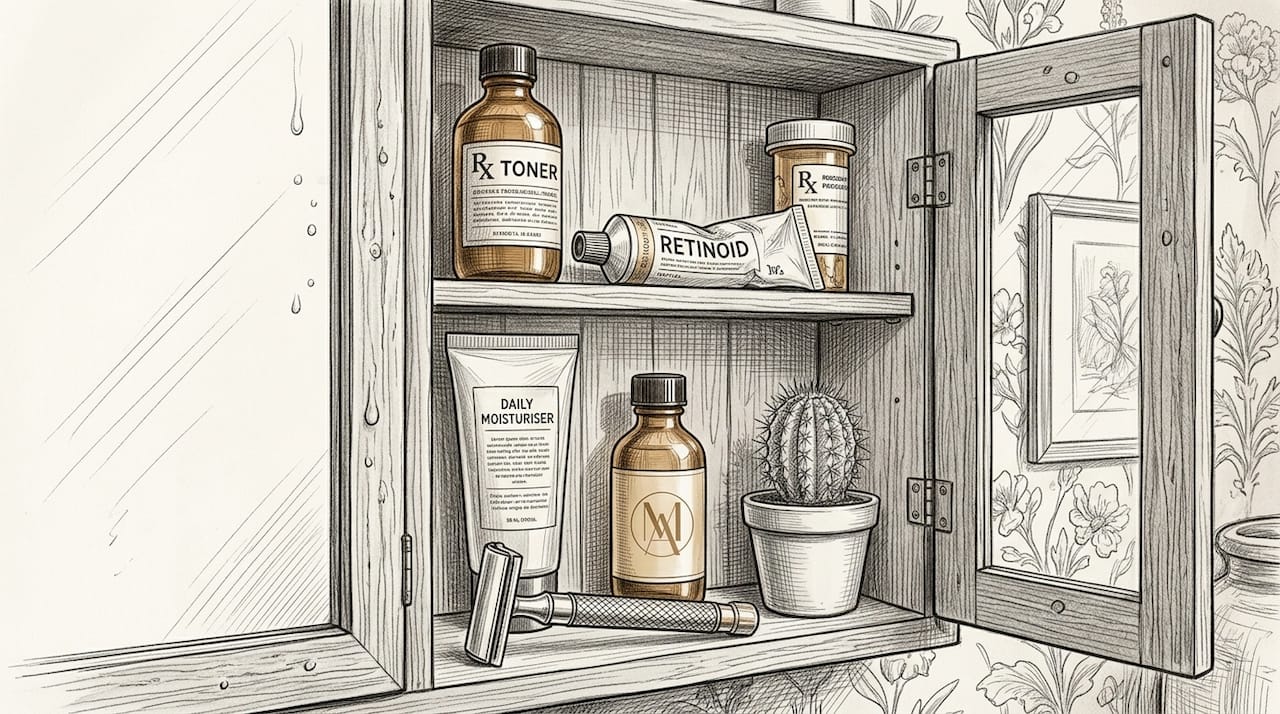
Tretinoin remains the most studied topical prescription active in existence. It clears acne and treats photoageing by accelerating skin cell turnover and replacing damaged surface cells. It keeps pores clear and slows the degradation of collagen in sun-damaged skin, improving fine wrinkles and uneven pigment over time.
The evidence base here is substantial. Tretinoin is classified as a first-line treatment for photoageing by European Academy dermatology guidelines, complemented by rigorous photoprotection. No OTC retinol product, regardless of its marketing claims, delivers the same degree of receptor activation at the same speed.
The honest caveat is that initial worsening and irritation are common in the first weeks. That is not the treatment failing. It is the skin adapting. Some formulations can take over seven months for full effect to establish.
3. Tyrosinase inhibitors: precision treatment for pigmentation
Hyperpigmentation, including melasma and post-inflammatory pigment from acne, is one of the most difficult skin concerns to treat without prescription-grade intervention. Tyrosinase inhibitors work by blocking the enzyme that triggers excess melanin synthesis, reducing pigmentation at the source rather than simply exfoliating over it.
Thiamidol, one of the newer generation inhibitors, demonstrates 36.1% mMASI score reduction at 12 weeks in a 2026 randomised, double-blind trial, with excellent tolerability across both sexes and no serious adverse events. That level of rigour is rarely seen in OTC pigmentation products.
For more established options, hydroquinone for hyperpigmentation remains a clinical benchmark, prescribed at concentrations of 2 to 4% for significant depigmentation. The key with all tyrosinase inhibitors is pairing them with broad-spectrum SPF≥50 daily, without exception. Photoprotection is not supportive care here. It is an integral part of how the treatment works.
4. Topical antibiotics and prescription acne treatments
Persistent inflammatory acne involves a bacterial component, excess sebum, follicular occlusion, and an inflammatory response. Prescription topical antibiotics such as clindamycin target Cutibacterium acnes directly, reducing the bacterial load that drives inflamed breakouts.
Used alone, antibiotics risk resistance over time. Clinicians typically combine them with benzoyl peroxide or retinoids to maintain efficacy and reduce the chance of resistance developing. That combination approach is where prescription acne treatment genuinely separates itself from OTC options. No single cleanser or spot treatment replicates a properly sequenced, clinician-designed regimen.
Prescription steroid creams also belong in this category for specific inflammatory skin conditions including eczema flares and contact dermatitis, though these require careful supervision to avoid side effects from prolonged use.
5. Prescription skincare vs over-the-counter: an honest comparison
| Feature | Prescription skincare | Over-the-counter skincare |
|---|---|---|
| Active concentration | Higher, clinically validated | Lower, regulated for consumer safety |
| Evidence base | Clinical trials, medical guidelines | Variable; often marketing-led |
| Side effect risk | Higher; requires supervision | Lower; suitable for self-directed use |
| Result timeline | 6 to 12+ weeks | Weeks to months for mild concerns |
| Best suited for | Moderate to severe acne, pigmentation, photoageing | Mild concerns, maintenance, supportive care |
| Supervision required | Yes, via clinician | No |
How effective is prescription skincare compared to OTC alternatives? For specific, moderate-to-severe concerns, the difference is significant. The advantages of prescription skincare are rooted in clinical validation rather than consumer marketing. OTC products have advanced considerably and serve an important role in daily maintenance, particularly for sensitive or reactive skin. But they are not designed to clear nodular acne or reverse years of sun-induced pigmentation.
The critical point: strongest is not always best. Skin tolerance, concern severity, and concurrent treatments all determine the right approach. A dermatologist’s role in skincare is precisely to make that calibration for you.
Pro Tip: Avoid layering prescription retinoids with exfoliating acids unless your clinician has specifically advised it. Mixing incompatible products can damage your skin barrier and set back your progress by weeks.
6. Managing side effects and maximising results
Understanding how to support your skin during prescription treatment is what separates patients who achieve lasting results from those who abandon treatment early. The side effects associated with prescription actives, including dryness, peeling, and increased sensitivity, are real but predictable.
The most effective strategies for managing initial irritation include:
- Using a water-based moisturiser for acne-focused tretinoin regimens and an oil-based moisturiser for photoageing treatment to buffer dryness
- Applying prescription actives to dry skin to reduce penetration speed in the first weeks
- Starting with every-other-night application and building frequency gradually
- Applying broad-spectrum SPF 50 every morning without fail, regardless of weather or season
Longer-term, the picture shifts considerably. Retinoids support collagen production over months and years. Pigmentation treatments, when maintained alongside daily photoprotection, prevent relapse and continue improving skin tone. The interaction between treatment and skin type also informs whether procedural treatments such as micro-needling may be introduced alongside topicals for enhanced outcomes.
7. How long does prescription skincare actually take to work?
Timeline transparency is one of the most underserved aspects of prescription skincare discussions. Patients often abandon effective treatment simply because results did not arrive fast enough.
Here is what the clinical evidence suggests:
- Weeks 1 to 4: Initial adjustment. Redness, flaking, and sensitivity are common. This phase does not indicate the treatment is wrong.
- Weeks 4 to 8: Skin begins to stabilise. Acne may show early clearance; pigmentation is unlikely to shift significantly yet.
- Weeks 8 to 12: Visible improvements in acne and mild pigmentation typically begin. Dermatologists advise reassessment if there is no change after 8 to 12 weeks of consistent use.
- Months 3 to 6: Meaningful reduction in pigmentation, improved skin texture, and continued acne clearance become visible.
- Beyond 6 months: Long-term photoageing improvements consolidate. Some patients require over seven months for full tretinoin benefit to manifest.
8. Summary comparison: prescription actives at a glance
| Active | Primary benefit | Key side effects | Best matched concern |
|---|---|---|---|
| Tretinoin | Cell turnover, collagen, acne clearance | Dryness, peeling, photosensitivity | Photoageing, acne |
| Thiamidol | Melanin inhibition, pigment reduction | Mild irritation in some users | Melasma, hyperpigmentation |
| Hydroquinone | Depigmentation | Ochronosis with prolonged use | Melasma, post-inflammatory pigment |
| Topical antibiotics | Antibacterial, anti-inflammatory | Resistance risk without combination | Inflammatory acne |
| Topical steroids | Anti-inflammatory | Skin thinning with overuse | Eczema, dermatitis flares |
My take on prescription skincare and realistic expectations
I have seen more patients arrive hoping prescription skincare will be the fast fix that everything else failed to be. That expectation is understandable. When you have spent years on OTC products without results, the idea of a prescription feels like crossing a threshold into something that will finally work quickly.
What I have learned is that the real value of prescription skincare is not speed. It is precision. The treatments genuinely work. But they work over months, not days, and they work best when the full picture is considered: your skin type, your barrier health, your photoprotection habits, and your willingness to sit with the discomfort of early irritation rather than abandoning ship.
The misconception I encounter most often is that higher potency always means better results. In practice, the patient who uses tretinoin three nights a week consistently for six months achieves far more than the one who applies it nightly for three weeks and stops because of peeling. Success with prescription skincare depends as much on how you support the treatment as on the treatment itself. That means moisturiser. It means daily SPF. It means consulting a skincare expert rather than self-prescribing based on what someone else uses.
The payoff for that patience is real and clinically supported. For those treating melasma, the BRIGHT SKY Protocol is a strong example of how sequencing prescription and procedural treatments correctly delivers results that neither approach achieves alone.
— Jess
How Them-ethod supports your prescription skincare goals
At Them-ethod, we take the guesswork out of prescription-grade skincare by pairing clinically effective products with expert guidance tailored to your specific concerns. For acne-prone skin, the PCA Clearskin acne serum delivers targeted, prescription-grade ingredients designed to reduce breakouts and refine skin texture without compromising the barrier. For those focused on pigmentation and skin health, the NEOSTRATA skincare collection brings scientifically validated actives for visibly healthier, more even-toned skin. Our virtual consultations connect you with top clinicians who design regimens matched to your skin, not a generic protocol. Every recommendation we make is grounded in evidence, and every product we carry meets the standard we hold ourselves to: results you can see and science you can trust.
FAQ
What are the main benefits of prescription skincare?
Prescription skincare delivers clinically validated actives at concentrations strong enough to treat moderate-to-severe acne, hyperpigmentation, and photoageing. Results are backed by clinical trials rather than consumer marketing alone.
How effective is prescription skincare compared to OTC products?
For specific concerns like melasma, inflammatory acne, or significant sun damage, prescription skincare consistently outperforms OTC alternatives. Meaningful improvement typically requires 6 to 12 weeks of consistent use.
What side effects should I expect?
Dryness, peeling, and increased photosensitivity are the most common side effects, particularly with retinoids. These are manageable with an appropriate moisturiser and daily broad-spectrum SPF 50.
Can I use prescription skincare with my existing routine?
Not always without adjustment. Mixing prescription retinoids with exfoliating acids or multiple actives simultaneously can damage the skin barrier. A clinician should review your full routine before you begin.
How long before I see results from prescription skincare?
Most patients see early changes between weeks 6 and 12. Pigmentation and photoageing improvements often require several months of consistent treatment and daily photoprotection.