




Why dermatologist-recommended products transform your skincare
TL;DR:
- Dermatologist-recommended products are based on clinical evidence, ensuring safety and effectiveness.
- Key ingredients like retinoids, ceramides, niacinamide, and SPF are scientifically proven to improve skin.
- Simple, personalized routines focusing on core essentials yield lasting skin health and results.
Social media makes skincare look effortless: a viral serum here, a celebrity moisturiser there, and your skin is supposedly transformed overnight. Yet 97% of patients prefer dermatologist recommendations over influencer endorsements when dealing with genuine skin concerns like acne. That gap between what trends and what truly works has never been more important to understand. This guide explains exactly why clinically backed, dermatologist-recommended products consistently outperform hype-driven alternatives, what ingredients the evidence actually supports, and how to build a routine that delivers real, lasting results.
Table of Contents
- How dermatologist-recommended products differ from trending skincare
- The science behind dermatologist-recommended ingredients
- Personalisation: Matching products to your unique skin concerns
- Core routine essentials: What dermatologists really advise
- A perspective you won’t find on social media
- Explore dermatologist-recommended solutions with The M-ethod
- Frequently asked questions
Key Takeaways
| Point | Details |
|---|---|
| Evidence-backed safety | Dermatologist-recommended products are rigorously tested for safety and effectiveness unlike most trending alternatives. |
| Clinically-proven results | Ingredients like retinoids and niacinamide deliver measurable improvements in pigmentation, scarring and overall skin health. |
| Personalised routines | Dermatologist advice customises skincare for your individual needs, improving outcomes and reducing trial-and-error. |
| Simplicity matters | Simple routines with cleanser, moisturiser, sunscreen, and targeted actives keep skin healthy and avoid unnecessary irritation. |
| Avoid being misled | Not all ‘tested’ or trending products are reliable; evidence and expert guidance make all the difference. |
How dermatologist-recommended products differ from trending skincare
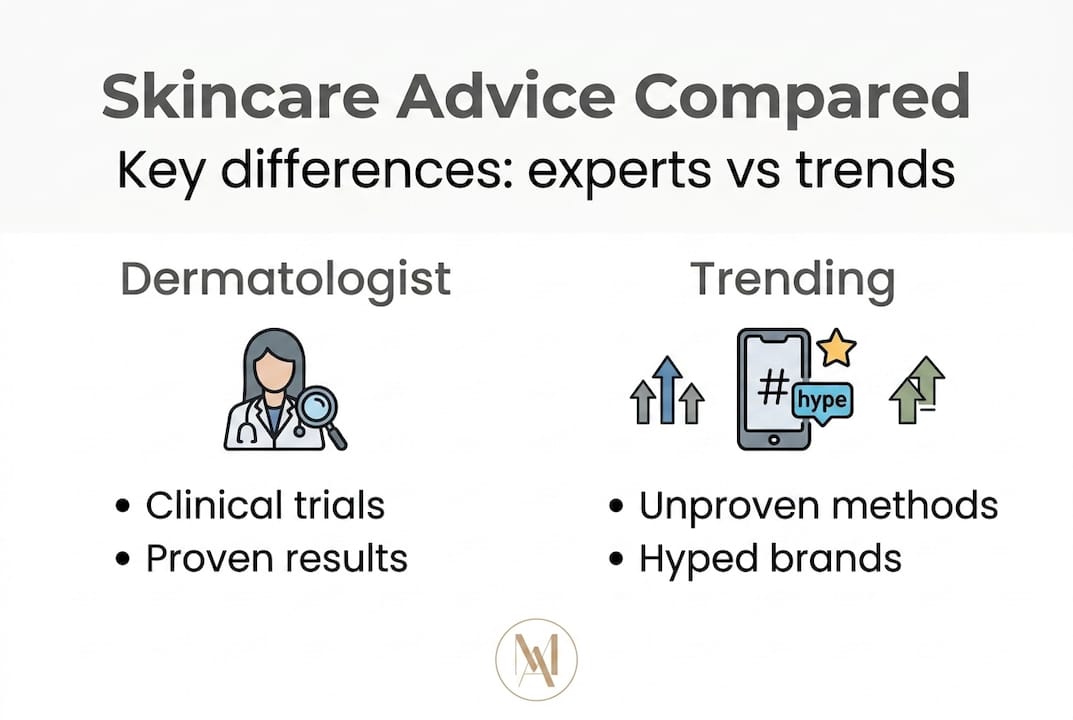
The core distinction is straightforward but often overlooked. Dermatologist-recommended products prioritise safety, tolerability, and verifiable long-term outcomes. Trending skincare, by contrast, prioritises marketability. A product can go viral based on appealing packaging or a single influencer post, with no clinical data to support its claims whatsoever. That is not a minor oversight. It is a fundamental difference in purpose.
Medical-grade skincare is safer and more effective than hype-driven alternatives because it undergoes rigorous research, clinical trials, and peer-reviewed testing before reaching your bathroom shelf. Trending products often skip this process entirely, relying on anecdotal testimonials and aesthetic appeal instead of measurable skin outcomes.
“Dermatologist-recommended products are formulated with active ingredients at concentrations proven to work, not concentrations that look good on a label.”
Here is a clear comparison of how the two categories differ across key areas:
| Feature | Dermatologist-recommended | Trending skincare |
|---|---|---|
| Ingredient evidence | Clinical trials and peer-reviewed data | Anecdotal or marketing-driven |
| Safety testing | Tested across multiple skin types | Often limited or self-reported |
| Active concentrations | Clinically effective levels | Variable, often cosmetic doses |
| Long-term efficacy | Documented in studies | Rarely measured |
| Regulation | Medical-grade oversight | Standard cosmetic regulation |
| Dermatologist input | Formulated with clinical expertise | Typically absent |
What makes this particularly relevant for you is that the stakes are real. Using an untested product on compromised or sensitive skin can worsen inflammation, disrupt the skin barrier (the protective outer layer that retains moisture and keeps irritants out), or trigger post-inflammatory hyperpigmentation. Dermatologists understand these risks intimately, which is why their dermatologist-recommended results prioritise tolerability as much as efficacy.
Key reasons dermatologist-backed products consistently outperform trending alternatives:
- Formulation precision: Active ingredients are present at concentrations that clinical studies confirm are effective, not diluted to cosmetic levels to satisfy label claims.
- Skin type validation: Products are tested across diverse skin phototypes, including sensitive, acne-prone, and darker skin tones that are routinely underrepresented in mainstream beauty testing.
- Barrier-first thinking: Dermatologists select products that support skin barrier function as a prerequisite to treating other concerns, rather than layering actives that may cause irritation.
- Evidence-based expectation setting: When a dermatologist recommends a product, they can tell you what to expect, when to expect it, and how to adjust if your skin responds unexpectedly.
The science behind dermatologist-recommended ingredients
Understanding how dermatologist-backed products differ sets the stage for exploring the powerful science behind their recommended ingredients. Dermatologists do not recommend ingredients arbitrarily. Each one is selected because the scientific evidence supports its mechanism of action (how it works at a cellular level), its safety profile, and its clinical outcomes across a range of skin concerns.
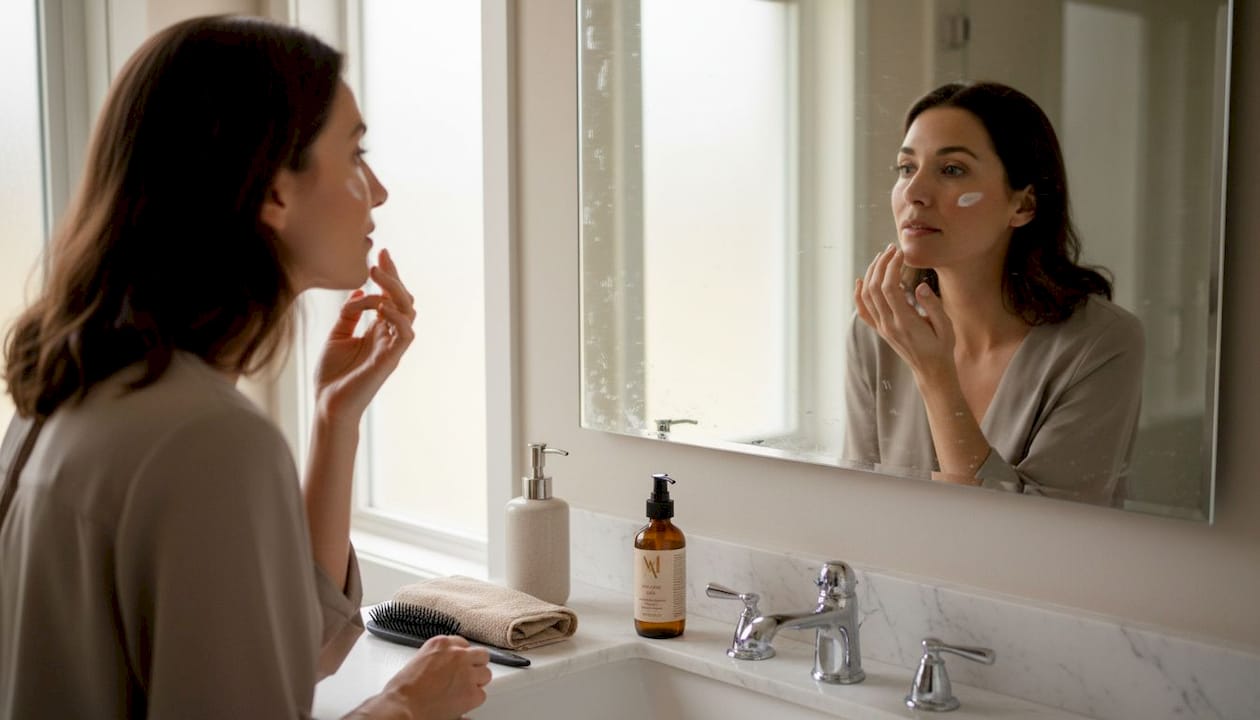
Dermatologist-endorsed ingredients target skin mechanics including barrier repair, collagen stimulation, inflammation reduction, and UV protection. These are not cosmetic benefits. They are physiological outcomes measured in clinical settings, and the distinction matters enormously.
The following are the most consistently recommended ingredients across dermatological literature:
- Retinoids (including retinol, tretinoin, and adapalene): These vitamin A derivatives accelerate cell turnover and stimulate collagen production in the dermis (the deep skin layer). They are among the most studied ingredients in dermatology, with decades of clinical evidence supporting their use for acne, hyperpigmentation, and signs of ageing.
- Ceramides: These lipid molecules are naturally present in a healthy skin barrier. Ceramide-rich formulations replenish barrier function, reduce transepidermal water loss (moisture escaping through the skin), and support recovery after active treatment.
- Niacinamide (vitamin B3): A versatile ingredient with well-documented anti-inflammatory, brightening, and barrier-reinforcing properties. Particularly valuable for acne-prone and hyperpigmented skin.
- Broad-spectrum SPF: Sunscreen remains the single most evidence-supported anti-ageing intervention available without a prescription. Daily use reduces photoageing, UV-induced DNA damage, and the risk of post-inflammatory hyperpigmentation (PIH) after treatment.
- Peptides: Short chains of amino acids that signal the skin to produce more collagen and elastin. A strong complement to retinoids for those who cannot tolerate the latter.
- Azelaic acid: Clinically validated for rosacea, acne, and PIH, with particular strength in darker phototypes where inflammation-triggered discolouration is a major concern.
The empirical data behind these ingredients is compelling. Sunscreen combined with niacinamide prevented PIH by approximately 16 ITA° (a standardised unit measuring skin lightness) in skin of colour populations, while retinoids reduced acne scarring by 55.2% compared to just 29.9% in vehicle-only (placebo) controls. These are not marginal differences. They are the kind of results that justify medical-grade formulation.
| Ingredient | Primary mechanism | Clinical evidence strength |
|---|---|---|
| Retinoids | Collagen stimulation, cell turnover | Very high (decades of trials) |
| Niacinamide | Anti-inflammatory, barrier support | High |
| Ceramides | Barrier repair, hydration retention | High |
| Broad-spectrum SPF | UV protection, PIH prevention | Very high |
| Azelaic acid | Anti-inflammatory, depigmenting | Moderate to high |
| Peptides | Collagen and elastin signalling | Moderate |
Pro Tip: If you are new to retinoids, start with a low-concentration retinol (0.025% to 0.05%) three nights per week and gradually increase frequency over four to six weeks. This significantly reduces the risk of retinoid dermatitis (redness, peeling, and irritation) while your skin acclimatises.
Building a routine around these evidence-backed ingredients, particularly when guided by dermatologist-approved routines, means every product in your regimen has a specific, measurable purpose rather than adding complexity without benefit.
Personalisation: Matching products to your unique skin concerns
With an understanding of ingredients and evidence, let’s see how dermatologist recommendations can be expertly tailored to your skin. One of the most persistent myths in skincare is that a single routine works for everyone. It does not. Acne-prone skin, rosacea-prone skin, post-menopausal skin, and melanin-rich skin all have distinctly different physiological needs, and treating them identically leads to frustration at best and damage at worst.
Labels claiming a product is “dermatologist tested” or “suitable for all skin types” sound reassuring, but such labels provide little clinical assurance without supporting evidence of how, where, and on whom the testing was conducted. A product can be “dermatologist tested” by a single practitioner on a handful of participants. That is a far cry from a controlled clinical trial.
Genuine personalisation through dermatologist guidance offers something no label can: a routine designed around your specific skin biology, lifestyle factors, and treatment goals. Here is what that looks like in practice:
- Acne and congestion: A dermatologist would typically prioritise non-comedogenic (pore-friendly) cleansing, a targeted benzoyl peroxide or salicylic acid treatment, and a light ceramide moisturiser to protect the barrier while actives work.
- Hyperpigmentation: Tyrosinase inhibitors (ingredients that block melanin production, such as kojic acid, arbutin, and azelaic acid) are combined with daily broad-spectrum SPF for daytime protection, and a retinoid for nighttime cell turnover.
- Sensitivity and redness: The focus shifts entirely to barrier repair: gentle cleansing, ceramide-rich hydration, and the careful, gradual introduction of any actives only once the barrier is stable.
- Ageing and volume loss: Retinoids remain the cornerstone, supported by antioxidants (such as vitamin C) to neutralise free radical damage, peptides to reinforce collagen networks, and high-SPF protection to prevent further photoageing.
To personalise your skincare effectively, you need to know your skin concerns in order of priority, your known sensitivities or reactions, and your tolerance for active ingredients. A dermatologist maps all three before making a single recommendation. The advantages of tailored skincare extend beyond better results. They include fewer adverse reactions, less wasted expenditure on products that do not suit you, and a clearer understanding of how your skin actually behaves across seasons and hormonal changes.
Pro Tip: Before your first consultation, keep a brief skin diary for two weeks, noting how your skin looks and feels morning and evening, which products cause any reaction, and how your skin responds after cleansing. This data gives a dermatologist an immediate, accurate picture of your barrier health.
For those ready to move from guesswork to precision, exploring bespoke skincare routines designed by clinicians is one of the most effective investments you can make in your skin’s long-term health.
Core routine essentials: What dermatologists really advise
Personalised options are powerful, but sticking to simple, core routines can protect your skin’s long-term health. There is a widespread belief that more steps equal better skin. Dermatologists largely disagree. Over-layering products, particularly actives, increases the risk of barrier disruption, product interactions, and skin sensitisation. Simplicity, done consistently, wins.
The dermatological consensus on a core routine is consistent and practical. Across clinical literature and expert guidance, the recommended essentials are:
- Gentle cleanser: Removes excess sebum, environmental pollutants, and residual SPF without stripping the skin’s natural oils or disrupting the acid mantle (the slightly acidic protective film on the skin’s surface).
- Moisturiser with barrier-supporting ingredients: Ceramides, hyaluronic acid, and glycerin are the gold standard components. Applied morning and evening to maintain skin hydration and support the barrier between active treatments.
- Broad-spectrum SPF (minimum SPF 30, ideally SPF 50): Non-negotiable. Daily use prevents UV-triggered collagen degradation, suppresses melanin overproduction, and protects the skin from the compounding effects of cumulative sun exposure.
- A targeted active ingredient: One active, introduced gradually, chosen for your primary concern. This might be a retinoid, niacinamide, azelaic acid, or a vitamin C antioxidant serum.
The core four for ageing-focused skin as consistently recommended by dermatologists includes antioxidants, moisturiser, broad-spectrum sunscreen, and a retinoid or peptide. Four products. That is all. The power is in the evidence behind each one, not the number of steps you complete.
The most common mistakes dermatologists see in patient routines include:
- Over-layering actives: Combining multiple exfoliating acids, retinoids, and strong vitamin C formulations simultaneously causes significant barrier disruption and sensitisation.
- Inconsistency: Using a retinoid sporadically produces far weaker results than a committed, gradually escalating regime.
- Neglecting SPF: Any brightening, anti-ageing, or acne-clearing work is undermined if unprotected UV exposure continues daily.
- Following trends without evaluation: A product trending on social media may actively conflict with the active ingredients you are already using.
Understanding the benefits of dermatologist advice becomes particularly evident when you see how much expensive trial and error a single well-structured consultation eliminates.
Pro Tip: Apply your actives at night when skin undergoes its natural repair cycle, and reserve mornings for antioxidant protection and SPF. This simple sequencing maximises the efficacy of both phases of your routine without creating unnecessary product conflict.
A perspective you won’t find on social media
After understanding what science and experience suggest, let us challenge some typical skincare narratives. The uncomfortable truth is that the beauty industry profits enormously from complexity and novelty. New ingredients, new formats, new routines and the cycle of replacement is built into the business model. Dermatology, by contrast, is frustratingly boring in the best possible way. The same core recommendations have held for decades because they are evidence-based and they work.
What most skincare advice ignores is that the skin barrier is not a passive backdrop to your active ingredient regime. It is the primary determinant of whether your actives work at all. A compromised barrier means reduced penetration of beneficial ingredients, increased sensitivity to everything, and a feedback loop of inflammation that actively worsens most skin concerns. Dermatologists know this. Influencers rarely mention it.
Expert consensus established via the Delphi method00612-7/abstract), a structured process of achieving agreement among leading specialists based on high-level clinical evidence, consistently outperforms anecdotal claims in predicting what works across diverse patient populations. When multiple board-certified dermatologists converge on the same recommendation through rigorous review of published data, that is categorically more reliable than any social media trend, regardless of how many views it generates.
We also think patience is the most underrated ingredient in any skincare routine. Clinical studies measure outcomes at eight, twelve, and twenty-four weeks, not overnight. The expectation of rapid transformation, cultivated by before-and-after content, sets people up for premature abandonment of routines that would have delivered meaningful results if continued. The evidence behind medical evidence for skincare tells a different story: slow, consistent, science-led routines are the ones that produce lasting change.
The most valuable shift you can make is not switching to a new serum. It is switching to a framework where clinical evidence, not aesthetics or popularity, determines what goes on your skin.
Explore dermatologist-recommended solutions with The M-ethod
You now know the science and strategy behind building a genuinely effective skincare routine. The next step is putting it into practice with products that clinicians actually stand behind. At The M-ethod, we curate an evidence-based selection of medical-grade skincare, designed to match real skin concerns with real solutions. Whether you are addressing active acne or preventing post-inflammatory scarring, the PCA Clearskin acne serum offers a clinically formulated starting point. For those exploring broader corrective regimens, our full range of Neostrata dermatologist products brings advanced glycolic acid science to targeted resurfacing. Every product we carry is selected with clinical outcomes, not marketing budgets, in mind.
Frequently asked questions
Are dermatologist-recommended products suitable for all skin types?
Yes, these products undergo clinical testing for safety and efficacy across a variety of skin types, including sensitive and darker phototypes, making them broadly appropriate when used as directed.
Do I need a prescription for dermatologist-recommended skincare?
Many recommended products are available over the counter, but persistent or severe conditions may require prescription-strength formulations tailored specifically to your skin’s needs.
How quickly will I see results from these products?
Results depend on the product and concern, but clinical data shows significant improvements such as reduced PIH and acne scarring within weeks of consistent use.
Can “tested” or “dermatologist-tested” labels be trusted?
Not always: these labels provide little assurance without underlying clinical evidence, so consulting a qualified dermatologist remains the most reliable way to identify proven products.
What is the best basic routine according to dermatologists?
Dermatologists recommend keeping to a simple regime: cleanse, moisturise, apply broad-spectrum sunscreen daily, and introduce one targeted active ingredient suited to your primary skin concern.