

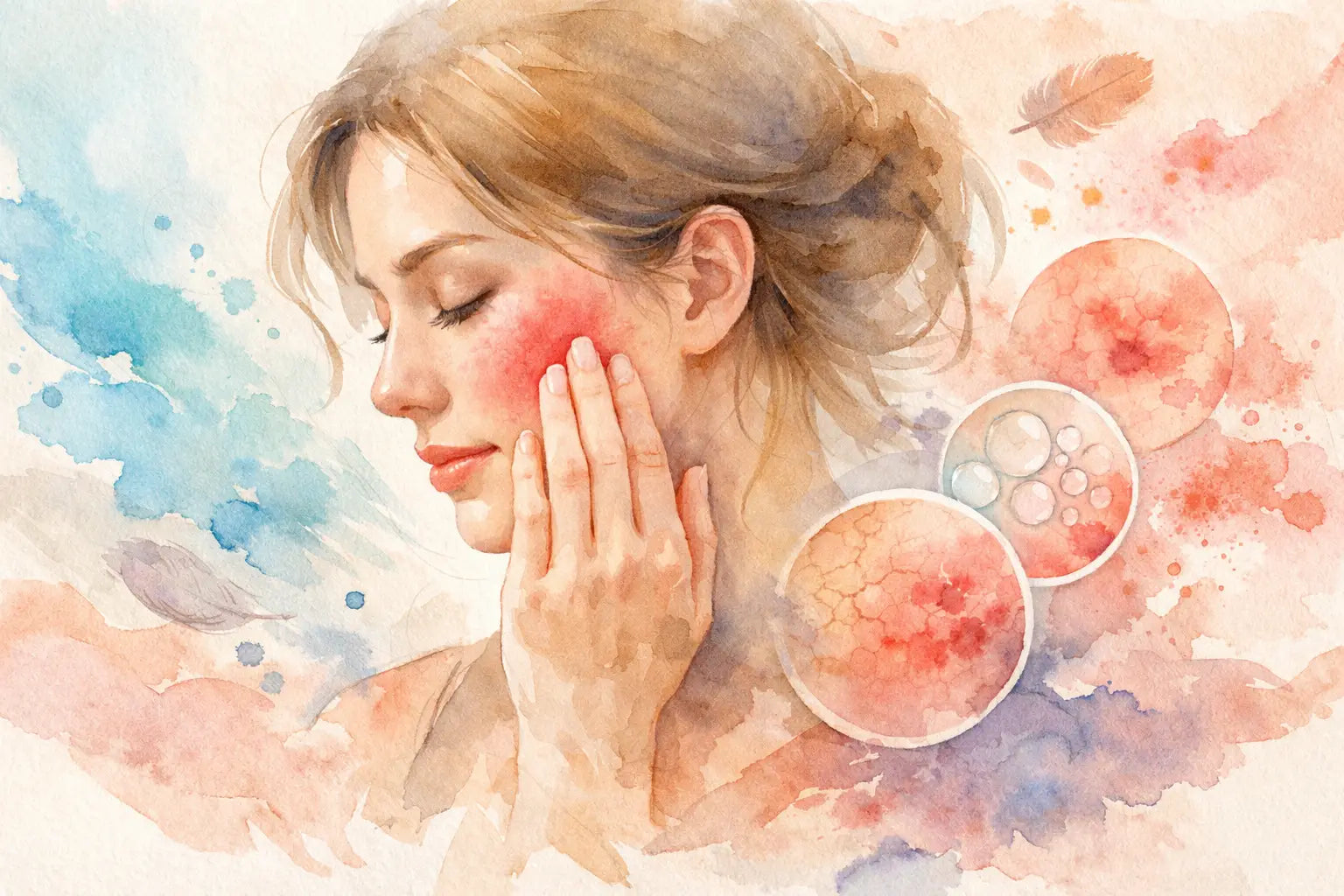
What Causes Sudden Skin Sensitivity?
Your usual cleanser suddenly stings. The serum you have used for months now leaves your skin red, tight or hot. If you are wondering what causes sudden skin sensitivity, the answer is rarely random. In most cases, skin that once felt resilient has had its tolerance lowered by a change in barrier function, exposure, hormones or treatment intensity.
That shift matters. Sudden sensitivity is not simply a cosmetic inconvenience. It is often your skin signalling that its protective defences are compromised, inflamed or being pushed beyond what it can comfortably handle.
What causes sudden skin sensitivity most often?
The most common cause is a disrupted skin barrier. The barrier is your skin’s outer defence system, designed to keep moisture in and irritants out. When it is weakened, water escapes more easily and everyday ingredients that once felt perfectly acceptable can begin to sting, burn or itch.
This can happen quickly. A stronger retinoid, a run of exfoliating acids, over-cleansing, cold weather, central heating, sun exposure or even a period of stress can be enough to tip skin from balanced to reactive. In premium skincare, more active does not always mean better. Clinical results depend on dosage, sequencing and tolerance, not simply product strength.
It is also worth separating sensitive skin from sensitised skin. Sensitive skin can be more genetically predisposed to react. Sensitised skin is skin that has become reactive due to external or internal triggers. Many adults who describe their skin as suddenly sensitive are actually dealing with sensitised skin, which means the right changes can often restore comfort and stability.
Barrier disruption is the leading trigger
A healthy barrier relies on lipids, ceramides, cholesterol and natural moisturising factors working in the right balance. Once that balance is disturbed, irritation follows far more easily.
One of the most frequent reasons is overuse of actives. Retinoids, alpha hydroxy acids, beta hydroxy acids, benzoyl peroxide and professional-style exfoliating pads can all deliver excellent outcomes when used correctly. Used too often, layered too aggressively or combined without strategy, they can produce inflammation rather than improvement. Skin may feel polished at first, then suddenly become dry, shiny, flaky and reactive.
Cleansing habits can contribute too. Foaming cleansers with a strong degreasing effect, frequent washing, hot water and cleansing brushes can strip essential lipids. That stripped feeling after cleansing is not a sign of purity. It is often a sign your skin has lost too much.
Even skincare that is technically high quality can become a problem if your routine lacks balance. A regimen focused only on correction, without enough support for repair and hydration, often leads to delayed sensitivity.
When active skincare becomes too much
This is where context matters. A retinoid that your skin tolerates beautifully in summer may feel far too intense in winter. An acid toner that works on resilient oily skin may not suit skin recovering from travel, illness or in-clinic treatment. Tolerance is not fixed. It changes with the condition of your barrier.
If your skin has become suddenly sensitive after introducing a new regimen, the issue may not be one individual product. It may be the cumulative load of exfoliation, vitamin A, vitamin C, cleansing and environmental stress all happening at once.
Environmental and lifestyle shifts can change skin quickly
Skin does not exist in isolation from the rest of your life. A change in climate, frequent flying, reduced sleep, emotional stress and illness can all alter how your skin behaves.
Cold air, wind and indoor heating are particularly common triggers. They reduce moisture levels and can increase transepidermal water loss, leaving the skin more vulnerable. On the other end of the spectrum, heat, humidity and intense UV exposure can provoke redness and inflammation, especially in those prone to rosacea or post-inflammatory pigmentation.
Pollution can also play a role. While not everyone notices an immediate reaction, urban exposure can increase oxidative stress and weaken skin over time. That is one reason why antioxidant support and daily SPF remain foundational in any results-driven skincare plan.
Stress deserves more attention than it usually gets. Elevated stress can impair barrier recovery, increase inflammation and worsen existing conditions such as eczema, acne and rosacea. If your skin has suddenly become reactive during a demanding period, that is not coincidence.
Hormones, age and underlying conditions
Sometimes sudden sensitivity is not about skincare misuse at all. It may reflect an internal shift.
Hormonal fluctuations during the menstrual cycle, pregnancy, perimenopause and menopause can all change skin behaviour. Oestrogen influences hydration, collagen and barrier integrity. As levels fluctuate or decline, skin may become thinner, drier and less tolerant of active ingredients that once felt easy to use.
Ageing skin is not automatically sensitive, but it is often less forgiving. Barrier lipids decline over time, repair can slow, and cumulative exposure to sun and inflammation can leave skin more reactive. This is why mature skin often benefits from advanced formulas that are both corrective and barrier-conscious, rather than relentlessly strong.
Underlying inflammatory conditions are another possibility. Rosacea, seborrhoeic dermatitis, eczema and perioral dermatitis can all present as sudden sensitivity, especially if they have been previously mild or misread as simple dryness. If redness, burning or rash-like changes persist, it is wise to consider whether the issue is medical rather than merely cosmetic.
Allergic reaction or irritation?
Not every reaction means an allergy. Irritant contact dermatitis is more common and happens when skin is overwhelmed by an ingredient or formula strength. Allergic contact dermatitis involves an immune response to a specific substance and can occur even with products marketed as gentle.
Fragrance, essential oils, preservatives and certain botanicals can all be triggers for some individuals. The difficulty is that reactions do not always happen on first use. You can develop sensitivity to an ingredient after repeated exposure.
If the skin is swelling, intensely itchy, blistering or developing a spreading rash, stop the suspect products and seek medical advice. That goes beyond standard sensitisation.
Why products suddenly sting when they never did before
This is one of the most frustrating experiences for sophisticated skincare users. You have invested in clinically proven formulas, built a proper routine and your skin still starts reacting.
Usually, the product has not changed your skin has. Once the barrier is compromised, even well-formulated serums and moisturisers can sting on application. That does not automatically mean the product is poor quality or unsuitable long term. It often means your skin needs a period of repair before it can tolerate the same level of activity again.
This is where disciplined restraint becomes more valuable than adding more steps. Chasing the reaction with extra acids, peels or treatment masks tends to prolong the problem.
How to calm suddenly sensitive skin
The first priority is to reduce inflammation and support barrier recovery. Strip your routine back to the essentials for a short period: a gentle cleanser, a barrier-supportive moisturiser and a broad-spectrum SPF. If your skin is very reactive, even cleansing once daily in the evening may be enough, with lukewarm water only in the morning.
Pause strong actives for several days or longer depending on severity. That usually means retinoids, exfoliating acids, scrubs and potent treatment products. When reintroducing them, do so one at a time and at a lower frequency than before. Skin often tolerates strategic use far better than nightly intensity.
Look for formulas centred on ceramides, cholesterol, fatty acids, glycerin, hyaluronic acid and soothing anti-inflammatory ingredients. Texture matters too. Very lightweight gels may not be enough if the barrier is significantly impaired, while richer creams can be more appropriate during recovery.
Keep expectations realistic. Barrier repair is not always immediate. Mild sensitisation may settle within days, while more significant disruption can take weeks. Patience is part of clinical skincare success.
When sudden skin sensitivity needs expert input
If sensitivity persists, worsens or keeps returning, it is time to look beyond surface-level guesswork. Recurrent burning, diffuse redness, rash-like patches or intolerance to nearly every product can indicate rosacea, dermatitis, allergy or a poorly matched treatment plan.
This is particularly relevant if you are using prescription-strength actives, post-procedure skincare or pigment protocols. High-performance regimens need precision. The right products can transform skin; the wrong cadence can destabilise it.
An expert-led consultation can help identify whether the issue is barrier damage, ingredient conflict, over-exfoliation, hormonal change or an underlying skin condition. That level of guidance is often what separates temporary trial-and-error from a regimen that truly restores skin health.
At The M-ethod Aesthetics, this is exactly why curated skincare should be paired with professional direction rather than trend-led layering. Luxury skincare performs best when it is intelligently prescribed.
Sudden sensitivity can feel unsettling, especially when your skin has always been cooperative. But it is also useful information. Skin that reacts is asking for recalibration, not punishment. Respond with less intensity, more precision and a stronger respect for barrier health, and your complexion is far more likely to return to calm, resilient form.