





Why dermatologist-recommended products deliver real results
The skincare market is saturated with products labelled ‘clean’, ‘natural’, or ‘dermatologist-tested’, yet many of these claims are little more than marketing language. Choosing between a trending botanical serum and a clinically validated formulation can feel genuinely confusing, especially when both promise transformative results. The truth is that not all skincare is equal, and understanding why dermatologist-recommended solutions consistently outperform trend-driven alternatives is the first step towards building a routine that actually works. In this article, we break down the science, the key ingredients, and the practical steps you need to make smarter, evidence-based choices for ageing, acne, and pigmentation.
Table of Contents
- What sets dermatologist-recommended products apart
- Ingredient spotlight: The science behind the recommendations
- How dermatologist-recommended regimens beat trends and myths
- Personalisation, safety, and real-life use: Key nuances
- Putting it into practice: Building your effective skincare routine
- Expert-recommended solutions: Where to find proven skincare
- Frequently asked questions
Key Takeaways
| Point | Details |
|---|---|
| Science drives efficacy | Dermatologist-recommended products use ingredients proven by rigorous research and expert consensus. |
| Ingredients matter most | Results depend on clinically backed actives like retinoids, sunscreen, and vitamin C, not branding or price. |
| Simple routines work best | Consistent use of a few evidence-based products is more effective than chasing trends or complex routines. |
| Personalisation is key | Even top-rated products must be tailored to your skin type, needs, and sensitivities for best safety and results. |
What sets dermatologist-recommended products apart
The term ‘dermatologist-recommended’ carries real weight when it is applied correctly. It means a product’s active ingredients have been evaluated through peer-reviewed research, clinical trials, and expert consensus, not simply tested on a small focus group or endorsed by a social media influencer. When dermatologists recommend a formulation, they are drawing on skin biology, published data, and years of clinical observation.
“Dermatologists rely on clinical evidence and ingredient efficacy, not trends, when making product recommendations.”
Contrast this with the ‘clean beauty’ category. Products marketed as natural or organic are not inherently safer or more effective. Poison ivy is natural. Fragrance allergens appear in many botanical extracts. The absence of synthetic ingredients does not guarantee results, and it certainly does not replace clinical validation. Understanding why medical skincare works for targeted concerns is essential before you invest in any new product.
When choosing professional skincare, look beyond the front-of-pack claims. The ingredient list and any references to published studies are far more informative than a ‘dermatologist-approved’ badge, which is not a regulated term in most markets.
- Peer-reviewed evidence supports the active ingredients
- Clinical trials demonstrate measurable outcomes for specific concerns
- Formulation science ensures ingredients are stable and bioavailable
- Concentration levels are appropriate for efficacy without unnecessary irritation
Pro Tip: Before purchasing, search the key active ingredient alongside ‘clinical trial’ or ‘randomised controlled study’. If credible research exists, you will find it quickly.
Ingredient spotlight: The science behind the recommendations
Knowing what makes a recommendation credible is one thing. Knowing which ingredients are actually worth your attention is another. A landmark 2025 study identified 23 key ingredients that achieved expert consensus across seven common skin concerns, giving us a reliable framework to work from.
| Skin concern | Top recommended ingredients |
|---|---|
| Ageing | Retinoids, mineral sunscreen, vitamin C, peptides |
| Acne | Benzoyl peroxide, salicylic acid, niacinamide, retinoids |
| Pigmentation | Vitamin C, niacinamide, azelaic acid, broad-spectrum SPF |
| Sensitive skin | Ceramides, niacinamide, mineral SPF, hyaluronic acid |
Retinoids and mineral sunscreen achieved a 96.8% dermatologist consensus for anti-ageing, making them the most universally endorsed pairing in modern dermatology. Retinoids accelerate cell turnover and stimulate collagen production. Mineral sunscreen prevents the UV-induced damage that accelerates photoageing in the first place. Together, they form the backbone of any evidence-based anti-ageing routine.
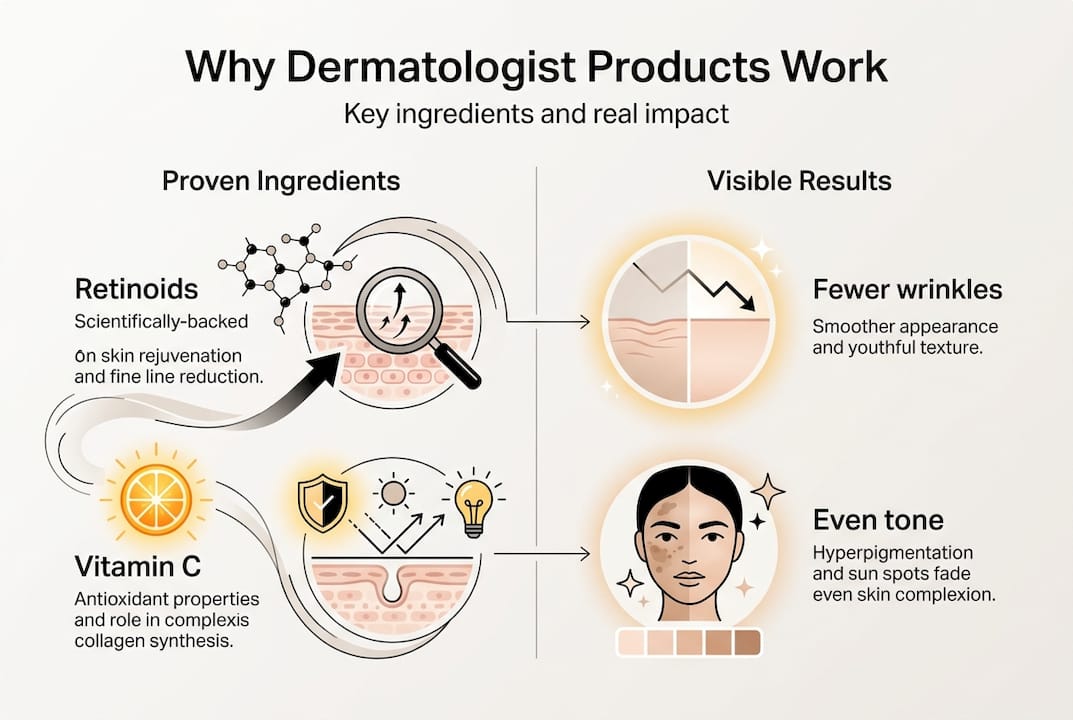
For pigmentation, vitamin C and niacinamide have demonstrated significant reductions in melanin production and uneven skin tone in clinical trials. Vitamin C inhibits the enzyme tyrosinase, which drives melanin synthesis. Niacinamide interrupts the transfer of melanin to skin cells. Used consistently, both deliver visible results. You can explore targeted options for skincare for pigment and acne on our journal.
A thorough national review of skincare ingredients published in 2025 reinforced these findings, confirming that a small number of well-researched actives consistently outperform the wider market.
How to identify a scientifically effective product:
- Check the ingredient list for at least one clinically validated active relevant to your concern.
- Confirm the active appears high enough in the list to be present at a meaningful concentration.
- Look for published research supporting that specific ingredient at that concentration.
- Verify the formulation is appropriate for your skin type (e.g. gel for oily skin, cream for dry).
- Ensure broad-spectrum SPF is part of your morning routine regardless of other actives used.
How dermatologist-recommended regimens beat trends and myths
Skincare myths are remarkably persistent. They circulate on social media, in wellness communities, and even in some retail environments. Addressing them directly is important because acting on misinformation can delay results or cause genuine harm.
| Common myth | Evidence-based reality |
|---|---|
| Natural oils replace moisturiser | Oils lack humectants; they can seal in dryness without hydrating |
| Expensive means more effective | Price reflects branding, not always ingredient quality or concentration |
| Retinol thins the skin | Retinol builds skin thickness by stimulating collagen and cell renewal |
| ‘Clean’ products are safer | Natural ingredients can be potent allergens; safety is about formulation |
| You need a 10-step routine | Consistent use of a simple routine with proven actives outperforms complexity |
The retinol myth deserves particular attention. Many people avoid it believing it will make their skin thinner or more fragile. In reality, retinol increases epidermal thickness over time by stimulating keratinocyte proliferation and boosting dermal collagen. The initial sensitivity some people experience is a temporary adjustment phase, not a sign of damage.
Product-hopping is another common pitfall. Switching between trending ingredients every few weeks prevents any single active from delivering its full benefit. Most evidence-based actives require consistent use over eight to twelve weeks before measurable results appear. Staying informed about clinical skincare trends helps you distinguish genuine advances from passing fads.
- Expensive or ‘luxury’ labelling does not guarantee clinical efficacy
- ‘All natural’ does not mean allergen-free or irritation-free
- Retinol strengthens rather than weakens the skin barrier over time
- Sunscreen is the single most evidence-backed anti-ageing product available
Pro Tip: When a brand claims ‘dermatologist-approved’, ask which dermatologist, under what conditions, and whether the endorsement is based on published data. Legitimate brands will have answers.
Personalisation, safety, and real-life use: Key nuances
Even the most well-researched ingredients are not universally appropriate. Skin type, life stage, and individual sensitivities all influence how your skin responds to active ingredients. This is where personalisation becomes critical.
Retinoids are a prime example. They are among the most evidence-backed actives available, yet they are not appropriate post-procedure, during pregnancy, or whilst breastfeeding. For individuals with rosacea or a compromised skin barrier, even low-concentration retinoids may trigger significant irritation without a carefully managed introduction protocol.
“Not all ‘dermatologist-approved’ claims are regulated. Sourcing products from clinically credible platforms and verifying ingredients independently remains essential for safe, effective skincare.”
Darker skin tones also require specific consideration. Certain actives, including high-concentration chemical exfoliants, carry a greater risk of post-inflammatory hyperpigmentation in Fitzpatrick skin types IV to VI. A dermatologist or trained clinician can guide you through the safest and most effective options for your specific complexion. Our guidance on best practices for sensitive skin covers many of these nuances in detail.
How to introduce actives safely:
- Patch test every new active on a small area of skin for 48 hours before full application.
- Introduce one new active at a time, waiting at least two weeks before adding another.
- Start with the lowest available concentration and increase gradually as your skin adapts.
- Avoid combining multiple strong actives (e.g. retinoids and high-strength AHAs) without professional guidance.
- Consult a dermatologist or skin clinician if you have a medical skin condition, are pregnant, or have experienced adverse reactions previously.
Putting it into practice: Building your effective skincare routine
All of this knowledge is only useful if it translates into a routine you can actually follow. The good news is that an effective, evidence-based routine does not need to be complicated. Simplicity, consistency, and the right actives for your specific concern are what drive results.
A consistent, tailored routine built around evidence-based ingredients delivers superior and safer outcomes than any complex multi-step programme built on trending products.
Step-by-step approach to building your routine:
- Identify your primary skin concern: ageing, acne, pigmentation, or sensitivity.
- Research the clinically validated actives for that concern using the consensus table above.
- Select a cleanser, treatment product, and moisturiser that include those actives at appropriate concentrations.
- Add a broad-spectrum SPF 30 or higher every morning without exception.
- Patch test new products and introduce them one at a time over several weeks.
- Monitor your skin’s response after eight weeks and adjust if needed, ideally with professional input.
When choosing skincare wisely, watch for these red flags:
- Routines with more than six to seven steps that include multiple strong actives simultaneously
- Products making claims of ‘instant results’ or ‘replaces Botox’ without clinical substantiation
- Formulations with no SPF recommendation in the brand’s morning routine guidance
- Ingredient lists where key actives appear at the very bottom, suggesting negligible concentrations
Realistic expectations matter. Skincare is not a quick fix. The most effective ingredients work gradually, rebuilding skin structure and function over months of consistent use. Patience, paired with the right formulations, is what separates genuine skin transformation from perpetual disappointment.
Expert-recommended solutions: Where to find proven skincare
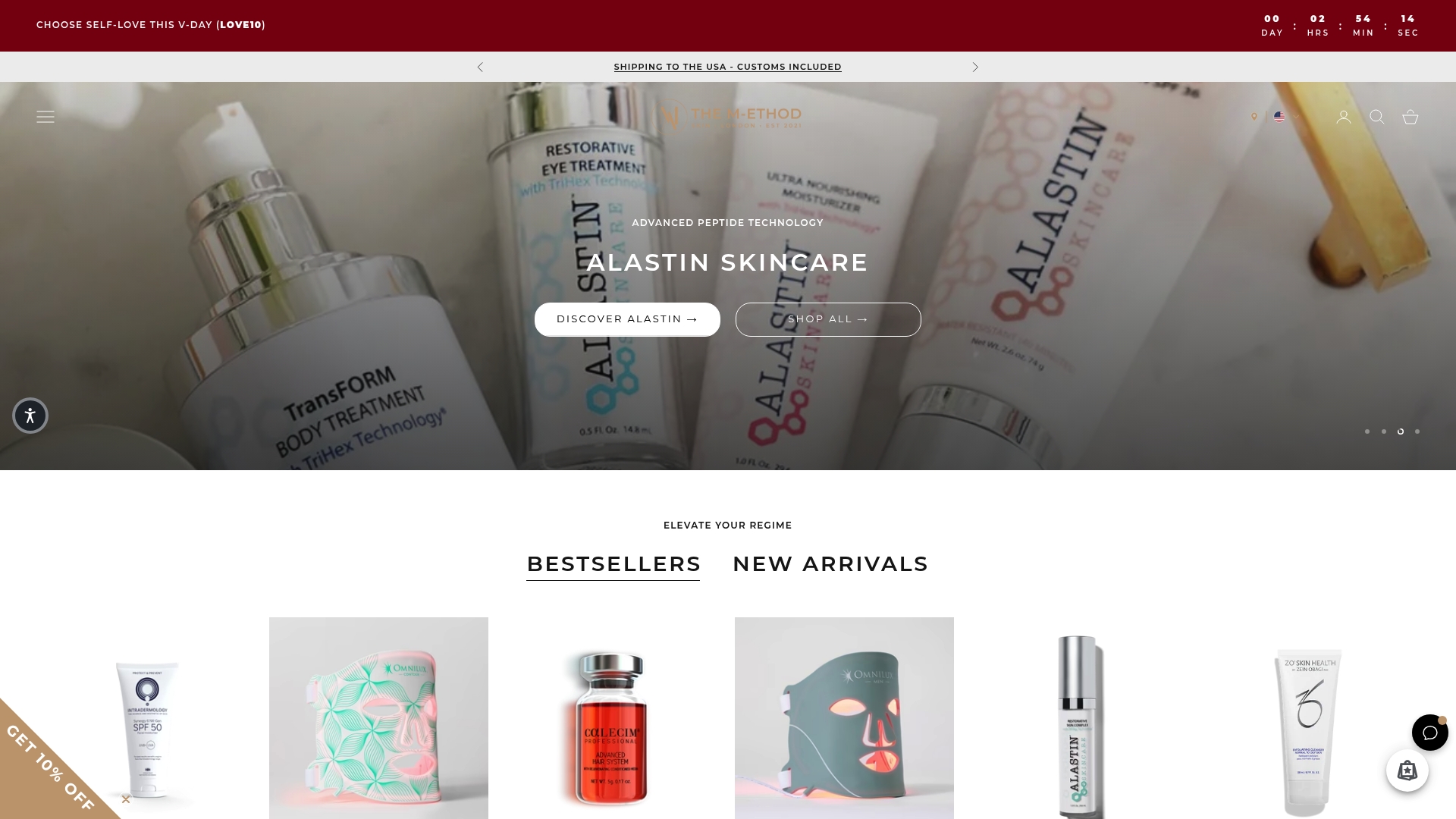
When you are ready to move beyond guesswork and invest in formulations that are genuinely backed by clinical evidence, the quality of your source matters as much as the products themselves. At The M-ethod Skin, every product in our curated collection has been selected for its ingredient integrity and clinical credibility. For acne-prone skin, PCA Clearskin delivers targeted sebum control with proven actives. For anti-ageing, PCA Retinol Night offers a well-tolerated, results-driven retinol formulation. For pigmentation and overall skin evenness, our Neostrata collection brings together scientifically validated options trusted by dermatologists worldwide. Browse our full range and, if you need personalised guidance, book a virtual skin consultation with one of our expert clinicians.
Frequently asked questions
What makes a product truly ‘dermatologist-recommended’?
A product earns this designation when its active ingredients are backed by clinical evidence and endorsed by medical experts through research, not simply tested or labelled by a brand. Always verify by checking the ingredient list against published dermatological consensus.
Are dermatologist-recommended products always safe for sensitive skin?
Not always. Actives such as retinoids may require buffering or a slower introduction for sensitive skin types, so personalisation and patch testing are essential before committing to any new active.
Is expensive or ‘natural’ skincare always better than dermatologist-recommended choices?
No. Clinical results determine efficacy, not price or natural labelling. Expensive or clean products are not inherently superior to clinically proven formulations, and in many cases they lack the active concentrations needed to deliver measurable results.
How can I spot genuinely ‘dermatologist-recommended’ products?
Look for well-established actives at meaningful concentrations, references to published clinical data, and professional consensus rather than relying on the label alone. As not all ‘dermatologist-approved’ claims are regulated, verifying through ingredients and independent research is always the most reliable approach.


