





Telemedicine's role in skincare access: 2026 guide
TL;DR:
- Telemedicine in skincare offers remote diagnosis and treatment, bridging the gap between patient needs and specialist access. It provides cost-effective, reliable care mainly for visual conditions, with a hybrid model combining virtual and in-person visits being most effective for complex cases.
Telemedicine in skincare access is defined as the remote delivery of dermatological assessment, diagnosis, and treatment through digital platforms, eliminating the need for an in-person clinic visit. Known clinically as teledermatology, it addresses one of dermatology’s most persistent problems: the gap between patient need and specialist availability. Research shows teledermatology delivers average cost savings of US$81.31 per patient, with total savings ranging from 6.27% to 45.33% depending on the healthcare system. The World Health Organisation recognises telemedicine as a priority tool for expanding specialist access in underserved regions. At Them-ethod, we see teledermatology not as a replacement for clinical care, but as a powerful complement to it.
How does telemedicine work for remote dermatological care?
Dermatology is particularly suited to telemedicine because skin conditions are primarily visual. That visual nature makes the store-and-forward model, where patients submit photos and data for later review, the dominant modality in teledermatology rather than real-time video calls.
The typical patient workflow follows a clear sequence:
- Complete a medical questionnaire. You provide your skin history, current concerns, medications, and any known allergies through a secure digital form.
- Submit high-quality photographs. Multiple images from different angles, including close-ups of the affected area, give the reviewing clinician the clearest possible picture.
- Await board-certified dermatologist review. Diagnosis and treatment plans are delivered within 24–48 hours in most asynchronous platforms.
- Receive a digital prescription or product recommendation. Where clinically appropriate, prescriptions are issued electronically and fulfilled through a pharmacy or skincare provider.
- Follow up remotely. Ongoing communication keeps your treatment on track without requiring further travel.
Pro Tip: Before submitting your photos, take them in natural daylight against a plain background. Artificial lighting and shadows are among the most common reasons a clinician requests resubmission, adding unnecessary delay to your care.
Asynchronous telemedicine removes scheduling conflicts and poor internet connectivity from the equation entirely. You submit your data when it suits you, and the clinician reviews it within their working hours. This flexibility is one of the most underappreciated benefits of telehealth in dermatology.

Is teledermatology clinically effective?
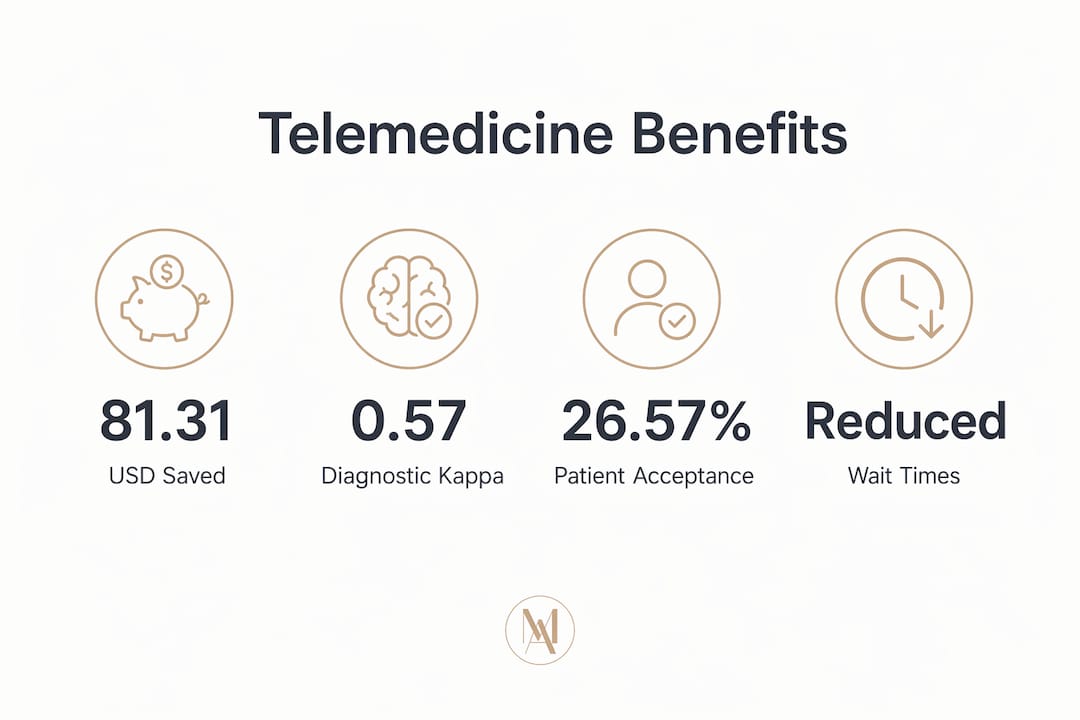
The short answer is yes, with important caveats. Diagnostic concordance between teledermatology and in-person visits shows a mean kappa coefficient of 0.57, which represents moderate to good agreement. That figure means a teledermatologist and an in-person clinician will reach the same diagnosis the majority of the time for common skin conditions.
Patient acceptance tells a more nuanced story. Only 26.57% of patients are willing to replace traditional face-to-face consultations with teledermatology entirely. That figure reflects not dissatisfaction, but a realistic understanding that some conditions require physical examination.
| Clinical factor | Teledermatology performance |
|---|---|
| Diagnostic concordance (kappa) | 0.57 (moderate to good agreement) |
| Patient willingness to replace in-person visits | 26.57% |
| Conditions well-suited to remote assessment | Acne, rosacea, eczema, psoriasis |
| Conditions requiring in-person follow-up | Suspicious lesions, biopsies, complex presentations |
Teledermatology also maintains reliable diagnostic accuracy without advanced dermoscopic tools. That makes it genuinely scalable in rural or resource-limited environments where specialist equipment is unavailable.
Pro Tip: If you are managing a chronic condition such as eczema or rosacea, teledermatology is particularly effective for routine follow-ups. Save your in-person appointments for flare-ups that require physical assessment or when your clinician requests it.
The benefits of telehealth in dermatology extend beyond diagnosis. Reduced waiting times, geographic flexibility, and the ability to consult a specialist without taking a day off work all contribute to better patient engagement and treatment adherence.
What are the cost and operational benefits of telemedicine in skincare?
The financial case for teledermatology is well established. Average savings of US$81.31 per patient may appear modest in isolation, but across a healthcare system managing thousands of dermatology referrals annually, the cumulative effect is substantial. The percentage savings range from 6.27% to 45.33%, reflecting how much the benefit scales with the baseline cost of in-person care in a given system.
Operational gains compound the financial ones. Teledermatology reduces in-person infrastructure requirements, cuts no-show rates, and improves scheduling efficiency across dermatology services. Fewer empty appointment slots mean clinicians spend more time delivering care and less time managing administrative gaps.
Key operational benefits include:
- Reduced infrastructure costs. Clinics require fewer physical consultation rooms when a portion of caseload moves online.
- Lower no-show rates. Remote consultations carry significantly lower non-attendance rates than in-person appointments.
- Improved scheduling. Asynchronous review allows clinicians to batch-process cases efficiently within their working day.
- Electronic health record integration. Digital workflows reduce duplication and administrative error when platforms connect with existing patient records.
- Scalability in underserved areas. Telemedicine enables access to specialist care for rural and remote populations where no local dermatologist exists.
The scalability point deserves emphasis. In regions where a dermatologist may serve a catchment area of several hundred kilometres, a single teledermatology platform can extend that clinician’s reach to patients who would otherwise wait months for an appointment or forgo care entirely.
What are the limitations of telemedicine and how does the hybrid model help?
Telemedicine is not a complete replacement for in-person dermatological examination. Complex skin conditions, suspicious lesions, and any case requiring a biopsy demand physical assessment. A clinician cannot palpate a lesion, assess its texture, or perform a dermoscopic examination through a photograph alone.
The hybrid care model, which combines virtual consultations with periodic face-to-face visits, is regarded by experts as the most effective approach. It preserves the convenience of remote skincare consultations for routine management while retaining the clinical safety net of in-person review when the situation demands it.
Common limitations to understand before starting teledermatology:
- Photo quality directly affects diagnosis. Selfies alone rarely provide sufficient information. Multiple angles, close-ups, and natural lighting are non-negotiable for accurate assessment.
- Asynchronous delays require patience. A 24–48 hour wait for provider review is standard. This is not suitable for acute emergencies.
- Not all conditions translate remotely. Conditions requiring tactile examination, such as cystic nodules or ambiguous pigmented lesions, need in-person evaluation.
- Technology access varies. Patients without reliable internet or a smartphone with a good camera face practical barriers to participation.
- Patient education matters. Misunderstandings about asynchronous delays are a leading cause of dissatisfaction. Knowing what to expect before you begin prevents frustration.
Pro Tip: When booking a virtual skincare appointment, ask the platform upfront whether they operate asynchronously or via live video. Knowing the model in advance helps you set realistic expectations and prepare the right documentation.
The hybrid approach also supports better long-term outcomes for conditions like acne or pigmentation, where progress is tracked over months. A virtual skin consultation every six to eight weeks, combined with an annual in-person review, gives clinicians enough data to adjust treatment without over-burdening the patient.
Who benefits most from skincare access through telemedicine?
Remote skincare consultations deliver the greatest value to specific groups of people. Understanding where the benefit is strongest helps you decide whether teledermatology is the right route for your situation.
People who gain the most from telemedicine in cosmetic dermatology and clinical skincare include:
- Those in rural or remote areas. Geographic distance from a dermatologist is the single biggest barrier teledermatology removes. A patient in a rural area can access the same board-certified specialist as someone in central London.
- People managing chronic skin conditions. Acne, rosacea, eczema, and psoriasis all respond well to remote monitoring. Routine follow-ups do not require physical examination in most cases.
- Those with mobility or transport limitations. Attending a clinic is not always straightforward. Virtual appointments remove that barrier entirely.
- Patients seeking urgent, non-emergency advice. A new rash or sudden flare-up that does not require A&E can be assessed remotely within 24–48 hours, faster than most GP referral pathways.
- People with busy schedules. Asynchronous teledermatology requires no set appointment time. You submit your information when it suits you.
Choosing a reputable platform matters. Look for services staffed by board-certified or GMC-registered dermatologists, with clear data security policies and transparent turnaround times. Prescription delivery and ongoing support should be part of the service, not an afterthought. For a detailed breakdown of what to look for, the guide to online skin consultations at Them-ethod covers the key criteria clearly.
Key takeaways
Telemedicine improves skincare access by delivering specialist dermatological care remotely, with proven cost savings, moderate diagnostic accuracy, and the greatest benefit when combined with periodic in-person review.
| Point | Details |
|---|---|
| Proven cost savings | Teledermatology saves an average of US$81.31 per patient, with system-wide savings up to 45.33%. |
| Moderate diagnostic accuracy | A mean kappa coefficient of 0.57 shows reliable concordance with in-person diagnosis for common conditions. |
| Hybrid model is most effective | Combining virtual and in-person care delivers the best clinical outcomes and patient safety. |
| Photo quality is critical | Multiple high-resolution images from different angles are required for accurate remote diagnosis. |
| Greatest benefit for remote populations | Telemedicine removes geographic barriers, giving rural patients access to specialist care they would otherwise lack. |
Telemedicine and skincare: my honest assessment after years in this field
The conversation around teledermatology has matured considerably. When virtual skincare appointments first became mainstream, the debate centred on whether they were “as good” as in-person visits. That framing missed the point entirely.
The right question is not whether telemedicine matches in-person care on every metric. It is whether telemedicine delivers better outcomes than no care at all, which is the realistic alternative for a significant portion of the population. For someone in a rural area waiting four months for a dermatology referral, a remote consultation within 48 hours is not a compromise. It is a genuine clinical intervention.
What I have observed, though, is that patient education remains the weakest link. People arrive at virtual consultations expecting the same experience as a face-to-face appointment, and when the asynchronous model delivers a written report rather than a live conversation, they feel shortchanged. That gap is not a technology problem. It is a communication problem, and platforms that invest in setting expectations upfront consistently report higher satisfaction.
The future I am cautiously optimistic about is one where teledermatology handles the volume, and in-person care handles the complexity. That division of labour, supported by good policy and quality standards, is where the real potential lies. Platforms like Them-ethod that combine virtual aesthetic consultations with access to prescription-strength products are already operating in that space effectively.
— Jess
Them-ethod’s approach to accessible, expert-led skincare
Them-ethod brings the benefits of teledermatology to a premium skincare experience. Through virtual skin consultations with top clinicians, you receive a personalised assessment and a treatment plan built around your specific concerns, whether that is acne, pigmentation, redness, or ageing. Clinically effective products follow directly from that consultation, including targeted treatments such as PCA Clearskin acne serum and the NEOSTRATA collection, both of which align with dermatologist-led protocols. International shipping means geography is no barrier to receiving the right products. Them-ethod also offers in-clinic treatments in London and Athens for those who benefit from the hybrid model.
FAQ
What is teledermatology?
Teledermatology is the remote assessment and treatment of skin conditions using digital platforms, typically through photo submission and secure messaging with a board-certified dermatologist.
How accurate is a remote skin diagnosis?
Research shows a mean kappa coefficient of 0.57 between teledermatology and in-person diagnosis, indicating moderate to good agreement for common conditions such as acne, eczema, and rosacea.
How long does a virtual skincare appointment take?
In asynchronous teledermatology, you submit your photos and questionnaire at any time, and receive a diagnosis and treatment plan within 24–48 hours.
Can telemedicine replace my in-person dermatologist?
Telemedicine is not a full replacement. Conditions requiring biopsy, tactile examination, or dermoscopy still need in-person assessment. The hybrid model, combining virtual and face-to-face care, delivers the best outcomes.
Who benefits most from remote skincare consultations?
People in rural or remote areas, those managing chronic conditions like acne or eczema, and anyone with limited access to a local dermatologist gain the most from teledermatology services.