

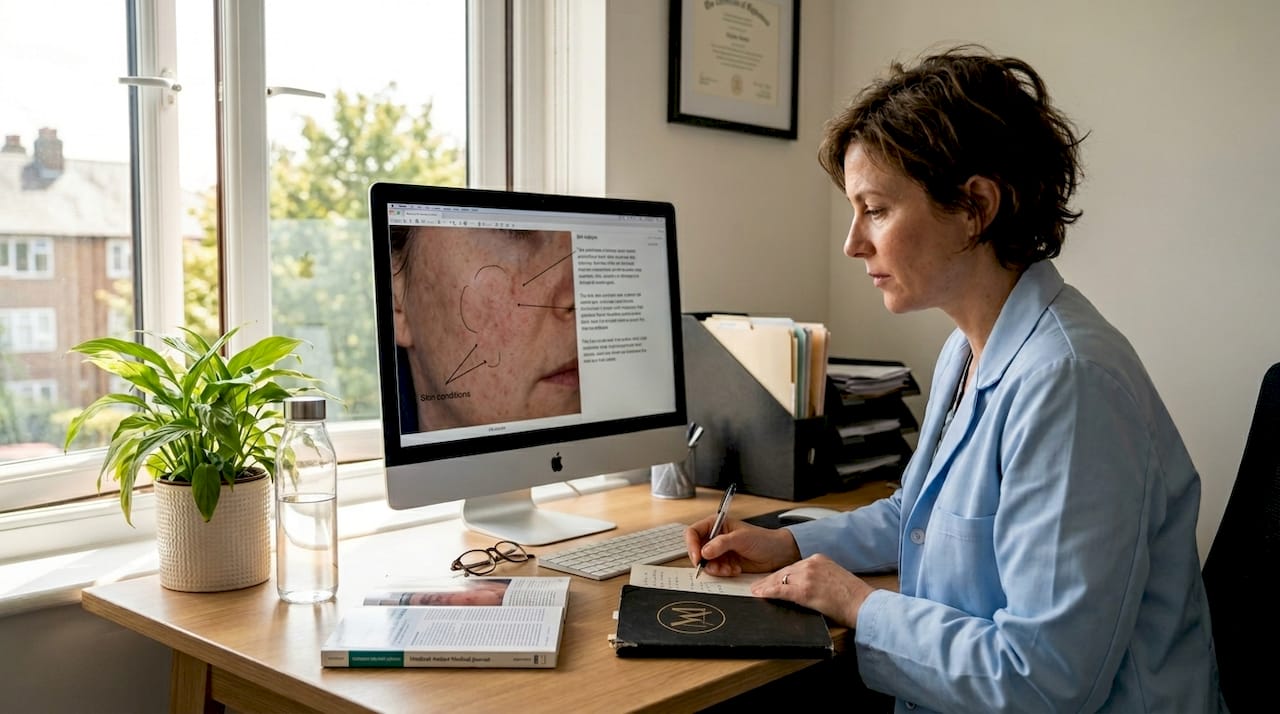
Prescription skincare: clear results backed by science
TL;DR:
- Prescription skincare acts at a deeper biological level, providing faster and more measurable results than OTC products.
- Personalised dermatologist-led treatments reduce side effects and improve efficacy for persistent skin concerns.
- Consistency and professional guidance are key to maximizing the benefits of prescription skincare.
Most people assume that the more expensive the moisturiser, the better the result. That assumption is costing you time, money, and real skin progress. The truth is that the majority of over-the-counter (OTC) products, regardless of price, are formulated to a regulatory ceiling that limits how deeply active ingredients can penetrate. Prescription skincare operates in an entirely different clinical category. Dermatologists consistently validate its superiority for persistent concerns such as ageing, pigmentation, and acne. In this guide, we break down the science, the evidence, and what you can realistically expect when you make the switch to a prescription-led routine.
Table of Contents
- The science behind prescription skincare
- Prescription skincare vs. over-the-counter: What’s the difference?
- Why personalisation makes all the difference
- Visible results: What to expect and when
- The uncomfortable truth: Why most people settle for less
- Discover tailored prescription solutions
- Frequently asked questions
Key Takeaways
| Point | Details |
|---|---|
| Prescription acts faster | Personalised prescription skincare clears acne and improves pigmentation in weeks, unlike standard shop-bought products. |
| Derma guidance is key | Expert consultations ensure safe, evidence-based treatments tailored for your goals and sensitivities. |
| Consistency drives results | Following your bespoke regimen as prescribed boosts outcomes and minimises risks over time. |
| OTC has limits | Over-the-counter solutions can help with mild problems but rarely match prescription performance for complex concerns. |
The science behind prescription skincare
Prescription skincare works at a fundamentally different biological level compared with OTC alternatives. Where a standard retinol serum may nudge cellular turnover, a prescription-strength retinoid such as tretinoin actively binds to nuclear receptors inside skin cells, triggering measurable changes in collagen production, cell renewal, and pigmentation regulation. This is not a subtle distinction. It is the difference between encouraging a process and directing it.
The three most clinically significant prescription actives are retinoids, hydroquinone, and antibiotic blends. Retinoids accelerate epidermal turnover and stimulate dermal collagen, addressing both texture and photoaging (sun-induced skin damage) simultaneously. Hydroquinone inhibits tyrosinase, the enzyme responsible for melanin overproduction, making it the gold standard for treating melasma and post-inflammatory hyperpigmentation. Antibiotic blends, often combined with benzoyl peroxide, target the bacterial and inflammatory drivers of acne without the resistance issues seen with antibiotic monotherapy.
The clinical evidence is striking. Acne clearance rates exceed 90% in a matter of weeks with personalised prescription treatment, a figure that no OTC formulation consistently achieves. This is why dermatologist-led personalisation is considered the clinical benchmark, not a luxury add-on.
“Prescription actives are not simply stronger versions of OTC ingredients. They operate through distinct biological pathways that OTC formulations are not permitted to access.” — Clinical Dermatology Review
Key reasons prescription skincare outperforms OTC options:
- Active concentrations are calibrated to your skin type and concern
- Ingredients penetrate to the dermis rather than sitting on the epidermis
- Formulations are adjusted as your skin responds over time
- Dermatologist oversight reduces the risk of adverse reactions
- Results are measurable, not anecdotal
OTC products serve a purpose for mild maintenance, but for anyone dealing with persistent acne, visible pigmentation, or accelerated ageing, the clinical gap between OTC and prescription is simply too significant to ignore.
Prescription skincare vs. over-the-counter: What’s the difference?
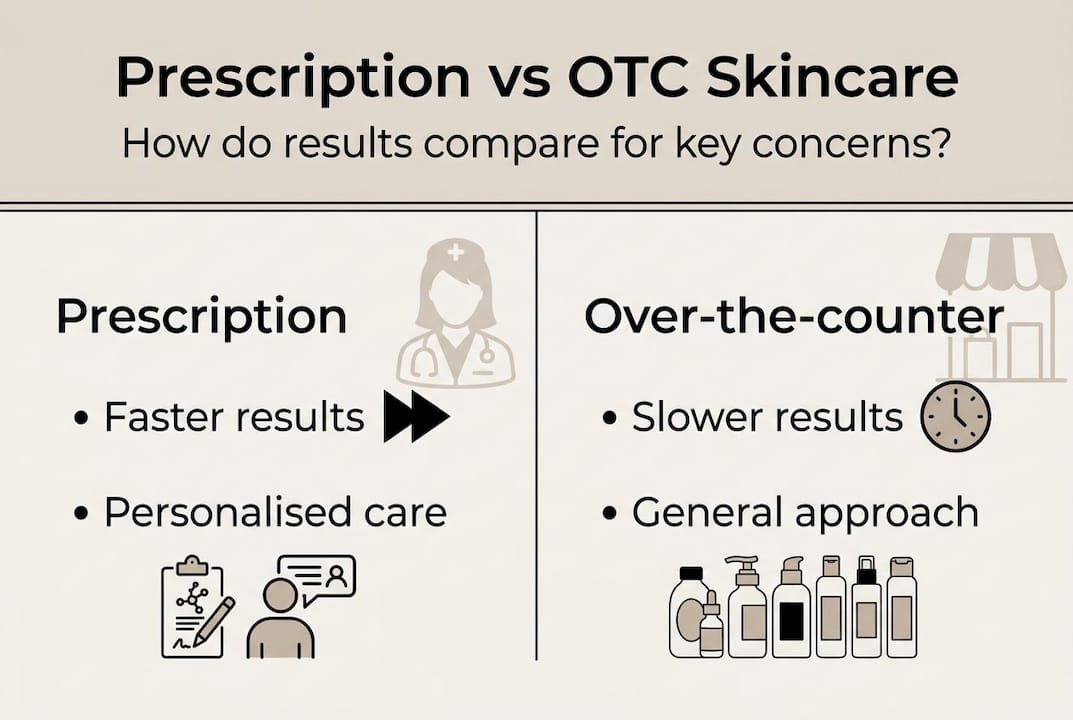
Now that the scientific distinction is clear, it is useful to see how prescription skincare compares with readily available products side by side.
| Feature | Over-the-counter | Prescription |
|---|---|---|
| Active concentration | Regulated low ceiling | Clinically calibrated |
| Depth of action | Epidermis only | Dermis and below |
| Results speed | Gradual, months to years | Weeks to months |
| Dermatologist supervision | None | Required |
| Customisation | Generic formulas | Tailored to your skin |
| Cost | Lower upfront | Higher, but better ROI |
| Best suited for | Mild, maintenance concerns | Persistent, moderate to severe issues |
A meta-analysis ranks prescription retinoids highest among all photoaging treatments, outperforming every OTC retinol product tested. This is consistent with what we see clinically: OTC retinol requires conversion to retinoic acid inside the skin, a process that is inefficient and variable. Prescription tretinoin is retinoic acid. It skips the conversion entirely.
Who should consider OTC skincare:
- Those with mild, occasional breakouts
- Individuals focused on general hydration and sun protection
- People new to active skincare building tolerance
- Those maintaining results already achieved through prescription treatment
Who should consider prescription skincare:
- Anyone with persistent acne unresponsive to OTC products
- Individuals dealing with melasma, post-inflammatory hyperpigmentation, or uneven skin tone
- Those noticing visible photoaging such as fine lines, loss of firmness, or texture changes
- People who want measurable, clinically validated results
If you are unsure where you fall, our prescription routine checklist can help you assess your current routine and identify the gaps.
Why personalisation makes all the difference
With differences set out, the next focus is on the role of expert personalisation in achieving superior results safely.
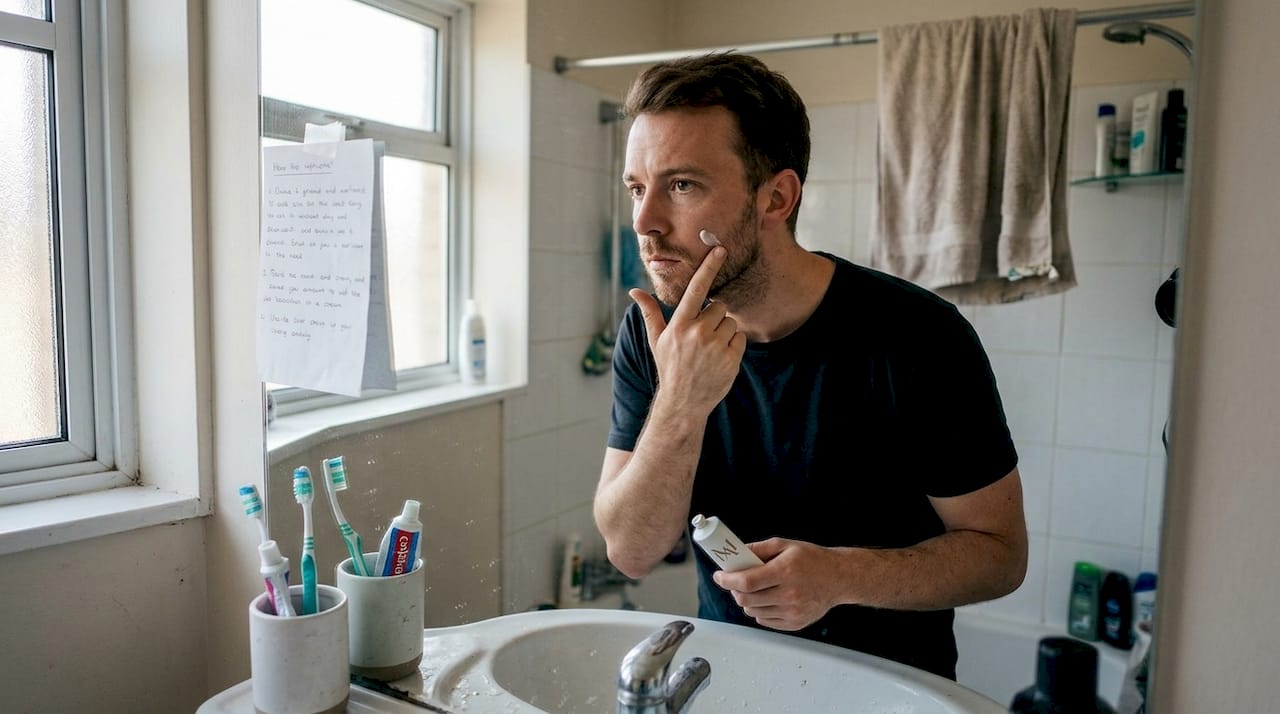
No two skins are identical. A prescription that delivers outstanding results for one person may cause unnecessary irritation for another if the concentration or combination is not right. This is precisely why dermatologist-led consultations are not optional extras. They are the mechanism through which prescription skincare becomes truly effective.
Here is what typically happens during an online dermatology appointment:
- Skin assessment — You share your skin history, current routine, concerns, and photographs or live video.
- Concern mapping — The dermatologist identifies primary and secondary concerns and any contraindications.
- Formulation selection — A tailored prescription is created, specifying actives, concentrations, and application protocols.
- Education — You receive guidance on layering, frequency, and what to expect during adjustment periods.
- Follow-up scheduling — A review is booked to assess your skin’s response and refine the plan.
This structured process is what separates prescription skincare from simply buying a stronger product online. The personalised skincare insights shared by leading dermatologists consistently highlight that tailored prescriptions reduce adverse events and accelerate results. Melasma improves 50 to 75% faster with prescription blends compared with OTC treatments, a statistic that speaks directly to the power of targeted formulation.
For those already on a prescription plan, optimising personalised treatments is an ongoing process, not a one-time event.
Pro Tip: If your skin feels tight or reactive in the first two to three weeks, do not abandon your prescription. This adjustment period is normal and expected. Communicate with your dermatologist, who can modify the frequency or concentration to keep your skin progressing comfortably.
Visible results: What to expect and when
Personalisation leads to unique routines, and now it is worth clarifying what results to expect and in what timeframe.
| Skin concern | Initial improvement | Significant improvement | Optimal results |
|---|---|---|---|
| Acne | 2 to 4 weeks | 6 to 8 weeks | 3 to 4 months |
| Melasma and pigmentation | 4 to 6 weeks | 8 to 12 weeks | 4 to 6 months |
| Photoaging and fine lines | 4 to 8 weeks | 3 to 4 months | 6 to 12 months |
Clinical outcomes confirm rapid acne clearance, notable melasma improvement, and measurable photoaging reversal with prescription-led protocols. These are not best-case scenarios. They represent consistent findings across multiple clinical studies.
What progress actually looks like week by week varies between individuals, but common early signs include reduced inflammation, smoother texture, and more even skin tone. By month three, most patients on a well-structured prescription plan report visible changes that they describe as transformative compared with their OTC experience.
“Patients who commit to their prescription protocol and attend follow-up appointments consistently achieve the outcomes they came in hoping for.” — Dermatology clinical review
It is important to manage expectations honestly. Photoaging that has accumulated over decades will not reverse in a fortnight. But progress is almost always faster than people expect, particularly for acne and pigmentation. Exploring next-generation routines that combine prescription actives with advanced skincare technology can further accelerate these outcomes.
Pro Tip: Consistency is the single most powerful factor in clinical skin improvement. Missing applications or switching products mid-course resets the biological clock on your results. Treat your prescription routine with the same commitment you would give any other health protocol.
The uncomfortable truth: Why most people settle for less
After reviewing the evidence, it is worth asking a direct question: if prescription skincare is this clearly superior, why do so many people persist with OTC products that are not working?
The honest answer is a combination of assumptions, not facts. Many people believe prescription skincare is prohibitively expensive, when in reality the cost per visible result is often lower than years of ineffective OTC spending. Others assume it requires lengthy in-person appointments, when online consultations have made access faster and more convenient than ever. There is also a cultural habit of “trying everything else first” before seeking clinical guidance, as if prescription solutions are a last resort rather than the most logical starting point.
We would argue that choosing prescription skincare is an act of self-investment, not indulgence. The evidence is not ambiguous. The dermatologists’ preferred solutions are prescription-led, personalised, and clinically monitored. Every month spent on products that cannot reach the dermis is a month of potential progress lost. The most proactive decision you can make for your skin is to stop waiting and start working with the science.
Discover tailored prescription solutions
At The M-ethod Skin, we believe that everyone deserves access to skincare that actually works at a clinical level. Our luxury online consultations connect you directly with top dermatologists who design personalised prescription plans based on your unique skin profile. Whether you are addressing persistent acne, stubborn pigmentation, or visible signs of ageing, we offer the tools and expertise to deliver real, measurable change. Explore our acne treatment serum and the scientifically advanced NEOSTRATA range for prescription-strength cosmeceutical solutions. Take the first step towards visible results with expert online dermatology at your fingertips.
Frequently asked questions
Is prescription skincare safe for sensitive skin?
When guided by a dermatologist and tailored to your specific skin profile, prescription skincare is generally very safe. Concentrations and formulations can be adjusted to minimise irritation and support your skin barrier throughout treatment.
How long does it take to notice results from prescription skincare?
For acne, visible improvement often occurs within two to four weeks. Pigmentation and ageing concerns typically show significant improvement within months, with melasma responding 50 to 75% faster than with OTC alternatives.
Is prescription skincare more effective than over-the-counter products?
Consistently, yes. Prescription actives outperform OTC for photoaging, persistent acne, and pigmentation, with clinical studies ranking prescription retinoids highest among all anti-ageing treatments tested.
Can I combine prescription skincare with my current routine?
In most cases, yes, but always consult your prescribing dermatologist first. Certain combinations can cause irritation or reduce efficacy, and your clinician will guide you on safe layering and sequencing.
Do I need ongoing consultations for prescription skincare?
Regular follow-ups are essential. As your skin responds, your prescription requires adjustments to maintain progress, prevent plateaus, and ensure the treatment remains appropriate for your evolving skin needs.