




Master medical-grade skincare routines for visible results
TL;DR:
- Medical-grade skincare offers higher concentrations of clinically tested actives with deeper skin penetration.
- Building a routine requires professional consultation, patch testing, and gradual introduction of products.
- Patience and personalized guidance are essential for achieving visible, sustainable results.
You follow a consistent routine, spend generously on products, and still your skin refuses to cooperate. Persistent pigmentation, stubborn breakouts, or fine lines that simply will not budge — these are the frustrations that over-the-counter (OTC) skincare cannot always resolve. The truth is, most high-street products are formulated to suit the broadest possible audience, which means lower concentrations of actives and limited clinical evidence. Medical-grade skincare operates on an entirely different level: higher potency, deeper penetration, and routines designed around your specific biology. In this guide, we cover the essentials, how to build your routine, step-by-step protocols for common concerns, and how to measure real progress.
Table of Contents
- What makes medical-grade skincare different?
- Essential steps for building a medical-grade routine
- Step-by-step routines for common skin concerns
- Troubleshooting, mistakes, and how to measure results
- Why true results require personalisation and patience
- Discover medical-grade skincare solutions with The M-ethod
- Frequently asked questions
Key Takeaways
| Point | Details |
|---|---|
| Medical-grade advantage | Higher concentrations and clinical backing yield faster, visible results than standard over-the-counter products. |
| Routine personalisation | Tailoring actives and steps to your skin’s unique needs ensures effectiveness and minimises risk. |
| Track progress | Expect results in 2-12 weeks and use benchmarks like before-and-after photos to measure change. |
| Patience pays off | Consistent, gradual use under professional guidance leads to long-term improvement. |
What makes medical-grade skincare different?
The term “medical-grade” is not simply a marketing label, though it is sometimes misused. True medical-grade products are formulated with significantly higher concentrations of clinically tested actives, often requiring professional oversight or a consultation before use. They are manufactured to pharmaceutical standards, meaning quality control and ingredient stability are held to a far stricter benchmark than typical retail products.
When you compare medical-grade to OTC skincare, the differences become clear:
| Feature | OTC skincare | Medical-grade skincare |
|---|---|---|
| Active concentration | Low to moderate | High, clinically dosed |
| Clinical evidence | Limited | Peer-reviewed studies |
| Skin penetration | Surface level | Deeper dermal layers |
| Professional oversight | None required | Often recommended |
| Regulatory standard | Cosmetic | Near-pharmaceutical |
As medical-grade skincare uses higher concentrations of active ingredients like retinoids, vitamin C, niacinamide, and peptides, backed by clinical testing for deeper penetration and efficacy compared to OTC products, the results are measurably superior for targeted concerns. You can explore top medical-grade skincare examples to see how this translates in practice.
The key actives and their roles are worth understanding:
- Retinoids: Stimulate collagen production and accelerate cell turnover, visibly reducing fine lines and uneven texture
- Vitamin C: A potent antioxidant that brightens skin tone and protects against oxidative stress
- Niacinamide: Regulates sebum, calms inflammation, and reduces post-inflammatory hyperpigmentation (PIH)
- Peptides: Signal proteins that support collagen and elastin synthesis, improving firmness over time
- Hyaluronic acid (HA): Draws moisture into the skin, maintaining hydration at multiple levels
The reason these actives perform so well in medical-grade formulations is penetration depth. Pharmaceutical-grade delivery systems, such as encapsulated retinol or liposomal vitamin C, carry actives past the stratum corneum (the outermost skin layer) into the viable epidermis and upper dermis, where real structural change occurs. This is what sets medical-grade skincare apart from even the most premium high-street alternatives.
Pro Tip: To verify a product is genuinely medical-grade, look for published clinical data, a listed percentage of the key active, and a brand that either requires or recommends a professional consultation. If neither is available, treat it as cosmetic-grade regardless of the price point. You can read more about why medical-grade solutions work on our journal.
Essential steps for building a medical-grade routine
Building a medical-grade routine is not simply a matter of swapping your existing products for stronger ones. Preparation is critical. Introducing high-potency actives to unprepared skin is one of the most common reasons people experience unnecessary irritation and abandon their routine prematurely.
Start with these foundational steps:
- Consult a dermatologist or skincare clinician before introducing prescription-strength actives, particularly retinoids or exfoliating acids
- Patch test every new product on the inner arm for 48 hours before applying to the face
- Simplify your existing routine first, removing unnecessary products that could interact with new actives
- Introduce one new active at a time, waiting two to four weeks before adding another
- Always include SPF 30 or above in your morning routine, as many actives increase photosensitivity
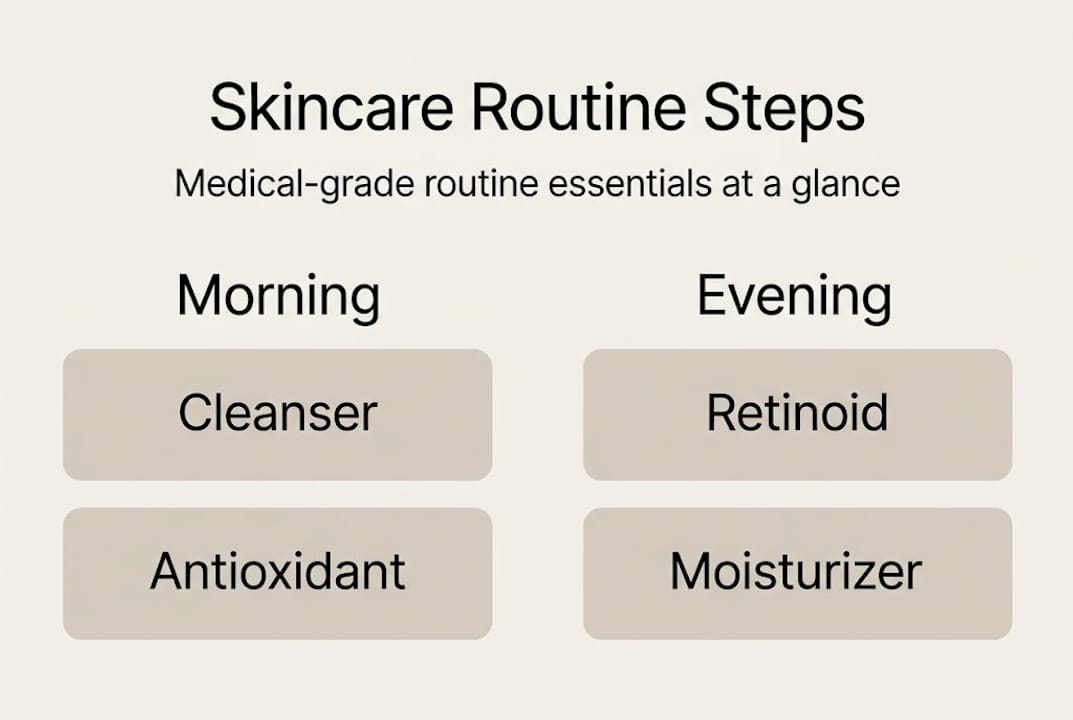
Here is a practical framework for the core components of any medical-grade routine:
| Product | When to use | Purpose |
|---|---|---|
| Gentle cleanser | AM and PM | Prepares skin, removes impurities |
| Vitamin C serum | AM | Antioxidant protection, brightening |
| Prescription retinoid | PM | Collagen stimulation, cell turnover |
| Niacinamide serum | AM or PM | Sebum control, barrier support |
| Peptide moisturiser | AM and PM | Firmness, hydration |
| Broad-spectrum SPF | AM only | UV protection, prevents degradation of actives |
Tailoring this framework to your specific concern matters enormously. For ageing, the priority is retinoids and peptides. Retinoic acid has been shown to deliver a 13% reduction in SAGS (skin ageing grading scale) score within 12 weeks, making it the gold standard for collagen stimulation. For acne-prone skin, the focus shifts to salicylic acid and niacinamide. For pigmentation, vitamin C and targeted brightening actives take precedence.
Pro Tip: Monitor your skin’s response every two weeks and photograph the same area in consistent lighting. Adjust frequency before you adjust products. If redness appears, reduce application to every other night rather than stopping entirely. For further guidance, explore our medical-grade brand guidance to identify the right formulations for your skin type.
Step-by-step routines for common skin concerns
With your foundation in place, it is time to apply targeted protocols. Each concern requires a specific sequence and combination of actives to deliver optimal results without compromising the skin barrier.
For ageing skin:
- AM: Gentle cleanser, vitamin C serum (10-20%), peptide moisturiser, SPF 50
- PM: Gentle cleanser, retinoid (start at 0.025%, increase gradually), hyaluronic acid, barrier-supportive moisturiser
For acne-prone skin:
- AM: Salicylic acid cleanser, niacinamide serum, oil-free moisturiser, SPF 30-50
- PM: Salicylic acid or benzoyl peroxide treatment (targeted), retinoid, lightweight moisturiser
As retinoids, salicylic acid, and niacinamide reduce lesions in as little as 2-4 weeks when used consistently, the key is avoiding over-exfoliation. Combining BHA (beta hydroxy acid) with benzoyl peroxide daily, for example, can strip the barrier and worsen breakouts. Explore our step-by-step acne protocols for a more detailed guide.
For pigmentation:
- AM: Brightening cleanser, vitamin C serum, niacinamide, SPF 50 (non-negotiable)
- PM: Retinoid or azelaic acid, targeted brightening serum, moisturiser
Clinical data on VYC-12L shows a 58% responder rate for skin smoothness versus 5% in the control group, and niacinamide combined with other actives significantly reduces PIH over time. These are not modest gains.
Dermatologist note: Never layer multiple exfoliating actives in a single application. Acids and retinoids should not be used simultaneously unless specifically formulated together. If you are unsure, seek professional guidance before combining prescription-strength ingredients.
Troubleshooting, mistakes, and how to measure results
Even well-intentioned routines can go wrong. Knowing the most common errors helps you course-correct quickly rather than abandoning a protocol that would otherwise work.
Common mistakes to avoid:
- Overusing actives in the belief that more equals faster results
- Mixing incompatible ingredients (e.g., vitamin C with niacinamide at high pH, or retinoids with AHAs nightly)
- Skipping SPF, which renders many actives ineffective and risks hyperpigmentation
- Changing too many products at once, making it impossible to identify the cause of a reaction
- Expecting overnight results and stopping before the active has had time to work
If you experience persistent redness, stinging, or peeling beyond mild flaking, reduce frequency first. Introduce a ceramide-rich barrier repair moisturiser and hold all actives for five to seven days before reintroducing at a lower frequency. Most reactions are not allergic; they are a sign of barrier disruption from overuse.

As some marketing hype exists around medical-grade labelling, and not all products deliver on their claims, it is worth focusing on real medical-grade outcomes supported by clinical data rather than price alone.
For measuring progress, consistency in your benchmarking method matters as much as the routine itself:
- Photograph your skin weekly in the same lighting, angle, and time of day
- Track specific concerns (e.g., number of active breakouts, size of pigmentation patches) rather than overall impressions
- Allow a minimum of 8-12 weeks before evaluating retinoid results; collagen remodelling is a slow, structural process
- Use a simple 1-10 scale for texture, tone, and hydration each week
Pro Tip: Keep a skincare diary noting products used, frequency, and any reactions. This becomes invaluable data when consulting a dermatologist or adjusting your routine. It removes guesswork and accelerates progress.
Why true results require personalisation and patience
We have seen clients arrive with expensive medical-grade regimens that were simply not right for their skin. The products were legitimate, the actives were potent, but the routine was built on someone else’s prescription. This is the uncomfortable truth about medical-grade skincare: the formulas are only as effective as the fit between product and individual skin biology.
Results are genuinely individual. Genetics, lifestyle, hormones, and even climate affect how your skin responds to actives. What produces dramatic results for one person may cause chronic irritation for another using the same product at the same concentration.
Patience and consistency are non-negotiable. We live in an era of instant feedback, but skin remodelling operates on a biological timeline. Collagen synthesis, pigmentation clearance, and barrier repair cannot be rushed. Commitment over months, not weeks, is what separates those who see transformative results from those who cycle endlessly through products.
Seeking guidance from a clinician who understands brand differentiation in skincare is the most reliable shortcut to a routine that actually works for you.
Discover medical-grade skincare solutions with The M-ethod
At The M-ethod, we curate only clinically validated, medical-grade products selected by our expert clinicians. Whether you are targeting acne, ageing, or stubborn pigmentation, our range is built around evidence, not trends. The PCA Clearskin acne serum is a standout for congestion-prone skin, while the NEOSTRATA professional range delivers powerful resurfacing and brightening actives trusted by dermatologists worldwide. If you are ready to stop guessing and start seeing real results, a personalised skincare consultation with our team is the most direct route to a bespoke routine that works for your skin, your lifestyle, and your goals.
Frequently asked questions
How long does it take to see results from a medical-grade skincare routine?
Visible improvements appear within 8-12 weeks for anti-ageing concerns and as early as 2-4 weeks for acne, depending on the actives used and your skin’s baseline condition.
Can medical-grade skincare routines cause irritation or purging?
Some actives, particularly retinoids and exfoliating acids, can temporarily cause irritation or purging when first introduced. Gradual introduction and close monitoring, as advised for sensitive skin types, significantly reduces this risk.
What makes a product truly medical-grade?
True medical-grade products contain higher concentrations of actives backed by clinical trials, are manufactured to pharmaceutical standards, and typically involve professional oversight or recommendation for safe use.
Is medical-grade skincare suitable for sensitive skin?
Yes, but sensitive skin types should introduce actives slowly and at lower concentrations. Dermatologist guidance is particularly valuable here, as not all medical-grade formulations are equally gentle, and a tailored approach minimises the risk of adverse reactions.