




Top medical-grade skincare: real examples & why they work
TL;DR:
- Medical-grade skincare contains high concentrations of active ingredients supported by peer-reviewed clinical evidence.
- These products are often dispensed through professionals and are more effective for targeted skin concerns than over-the-counter options.
- Successful results depend on proper use, consistency, and professional guidance rather than product alone.
Finding skincare that genuinely delivers results is harder than it should be. Walk into any pharmacy or scroll through any beauty retailer and you are met with thousands of products, each promising transformation. Yet most people with real skin concerns, whether that is persistent acne, stubborn pigmentation, or visible signs of ageing, find that high-street formulas simply do not move the needle. Medical-grade skincare occupies a different category entirely. These products are formulated to different standards, with higher concentrations of clinically proven actives, and they are typically dispensed through professionals who can match the right product to your specific skin biology. This article walks you through the criteria that matter, real brand examples, and how to choose wisely.
Table of Contents
- How to identify a medical-grade skincare product
- Examples of top medical-grade skincare brands
- Head-to-head comparison: Medical-grade vs. over-the-counter skincare
- Recommended medical-grade products for specific skin concerns
- Why ‘medical-grade’ should be a starting point, not the finish line
- Explore trusted medical-grade skincare options
- Frequently asked questions
Key Takeaways
| Point | Details |
|---|---|
| Genuine medical-grade criteria | Effective medical-grade products have high concentrations, clinical backing, and are often dispensed by professionals. |
| Brand examples matter | Brands like SkinCeuticals, ZO Skin Health, and Obagi Medical set industry standards for results. |
| Compare before you choose | Medical-grade products outperform typical high-street formulas for serious skin concerns. |
| Match to your skin’s needs | Pick products and actives suited to your unique concerns, seeking professional advice where possible. |
How to identify a medical-grade skincare product
The term ‘medical-grade’ is used frequently, but what does it actually mean? At its core, a medical-grade product is one formulated with active ingredients at concentrations high enough to produce measurable, clinically documented changes in the skin. This is not about marketing language. It is about formulation science and evidence.
Understanding what sets medical-grade brands apart requires looking beyond the label. Here are the criteria that genuinely matter:
- Clinical evidence: The product should be supported by peer-reviewed studies or clinical trials demonstrating efficacy, not just consumer perception surveys.
- Active ingredient concentration: Medical-grade formulas typically contain higher percentages of retinoids, vitamin C, hydroxy acids, or growth factors than their over-the-counter equivalents.
- Professional dispensation: Many of the most effective products are sold exclusively through trained clinicians, aestheticians, or medical professionals who can assess suitability.
- Stability and delivery systems: The best formulations use advanced encapsulation or delivery technologies to ensure actives penetrate to the correct skin layer without degrading.
- Regulatory compliance: Reputable brands adhere to strict manufacturing standards, including Good Manufacturing Practice (GMP) guidelines.
One important caveat: the term ‘medical-grade’ is not legally regulated in every market. This means some brands use the label without meeting the above standards. Scrutinising ingredient lists and looking for published clinical data is essential.
“Higher concentrations of actives are what separate medical-grade products from cosmetic-grade ones. Without adequate penetration and potency, you simply cannot achieve the cellular changes that address concerns like hyperpigmentation or collagen loss at a structural level.” — Clinical skincare perspective
Brands such as SkinCeuticals, ZO Skin Health, Obagi Medical, EltaMD, Alastin, SkinMedica, and iS Clinical are recognised medical-grade brands dispensed through professionals, formulated for concerns including ageing, acne, and hyperpigmentation.
Pro Tip: Before purchasing, search for the brand’s published clinical studies. If a company cannot point you to peer-reviewed evidence, treat its ‘medical-grade’ claims with scepticism.
Examples of top medical-grade skincare brands
Now that you know what to look for, here are some of the best medical-grade skincare brands trusted by dermatologists worldwide. Each has earned its place through consistent clinical performance and formulation integrity.
| Brand | Flagship product | Main focus |
|---|---|---|
| SkinCeuticals | C E Ferulic | Antioxidant protection and brightening |
| ZO Skin Health | Retinol Skin Brightener | Anti-ageing and skin renewal |
| Obagi Medical | Nu-Derm System | Hyperpigmentation and skin transformation |
| EltaMD | UV Clear Broad-Spectrum SPF 46 | Sun protection for acne-prone skin |
| Alastin | Regenerating Skin Nectar | Post-procedure recovery and repair |
| SkinMedica | TNS Advanced+ Serum | Growth factor-based anti-ageing |
| iS Clinical | Active Serum | Multi-concern clarifying treatment |
Each of these brands brings a distinct strength to the table. Understanding those brand advantages helps you select the right line for your concerns:
- SkinCeuticals is renowned for its patented antioxidant formulations, particularly its vitamin C serums, which are backed by decades of published research.
- ZO Skin Health, developed by Dr Zein Obagi, focuses on aggressive skin health restoration using retinol, exfoliants, and brightening agents.
- Obagi Medical is particularly effective for hyperpigmentation and uneven skin tone, with its Nu-Derm System offering a full transformation protocol.
- EltaMD leads in mineral-based sun protection, particularly for sensitive and acne-prone skin types.
- Alastin specialises in TriHex Technology, which supports the skin’s natural ability to clear damaged collagen and elastin while stimulating new production.
- SkinMedica uses proprietary growth factor technology to support cellular regeneration, making it a strong choice for mature skin.
- iS Clinical combines pharmaceutical-grade botanicals with potent actives for multi-concern treatment, particularly suited to those managing both sensitivity and congestion.
These benefits for specific skin concerns are well documented across clinical settings and real-world use.
Pro Tip: Not every professional-grade product suits every skin type. A formula that transforms one person’s skin can trigger sensitivity in another. Always seek a consultation before committing to a new regimen.
Head-to-head comparison: Medical-grade vs. over-the-counter skincare
Having met the leading brands, it is crucial to understand how these products differ from what is sold on the high street. The differences are not superficial.
| Feature | Medical-grade | Over-the-counter |
|---|---|---|
| Active concentration | High, clinically dosed | Low, often below effective threshold |
| Clinical evidence | Peer-reviewed studies | Typically consumer testing only |
| Availability | Via professionals or specialist clinics | Pharmacies, supermarkets, online |
| Cost | Higher investment | More accessible price points |
| Customisation | Tailored to skin type and concern | Generalised formulations |
| Risk of irritation | Higher without guidance | Lower due to milder formulas |
This does not mean over-the-counter products are without value. There are situations where they are entirely appropriate. Clinical performance evidence consistently shows, however, that for targeted concerns, medical-grade formulations outperform their high-street equivalents.
Over-the-counter skincare may be sufficient when:
- Your skin is generally healthy with no specific concerns beyond basic maintenance.
- You are building a foundational routine, such as a gentle cleanser and moisturiser.
- You are maintaining results already achieved through a professional programme.
- Budget constraints make professional products temporarily inaccessible.
- Your concern is mild and does not require prescription-level intervention.
For more serious concerns, the calculus changes. Medical skincare for targeted skin concerns such as cystic acne, melasma, or significant photoageing requires the potency and precision that only medical-grade formulations can provide. These products are formulated to work at a deeper level, influencing cellular behaviour rather than simply sitting on the skin’s surface.
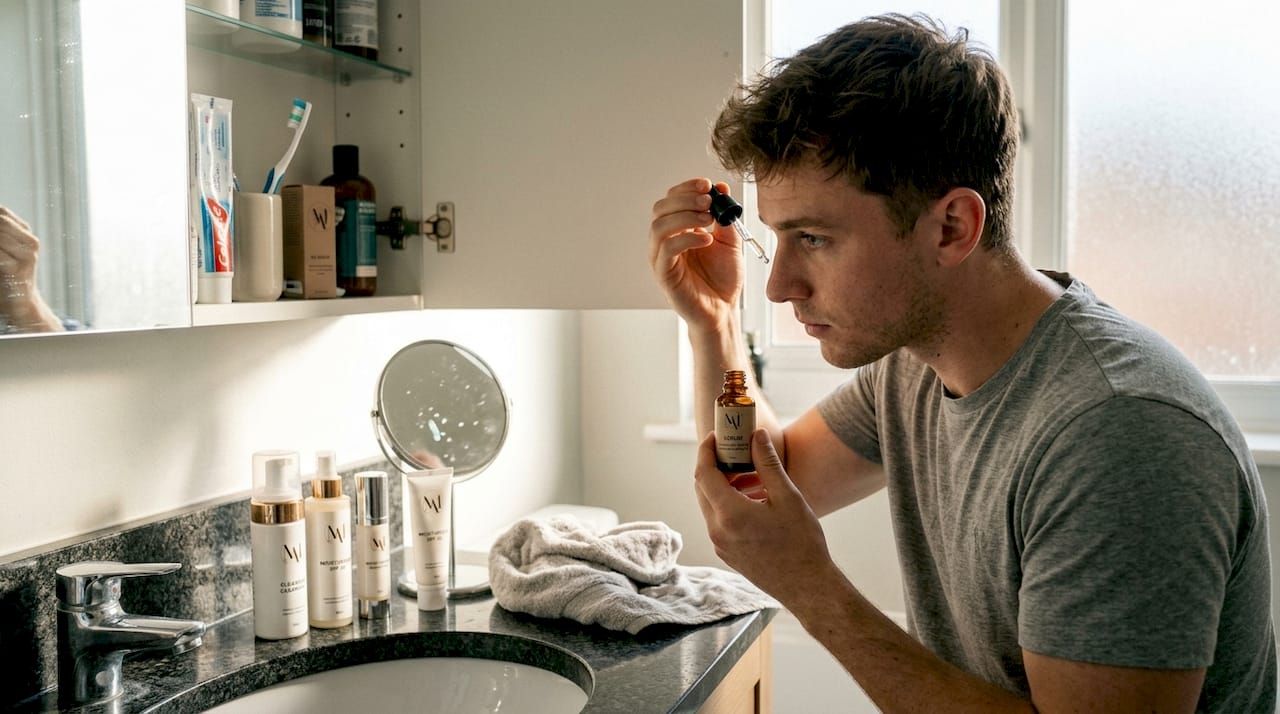
Professional guidance also matters for safety. Higher concentrations of actives carry a greater risk of irritation, purging, or adverse reactions if used incorrectly. A qualified clinician can sequence your products, manage your skin’s adaptation, and adjust your protocol as your skin responds.
Recommended medical-grade products for specific skin concerns
To make the most of these advanced formulas, let us look at which products suit different skin challenges. Targeted skin concerns each require a different active ingredient strategy.
For ageing skin:
- Retinoids (retinol, retinaldehyde, or prescription tretinoin) to stimulate collagen production and accelerate cell turnover.
- Vitamin C serums, particularly L-ascorbic acid at 10 to 20 percent, to protect against oxidative damage and brighten the complexion.
- Peptide-rich formulas to support structural proteins in the dermis.
- Growth factor serums such as SkinMedica TNS Advanced+ for mature skin seeking cellular renewal.
For acne-prone skin:
- Salicylic acid cleansers to dissolve excess sebum and clear congested pores.
- Niacinamide to regulate oil production and reduce post-inflammatory redness.
- Benzoyl peroxide at therapeutic concentrations for active breakouts.
- EltaMD UV Clear SPF 46 for daily sun protection without aggravating blemishes.
For hyperpigmentation:
- Hydroquinone (where available and under professional supervision) remains the gold standard for melanin suppression.
- Tranexamic acid and kojic acid as alternatives for those who cannot tolerate hydroquinone.
- The Obagi Nu-Derm System as a full protocol addressing pigmentation at multiple levels.
- Antioxidant serums to prevent UV-triggered melanin activation.
For sensitive or reactive skin:
- Ceramide-rich barrier repair formulas to restore the skin’s natural defence function.
- Azelaic acid for gentle brightening and redness reduction without harsh exfoliation.
- Fragrance-free, minimal-ingredient formulations from brands with demonstrated tolerance testing.
Medical-grade products are chosen for their effectiveness across these concerns precisely because their formulations are designed to produce measurable change. When in doubt about which actives are right for your skin, a professional consultation removes the guesswork entirely.
Why ‘medical-grade’ should be a starting point, not the finish line
With all this information, it is tempting to head straight for the most impressive-sounding bottle. But here is what we have seen consistently in clinical practice: the product alone rarely determines the outcome.
We have worked with clients who invested in the best formulations available and saw minimal results, simply because their routine was inconsistent or poorly sequenced. We have also seen clients achieve remarkable transformations with a focused, well-guided protocol using just three or four products. The difference was not the product. It was the approach.
The uncomfortable truth is that consistency and professional oversight outperform product prestige every time. Real results from medical-grade skincare come from sustained use, correct application, and periodic reassessment by someone who understands your skin’s biology and how it is changing.
Medical-grade is not a miracle. It is a tool. And like any precision tool, it works best in informed hands. We encourage you to treat a professional assessment not as an optional extra, but as the foundation of any serious skincare investment.
Pro Tip: Prioritise a skin consultation before spending on high-potency products. A clinician can prevent you from wasting money on the wrong formula and protect your skin from unnecessary irritation.
Explore trusted medical-grade skincare options
If you are ready to move beyond guesswork and invest in a regimen that is genuinely matched to your skin, we are here to help. At The M-ethod Skin, we stock a curated selection of the world’s most trusted medical-grade brands, backed by feedback from real customers who have experienced measurable results. Our virtual skin consultations connect you with expert clinicians who can assess your concerns, recommend the right products, and guide your progress over time. Whether you are addressing ageing, pigmentation, acne, or sensitivity, you can find medical-grade skincare tailored to your skin at our online boutique, with international shipping available.
Frequently asked questions
What qualifies a skincare product as medical-grade?
Medical-grade skincare features high concentrations of clinically proven actives, is supported by peer-reviewed evidence, and is typically dispensed through professionals including brands such as SkinCeuticals, Obagi Medical, and ZO Skin Health.
Are medical-grade products better for ageing and acne?
Yes. These formulations are designed for targeted concerns including ageing and acne, using potent actives at therapeutic concentrations that over-the-counter products rarely match.
Do I need a prescription for medical-grade skincare?
Many medical-grade products do not require a prescription but should be purchased through a qualified professional to ensure the formulation is appropriate for your skin type and concern.
Can I use medical-grade skincare with sensitive skin?
Yes, but professional guidance is essential. Some formulations contain actives that can provoke sensitivity reactions without proper clinical assessment and sequencing to manage your skin’s response.