0.94 mm at 12 Weeks, Under Eye HIFU Results and Ocular Risks
HIFU can reduce mild to moderate under-eye skin laxity in carefully selected patients, with changes building over several weeks and lasting a number of months. It carries a small but documented risk of ocular harm, so the essential caveat is this: results depend entirely on choosing a trained clinician who uses conservative, low-depth settings and proper eye protection.
TL;DR:
- HIFU results may last several months, with mild tightening seen within days and genuine collagen remodeling taking 6 to 12 weeks.
- Proper patient selection is critical; candidates should have mild to moderate skin laxity without hollowing or recent eye surgery.
- Using visualized devices and conservative deep and energy settings, along with eye shields, significantly reduces the risk of ocular injury.
- Serious eye complications are rare but linked to incorrect probe use or excessive energy, emphasizing the need for clinician training and safety protocols.
- HIFU is suitable for skin tightening but not for fat herniation or hollowing, which often require fillers or surgical correction.
Table of Contents
- How focused ultrasound tightens the under-eye area
- What the clinical evidence says about results and what you can reasonably expect
- Who is a good candidate, and who should avoid periocular HIFU
- What happens during a session and the immediate aftercare
- Risks, complications and a practical safety checklist to reduce ocular injury
- Alternatives and combination strategies for under-eye ageing
- A clinician’s view on treating the eye area with caution
- Book a consultation before choosing your under-eye treatment
- FAQ
- Sources
How focused ultrasound tightens the under-eye area
Micro-focused ultrasound (MFU), the technology behind HIFU devices, delivers sound energy to a precise point beneath the skin’s surface. At that point, heat builds quickly enough to create a tiny thermal coagulation zone, and the body responds by remodelling collagen over the following weeks. That remodelling, not the heat itself, is what produces visible tightening.
Depth is everything around the eye. Standard facial probes can reach several millimetres into tissue, but periocular work calls for far shallower, more controlled settings:
- Shallow probes (around 2.0 mm) target the dermis, where fine lines and loose skin texture originate.
- Deeper settings (4.5 mm and beyond) have been used experimentally to address infraorbital fat, though this work remains early and far closer to the orbit.
- Visualised devices, often called MFU-V, let the clinician see the focal depth on a screen before firing, rather than estimating it blind.
That visual confirmation matters more here than almost anywhere else on the face, because a few millimetres separate a therapeutic result from contact with structures the treatment was never meant to touch. For more on how the technology behaves across the face generally, our HIFU treatment overview covers the broader mechanism.
What the clinical evidence says about results and what you can reasonably expect
The data on under-eye HIFU is still thin, but it is encouraging within its limits. A 2025 prospective cohort using a 2.0 mm periocular probe found a mean eyelid length reduction of 0.94 ± 0.34 mm at 12 weeks, with 76% of patients reporting clinical improvement and clinicians independently recognising improvement in 59% of cases. That gap between patient and clinician perception is worth sitting with: people often feel a difference that is not yet obvious on examination.
Timing follows a predictable pattern:
- Mild tightening can appear within days, driven largely by swelling and tissue contraction rather than new collagen.
- Genuine remodelling takes 6 to 12 weeks to show through.
- Mild erythema was the most common side effect in the cohort above, typically resolving within 3 to 4 days.
The same study notes its own limits: a small sample and short follow-up, which means durability beyond a few months is not yet well established. Treat any single-session promise of a long-lasting eye lift with scepticism until larger trials confirm how long these changes hold.
Who is a good candidate, and who should avoid periocular HIFU
Under-eye HIFU suits a narrower group than general facial HIFU, and knowing where you sit matters before booking anything.
- Ideal candidates have mild to moderate skin laxity rather than true hollowing, a tear trough problem that HIFU does not correct.
- Skin thickness matters. Very thin lower eyelid skin responds less predictably and carries a higher relative risk during treatment.
- Recent ocular surgery is a red flag. Anyone who has had LASIK, PRK or other recent eye surgery should wait and discuss timing with both their ophthalmologist and their aesthetic clinician.
- Active eye inflammation or connective tissue disorders are reasons to pause and seek medical clearance first.
- Ask direct questions at consultation: what probe depth will be used, what energy settings, whether imaging guidance is available, and whether the clinic has a working relationship with an ophthalmologist for referral if needed.
Our suitability guide walks through broader candidacy questions that apply across facial HIFU, many of which carry over to periocular assessment.
What happens during a session and the immediate aftercare
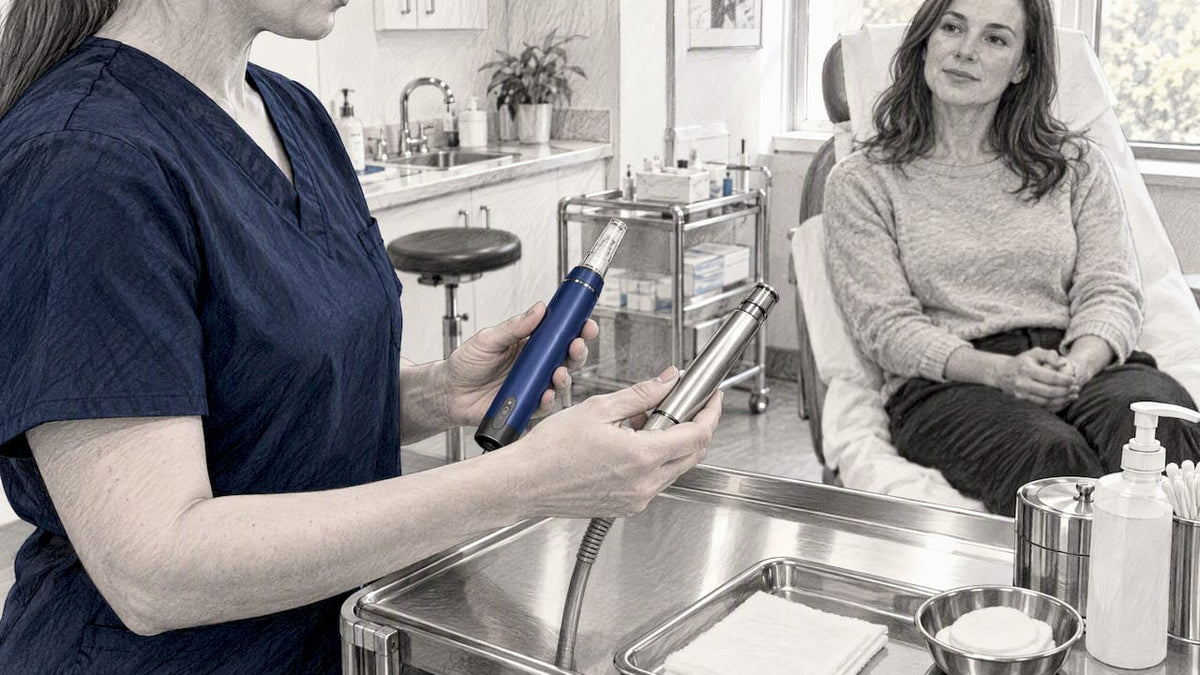
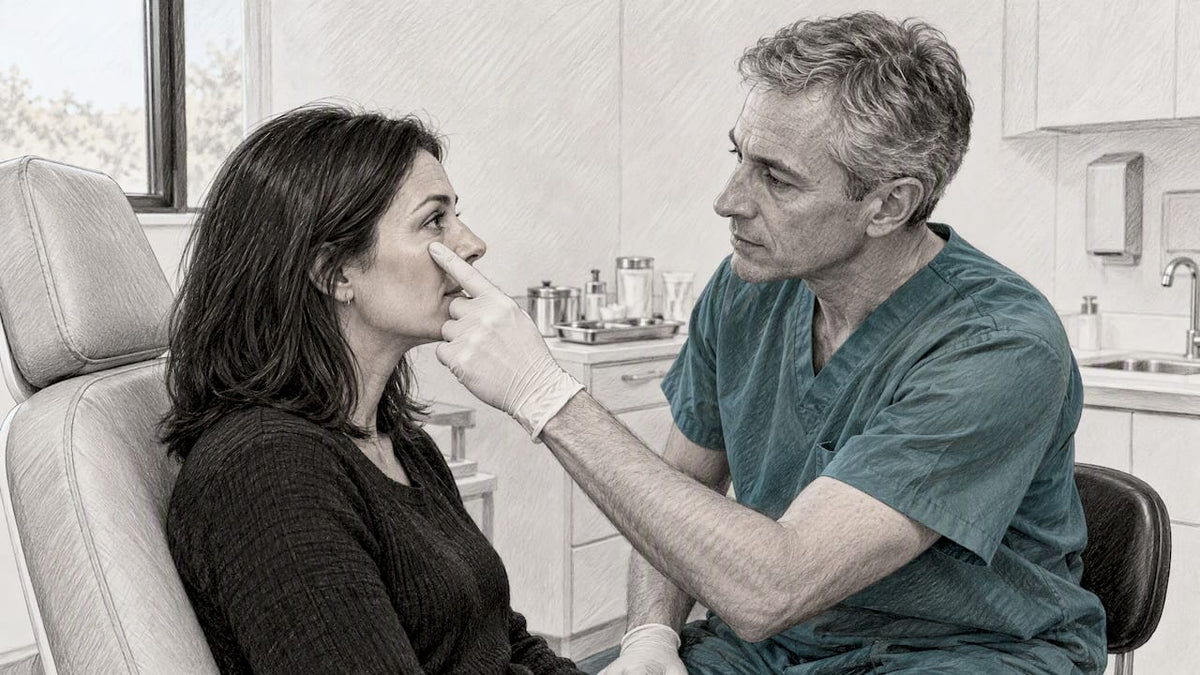
A periocular HIFU appointment starts with photographs, a consent discussion and, in better-equipped clinics, some form of mapping to confirm safe depth before any energy is delivered.
During treatment:
- The clinician applies a topical numbing agent, since the periocular area is sensitive.
- The probe delivers a defined number of thermal points along the treatment zone, moving methodically rather than freehand.
- A full under-eye session typically runs a matter of minutes per side, considerably shorter than a full-face protocol.
Most people describe a brief heat or prickling sensation rather than sharp pain. Afterwards, mild redness and slight puffiness are common and usually settle within a few days, consistent with the recovery window reported in the periocular HIFU cohort.
Pro Tip: Avoid vigorous eye rubbing or heavy eye makeup for 24 hours after treatment to let the treated skin settle undisturbed.
Risks, complications and a practical safety checklist to reduce ocular injury
This is the section worth reading twice. Case reports have documented serious, though rare, ocular complications from periocular MFU, including a case of corneal leukoma with iridocyclitis following transient visual decline after treatment. Separate case literature has linked incorrect probe use or excessive energy to traumatic cataract and corneal stromal damage. A broader safety review of HIFU complications confirms that ocular injury appears among the documented adverse events for high-intensity focused ultrasound, with risk tied closely to device settings and operator training.
Practical safeguards that reduce this risk:
- Clinician certification and specific periocular training, not just general HIFU experience.
- Use of visualised (MFU-V) devices where possible, so depth is confirmed rather than assumed.
- Conservative depth and energy settings for any work close to the orbit.
- Protective eye shields during treatment, which the case report authors specifically recommend.
- Full disclosure of eye history, including any surgery, inflammation or systemic conditions that could raise risk, a principle echoed in general guidance on treatment contraindications.
Anyone who notices visual changes after a session should seek urgent ophthalmic review rather than waiting to see if it resolves. Our HIFU side effects guide covers the more common, non-ocular reactions in further detail.
Alternatives and combination strategies for under-eye ageing
HIFU is not the right tool for every under-eye concern, and knowing its boundaries helps you choose correctly the first time.
- True hollowing or tear trough deformity usually responds better to hyaluronic acid filler, which restores lost volume rather than tightening existing skin.
- Infraorbital fat herniation, the classic under-eye bag caused by fat pushing forward rather than skin laxity, typically needs surgical correction. Lower blepharoplasty remains the established option when fat protrusion, not skin laxity, is the main issue.
- Combination protocols pairing MFU-V with HA filler have shown promising results in small pilot work, with tightening addressing the skin and filler addressing volume loss in the same visit or staged closely together.
Choosing between these options depends on an honest assessment of what is actually causing the appearance, skin laxity, volume loss, or fat protrusion, since each has a different fix.
A clinician’s view on treating the eye area with caution
We approach periocular HIFU the way the evidence demands: cautiously. The eye area has the thinnest skin on the face and the least margin for error, so we would rather under-treat than guess at depth.
Our virtual consultations include photo review and, where a case warrants it, a recommendation to involve an ophthalmologist before any periocular procedure proceeds. That sequencing protects outcomes far more reliably than enthusiasm for a new device ever could.
— Jess
Book a consultation before choosing your under-eye treatment
We offer a route to that same cautious assessment without guesswork. Our online skin consultation lets you share photographs and discuss whether HIFU, filler or another approach genuinely fits your under-eye concern, rather than booking a treatment and hoping it was the right call.
For readers ready to go further, our clinic treatments page lists HIFU alongside Profhilo, microneedling and polynucleotides, so combination planning can happen in one place with one clinician guiding the sequence. Start with the consultation, and we will help you work out what your skin actually needs.
This article is general information, not a substitute for advice from a qualified doctor. Consult a qualified healthcare professional about your own circumstances before acting on anything here.

FAQ
Can you do HIFU under the eyes?
Yes, HIFU can be applied under the eyes using shallow, periocular-specific probe settings, though it suits mild to moderate skin laxity rather than hollowing or fat bulging. A 2025 prospective cohort using a 2.0 mm probe reported measurable tightening at 12 weeks with mostly mild side effects.
What is the disadvantage of HIFU?
The main disadvantage is the rare but serious risk of ocular complications when the treatment is delivered too deep, at excessive energy, or without proper eye protection. Case reports describe traumatic cataract, iridocyclitis and corneal scarring linked to incorrect periocular technique, which is why operator training and conservative settings matter so much.
Is HIFU as good as Botox?
HIFU and Botox address different problems, so comparing them directly is not quite accurate. Botox relaxes muscle movement that causes certain lines, while HIFU tightens skin through collagen remodelling, and many people use the two for entirely separate concerns rather than choosing one over the other.
What is the best procedure to tighten sagging skin under the eyes?
For mild to moderate skin laxity without significant fat protrusion, HIFU using a periocular-specific probe is a reasonable non-surgical option. When fat herniation or significant hollowing is the primary issue, lower blepharoplasty or hyaluronic acid filler tends to address the underlying cause more directly than skin tightening alone.
Sources
- Efficacy of high-intensity focused ultrasound for treating upper and lower eyelid sagging - PubMed
- Complications and Risks of High-Intensity Focused Ultrasound (HIFU) in Esthetic Procedures: A Review