



Artikel: SPF 30+ Clinician Backed: Mineral vs Chemical Sunscreen by Skin Type

SPF 30+ Clinician Backed: Mineral vs Chemical Sunscreen by Skin Type
Both mineral and chemical sunscreens protect your skin when they’re broad-spectrum and applied properly and often. Mineral formulas, built on zinc oxide or titanium dioxide, tend to suit sensitive, rosacea-prone, or reactive skin best because they sit on the surface and work the moment you apply them. Chemical filters are usually the lighter, more cosmetically elegant choice, but only if you apply them correctly, roughly 15 to 30 minutes before sun exposure, and reapply on schedule.
TL;DR:
- Mineral sunscreens are better suited for sensitive or reactive skin because they sit on the surface and provide instant protection.
- Chemical sunscreens require 15 to 30 minutes to activate and are preferred for daily wear due to their clear, lightweight finish.
- Application quantity and reapplication frequency are crucial for effectiveness, with most adults needing about a teaspoon for the face and neck.
- Mineral formulas tend to cause less irritation but can leave a visible cast on deeper skin tones, which tinted options can minimize.
- Applicability depends more on skin type and routine discipline than on choosing between mineral or chemical filters.
Table of Contents
- Mineral vs chemical sunscreen: how each one actually works
- Physical vs chemical sunscreen: tolerance, finish, and durability trade-offs
- Which sunscreen should you choose for your skin type?
- Why The M-ethod leans mineral-first for reactive skin
- An evidence-led take: skin type first, filter type second
- Find the right sunscreen and skincare routine with Them-ethod
- Sources
Mineral vs chemical sunscreen: how each one actually works
The difference between sunscreens comes down to what happens the moment UV rays hit your skin. Mineral filters, zinc oxide and titanium dioxide, form a physical layer that scatters and reflects UV radiation, though at the particle sizes used in most modern formulas, they also absorb a portion of it. That’s why dermatologists have quietly retired the old “physical blocker” label in favour of “mineral filter”. Chemical filters work differently: ingredients like avobenzone, oxybenzone, octisalate, octocrylene, and homosalate absorb UV radiation and convert it into a small amount of heat, released harmlessly from the skin.
This mechanism explains a lot about how each type behaves in practice. Chemical sunscreens are often cosmetically preferred because they’re lightweight and blend invisibly, but that absorption process needs time to activate, which is why they’re typically applied well before you step outside.
Reading the ingredients list matters more than trusting the front-of-bottle claims. Look for these signals:
- Mineral actives: zinc oxide, titanium dioxide, often listed as the sole or dominant active
- Chemical actives: avobenzone, octisalate, octocrylene, homosalate, oxybenzone, octinoxate
- Hybrid formulas: a mineral filter paired with a small percentage of a chemical one, usually to improve texture or spreadability
- SPF boosters: oil-soluble agents added to mineral formulas to help them spread more easily, which can blur the line between categories
Marketing terms like “physical” or “natural” aren’t regulated definitions. The ingredients panel is the only reliable source of truth.
Physical vs chemical sunscreen: tolerance, finish, and durability trade-offs
Skin tolerance is where mineral sunscreen benefits become most obvious for certain groups. Mineral formulas are generally better suited to sensitive skin, rosacea, and eczema because they stay on the surface rather than penetrating, which lowers the odds of triggering a flare. Chemical filters, by contrast, can cause stinging or contact dermatitis in some people, though it’s worth noting that inactive ingredients, fragrance, preservatives, and certain emulsifiers are frequently the real culprits behind irritation, regardless of which filter type sits alongside them.
Cosmetic finish is the other major trade-off:
- White cast: Mineral sunscreens, especially non-tinted ones, can leave a visible film on deeper skin tones. Tinted formulas with iron oxides solve this while adding a layer of visible-light protection that plain mineral sunscreen doesn’t offer.
- Micronised particles: Smaller zinc oxide and titanium dioxide particles reduce white cast but can shift how they interact with light, which is part of why tinted, micronised mineral products have become the default recommendation for darker skin.
- Chemical clarity: Chemical filters typically dry clear, which is the main reason they remain popular for daily wear under makeup.
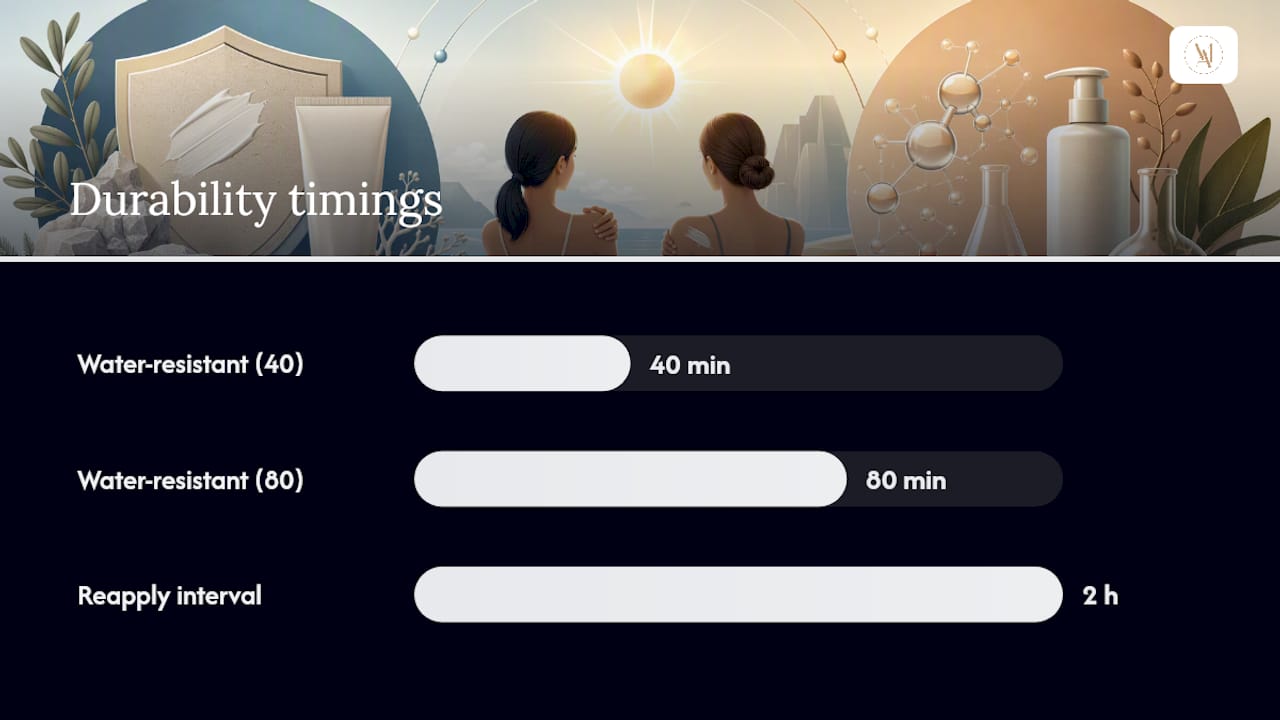
Water resistance depends more on formulation and activity than filter type. A water-resistant label (40 or 80 minutes) tells you how long a formula holds up during swimming or heavy sweating, but both mineral and chemical products need reapplying afterwards, and every two hours regardless of activity.
On the safety question, the picture is more nuanced than headlines suggest. A JAMA-published study found measurable bloodstream absorption of several chemical sunscreen ingredients above the FDA’s threshold for waived safety trials. That finding justified further research, but it doesn’t establish systemic harm. The FDA itself maintains that both mineral and chemical sunscreens can be effective, while continuing to review certain chemical actives.
Pro Tip: If a chemical sunscreen has ever left your skin stinging or blotchy, don’t assume all chemical filters are the problem. Patch-test a fragrance-free, single-filter formula before writing off the whole category.
Which sunscreen should you choose for your skin type?
Choosing between mineral and chemical sunscreen is really a question of matching the formula to your skin’s tolerance and your daily routine, not picking a “winner” outright. Clinical guidance consistently points out that broad-spectrum coverage, adequate SPF, and correct reapplication matter more for protection than the filter category itself. Still, some situations do tip the decision clearly one way.
- Sensitive, eczema-prone, or rosacea skin: choose mineral. It’s less likely to sting or trigger a flare, and it protects the instant it’s applied.
- Pregnancy or infant skin: clinicians commonly recommend mineral formulas because zinc oxide and titanium dioxide have decades of clinical use and minimal skin penetration.
- Daily wear under makeup: a lightweight chemical sunscreen or a tinted, micronised mineral formula both work well; pick based on finish preference.
- Water sports or heavy sweating: look for a water-resistant label and reapply immediately after towelling off, regardless of type.
- Deeper skin tones: a tinted mineral sunscreen avoids the grey or ashy cast that untinted formulas can leave.
On SPF strength, dermatologist recommendations are consistent: aim for SPF 30 or higher for daily use, and SPF 50 or higher for extended outdoor exposure, always choosing a broad-spectrum label that covers both UVA and UVB.
Application technique changes the maths more than most people realise. Most adults need roughly a shot-glass amount to cover the body and a full teaspoon for the face and neck; skimping on quantity is one of the most common reasons sunscreen underperforms in real-world use. Reapply regularly outdoors, and immediately after swimming or heavy sweating. Timing differs by type: mineral sunscreen protects on contact, while chemical formulas need roughly 15 to 30 minutes to bind and activate before sun exposure begins.
If you’re managing light sensitivity alongside sunscreen use, pairing it with proper eye protection is worth considering. Sunglasses designed for sensitive eyes can reduce glare-related discomfort that sunscreen alone won’t address.
See a clinician if you notice persistent stinging, a rash that doesn’t resolve within a day, suspected allergy to a specific filter, or if you’re on medication that causes photosensitivity.
Why The M-ethod leans mineral-first for reactive skin
Them-ethod works with clinicians who see the practical fallout of sunscreen mismatches every week: the rosacea flare after a fragranced chemical formula, the stinging around the eyes from a “clear” gel that was not as gentle as it claimed. That clinical exposure shapes a straightforward bias towards mineral-first recommendations whenever skin is reactive, post-procedure, or under medical treatment.
Virtual skin consultations with Them-ethod’s clinicians go beyond a generic “mineral or chemical” verdict. They factor in your current actives, any post-treatment sensitivity from procedures like micro-needling or peels, and how a sunscreen’s texture will sit under the rest of your routine.
For readers who want to go deeper on this topic:
- Mineral vs Chemical Sunscreen Explained, a more detailed breakdown of formulation and clinical picks
- How to Choose Rosacea Friendly Sunscreen, for anyone managing reactive or flushed skin
- Medical Grade Sunscreen Review: What Matters, which unpacks absorption concerns in more clinical detail
- How to Choose Tinted Sunscreen for Your Skin, for matching tinted mineral shades to deeper skin tones
An evidence-led take: skin type first, filter type second
The conventional advice treats “mineral vs chemical” as a single global verdict, as if one formula should win for everyone. That’s the wrong frame. The research supports a narrower, more useful claim: mineral filters carry a stronger tolerance profile for sensitive, reactive, and clinically compromised skin, while chemical filters win on cosmetic elegance for skin that isn’t reactive. Neither claim generalises beyond that.
What gets consistently underrated is application discipline. A chemical sunscreen applied at the correct amount, at the right time, and reapplied on schedule will outperform a premium mineral formula used carelessly. The absorption data on chemical filters is a legitimate area for continued research, not a reason to panic. UV exposure remains the far larger, well-established risk.
If you take one thing from this, prioritise skin type and correct use over brand loyalty to a filter category.
— Jess
Find the right sunscreen and skincare routine with Them-ethod
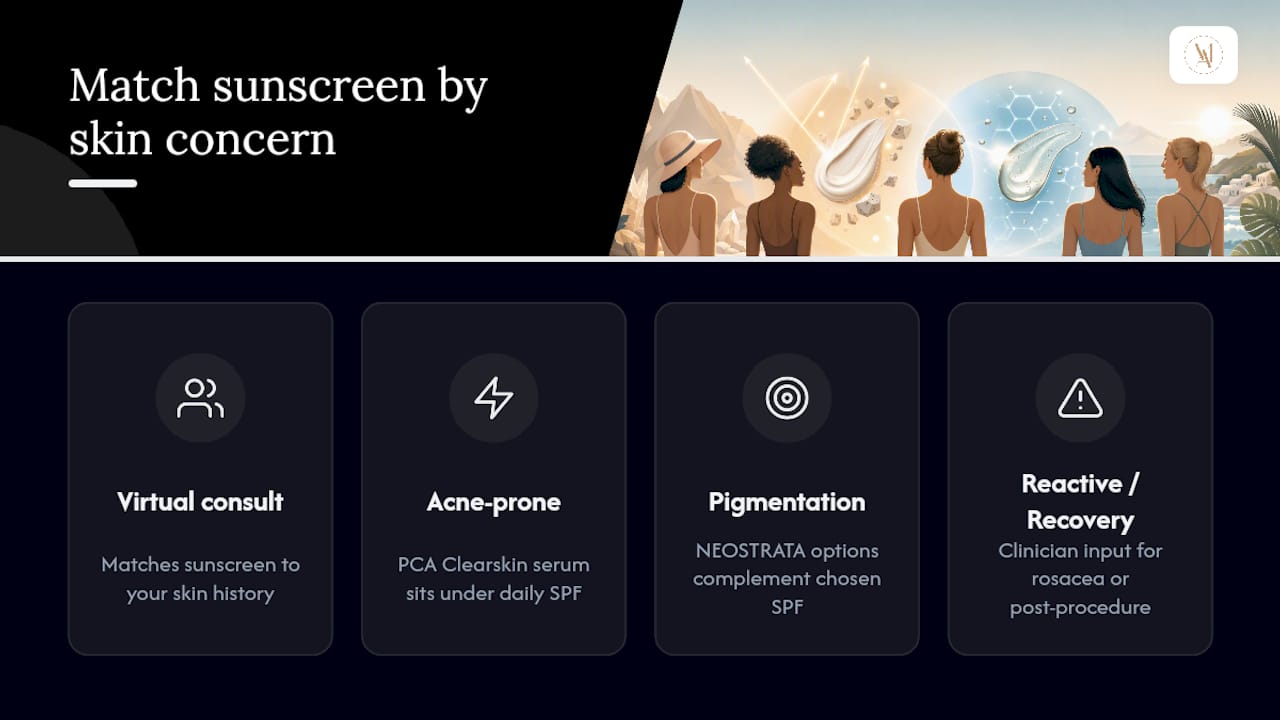
Some skincare providers offer clinician’s judgement beyond marketing claims on product labels. Where a search engine leaves you comparing ingredient lists alone, Virtual skin consultations can help match sunscreen and formulation choices to an individual’s skin history, including reactive skin, rosacea, and post-procedure recovery.
If your sunscreen choice needs to work alongside an acne-prone routine, the PCA Clearskin acne treatment serum is formulated to sit comfortably underneath daily SPF. For broader concerns like pigmentation or uneven tone that sun exposure worsens, the NEOSTRATA collection offers clinically focused options that complement a properly chosen sunscreen.
Consider booking a virtual consultation to get a sunscreen and skincare routine matched to your skin rather than choosing products without expert guidance.
This article is general information, not a substitute for advice from a qualified doctor. Consult a qualified healthcare professional about your own circumstances before acting on anything here.
Sources
- Mineral vs. Chemical Sunscreen: Which Is Better?
- Sunscreen: How it can help protect your skin from the sun
- Pharmacokinetics of sunscreen active ingredients (example JAMA study)