

Artikel: Reactive versus sensitive skin: what's the difference?

Reactive versus sensitive skin: what's the difference?
TL;DR:
- Sensitive skin is a persistent condition caused by a weakened skin barrier, requiring long-term repair, while reactive skin involves temporary flare-ups triggered by external factors. Proper diagnosis relies on observing whether discomfort is constant or episodic, with barrier healing indicated by clinical measurements like TEWL. A minimalist routine focusing on gentle cleansing, barrier repair, and trigger identification effectively manages both conditions.
Sensitive skin is defined as a chronic condition in which the skin maintains a persistently heightened response to stimuli, while reactive skin describes a temporary, episodic reaction triggered by a specific exposure. Understanding what is reactive versus sensitive skin matters because the two conditions require fundamentally different management strategies. Confusing them leads to the wrong products, prolonged discomfort, and wasted money. Sensitive skin affects 50–70% of adults worldwide, making it one of the most prevalent skin concerns in clinical practice. Getting the distinction right is the first step towards a routine that actually works.
What causes sensitive skin versus reactive skin?
Sensitive skin originates in the skin’s structure and biology. People with this condition typically have a weaker skin barrier and a genetically predisposed tendency toward exaggerated sensory responses. The barrier dysfunction allows environmental irritants, temperature changes, and even water to penetrate more easily, triggering the nervous and immune systems simultaneously. Clinically validated sensitive skin involves measurable disturbances across the barrier, nervous system, and immune response working together.
Reactive skin, by contrast, is driven by identifiable external triggers rather than an underlying structural weakness. Common triggers include:
- Fragranced skincare products and alcohol denat.
- Sudden weather changes, particularly cold wind or intense heat
- Hormonal fluctuations during the menstrual cycle or pregnancy
- Psychological stress, which elevates cortisol and disrupts barrier function
- Dietary factors such as alcohol, spicy foods, and high-sugar meals
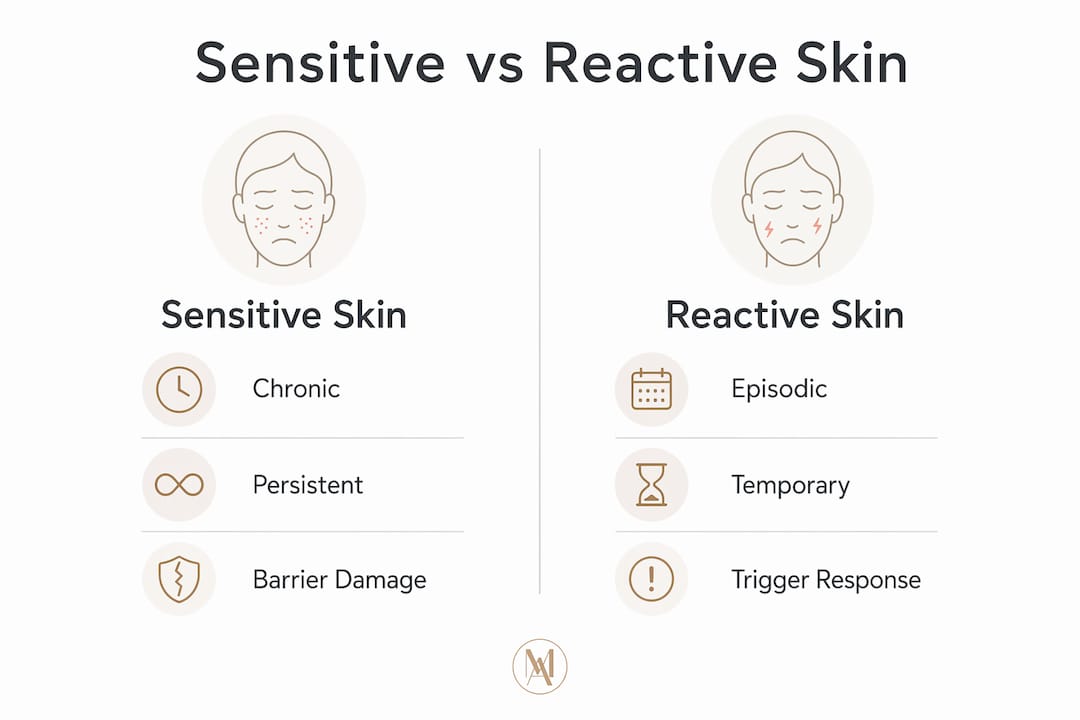
The critical distinction is reversibility. Reactive skin sensitivity is episodic and fully reversible once the trigger is removed, whereas sensitive skin maintains a persistent baseline of discomfort regardless of external conditions. That difference shapes everything from the products you choose to the goals you set for your skin.
Pro Tip: Keep a simple skin diary for two weeks. Note products used, foods eaten, stress levels, and weather conditions alongside any skin reactions. Patterns in your diary will reveal whether your skin is reacting to specific triggers or simply always uncomfortable, which is the clearest self-assessment tool available.
How do symptoms differ between reactive and sensitive skin?
The symptom profiles of these two conditions overlap enough to cause genuine confusion, yet they differ in timing, duration, and visibility. Sensitive skin produces a chronic baseline of sensations including burning, stinging, tightness, and dryness that are present most of the time. Reactive skin produces flare-ups of redness, swelling, or heat that appear after a specific exposure and then resolve.

One particularly important clinical nuance: symptoms like stinging or burning signal barrier compromise and function as repair signals from the nervous system. They are not simply cosmetic inconveniences. Visible signs are often absent in sensitive skin, meaning someone can experience significant discomfort with no redness or scaling that another person could observe. Reactive skin episodes, however, are frequently visible, producing erythema (redness), localised swelling, or a rash that appears within minutes to hours of trigger exposure.
| Feature | Sensitive skin | Reactive skin |
|---|---|---|
| Duration | Chronic and persistent | Episodic and temporary |
| Visible signs | Often absent | Commonly present (redness, swelling) |
| Primary sensations | Burning, stinging, tightness | Flushing, heat, itching |
| Trigger required | No specific trigger needed | Yes, a specific trigger is required |
| Returns to baseline | Rarely without treatment | Yes, once trigger is removed |
| Underlying cause | Barrier dysfunction, genetics | External exposure or irritant |
Understanding this table changes how you approach your routine. If your skin is always uncomfortable, you are managing a chronic condition. If it flares and then calms, you are managing triggers.
What skincare approaches effectively manage reactive and sensitive skin?
The primary goal for sensitive skin is long-term barrier repair. The primary goal for reactive skin is identifying and avoiding triggers. These are different objectives, and conflating them produces routines that address neither effectively.
For both conditions, a minimalist approach is the clinical standard. A 4–6 week routine built around gentle cleansing, moisturisation, and sun protection forms the foundation. Products within this protocol can cost well under £40 per item and last two to three months when used correctly. Simplicity is not a compromise. It is the strategy.
Here is a practical framework for building your routine:
- Cleanse gently. Use a soap-free syndet cleanser that preserves the acid mantle. Avoid foaming cleansers containing sodium lauryl sulphate (SLS), which strips the barrier even in a single wash.
- Moisturise with barrier-repairing ingredients. Ceramides, hyaluronic acid, and niacinamide are the three most evidence-supported ingredients for barrier restoration. A ceramide-rich moisturiser applied morning and evening reduces transepidermal water loss and calms nerve sensitivity over time.
- Protect with mineral sunscreen. Zinc oxide and titanium dioxide sit on the skin’s surface rather than absorbing into it, making them far less likely to provoke a reaction than chemical UV filters.
- Identify and remove triggers. For reactive skin specifically, patch-test every new product on the inner arm for 48 hours before applying it to the face. Introduce one new product at a time, never two simultaneously.
- Consult a dermatologist if symptoms persist. Conditions including rosacea, eczema, and contact dermatitis can mimic reactive or sensitive skin. A dermatologist can perform patch testing and measure transepidermal water loss (TEWL) to confirm the diagnosis.
Pro Tip: Avoid introducing active ingredients such as retinol or vitamin C until your skin has been stable and comfortable for at least four to six weeks. Using actives too early on a compromised barrier almost always worsens dysfunction, even when the product is high quality.
How to tell if you have reactive skin, sensitive skin, or both
Distinguishing between these two conditions in your own skin requires honest observation over time. The key question is whether your discomfort has a baseline or whether it only appears in response to something specific.
Ask yourself the following:
- Does your skin feel uncomfortable even when you have used no products and stayed indoors?
- Do reactions appear within minutes of applying a product or stepping into cold air?
- Does your skin return to a comfortable state after a day or two without any changes?
- Have you been diagnosed with or suspected of having rosacea, eczema, or perioral dermatitis?
- Do reactions occur across multiple unrelated products, or only with specific formulations?
If your skin is always uncomfortable regardless of circumstances, sensitive skin is the more likely diagnosis. If reactions are clearly linked to specific products, foods, or environmental changes, reactive skin is the more probable explanation. Many people experience both simultaneously, particularly those with rosacea, where a chronically sensitised barrier also reacts acutely to wine, heat, and UV exposure.
Clinically, barrier healing can be signalled by as little as a 1% change in TEWL. This measurement is one of the most precise tools a dermatologist has for confirming whether a barrier is compromised and tracking improvement. If you are uncertain about your skin type, a virtual consultation with a clinician can provide clarity far faster than months of trial and error. Sensitive skin protocols built around TEWL monitoring and hydration targets are now available without needing to visit a clinic in person.
It is also worth noting that many skin sensitivity issues stem from incorrect product choices rather than an inherent skin type. This means that what feels like a chronic condition may actually be a reactive pattern caused by a single problematic ingredient used daily. Removing that ingredient can produce a dramatic improvement within weeks.
Key takeaways
Sensitive skin is a chronic, barrier-driven condition requiring long-term repair, while reactive skin is episodic and resolves when its specific trigger is removed.
| Point | Details |
|---|---|
| Core distinction | Sensitive skin is persistent; reactive skin is temporary and trigger-dependent. |
| Barrier repair is central | A 4–6 week minimalist routine with ceramides and mineral SPF is the clinical foundation for both. |
| Actives require stability | Introduce retinol or vitamin C only after four to six weeks of comfortable, stable skin. |
| Self-assessment matters | A skin diary tracking products, diet, and environment reveals whether reactions are chronic or triggered. |
| Professional diagnosis helps | TEWL measurement and patch testing confirm the condition and prevent months of guesswork. |
Why I think most people are managing the wrong condition entirely
In my experience working with clients at Them-ethod, the most common mistake is not the products people choose. It is the diagnosis they give themselves before they even begin. Someone experiences redness after using a new serum, concludes they have sensitive skin, and then builds an entire routine around managing a chronic condition they do not actually have. The real issue was a single reactive episode caused by one ingredient, often fragrance or alcohol denat., that would have resolved within 48 hours of removal.
The reverse also happens. Someone with genuinely sensitive skin, characterised by persistent stinging and tightness, keeps cycling through new products looking for the one that will fix everything. They never find it because the problem is not the products. It is the barrier, and no single product corrects a compromised barrier overnight.
What I consistently advocate is patience and simplicity before anything else. Strip the routine back to three products. Give it six weeks. If the skin settles, you were likely dealing with reactive episodes caused by product overload. If discomfort persists even with the most minimal, gentle routine, that is your signal to seek a clinical assessment. Guessing costs time and money. A TEWL measurement or patch test costs neither.
The other misconception I see regularly is the belief that more expensive products produce faster results. They do not. A ceramide moisturiser from a pharmacy performs the same barrier repair function as one from a luxury counter. What matters is the formulation, not the price. At Them-ethod, we recommend products based on clinical evidence, not marketing. That distinction matters enormously when your skin is already compromised and every new product is a risk.
— Jess
Explore gentle skincare solutions at Them-ethod
At Them-ethod, we curate products specifically chosen for their clinical efficacy and tolerability in sensitive and reactive skin types. The PCA Clearskin serum is a standout option for those managing barrier compromise alongside breakout-prone or congested skin, offering calming and clarifying benefits without aggravating sensitivity. For those seeking a broader collection built on science-backed formulations, the Neostrata range delivers targeted support for skin texture and barrier health. Browse our full sensitive skin collection to find products matched to your specific concerns, or book a virtual consultation with one of our clinicians for a personalised protocol.
FAQ
What is the main difference between reactive and sensitive skin?
Sensitive skin is a chronic condition with persistent discomfort caused by a structurally weaker barrier. Reactive skin is a temporary, episodic response to a specific trigger that resolves once the trigger is removed.
Can you have both sensitive and reactive skin at the same time?
Yes. Conditions such as rosacea involve a chronically sensitised barrier that also reacts acutely to specific triggers including UV exposure, alcohol, and temperature changes. Managing both requires barrier repair and trigger avoidance simultaneously.
Which ingredients should I avoid with sensitive or reactive skin?
Avoid fragrance, alcohol denat., sodium lauryl sulphate, and chemical UV filters until your barrier is stable. These are the most common triggers for both reactive episodes and ongoing barrier disruption in sensitive skin.
How long does it take to repair a sensitive skin barrier?
A consistent minimalist routine takes 4–6 weeks to produce measurable barrier improvement. Introducing active ingredients such as retinol or vitamin C before this window closes frequently worsens dysfunction rather than improving it.
When should I see a dermatologist about skin sensitivity?
Consult a dermatologist if discomfort persists after six weeks of a gentle, minimal routine, or if you suspect an underlying condition such as eczema, rosacea, or contact dermatitis. Patch testing and TEWL measurement provide a clinical diagnosis that self-assessment cannot replicate.