



Artikel: Obagi Tretinoin Strengths: 0.025%, 0.05% and 0.1% Explained
Obagi Tretinoin Strengths: 0.025%, 0.05% and 0.1% Explained
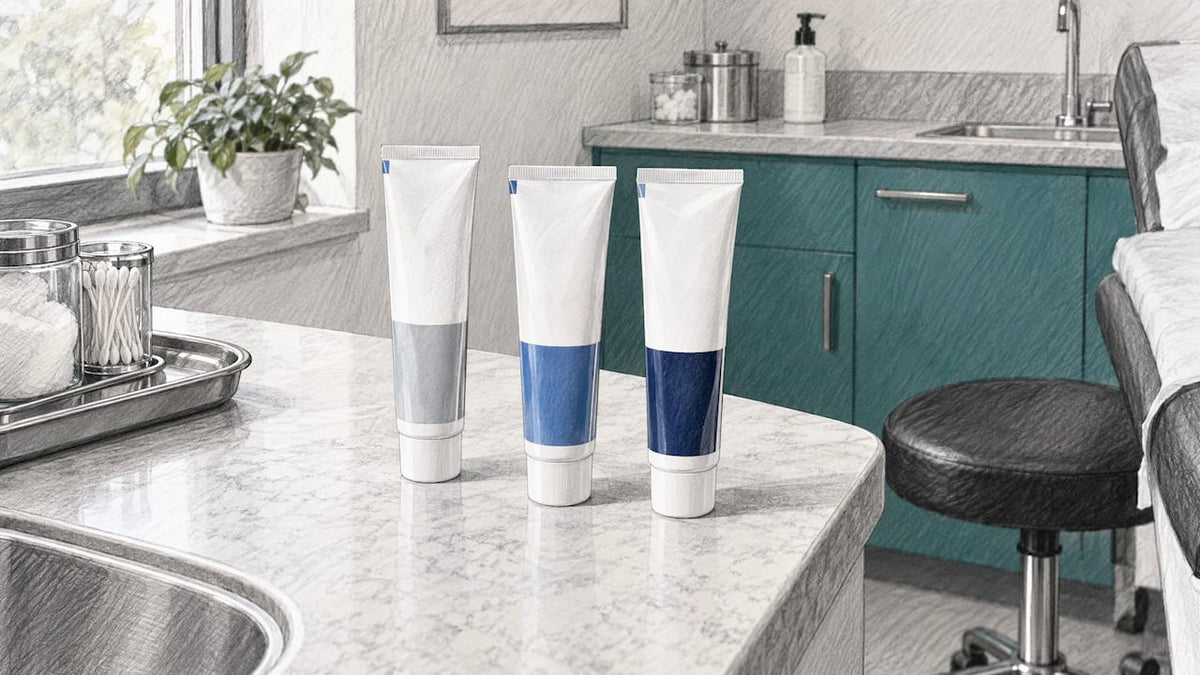
Obagi tretinoin comes in three cream strengths (0.025%, 0.05% and 0.1%) and one gel strength (0.05%), all by prescription only. The strength you should start on is rarely the highest one. It depends on your skin’s sensitivity, whether you have used a retinoid before and what you want to treat, and the best way to settle that is a one-to-one conversation with a clinician before you buy. This guide explains what each strength is for, how they differ in practice and how to build up safely.
TL;DR
- Obagi offers tretinoin as 0.025%, 0.05% and 0.1% creams and a 0.05% gel; every one needs a prescription in the United States.
- The active ingredient is the same in every strength. What changes is how much of it reaches your skin, and so how quickly irritation can appear.
- Clinical reviews support starting at a lower concentration and increasing gradually, because a history of irritation is the strongest predictor of how your skin will react.
- Percentages do not compare directly with retinol: tretinoin is already the active form, so a retinol percentage is not the same thing.
- Our online skin consultation with Dr Mandy is the practical place to match a strength to your skin, goals and routine.
Table of Contents
- The Obagi tretinoin range at a glance
- What tretinoin actually does
- 0.025%: where most people begin
- 0.05%: the middle step
- 0.1%: for experienced, tolerant skin
- How clinicians choose a strength
- How to start without overdoing it
- What to expect in the first weeks
- Pregnancy and other safety points
- Tretinoin strength versus retinol percentage
- Perspective: why strength is a conversation, not a shopping choice
- Getting the right strength with us
- FAQ
- Sources
The Obagi tretinoin range at a glance
Obagi Medical lists 0.025% cream, 0.05% cream, 0.1% cream and 0.05% gel, and describes them as topical treatments for acne vulgaris that require a prescription. US labelling for tretinoin cream, held on the National Library of Medicine’s DailyMed database, shows the same three cream strengths, and the labelled indication is the topical treatment of acne.
| Product | Strength | Form | Typical starting point |
|---|---|---|---|
| Obagi Tretinoin 0.025% | 0.025% | Cream | New users and sensitive skin |
| Obagi Tretinoin 0.05% | 0.05% | Cream | Users who tolerate 0.025% well |
| Obagi Tretinoin 0.1% | 0.1% | Cream | Experienced users, with clinician guidance |
| Obagi Tretinoin 0.05% | 0.05% | Gel serum | Users who prefer a lighter texture |
The last column is a general pattern, not a prescription. Your clinician decides what is right for you.
Obagi’s tretinoin products are fragrance-free, which matters if your skin reacts to scented products.
What tretinoin actually does
Tretinoin is a prescription vitamin A derivative, also called retinoic acid. A 2025 academic review notes that topical tretinoin has well-established efficacy in acne vulgaris. It can normalise skin cell growth and block inflammatory mediators. It does this by activating nuclear retinoic acid receptors in the skin, which in turn influence gene expression.
In plain terms, it encourages skin cells to turn over in a more orderly way and calms some of the inflammation behind breakouts. Many people also use it for fine lines and uneven tone, which is why you will see it in anti-ageing and pigmentation routines. The formal labelled indication for these products remains acne, so any other use is something to agree with your clinician.
0.025%: where most people begin
A 2022 academic review describes 0.025% as therapeutically effective with a reasonable safety profile, and recommends starting at a lower concentration and increasing gradually to a level you can tolerate. The same review says lower concentrations generally give less pronounced but still significant improvement, with fewer adverse effects.
That is why 0.025% suits:
- first-time retinoid users
- sensitive, dry or rosacea-prone skin, where your clinician agrees it is appropriate
- anyone who has reacted badly to a retinoid before
- people using tretinoin for the first time on the neck or around the eyes under guidance
We go deeper on why a low strength can hold its own in our piece on why 0.025% can rival 0.1%.
0.05%: the middle step
The 0.05% cream and gel sit between the two. They make sense once your skin has settled on 0.025% with no lasting redness, peeling or stinging, and you and your clinician want a stronger effect on texture, breakouts or tone. The gel version appeals to people who find creams heavy, particularly in warm weather or on oilier skin.
Moving up is a decision, not an obligation. If 0.025% is working and your skin is comfortable, staying there is a perfectly good plan. A 2022 review notes that maintenance can use lower concentrations or less frequent application.
0.1%: for experienced, tolerant skin
The 0.1% cream is the highest strength in the range. It is generally reserved for people who have used tretinoin for some time, whose skin has adapted and who have a clear reason, agreed with a clinician, to go higher. A higher percentage does not guarantee a faster result. It does raise the likelihood of dryness and irritation, which can interrupt your routine and cost you progress.
If you are weighing 0.05% against 0.1%, our guide on how to choose retinoid strength sets out the questions to ask first.
How clinicians choose a strength
There is no single correct strength. A clinician’s choice is influenced by the condition being treated, your skin type, previous treatments and familiarity with a particular retinoid. A peer-reviewed acne review found that a history of irritation with facial products was the most reliable predictor of irritation and reported better tolerability at lower concentrations.
So the questions that matter are:
- What are you treating? Acne, pigmentation, fine lines and texture can call for different plans.
- Have you used a retinoid before? Past experience with retinol or other prescription retinoids is useful information.
- How does your skin react to new products? Easily irritated skin points to a gentler start.
- What else is in your routine? Exfoliating acids, vitamin C and in-clinic treatments all change how your skin tolerates tretinoin.
- Do you have eczema? Current labelling advises that tretinoin may cause severe irritation on eczematous skin and should be used with utmost caution in these patients.
How to start without overdoing it
The method matters as much as the strength. Clinicians can improve tolerability by starting every other day for the first two to four weeks, using a thin pea-sized layer and moisturising. The same review says mild irritation commonly settles within one to two weeks.
A practical start looks like this:
- Apply to clean, fully dry skin in the evening.
- Use a pea-sized amount for the whole face, not a generous layer.
- Begin every second or third night, then build towards nightly use as your skin allows. Our guide to starting tretinoin at night gives a week-by-week pattern.
- Moisturise afterwards and wear sunscreen every morning.
- Keep it away from the eyes, mouth, angles of the nose and mucous membranes.
If the gradual approach appeals, our article on microdosing retinoids explains how to ease in.
What to expect in the first weeks
US labelling notes that in the early weeks an apparent worsening of inflammatory lesions may occur, because the medication acts on deep, previously unseen lesions. This is one reason to judge results over weeks rather than days. A 2025 review describes the adverse events of topical tretinoin as typically mild, localised and transient.
If your skin becomes sore or very dry, Obagi Medical’s guidance is to use the product less often, pause it or stop. Dermatology guidance adds that for irritation you can moisturise more, switch to a gentler cleanser and increase frequency more slowly. If irritation persists, speak to your clinician rather than pushing through.
Pregnancy and other safety points
Obagi Medical advises that tretinoin should be used during pregnancy only if the potential benefit justifies the potential risk to the foetus. If you are pregnant, planning a pregnancy or breastfeeding, talk to your doctor before using any retinoid. Our summary of the retinol and pregnancy evidence and our pregnancy-appropriate routine cover what to use instead while you wait.
Tell your clinician about eczema, very sensitive skin or any other prescription or in-clinic treatments you are using, so the plan can be built around them.
Tretinoin strength versus retinol percentage
A common question is whether 0.025% tretinoin is stronger than a 1% retinol. The percentages cannot be compared directly. Tretinoin is the active retinoic acid, whereas retinol has to be converted first. Dermatologists estimate that retinol is roughly ten times less potent, because only about 10% is converted.
A 12-week randomised split-face study paired 0.25%, 0.5% and 1.0% sustained-release retinol with 0.025%, 0.05% and 0.1% tretinoin. Both improved photodamage, with no significant efficacy differences between the paired products. The practical lesson: the number on the tube only means something within the same ingredient.
If you are supporting your skin around a prescription routine, a gentle retinol and peptide serum can suit the days you rest your tretinoin, though you should check with your clinician before combining retinoids.
Perspective: why strength is a conversation, not a shopping choice
Most people who come to us asking about Obagi tretinoin strengths have already decided that stronger means better. We understand why: the numbers look like a ladder, and 0.1% sits at the top.
Our approach at The M-ethod Skin is to treat strength as one part of a personalised plan. The clinical literature points the same way: start low, build slowly and protect your skin barrier, so that you can keep using the product for months rather than days.
As a UK-based Obagi Ambassador Clinic, we work with prescription-strength, dermatologist-recommended skincare every day, and our one-to-one consultations with Dr Mandy are designed to match the product, strength and routine to the person. Pairing the right strength with sunscreen, a suitable cleanser and a moisturiser is what turns a prescription into visible, lasting progress.
Jess
Getting the right strength with us
If you want a plan built around your skin rather than a guess from a product page, our online skin consultation with Dr Mandy is the place to start. We ship internationally with customs handled, and you can browse the supporting products in our skincare collection, from cleansers and moisturisers to sunscreen. If you are also thinking about in-clinic treatments such as microneedling in London or Athens, you can see them in The M-ethod Skin Clinic collection.
For how prescriptions work in the United States, see our guide to lawful tretinoin prescription routes.
FAQ
What strengths of Obagi tretinoin are there?
Obagi makes tretinoin in 0.025%, 0.05% and 0.1% creams and a 0.05% gel. All require a prescription. Your clinician will recommend one based on your skin and history.
Which Obagi tretinoin strength should a beginner use?
Clinical reviews support starting at a lower concentration and increasing gradually, so 0.025% is the usual place to begin. Your own history of irritation matters most. A consultation lets you confirm the right starting point.
Is 0.025% tretinoin stronger than 1% retinol?
They are different ingredients, so the numbers do not line up. Tretinoin is already active, while retinol must be converted, and only about 10% converts. One study found paired products performed similarly, but the percentages are not interchangeable.
What should I do if tretinoin irritates my skin?
Use it less often, moisturise more and switch to a gentle cleanser. You can pause it or stop altogether if needed. If irritation continues, speak to your clinician.
Sources
- Obagi Rx prescription skincare range
- Prescription Vitamin A Tretinoin, Obagi Medical
- Rx .05 Tretinoin Gel Serum, Obagi Medical
- DailyMed: tretinoin cream labelling (consumer view)
- DailyMed: tretinoin cream labelling
- An Updated Review of Topical Tretinoin in Dermatology
- Use of Retinoids in Topical Antiaging Treatments
- A Clinician’s Guide to Topical Retinoids
- Why Topical Retinoids Are Mainstay of Therapy for Acne
- Topical Tretinoin: A Versatile supplement, Practical Dermatology
- How Retinol Cosmetics Change Skin at a Chemical Level, Scientific American
- Randomised split-face study comparing retinol and tretinoin, Journal of Drugs in Dermatology