



Artikel: Niacinamide for redness: a guide for sensitive and rosacea-prone skin

Niacinamide for redness: a guide for sensitive and rosacea-prone skin
Topical niacinamide reduces facial redness for most people who use it consistently, and it does so without causing the flushing associated with its chemical cousin, niacin. If your skin is rosacea-prone or highly reactive, patch test first and introduce it slowly, watching for stinging, spreading rash, or swelling that would signal you should stop. Realistically, expect meaningful improvement over several weeks rather than days. Clinical formulations containing niacinamide have shown statistically significant redness reduction by day 29, which gives you a fair benchmark for your own patience.
That’s the headline. The rest of this comes down to why it works, who should be more careful than others, and how to actually build it into a routine without triggering the very reaction you’re trying to avoid.
Key Takeaways
Topical niacinamide reliably calms facial redness through anti-inflammatory and barrier-repair mechanisms, but rosacea-prone skin needs cautious, clinically guided introduction rather than self-directed trial and error.
| Point | Details |
|---|---|
| Patch test before facial use | Apply to your forearm for three to five days before trying any new niacinamide product on your face. |
| Expect weeks, not days | Clinical trial data shows measurable redness reduction by around day 29, not within the first week. |
| Distinguish rosacea from sensitivity | Visible vessels, flushing, or pustules warrant a clinician’s assessment rather than self-treatment alone. |
| Most reactions aren’t from niacinamide | Fragrance, preservatives, or overly high concentrations are more common culprits than the active itself. |
| Personalised guidance beats guesswork | Them-ethod’s virtual consultations and NEOSTRATA range offer a clinically grounded next step if you’re uncertain. |
Table of Contents
- How does niacinamide reduce redness?
- Rosacea vs sensitive skin: who actually benefits?
- How should you introduce niacinamide into your routine?
- Which formulations and ingredients suit redness-prone skin?
- Why might niacinamide make redness worse?
- What does the clinical evidence actually show?
- How do you know if it’s working, and when should you see a dermatologist?
- What’s the honest verdict on niacinamide for redness?
- Where Them-ethod fits into your redness routine
- Frequently asked questions
- Sources
How does niacinamide reduce redness?
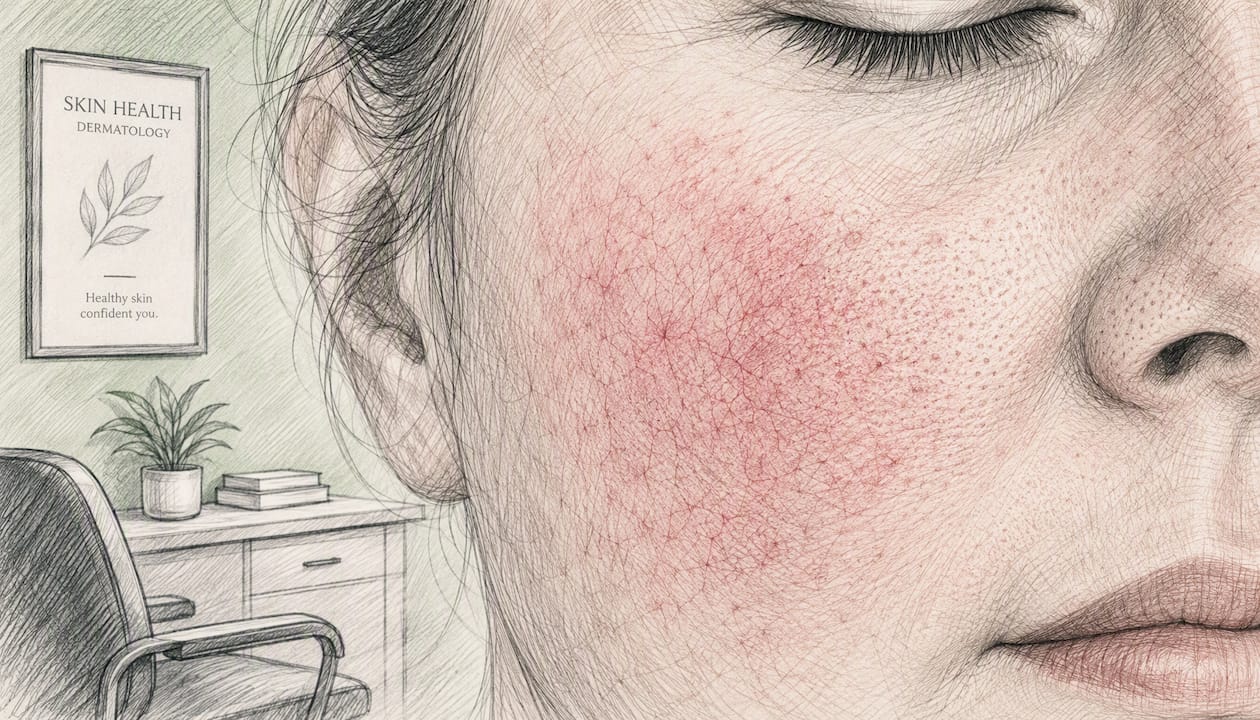
Redness on the face is usually a visible symptom of inflammation. Blood vessels dilate, the skin barrier lets in irritants it should be keeping out, and the cycle feeds itself. Niacinamide interrupts that cycle in a few measurable ways rather than through a single mechanism.
At a cellular level, niacinamide has anti-inflammatory, antioxidant, and barrier-supporting effects that calm the inflammatory signalling behind blotchy, reactive skin. It also supports keratinocyte differentiation, the process by which skin cells mature and organise themselves into a functional barrier. In laboratory studies, niacinamide increased markers including filaggrin, loricrin, and involucrin, the structural proteins that keep your barrier intact, and it raised cellular NAD levels in a dose-dependent way. A stronger barrier means fewer irritants getting through and less inflammatory response to begin with.
One point causes genuine confusion, so it’s worth being precise about it. Niacinamide is chemically related to niacin (nicotinic acid), and niacin is well known for causing a hot, flushed feeling when taken orally at high doses. Niacinamide does not share that vasodilating effect. Reviews confirm that niacinamide lacks the flushing response associated with niacin, which is precisely why it’s the form used in skincare rather than niacin itself. If your face flushes after applying a niacinamide serum, something else in the formula, or the concentration, is almost certainly the cause, not the niacinamide.
The mechanisms, in short:
- Dampens inflammatory signalling that drives visible redness
- Strengthens barrier proteins (filaggrin, loricrin, involucrin) so irritants penetrate less easily
- Raises cellular NAD, supporting cell repair and resilience
- Induces PPAR-α activity linked to improved barrier lipid production
- Does not dilate blood vessels the way niacin can
Statistic callout: In a clinical trial of two anti-redness formulations containing niacinamide, panthenol, and palmitoylethanolamide (PEA). participants saw a statistically significant reduction in facial redness by day 29, with mean improvement scores reaching as high as 0.88 in some groups and no product-related irritation reported. That four-week mark is a sensible point to judge your own progress against, rather than expecting change within the first week.
Rosacea vs sensitive skin: who actually benefits?
Not every red face is the same red face, and that distinction changes what you should reach for. Researchers at George Washington University make the case plainly: sensitive skin syndrome and rosacea are biologically distinct conditions, with different protein signatures underlying each. Dermatologist Dr Adam Friedman has noted that treating rosacea as generic “sensitive skin” often leads people towards products that soothe surface irritation without addressing the vascular and inflammatory drivers rosacea actually involves.
Practically, this is what tends to separate the two:
You’re likely to see good results from niacinamide if your redness shows up as chronic blotchiness, general reactivity to weather or products, or visible signs of a compromised barrier such as tightness, flaking, or stinging with ordinary products. This is the profile niacinamide’s barrier-repair and anti-inflammatory mechanisms are best suited to.
You should involve a clinician before self-treating if you have visible thread veins (telangiectasia), frequent unprovoked flushing episodes, or papules and pustules alongside redness. These features point towards rosacea subtypes that often need prescription treatment, and while niacinamide may still play a supporting role, it shouldn’t be your entire strategy.
It’s also worth separating true niacinamide intolerance from a reaction to something else in the bottle. Journalism and clinician commentary consistently point out that most reported irritation traces back to other ingredients, fragrance, preservatives, or simply too high a concentration too soon, rather than niacinamide itself.
Stop and seek advice if you notice severe stinging, a spreading rash, facial swelling, intense flushing that doesn’t settle, or any systemic symptoms like feeling unwell alongside a skin reaction.
Pro Tip: If you’re not sure whether what you’re dealing with is rosacea or just reactive, sensitised skin, don’t guess your way through six months of trial and error. A proper clinical assessment, even a virtual one, will save you money and irritation in the long run.
How should you introduce niacinamide into your routine?
Rushing this is the single biggest reason people think they’ve reacted to niacinamide when they’ve actually just overwhelmed a compromised barrier. Go slowly and the odds shift firmly in your favour.
- Patch test first. Apply a small amount of the product to the inside of your forearm or just behind your ear, twice daily, for three to five days. No redness, itching, or bumps means you’re likely clear to try it on your face.
- Start at a modest concentration. Serums and moisturisers typically range from around 2% to 10% niacinamide. If your skin is rosacea-prone or reactive, begin at the lower end rather than reaching for the strongest formula on the shelf.
- Introduce it every other day. Give your skin two to three applications in the first week before considering daily use.
- Build your routine around it. In the morning: cleanse, apply niacinamide, moisturise, then finish with sunscreen. In the evening: cleanse, apply niacinamide, moisturise.
- Move to daily use once tolerated. If a week of alternate-day use produces no stinging or flare, daily application is generally fine.
- Introduce other actives one at a time. If you’re adding a retinoid or an acid exfoliant, wait until niacinamide is well established before layering something new, and never introduce two unfamiliar actives in the same week.
| Timepoint | What to expect |
|---|---|
| — | Patch test complete; alternate-day use begins; minimal visible change expected |
| Weeks 2–4 | Early signs of calmer skin texture; some reduction in stinging or reactivity |
| Weeks 4–6 | Measurable redness reduction possible, in line with clinical trial findings around day 29 |
| Weeks 6–12 | Continued improvement in overall tone and barrier resilience if tolerated well |
If you’re already using retinoids or acids and want to add niacinamide, our guide to niacinamide’s role in skincare covers concentration ranges and pairing logic in more depth.
Which formulations and ingredients suit redness-prone skin?
Not all niacinamide products are built the same way, and the vehicle matters almost as much as the active ingredient itself.
Serums tend to deliver a higher concentration with faster absorption, which suits oilier or more resilient skin. Moisturisers and creams, by contrast, deposit niacinamide within an occlusive, often more soothing base, which tends to suit dry, rosacea-prone, or highly reactive skin better because the format itself adds a layer of barrier support. If your skin flares easily, a cream-based niacinamide product is usually the gentler starting point.
Certain co-ingredients make a genuine difference to tolerability and outcome. Clinical trials combining niacinamide with panthenol and palmitoylethanolamide (PEA) showed measurable redness reduction with no product-related irritation, suggesting these barrier-mimetic partners work with niacinamide rather than against it. Also worth seeking out:
- Ceramides to reinforce lipid barrier structure
- Glycerin for humectant hydration without heaviness
- Minimal or no fragrance, which remains one of the most common irritant triggers in reactive skin
Be more cautious layering niacinamide with strong exfoliating acids, high-percentage retinoids, or products containing essential oils, particularly in the same routine step. These combinations can compound irritation rather than complement niacinamide’s calming action. If your skin is sensitised, introduce them on alternating days rather than stacking them.
Packaging matters more than most people assume. Airless pump bottles limit oxidation and contamination exposure far better than open jars, which matters for actives that degrade or for reactive skin where preservative load is a genuine concern. Our barrier repair ingredients guide breaks down which companion ingredients are worth prioritising if you’re shopping.
Pro Tip: Niacinamide calms inflammation, but it does nothing to protect against the UV exposure that provokes redness in the first place. A broad-spectrum sunscreen every morning is not optional if you’re serious about controlling redness long term.
Why might niacinamide make redness worse?
It’s rare, but it happens, and understanding why helps you respond rationally rather than assuming the ingredient itself is to blame.
- Allergic or irritant reaction to another ingredient in the formula, such as fragrance, alcohol, or a preservative, rather than niacinamide.
- Concentration too high, too soon, particularly on a barrier that’s already compromised.
- Overuse, applying it multiple times a day or alongside several other active ingredients simultaneously.
- Concurrent irritants, such as recently started retinoids, acid exfoliants, or aggressive cleansing routines, masking as a niacinamide reaction.
Editorial reporting backs this up: experts commonly attribute reported irritation to concentration or co-ingredients rather than niacinamide itself, and advise stopping use if burning or stinging develops.
If you do react, stop the product immediately and strip your routine back to a gentle cleanser and a bare moisturiser for several days. A cool compress can ease acute discomfort. Photograph the reaction so you have a record if you need to show a clinician, and monitor over 48 to 72 hours.
Seek medical attention if you notice blistering, a rash that spreads beyond the application area, swelling of the face or eyes, or any systemic symptoms such as difficulty breathing or feeling generally unwell.
What does the clinical evidence actually show?
The evidence base for niacinamide and redness is reasonably solid for a cosmetic active, though it isn’t infinite, and it’s worth understanding both its strength and its limits.
“Sensitive skin syndrome and rosacea are not the same condition, and the difference is written in your proteins.” The distinction matters clinically because the two conditions call for different treatment logic, not just different marketing language.
That framing, from dermatology researchers at George Washington University, is a useful check on the tendency to treat all facial redness as interchangeable. On the formulation side, the strongest piece of evidence specific to redness comes from a clinical trial of two anti-redness products combining niacinamide with panthenol and PEA. Both formulations produced statistically significant improvement in redness scores by day 29 (P < 0.001), with no product-related irritation recorded across the trial population. Cleveland Clinic’s consumer-facing guidance aligns with this, noting that niacinamide soothes inflammation and can calm redness linked to acne, rosacea, and eczema, while flagging that rare irritation can still occur.
Statistic callout: Mean redness score improvements in the trial reached up to 0.88 by day 29 in certain formulation groups, a meaningful shift for a four-week window using an over-the-counter formulation rather than a prescription treatment.
The limitations are worth being honest about. Trial sample sizes in cosmetic dermatology research are typically modest, formulations vary considerably between brands, and none of this evidence substitutes for a clinician’s diagnosis if you suspect rosacea specifically. Niacinamide is a solid supporting tool. It isn’t a replacement for prescription therapy where that’s genuinely needed.
How do you know if it’s working, and when should you see a dermatologist?
Redness improvement isn’t always obvious day to day, so give yourself objective checkpoints rather than staring in the mirror every morning hoping for a dramatic shift.
- At 2 to 4 weeks: look for reduced stinging or burning when you apply other products, and slightly less reactivity to temperature changes or touch.
- At 6 to 8 weeks: photograph your skin in the same lighting as your starting point and compare blotchiness and overall tone. This is roughly where the clinical trial data suggests visible change becomes measurable.
- At 12 weeks: you should have a clear sense of whether niacinamide is part of your solution. Continued improvement in barrier resilience, fewer flare triggers, and calmer baseline tone are good signs.
Track progress with simple, low-effort methods: a monthly photo in consistent lighting, a note of how often your skin flares, and honest tracking of stinging or discomfort with your usual products.
See a dermatologist if your redness worsens rather than improves, if new papules or pustules appear alongside redness, or if you suspect a rosacea subtype that hasn’t been formally diagnosed. Prescription options exist for rosacea that over-the-counter niacinamide simply won’t reach on its own, and a clinician can rule out other causes entirely.
What’s the honest verdict on niacinamide for redness?
Niacinamide deserves its reputation, but not for the reasons most skincare marketing suggests. It isn’t a miracle ingredient that erases redness overnight, and treating it that way sets people up to quit after two weeks when nothing dramatic has happened. What it actually does, reliably, is support the two things that genuinely drive down facial redness over time: a calmer inflammatory response and a barrier that stops leaking irritants into skin that’s already inflamed. That’s a slower, less exciting story than most product copy tells, but it’s the one backed by measured trial data rather than testimonials.
Where I’d push back on conventional advice is the assumption that “sensitive” and “rosacea-prone” skin should follow the same playbook. They shouldn’t. If you have visible vessels, frequent flushing, or pustules, niacinamide is a supporting player at best, and leaning on it alone while ignoring a rosacea diagnosis wastes time you don’t need to lose. If your redness is closer to general reactivity and barrier fatigue, niacinamide is genuinely one of the better tools available, and the four-week clinical benchmark is a fair one to hold yourself to.
If you’re still unsure which camp you fall into, that uncertainty is itself useful information; it means a proper assessment, rather than another product, is probably the more efficient next step. A virtual consultation with a clinician can settle in minutes what months of guesswork won’t.
Where Them-ethod fits into your redness routine
Them-ethod exists for exactly the moment this article has walked you through: you understand niacinamide’s mechanism, you’ve patch tested, and now you want a formulation you can actually trust rather than another shelf gamble. Unlike browsing generic skincare retailers, Them-ethod curates dermatologist-recommended, medical-grade options and pairs them with the option of a personalised virtual consultation, so you’re matched to a concentration and companion ingredients suited to your specific redness pattern rather than a generic best-seller. The NEOSTRATA collection includes science-backed formulations built around barrier support and even tone, a sensible starting point if you’ve read this far and want a clinically credible product rather than another impulse buy. If your redness looks more rosacea-shaped than sensitivity-shaped, book a virtual skin consultation through Them-ethod and get a plan built around your actual skin, not a generic routine.
Frequently asked questions
Does niacinamide reduce redness on rosacea-prone skin specifically? It can help, particularly with general blotchiness and barrier-related sensitivity, but visible vessels, frequent flushing, or pustules suggest a rosacea subtype that benefits more from prescription treatment guided by a dermatologist.
How long does niacinamide take to reduce redness? Clinical trial data shows statistically significant improvement by around day 29, so give it four to six weeks of consistent use before judging results.
Can niacinamide serum cause more redness or inflammation? It’s uncommon, and when it happens it’s usually traceable to another ingredient, an overly high concentration, or overuse rather than niacinamide itself.
What percentage of niacinamide is best for sensitive skin?
What should I avoid combining with niacinamide on redness-prone skin? Be cautious layering it with strong exfoliating acids, high-percentage retinoids, or fragranced essential oil blends, and introduce any new active on separate days rather than stacking them.
This article is general information, not a substitute for advice from a qualified doctor. Consult a qualified healthcare professional about your own circumstances before acting on anything here.
Sources
- Clinical and in vitro evidence for anti‑redness formulations containing niacinamide, panthenol and PEA - PMC
- Sensitive skin syndrome and rosacea are not the same condition, and the difference is written in your proteins | Dermatology | GW School of Medicine and Health Sciences
- Can niacinamide help your skin? — Cleveland Clinic
- Can using niacinamide in your skin‑care routine cause redness? | Allure