



Artikel: Melasma in summer: why it flares and how to stop it
Melasma in summer: why it flares and how to stop it
Melasma commonly worsens in summer because ultraviolet radiation, visible light, and heat all reactivate the melanocytes and inflammatory pathways that drive pigment production. If you’re noticing your patches darkening as the temperature climbs, you’re not imagining it, and you’re not alone in it.
The fastest way to regain control is to act now, before the flare deepens further. Start here:
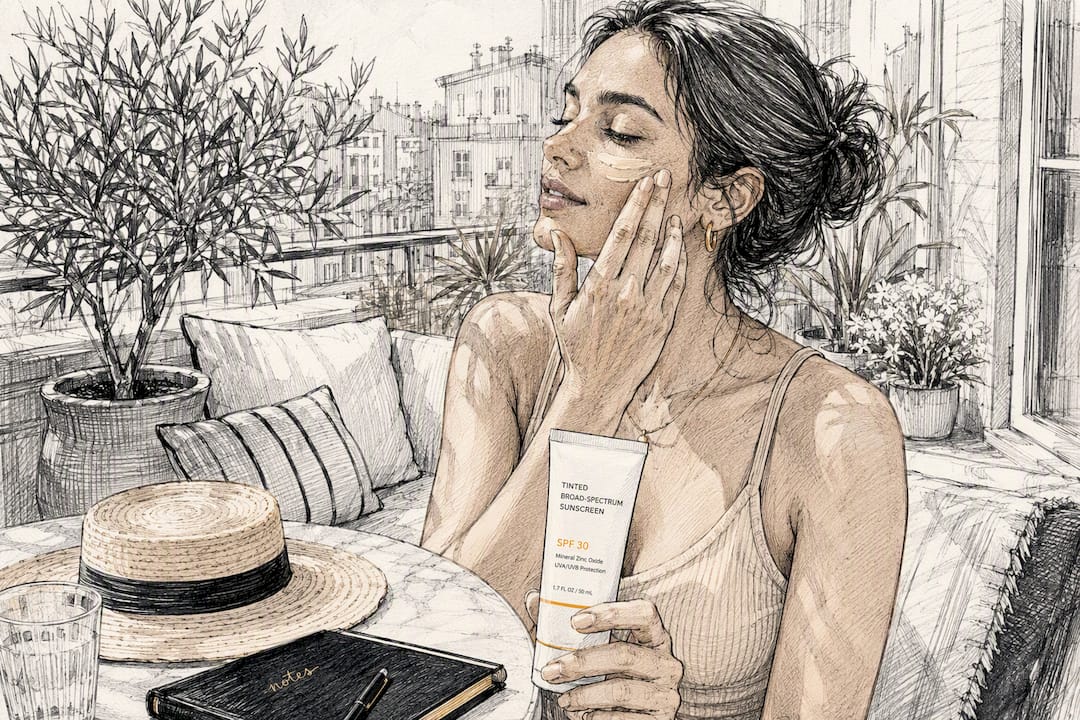
- Layer your photoprotection with a tinted, broad-spectrum SPF 30 or higher, ideally one containing iron oxide.
- Add physical barriers — a wide-brimmed hat, UPF clothing, shade — because sunscreen rarely works alone in strong summer light.
- Avoid heat triggers where you can: long hot showers, sauna sessions, and standing over a hob all count.
- Pause irritating actives (strong retinoids, high-percentage acids) until your barrier and protection are solid.
Topical treatments and in-clinic procedures still work in summer, but they carry more risk of rebound darkening unless photoprotection is airtight first. We’ll walk through exactly why, and what a realistic seasonal plan looks like.
Key Takeaways
Melasma worsens in summer because UV, visible light, and heat jointly reactivate pigment production, and consistent photoprotection outperforms any single treatment on its own.
| Point | Details |
|---|---|
| Visible light matters | Tinted sunscreens with iron oxide block pigment triggers that standard SPF formulas miss entirely. |
| Heat is an independent trigger | Hot showers, cooking steam, and heatwaves worsen pigment even without sun exposure. |
| Topicals need summer adjustment | Apply hydroquinone and tretinoin at night, and reduce potency if your skin barrier is compromised. |
| Procedures carry seasonal risk | Aggressive lasers raise rebound pigmentation risk in summer; many clinicians prefer autumn or winter timing. |
| Maintenance is ongoing | Melasma relapses without continued photoprotection, so treat this as long-term management, not a cure. |
| Personalised support helps | Them-ethod’s virtual consultations and protocols like BRIGHT SKY tailor treatment intensity to summer conditions. |
Table of Contents
- Why does melasma get worse in summer?
- What sunscreen and habits actually prevent flares?
- Which topical treatments work safely through summer?
- Are oral tranexamic acid and laser treatments safe in summer?
- Building a daily summer skincare routine for melasma
- When should you see a dermatologist about melasma?
- Frequently asked questions
- Sources
Why does melasma get worse in summer?
Three forces converge in warm months, and each one acts on pigment through a different mechanism. Understanding them changes what you buy and how you use it.
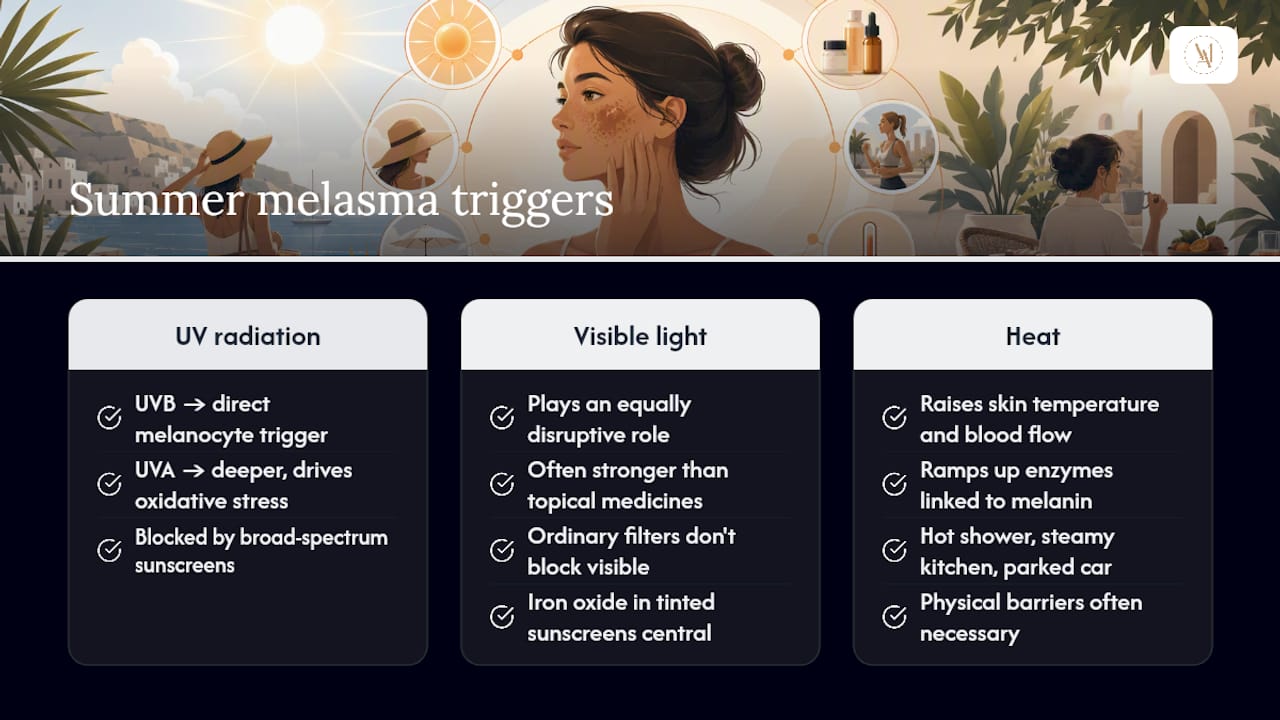
Ultraviolet radiation is the obvious culprit. UVB triggers melanocytes directly, while UVA penetrates deeper and drives oxidative stress that keeps pigment production switched on for longer after exposure. Most people know to block both, which is why “broad-spectrum” matters on a label.
What surprises many patients is that visible light plays an equally disruptive role. Clinical experts note that sunlight is often stronger than topical medicines, and that visible light and heat contribute significantly to activating pigmentation, sometimes overwhelming whatever cream you’re using underneath. Ordinary sunscreen filters were never designed to block the visible spectrum, which is why iron oxide, a mineral pigment added to tinted formulas, has become central to serious melasma protection.

Heat behaves as its own independent trigger, separate from light entirely. It raises skin temperature, increases local blood flow, and appears to ramp up enzymatic activity linked to melanin synthesis. That means a hot shower, a steamy kitchen, or an afternoon in a parked car can worsen patches with zero UV involved.
Hormonal fluctuations, whether from pregnancy, contraception, or hormone therapy, don’t cause melasma on their own in summer, but they lower the threshold at which sun exposure sets pigment off. Some medications are photosensitising too, meaning they amplify the skin’s reaction to light you’d otherwise tolerate.
Visible light and heat are significant contributors to melasma flares, and physical barriers alongside tinted sunscreens are often necessary because sunscreen alone may not be enough.
That single point reframes most people’s summer routine: sunscreen is necessary, but it isn’t sufficient by itself.
What sunscreen and habits actually prevent flares?
Photoprotection is the one intervention every dermatology guideline agrees on, yet most people under-apply and under-reapply it. Getting the basics genuinely right does more for melasma than most treatments you could add on top.
Broad-spectrum SPF 30 is the floor, not the target. It signals a product blocks both UVB (the “SPF” number) and UVA, and for melasma, higher is generally better through the summer months. But SPF alone says nothing about visible light protection, which is where tint comes in.
Randomised trials have found that sunscreens containing iron oxide produced markedly better pigment outcomes than UV-only formulas, with one trial reporting an average MASI reduction of 77.8% versus 61.9% at eight weeks when paired with 4% hydroquinone. That gap is the practical argument for choosing a tinted formula over a clear one, even if you don’t love wearing visible tint daily.
Mineral filters (zinc oxide and titanium dioxide) tend to suit melasma-prone skin better in summer because they reflect rather than absorb light, which limits the heat build-up some chemical filters generate on the skin’s surface. A well-formulated chemical sunscreen is still workable if you’re pairing it with shade and reapplication discipline.
A realistic application checklist:
- Use roughly two finger-lengths of product to cover the face and neck; most people apply less than half that.
- Reapply every two hours outdoors, or immediately after swimming or heavy sweating.
- Layer a tinted, iron-oxide foundation or powder over sunscreen for extra visible-light coverage during the day.
- Wear a wide-brimmed hat and UPF clothing for genuine midday sun, and seek shade between 11am and 3pm where you can.
- Use a small fan or misting spray to cool the skin after outdoor time, since heat itself worsens pigment.
Pro Tip: Check the ingredients list for “iron oxide” near the top rather than trusting marketing copy that just says “tinted”. If it’s not listed, the visible-light protection is likely minimal. Avoid pairing sunscreen with strongly exfoliating actives on the same hot days. Irritated skin produces more inflammatory pigment, undoing the protection you just applied. A tinted sunscreen buyer’s guide can help you match tone and coverage without trial and error.
Which topical treatments work safely through summer?
Topical agents remain first-line therapy, and choosing the right one matters less than using it correctly during hot weather. For people who want to avoid hydroquinone, azelaic acid, kojic acid, and niacinamide offer gentler alternatives with a slower but real effect.
Realistic timelines matter here, because impatience leads people to over-treat. Most regimens need 8 to 16 weeks before visible improvement, and results plateau rather than disappear entirely.
Sunscreen itself carries measurable weight in that improvement. Placebo arms in randomised trials, where patients used only broad-spectrum sunscreen with no active depigmenting agent, still showed MASI reductions of roughly 10 to 27% over 8 to 12 weeks. That’s a genuine treatment effect from sun protection alone, which tells you how much ground you lose if photoprotection slips while you’re using an active ingredient.
Summer-specific rules worth following:
- Apply hydroquinone and tretinoin at night where possible, since both increase photosensitivity and work independently of daylight.
- Choose non-irritating, fragrance-free vehicles in summer; sweat and heat make actives sting more than they would in winter.
- If your skin barrier feels compromised (peeling, redness, heat rash), pause potent actives for a few days rather than pushing through.
- Cycle down from an intensive phase to a maintenance phase once you plateau, rather than staying on high-strength treatment indefinitely.
Irritation itself can trigger more pigment through inflammation, a mechanism dermatologists call post-inflammatory hyperpigmentation. That’s why reducing potency during a heatwave is a legitimate strategy, not a compromise. Anyone starting or adjusting a regimen should read through the safety notes on hydroquinone protocols before escalating to combination therapy.
Are oral tranexamic acid and laser treatments safe in summer?
Oral and procedural options can accelerate results, but summer changes the risk calculation for nearly all of them. Timing matters as much as the treatment itself.
Oral tranexamic acid (TXA) currently has the strongest evidence among systemic agents, working by reducing the vascular signalling that feeds pigment production. Reviews describe accumulating evidence for its efficacy, typically over 12 to 16 weeks of use, but TXA is thrombophilic. It raises clotting risk, and needs a clinician review of personal and family clotting history, current medications, and smoking status before it’s prescribed. This isn’t a supplement to self-source online.
Microneedling and chemical peels sit at a gentler end of the procedural spectrum. Used by an experienced practitioner, they help topical agents penetrate more effectively and carry comparatively low risk when photoprotection is strict afterwards.
Lasers are where summer caution matters most. Low-fluence Q-switched Nd:YAG and similar picosecond devices can lighten stubborn pigment, but the American Academy of Dermatology warns that heat and inflammation from laser treatment raise the risk of rebound hyperpigmentation, and that risk climbs further in warmer months unless photoprotection is meticulous. Many clinicians prefer scheduling aggressive resurfacing for autumn or winter, reserving low-fluence, non-ablative settings for summer when treatment can’t wait.
Pro Tip: Clinicians often combine a gentle in-office procedure with a maintenance topical regimen, sometimes including tranexamic acid, rather than relying on the procedure alone. That combination tends to hold results longer than either approach used in isolation. A guide to tranexamic acid for melasma covers dosing patterns and who should avoid it.
Building a daily summer skincare routine for melasma
A workable routine beats a perfect one you abandon by July. Here’s a structure that holds up in heat.
Morning: cleanse, apply an antioxidant serum such as vitamin C, moisturise, then finish with a tinted broad-spectrum SPF containing iron oxide. Top with a hat or cap if you’re heading outdoors.
Midday: reapply sunscreen if you’ve been outside for two hours or more, retreat to shade during peak sun, and cool your skin with a fan or misting spray if you feel flushed or overheated.
Evening: cleanse gently, apply prescribed topical agents (hydroquinone, tretinoin, or your maintenance actives), then follow with a repair moisturiser. Skip anything abrasive if your skin has had heavy sun or sweat exposure that day.
For weekly and seasonal upkeep:
- Log your triggers, sun exposure, and flare timing in a notes app so patterns become obvious over weeks rather than guesswork.
- Taper from an intensive treatment phase to a lighter maintenance regimen (retinoid or azelaic acid a few nights a week) once results plateau.
- Book a dermatology review roughly every three months during summer to check progress and adjust strength.
- Rebuild your kit each season: sunscreen, a physical barrier item, prescribed topicals, and a repair serum.
A melasma skincare routine guide walks through product pairing in more depth if you want a fuller template to work from.
When should you see a dermatologist about melasma?
Book a consultation if your patches keep darkening despite strict sun protection, if they’re large, symptomatic, or spreading, or if you’re considering tranexamic acid, laser, or another procedural option. Prior experience of rebound pigmentation after any treatment is also a reason to get a professional opinion before trying again.
At a consult, a clinician typically assesses pigment depth using tools like a Wood’s lamp or dermatoscope, which helps predict how well you’ll respond to topical versus procedural approaches. They’ll also review hormonal status, current medications, and clotting history, particularly relevant if oral TXA is on the table.
Bring photos of your patches over time, a list of medications and hormonal treatments, and notes on recent sun or heat exposure. Ask directly about downtime, expected timelines, and maintenance costs, since many melasma treatments sit outside standard insurance cover.
A clinician’s view on managing summer melasma
Photoprotection comes first, every time, before any treatment decision gets made. Graduated escalation, rather than reaching straight for lasers, tends to produce steadier results with less rebound risk in hot months.
What gets underestimated is the psychological weight of a condition that relapses. Patients often expect a cure; the honest answer is patience and maintenance, not a single fix. At The M-ethod, protocols such as BRIGHT SKY are built around that reality: sustained photoprotection paired with treatment escalated only as the skin allows.
How Them-ethod supports your summer melasma plan
Managing melasma through summer means matching the right protection to the right treatment intensity, and that’s exactly where a tailored plan earns its keep over guesswork. Them-ethod offers virtual consultations with clinicians who can assess whether oral tranexamic acid suits your history, whether a low-fluence laser candidate should wait until autumn, and how to structure a hydroquinone protocol that survives a heatwave without irritation.
For photoprotection and maintenance, the NEOSTRATA collection carries clinically active formulas suited to pigmentation upkeep, while options like PCA Clearskin support skin that’s prone to inflammation-driven flares. If your summer routine needs a proper review rather than another guess, book a virtual consultation with Them-ethod to get a seasonal plan built around your skin, your history, and your risk profile.
Frequently asked questions
Does melasma always get worse in summer? Most people with melasma notice some worsening as UV, visible light, and heat exposure increase, though severity varies by skin tone, hormone status, and how consistently photoprotection is maintained.
What’s the single best sunscreen for melasma in summer? A broad-spectrum, mineral-based SPF 30+ containing iron oxide offers the strongest evidence for reducing melasma relapse, since it blocks UV and visible light together.
Can I use hydroquinone in summer, or should I wait? Hydroquinone can be used year-round if photoprotection is strict; applying it at night and pairing it with rigorous daytime sun protection reduces the risk of irritation-driven pigment.
Is oral tranexamic acid safe for everyone with melasma? No. TXA carries a genuine thrombosis risk and requires a clinician to review clotting history, medications, and smoking status before prescribing.
Should I avoid laser treatment for melasma during summer? Many clinicians prefer scheduling aggressive laser resurfacing outside peak sun months, since heat and UV exposure raise the risk of rebound hyperpigmentation after treatment.
This article is general information, not a substitute for advice from a qualified doctor. Consult a qualified healthcare professional about your own circumstances before acting on anything here.
Sources
Readers wanting the clinical detail behind this guide can go straight to the primary sources:
- Update on Melasma—Part II: Treatment - PMC
- Unmasking the causes and treatments of melasma - Harvard Health
- An Update on New and Existing Treatments for the Management of Melasma | SpringerLink
- Melasma: Diagnosis and treatment - American Academy of Dermatology
Use the clinical reviews for depth on mechanisms and trial data, and the practical guides for day-to-day routine decisions.