



Artikel: Stop Double Cleansing Every Night: When It Helps, How to Stay Safe

Stop Double Cleansing Every Night: When It Helps, How to Stay Safe
Double cleansing genuinely benefits anyone who wears sunscreen, makeup, or produces heavy sebum by day, because a single water-based wash rarely lifts oil-based residue on its own. It matters far less for bare-skinned mornings or dry, reactive complexions, where the extra step can strip more than it cleans. The method works, but only when matched to the skin and the day it’s meant for.
TL;DR:
- Double cleansing is most effective for removing heavy sunscreen, makeup, and sebum that water-based cleansers alone often leave behind.
- Technique, especially emulsification, is critical to prevent greasy residue and maintain skin barrier health during the process.
- Over-cleansing or using harsh, foaming second cleansers can damage the skin barrier, causing tightness, redness, flaking, and increased sensitivity.
- People with dry, sensitive, or barrier-compromised skin should limit double cleansing or opt for gentle, low-pH formulas to avoid irritation.
- Personalized advice from a dermatologist or skin specialist can help determine if double cleansing suits individual skin conditions and exposures.
Table of Contents
- What double cleansing actually is and why the order matters
- What double cleansing benefits you’ll actually notice
- Who benefits from double cleansing and who should skip it
- How to double cleanse without damaging your barrier
- Risks of over-cleansing and how to protect your barrier
- What clinicians actually recommend before you commit to it nightly
- The conventional advice on double cleansing is too simplistic
- Getting personalised advice on your cleansing routine
- Sources
- FAQ
What double cleansing actually is and why the order matters
Double cleansing means washing your face twice, once with an oil-based cleanser and once with a water-based one, in that specific sequence and never reversed. The logic sits in basic chemistry: “like dissolves like.” Sunscreen, sebum, and long-wear makeup are oil-based, so they need an oil-based solvent to break them down before water can carry them away. A PMC review of cleansing and topical delivery confirms that an oil-first cleanse dissolves sunscreen and waterproof makeup that water-based cleansers often fail to shift on their own.
The first step isn’t optional decoration. It’s the step doing the heavy lifting on oil-soluble grime, while the second step handles what’s left, including sweat, dead skin cells, and any residue that didn’t fully emulsify.
- Step one (oil-based): breaks down sunscreen, sebum, and makeup pigment.
- Step two (water-based): removes what oil alone can’t, including sweat and water-soluble debris.
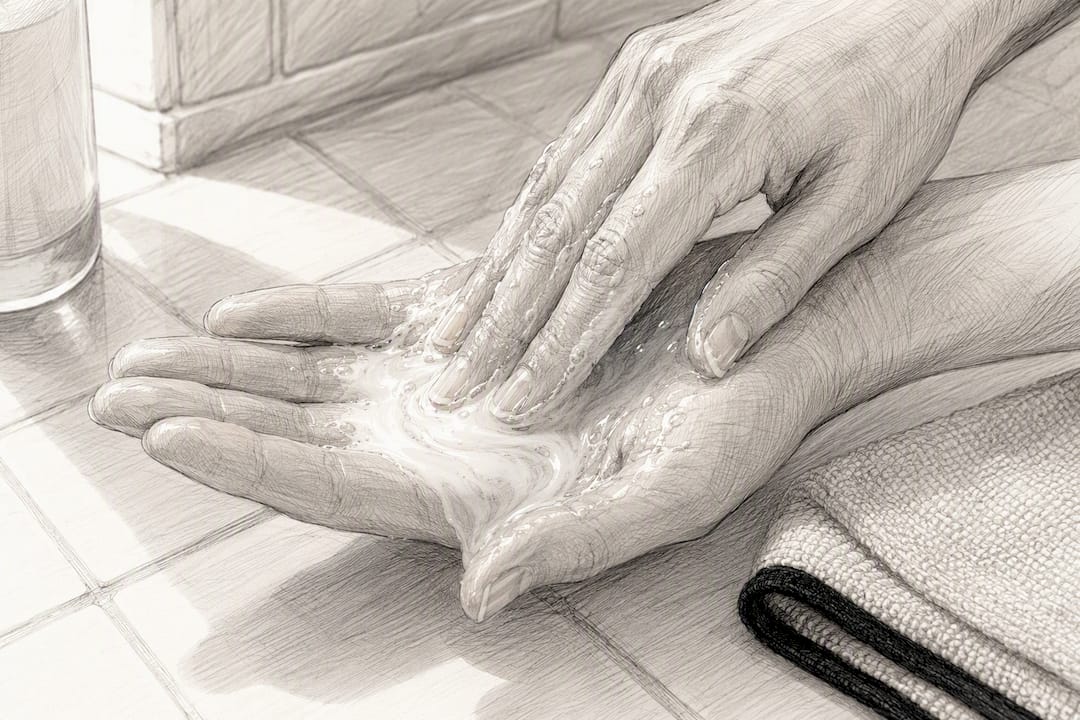
- Emulsification: wetting your hands and massaging turns the oil cleanser milky, which is the visual cue that it’s ready to rinse cleanly rather than leave a film.
Skip that emulsification stage and you’ll likely be left with the greasy residue people often blame on oil cleansers, when the real issue is technique.
What double cleansing benefits you’ll actually notice
The most immediate benefit is thorough removal. A single cleanse, however good, tends to leave a faint layer of sunscreen or long-wear foundation behind, particularly around the hairline and jaw. Double cleansing clears that residue properly, which matters because leftover SPF and makeup sitting on skin overnight is a common contributor to dull texture the next morning.
Reduced congestion is the second, more debated benefit. Research on cleansing and skin inflammation suggests that removing more of the day’s buildup can ease the low-grade congestion that contributes to clogged pores, and some people do report fewer breakouts once they adopt the habit consistently. This isn’t universal. It’s most noticeable in people who already deal with excess sebum or frequent congestion, rather than those with naturally clear, low-oil skin.
The third benefit is quieter but arguably the most valuable for anyone investing in serums or retinoids: better absorption. Active ingredients need to reach skin that isn’t sitting under a barrier of sunscreen filters or silicone-based primer. Once that layer is properly cleared, a night serum or retinoid has a genuinely clean surface to work on, rather than competing with leftover product.
Many people who switch to a consistent evening double cleanse notice a difference in texture and congestion within a short period, particularly if their previous routine involved a single wipe-down after heavy SPF or makeup use. That’s a realistic timeline to set expectations against, rather than the overnight transformation some product marketing implies.
- Sunscreen and waterproof makeup removed more completely than with one cleanse alone.
- Congestion and breakouts may ease for those prone to buildup, though results vary by skin type.
- Serums and treatments absorb more effectively once residue is gone.
- Textural changes are often noticeable within roughly a week of consistent evening use.
Who benefits from double cleansing and who should skip it
Not every face needs this routine every night, and the wrong candidate doing it daily can do real damage. The decision comes down to what’s on your skin that day and what condition your barrier is in.
People who typically benefit:
- Daily sunscreen wearers, especially with mineral or high-SPF formulas that sit heavier on skin.
- Regular makeup users, particularly with long-wear or waterproof products.
- Oily or congestion-prone skin dealing with visible blackheads or a persistent shine by evening.
People who should limit or avoid it:
- Dry or naturally dehydrated skin, where an extra cleanse can tip things into tightness and flaking.
- Sensitive, rosacea-prone, or eczema-affected skin, where surfactants and mechanical massage aggravate redness.
- Anyone using retinoids, undergoing active exfoliation, or recovering from a procedure such as microneedling or a peel.
Ask yourself three quick questions before reaching for the second cleanser: did you wear SPF or makeup today? Was it a particularly heavy, sweaty, or polluted day? And is your skin currently coping with retinoids or recent in-clinic treatment? A “no” to the first two, or a “yes” to the third, usually points towards a single, gentle cleanse instead.
How to double cleanse without damaging your barrier
Technique decides whether double cleansing helps or harms, and most of the mistakes people make happen in the first thirty seconds.
- Apply the oil-based cleanser to completely dry skin and face. Water at this stage stops the oil from binding properly to sebum and makeup.
- Massage for 30 to 60 seconds, working outward from the centre of the face, giving the oil time to break down sunscreen and pigment.
- Emulsify with lukewarm water. Wet your hands and continue massaging until the cleanser turns milky. This is the step dermatological technique guides flag as most often skipped, and skipping it is usually why people complain of greasy residue.
- Rinse thoroughly, then follow with a gentle, low-pH, sulfate-light water-based cleanser as step two.
- Massage for roughly 30 seconds, rinse, and pat the skin dry rather than rubbing.
- Apply moisturiser immediately while skin is still slightly damp, to lock in hydration before it evaporates.
Avoid hot water throughout, since heat strips lipids the oil step was designed to preserve, and skip any mechanical scrubbing or exfoliating brush during either phase. If you’re acne-prone, choose non-comedogenic formulas for both steps, including something like a dedicated cleansing oil for step one and a creamy, non-foaming wash for step two.
Micellar water is a useful lower-friction swap on nights when a full oil cleanse feels excessive but you still wore light makeup. On bare-faced mornings, most dermatology guidance points towards a single gentle cleanse rather than repeating the double step, since overnight lipid production still needs protecting.
Pro Tip: If your oil cleanser ever leaves a residue, you almost certainly stopped emulsifying too early. Keep massaging with wet hands until the texture visibly turns milky white before rinsing.
Risks of over-cleansing and how to protect your barrier
The stratum corneum, the outermost layer of skin, relies on an intact lipid structure to hold moisture in and irritants out. Harsh or excessive surfactant exposure degrades that barrier function over time, and double cleansing with the wrong products, or too frequently, accelerates the problem rather than solving it.
The warning signs are consistent: tightness straight after washing, visible flaking within a day or two, patches of redness, heightened sensitivity to products that never used to sting, and, confusingly, a rebound in oil production as skin tries to compensate for what’s been stripped.
- Tightness or a “squeaky clean” feeling immediately after cleansing.
- Flaking or rough texture appearing within 24 to 48 hours.
- Increased redness or stinging with previously well-tolerated products.
- Rebound oiliness as skin overcompensates for lost lipids.
The fix rarely means abandoning the method entirely. Switching to a genuinely mild, low-pH second cleanser reduces the damage compared with using a harsh, foaming formula twice, according to clinical guidance on cleansers and skin physiology. Cutting frequency to three or four evenings a week, pausing entirely during recovery from a procedure or retinoid ramp-up, and never skipping moisturiser afterwards all help skin recover without losing the benefits on the nights it’s genuinely needed. If irritation persists beyond a week of these adjustments, that’s a reasonable point to speak with a clinician rather than keep experimenting alone.
What clinicians actually recommend before you commit to it nightly
An effective approach leans on dermatologist-recommended, prescription-strength skincare and one-on-one consultations, which means product recommendations get matched to what someone’s barrier can genuinely tolerate rather than a generic routine., and that background shapes how the guidance here gets applied in practice.
A common scenario in consultations: someone double cleanses nightly with a foaming gel as step two, then develops persistent dryness and flaking. The usual fix is swapping the harsh foam for a gentle, creamy cleanser, sometimes without changing anything else about the routine, with symptoms settling within a week or two.
The conventional advice on double cleansing is too simplistic
Most skincare content treats double cleansing as a universal upgrade, something everyone should adopt regardless of skin type. That framing is where the advice falls down. The method is a targeted tool matched to specific exposures, sunscreen, makeup, pollution, heavy sebum, not a daily ritual that automatically improves every complexion.
What gets underrated is product choice over step count. Two genuinely gentle cleansers used correctly will almost always outperform one aggressive foaming wash, even when the aggressive option is used just once. The emphasis on “two steps equals better results” misses that a harsh second cleanser can undo everything the gentle oil step achieved.
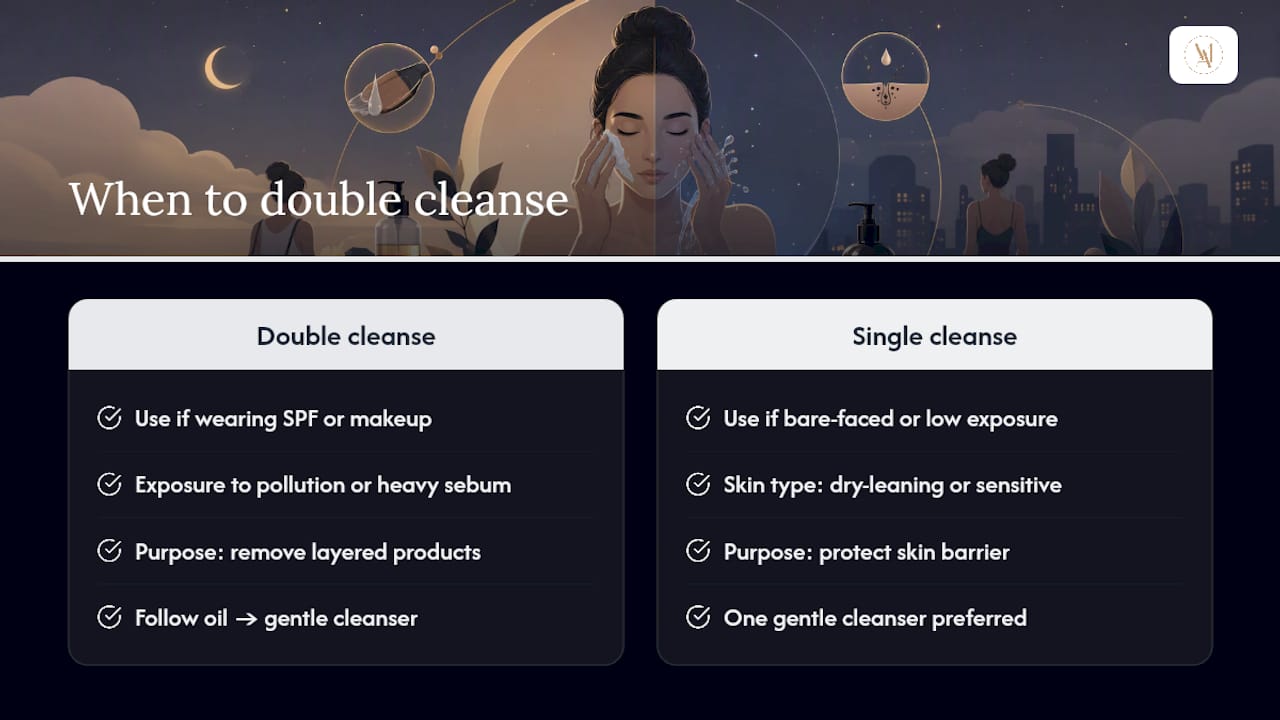
If you take one thing from this, prioritise reading your skin’s response over following a fixed rule. Wore SPF and makeup? Double cleanse properly. Bare-faced and dry-leaning? A single gentle wash protects more than it costs you. The people who get the best results are the ones adjusting nightly, not the ones treating the routine as gospel.
— Jess
Getting personalised advice on your cleansing routine
If you’re still unsure whether your skin needs two steps or one, that’s exactly the kind of question a proper consultation settles quickly, rather than months of trial and error. Them-ethod’s online skin consultation connects you directly with an expert clinician who can assess your barrier, your current products, and your actual exposures, then tell you plainly whether double cleansing helps you or is quietly undoing your progress.
For those ready to build the routine properly, the curated cleanser collection includes gentle, non-foaming formulas suited to step two, alongside oil-based options for step one. Readers dealing with barrier damage or considering in-clinic treatment can also explore Them-ethod’s clinic services for further support. Book a consultation today to get a routine matched to your skin, not a generic recommendation.
Sources
This guide draws on peer-reviewed research from NCBI on barrier function and clinical explainers from Cleveland Clinic on double cleansing practice.
- PMC article: cleansing and topical delivery (NCBI)
- PMC article on surfactants and barrier function (NCBI)
- PubMed entry on cleansers and skin physiology
FAQ
Is double cleansing necessary for everyone?
No. It benefits people who wear sunscreen, makeup, or have heavy sebum by evening, but dry, sensitive, or barrier-compromised skin often does better with a single gentle cleanse.
Do you need to double cleanse in the morning?
Most dermatology guidance recommends skipping it in the morning and using a single gentle cleanse or water instead, to preserve the lipids skin produces overnight.
What order should you double cleanse in?
Oil-based cleanser always goes first to dissolve sunscreen, sebum, and makeup, followed by a gentle, low-pH water-based cleanser to finish the clean.
Can double cleansing cause breakouts?
It can, but usually because the oil wasn’t emulsified properly or the second cleanser was too harsh, rather than because the method itself is flawed.
How do I know if double cleansing is damaging my skin?
Watch for tightness, flaking, redness, or a stinging sensation with usually well-tolerated products; if these appear, cut back frequency or speak with a clinician through a service like Them-ethod’s online skin consultation.