



Artikel: 12 Weeks to Fewer Bumps: Clinician Backed Azelaic Acid for Rosacea
12 Weeks to Fewer Bumps: Clinician Backed Azelaic Acid for Rosacea
Azelaic acid is a genuinely evidence-backed treatment for papulopustular rosacea, the subtype marked by inflamed bumps and pus-filled spots. Most people who respond see meaningful change by approximately twelve weeks of consistent, twice-daily use. It can sting on sensitive skin during the first fortnight, and it is not the tool of choice if your main complaint is flat, diffuse redness or visible thread veins rather than breakouts.
TL;DR:
- Azelaic acid typically takes about 12 weeks of consistent twice-daily use to show significant improvements in papulopustular rosacea.
- Prescription gel formulations are more rigorously tested and generally penetrate the skin more effectively than over-the-counter creams or serums with lower concentrations.
- The strongest evidence applies mainly to white patients with papulopustular rosacea, with limited data on other skin tones or redness-only symptoms.
- Side effects like stinging, burning, and dryness usually diminish after the first one to two weeks if the skin barrier is properly maintained.
- For persistent redness or visible blood vessels, vascular-targeted therapies like laser or light treatments are usually more effective than azelaic acid alone.
Table of Contents
- Azelaic acid for rosacea: what the clinical evidence shows
- How to apply azelaic acid for rosacea correctly
- Side effects, safety, and when to stop treatment
- Building a rosacea-friendly routine around azelaic acid
- When azelaic acid isn’t enough
- A clinician-informed take on realistic expectations
- Getting clinician guidance on azelaic acid and your rosacea subtype
- Sources
Azelaic acid for rosacea: what the clinical evidence shows
The strongest support comes from a 2023 systematic review and meta-analysis pooling data across roughly 20 rosacea studies. It found topical azelaic acid produced statistically significant reductions in inflammatory lesion counts and erythema severity compared with vehicle (the inactive base cream used as a control), with treatment success typically assessed at around twelve weeks.
That timeframe is not arbitrary. It matches the design of the pivotal trials behind the FDA-approved 15% azelaic acid gel label, where two multicentre, randomised, double-blind trials involving roughly 664 participants combined tested the gel applied twice daily for 12 weeks. Both showed statistically significant drops in papules and pustules against vehicle.
Head-to-head data adds useful context. Some trials found azelaic acid performed as well as, or better than, topical metronidazole for lesion reduction and erythema in mixed-population studies, a comparison worth knowing if a clinician has offered you either option. The Cochrane Library’s overview of rosacea interventions also rates the evidence for topical azelaic acid as moderate quality, which is part of why it sits among first-line topical agents in multiple dermatology guidelines.
The evidence has real boundaries worth knowing before you start:
- Trial populations skewed heavily towards white participants with papulopustular disease, so generalisability to other skin tones and rosacea presentations is less certain.
- Isolated facial erythema without papules or pustules has not been well studied, and product labelling is explicit that efficacy for redness alone hasn’t been evaluated the way lesion reduction has.
- Most pooled data reflects 12-week windows; longer-term comparative data is thinner than the short-term trial evidence.
Mechanistically, azelaic acid earns its results by working across several pathways at once. It has anti-inflammatory, antimicrobial, and antioxidant effects that together explain why it tends to calm both the visible bumps and the inflammation driving them, rather than targeting a single cause.
How to apply azelaic acid for rosacea correctly
Getting the technique right matters almost as much as choosing the product. The FDA-approved 15% gel is applied as a thin layer to affected areas twice daily, with response assessed over 12 weeks, and that labelling reflects the exact protocol used in its clinical trials.
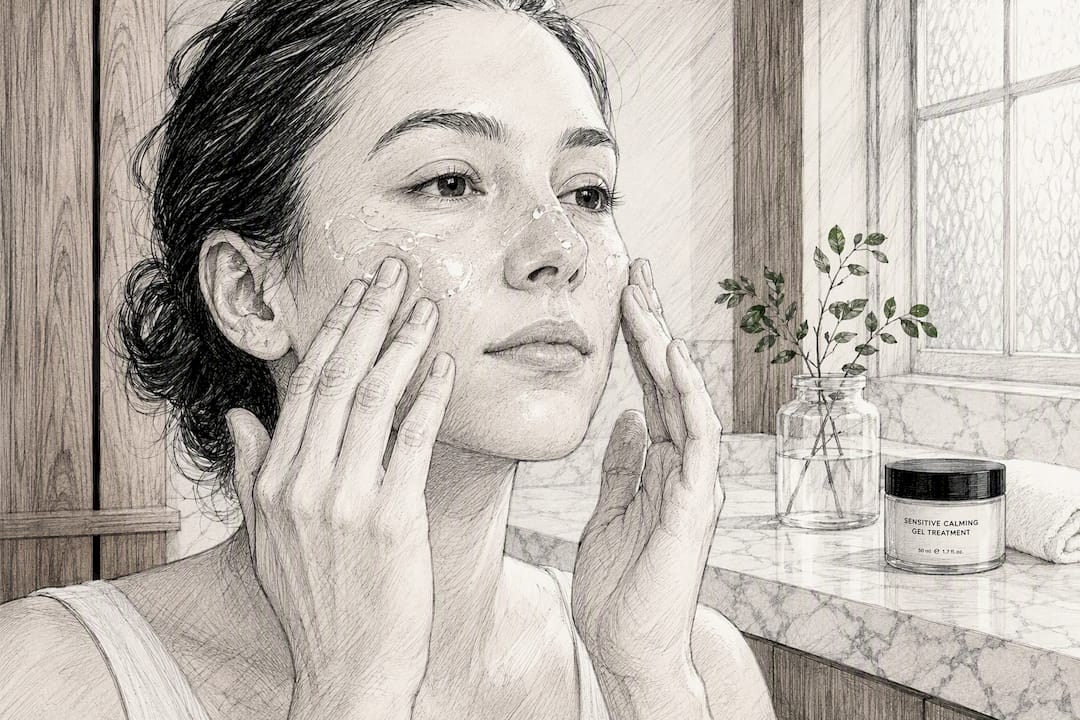
Over-the-counter azelaic acid comes in gentler concentrations, typically 10% or lower, often in richer cream or serum bases rather than the gel vehicle used in prescription formulas. A thicker moisturising base can feel more comfortable on reactive skin, but it may also slow how quickly the active ingredient penetrates, which is one reason prescription-strength gel remains the version most rigorously trial-tested.
A simple sequence works for most routines:
- Cleanse with a fragrance-free, non-foaming cleanser and pat the skin dry.
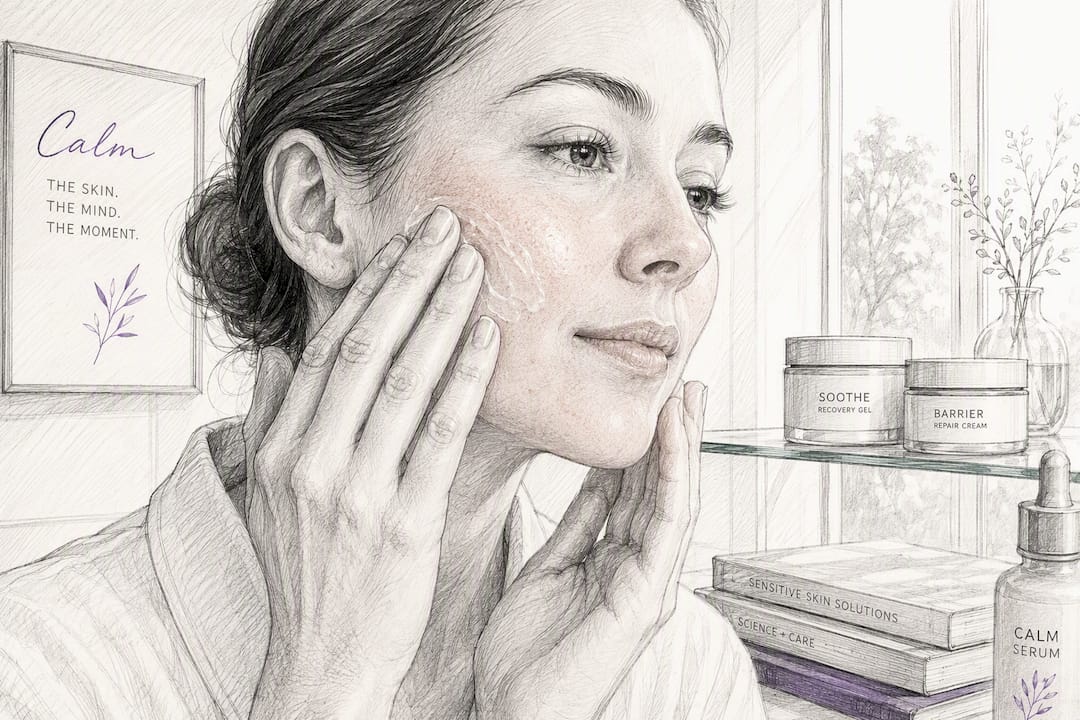
- Apply a thin layer of azelaic acid to the whole treatment area, not just individual spots.
- Wait a few minutes, then follow with a barrier-support moisturiser.
- In the morning, finish with a broad-spectrum mineral sunscreen of SPF 30 or higher.
Pro Tip: If your skin flushes or stings easily, start with short-contact application, leaving the gel on for a couple of hours before rinsing, or apply every other day for the first week. Build up to full twice-daily use as tolerance improves rather than starting at full strength from day one.
Side effects, safety, and when to stop treatment
Stinging, burning, and mild dryness are the most common reactions, and they’re usually strongest in the first one to two weeks before settling as your skin adjusts. Applying to fully dry skin and pairing it with a bland, barrier-repair moisturiser reduces most of this discomfort.
Watch for signs that go beyond normal irritation:
- Swelling, hives, or a rash that spreads beyond the treatment area.
- Persistent itching or difficulty breathing, which warrant stopping immediately and seeking medical care.
- Skin that becomes more inflamed or painful rather than gradually improving.
If you’re pregnant, planning pregnancy, or breastfeeding, check with your clinician before starting treatment, since topical use in these circumstances should be individually assessed. Mayo Clinic guidance also recommends a clinician review if there’s no visible improvement within about twelve weeks, or if symptoms worsen at any point. Rosacea can behave unpredictably, and a partial or absent response is a legitimate reason to reassess the plan rather than push through indefinitely.
Building a rosacea-friendly routine around azelaic acid
Azelaic acid performs better, and irritates less, when the rest of your routine is built to protect the skin barrier rather than fight against it. The American Academy of Dermatology frames this as three pillars working together: a gentle fragrance-free cleanser, a barrier-repair moisturiser, and daily mineral sunscreen.
What to avoid is just as important as what to include:
- Alcohol-based toners and astringents, which strip the barrier and increase stinging.
- Fragranced products, physical exfoliants, and AHA/BHA acids used alongside azelaic acid.
- Menthol, camphor, and sodium lauryl sulphate, all common triggers for reactive skin.
Layer treatment before moisturiser, and reserve sunscreen for mornings only. If you’re managing rosacea alongside oral treatments or maintenance therapy, this same layering order applies. Our rosacea skincare routine guide walks through a full daily sequence, and our sunscreen selection guide covers mineral formulas that won’t sting compromised skin.
Pro Tip: Introduce one new product at a time when building a rosacea routine. If irritation appears, you’ll know exactly which product to adjust instead of restarting the whole regimen.
When azelaic acid isn’t enough
Azelaic acid is built to treat papules and pustules, not the flushed, persistently red complexion that comes from visible blood vessels or diffuse background erythema. If that’s your dominant symptom, vascular-targeted therapies tend to make more difference than any topical alone.
For moderate to severe disease, or when azelaic acid alone plateaus, clinicians often add:
- Oral antibiotics or topical ivermectin/metronidazole as adjuncts or alternatives.
- Pulsed dye laser or intense pulsed light (IPL) for persistent redness and visible vessels.
- Combination regimens that pair a topical with maintenance therapy over the longer term.
A dermatologist consultation is worthwhile whenever 12 weeks of consistent use hasn’t shifted things, or your rosacea subtype seems mixed.
A clinician-informed take on realistic expectations
Most disappointment with azelaic acid comes from mismatched expectations, not treatment failure. Clinicians typically start patients low and slow, build to twice daily over a fortnight, and judge success at 12 weeks, not two. It rewards patience over intensity. What we see repeatedly is that adherence, not concentration, decides outcomes: the person who tolerates once-daily application consistently for three months outperforms the one who quits after a week of stinging. Guided product selection removes much of that guesswork.
— Jess
Getting clinician guidance on azelaic acid and your rosacea subtype
Rosacea rarely fits one neat box, and choosing between over-the-counter and prescription-strength azelaic acid is easier with an accurate diagnosis first. Them-ethod’s virtual consultations connect you with clinicians who can confirm your rosacea subtype, assess whether azelaic acid suits your presentation, and guide access to prescription-strength options where appropriate, alongside curated medical-grade products chosen to support tolerance rather than fight against it. If you’d rather explore complementary supportive care first, our partner guide on gentle rosacea skincare is a useful starting point. When you’re ready for clinically backed, barrier-friendly formulations to pair with treatment, browse the NeoStrata collection or book a consultation to get a plan built around your skin, not a generic protocol.
This article is general information, not a substitute for advice from a qualified doctor. Consult a qualified healthcare professional about your own circumstances before acting on anything here.
Sources
- A systematic review to evaluate the efficacy of azelaic acid in the management of acne, rosacea, melasma and skin aging (King, 2023)
- DailyMed - AZELAIC ACID GEL label (15%)
- Mayo Clinic — Azelaic acid (topical route) - Side effects & dosage