




Artikel: 10 advantages of dermatologist consultations for your skin
10 advantages of dermatologist consultations for your skin
Seeing a dermatologist reliably improves diagnostic accuracy, unlocks prescription-strength treatments, and makes aesthetic procedures significantly safer. Whether your concern is a changing mole, persistent acne, or pigmentation you cannot shift with over-the-counter products, specialist input changes outcomes in ways that general advice simply cannot match. Here are the advantages that matter most:
- Accurate diagnosis of conditions that mimic each other (eczema vs. psoriasis, for example)
- Early skin cancer detection through full-body exams and dermoscopy
- Prescription access to retinoids, biologics, antibiotics, and phototherapy
- Long-term management of chronic conditions such as acne, rosacea, and eczema
- Medically supervised cosmetic treatments with reduced complication risk
- Personalised prevention plans tailored to your skin type and history
- Reassurance when a lesion turns out to be benign, and clarity when it is not
You can book a consultation in person or, for many concerns, online through a virtual skin consultation. Read on for the clinical detail behind each advantage.
Pro Tip: If you are unsure whether your concern warrants a specialist, err on the side of booking. Dermatologists regularly identify secondary issues during an appointment that the patient did not even come in for.
Key takeaways
Dermatologist consultations improve diagnostic accuracy, unlock prescription-strength treatments, and deliver better long-term adherence than self-managed skincare, making specialist input one of the most effective investments in skin health.
| Point | Details |
|---|---|
| Diagnostic breadth | Dermatologists diagnose over 3,000 skin, hair, and nail conditions, reducing misdiagnosis. |
| Adherence improvement | Expert-guided regimens show 35% better adherence than self-selected routines. |
| Prescription access | Specialist prescriptions unlock biologics, retinoids, and phototherapy unavailable OTC. |
| Teledermatology | Virtual consultations suit triage and follow-ups; in-person is required for biopsies and procedures. |
| Them-ethod | Offers virtual skin consultations and medical-grade products, with in-clinic treatments in London and Athens. |
Table of Contents
- 1. Dermatologists give you a faster, more accurate diagnosis
- 2. Skin cancer detection is one of the most critical benefits
- 3. Prescription treatments deliver results that OTC products cannot
- 4. Cosmetic and aesthetic treatments are safer under medical supervision
- 5. What to expect in a consultation and how to prepare
- 6. Teledermatology versus in-person: which is right for you?
- 7. When to see a dermatologist: red flags, frequency, and UK costs
- 8. What the evidence shows about outcomes and adherence
- What we see in practice: a clinician’s perspective
- Book a virtual or in-clinic consultation with Them-ethod
- Sources
1. Dermatologists give you a faster, more accurate diagnosis
The single greatest advantage of a dermatology consultation is diagnostic precision. Dermatologists diagnose and treat more than 3,000 conditions of the skin, hair, and nails, a breadth of training that general practitioners simply cannot replicate within a standard appointment. That depth matters because many skin conditions share surface features: seborrhoeic dermatitis and psoriasis look similar; rosacea is routinely mistaken for acne; early melanoma can resemble a benign seborrhoeic keratosis.
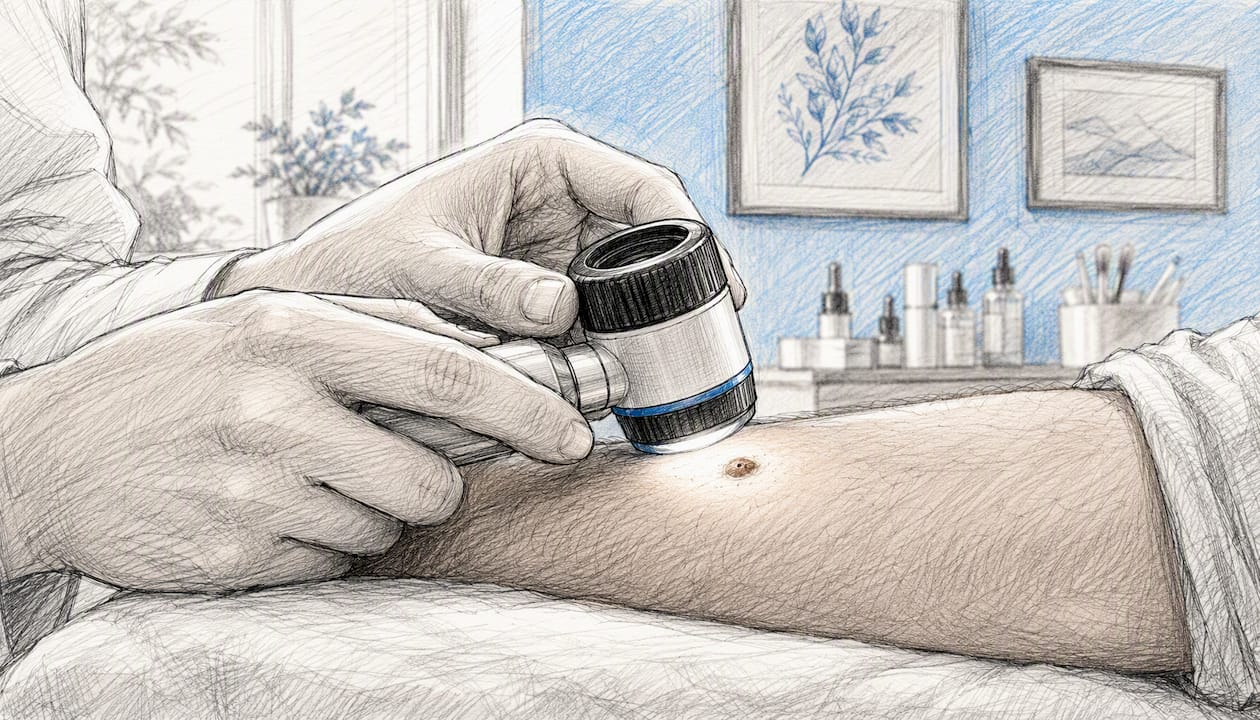
Specialist tools sharpen that accuracy further. Dermoscopy, a non-invasive technique using a handheld illuminated lens, reveals subsurface structures invisible to the naked eye, allowing a trained clinician to distinguish a dysplastic naevus from a melanoma with far greater confidence. When visual assessment is insufficient, a punch or shave biopsy provides histological confirmation. Both the NHS and the British Association of Dermatologists recommend specialist review for any lesion that changes in size, shape, or colour, or that bleeds without obvious cause.
Pro Tip: Photograph any changing lesion weekly for four to six weeks before your appointment. A time-stamped photo sequence gives the clinician objective evidence of change, which is far more useful than a verbal description.
2. Skin cancer detection is one of the most critical benefits
Skin cancer is the most common cancer in the UK, and early detection is the single factor most strongly associated with survival. A dermatologist can perform a full-body skin exam, systematically reviewing every surface area, including the scalp, between toes, and under nails, where patients rarely look themselves. Crucially, the clinician may identify a high-risk lesion that is not the one you came in about.

Northwell Health guidance notes that regular dermatology visits enable early detection and allow monitoring of risk factors over time, particularly for people with a personal or family history of melanoma, fair skin, or significant cumulative sun exposure. The British Skin Foundation supports annual full-body checks for higher-risk individuals as a preventive strategy.
Red flags that make an urgent appointment necessary:
- A mole that changes in size, shape, or colour over weeks
- A sore that does not heal within four weeks
- A lesion that bleeds spontaneously or itches persistently
- A new dark streak under a fingernail or toenail
- Any rapidly growing lump or nodule
3. Prescription treatments deliver results that OTC products cannot
When over-the-counter products have failed, a dermatologist’s prescription pad is often the turning point. Specialists can prescribe topical retinoids at concentrations unavailable without a prescription, oral antibiotics for inflammatory acne, isotretinoin for severe or scarring acne, and systemic immunosuppressants or biologics for moderate-to-severe psoriasis and atopic eczema. University of Utah Health confirms that dermatologists manage serious or persistent conditions using prescription medicines, phototherapy, and procedures that are not available over the counter.
Consider a patient who has cycled through every pharmacy acne product for two years without lasting improvement. A dermatologist can assess whether the acne is hormonal, bacterial, or comedonal, then prescribe accordingly. For someone with chronic eczema, a specialist can introduce dupilumab, a biologic that targets the specific inflammatory pathway driving the condition, rather than relying on repeated courses of topical steroids.
Common treatment pathways a dermatologist may use:
- Topical therapies: prescription retinoids, calcineurin inhibitors, high-potency corticosteroids
- Oral medications: antibiotics, spironolactone, isotretinoin, methotrexate
- Biologics: dupilumab (eczema), secukinumab (psoriasis)
- Phototherapy: narrowband UVB for psoriasis, vitiligo, and eczema
- Minor procedures: cryotherapy, curettage, intralesional steroid injections
Pro Tip: Bring a written list of every product you currently use, including supplements, and every treatment you have tried in the past two years. This prevents the clinician from prescribing something you have already failed and speeds up the route to an effective plan.
4. Cosmetic and aesthetic treatments are safer under medical supervision
Medical oversight is what separates a well-executed cosmetic procedure from a complication. A dermatologist assesses your skin type, Fitzpatrick classification, medical history, and current medications before recommending any aesthetic intervention, which materially reduces the risk of adverse outcomes such as post-inflammatory hyperpigmentation, scarring, or infection.
Clinically administered cosmetic options include:
- Chemical peels (superficial to deep, matched to skin type and concern)
- Prescription retinoids for collagen stimulation and pigmentation correction
- Laser and light therapies for vascular lesions, pigmentation, and resurfacing
- Micro-needling (such as FDA-approved SkinPen) for texture and scarring
- Injectables: anti-wrinkle injections, Profhilo, polynucleotides, and HIFU for non-surgical lifting
Medical-grade products prescribed or recommended by a dermatologist contain active ingredients at concentrations that require professional guidance for safe use. Cleveland Clinic notes that professional consultations save time and money long term by directing patients to evidence-based regimens and away from ineffective product cycles. For evidence-based anti-ageing strategies, the Them-ethod anti-ageing guide covers approaches recommended by clinicians in detail.
Skin care expert advantage: Any invasive or ablative procedure, including deep peels, laser resurfacing, or injectables, requires an in-person assessment before treatment. No responsible clinician will perform these remotely.
5. What to expect in a consultation and how to prepare
A dermatology consultation, whether in person or virtual, follows a consistent structure. The clinician takes a full history (onset, triggers, previous treatments, family history, medications, and allergies), examines the affected area, arrives at a working diagnosis, and then presents a treatment plan with prescriptions or referrals as appropriate.
Preparation checklist:
- Current skincare products (or a photographed list of them)
- A symptom diary noting when flares occur and what seems to trigger them
- Photos of the skin at its worst, ideally time-stamped
- A list of all medications and supplements
- Details of any known allergies or previous adverse reactions
- Questions you want answered before you leave
For virtual consultations specifically:
- Use natural daylight or a ring light for clear, accurate colour representation
- Take close-up photos of the affected area before the call, from multiple angles
- Find a private space with a stable internet connection
- Have your product list and symptom diary open and ready to share on screen
- Confirm the follow-up process: will prescriptions be sent electronically, and when should you expect them?
Circle Health Group confirms that patients who arrive prepared with documented histories and clear photos enable clinicians to move beyond surface recommendations to evidence-based protocols, improving personalised treatment accuracy.
Pro Tip: A prepared patient shortens the consultation and reduces unnecessary repeat visits. Clinicians report that a symptom diary and product list are the two most useful things a patient can bring.
6. Teledermatology versus in-person: which is right for you?
Teledermatology improves access and continuity but has clear limits when physical examination or procedures are required. Understanding which mode fits your concern saves time and gets you to the right care faster.
Teledermatology works well for:
- Routine acne or rosacea follow-ups
- Prescription renewals and medication adjustments
- Initial triage of a new rash or lesion (to determine urgency)
- Skincare regimen reviews and product guidance
- Post-procedure check-ins
In-person is required for:
- Any lesion that may need a biopsy
- Surgical procedures (excisions, Mohs surgery)
- Complex or widespread rashes requiring full-body examination
- Conditions where dermoscopy or Wood’s lamp assessment is needed
- Phototherapy
Quick decision rules:
- If you can describe and photograph the concern clearly, a virtual triage is a reasonable first step.
- If the lesion is changing rapidly, bleeding, or you have been told previously it needs monitoring, book in person.
- If a teleconsult clinician recommends an in-person review, treat that as a priority, not a suggestion.
sk:n Clinics notes that nurse-led or initial consultations are useful for mild concerns, but specialist dermatology input is recommended for persistent or complex issues. A teleconsult will often prompt an in-person referral when the clinical picture is unclear or a physical test is needed. For practical guidance on preparing for an online appointment, the Them-ethod online consultation guide covers the process step by step.
7. When to see a dermatologist: red flags, frequency, and UK costs
Book urgently if you notice:
- A mole or lesion that has changed in size, shape, or colour within weeks
- A sore that has not healed after four weeks
- Sudden, widespread rash with fever or systemic symptoms
- Intense pain, swelling, or signs of skin infection spreading rapidly
- A new dark line under a nail without a history of trauma
For routine screening, Northwell Health recommends annual full-body checks for people at higher risk: those with a personal or family history of melanoma, many moles, fair skin, or significant sun exposure history. Lower-risk individuals may need a specialist review only when a new concern arises.
UK pathways and typical timelines:
Private costs vary by clinic, location, and clinician seniority. London-based specialist clinics tend to sit at the higher end of these ranges. After a private consultation, prescriptions are typically issued the same day; NHS prescriptions follow the standard dispensing process.
8. What the evidence shows about outcomes and adherence
Specialist input consistently improves both diagnostic accuracy and treatment outcomes compared with self-management or general practice alone. The British Association of Dermatologists publishes clinical guidelines that underpin dermatology practice across the UK, and bodies such as MD Anderson and Cleveland Clinic have documented the value of specialist-led care in reducing misdiagnosis and improving long-term disease control.
Adherence is where the gap between advice and outcomes is most visible. Proprietary data published by Them-ethod shows that consulting a skincare expert leads to 35% better adherence to prescribed skincare regimens, measured against patients who self-select products without clinical guidance. That figure reflects a consistent pattern: when a patient understands why a regimen was chosen for their specific skin type and condition, they follow it.
| Outcome area | What specialist care delivers |
|---|---|
| Diagnostic accuracy | Dermoscopy and biopsy reduce misdiagnosis of ambiguous lesions |
| Treatment response | Prescription-grade therapies outperform OTC alternatives for moderate-to-severe conditions |
| Adherence | Expert-guided regimens show 35% better adherence than self-selected routines |
| Prevention | Annual full-body checks enable early detection and risk stratification |
Pro Tip: Ask your dermatologist to explain the mechanism behind each prescribed treatment. Understanding why a retinoid or biologic works for your specific condition is the single strongest predictor of whether you will stick with it.
For a deeper look at how preparation improves consultation quality, the Them-ethod consultation best practices guide outlines what clinicians look for and how to make the most of your appointment time.
What we see in practice: a clinician’s perspective
The most consistent finding across consultations is that patients arrive having already spent considerable time and money on products that were not wrong, exactly, but were not right for their specific skin. A well-formulated vitamin C serum is a reasonable choice in the abstract. Applied to a compromised barrier with active rosacea, it is an irritant. That gap between general advice and personalised clinical assessment is where dermatology consultations deliver their clearest value.
What strikes us most is how often a single consultation resolves months of confusion. Not because the clinician has access to some secret knowledge, but because they can examine the skin directly, ask the right questions in the right order, and prescribe something the patient could not access on their own. The reassurance element is underestimated, too. Patients who have been anxious about a lesion for weeks leave with either a clear diagnosis or a biopsy arranged, and that certainty, in either direction, has real clinical value.
Virtual consultations have expanded access meaningfully, particularly for patients outside major cities or those managing conditions that require frequent regimen adjustments. The limits are real, as outlined earlier, but for the right concern, a well-prepared online appointment with a qualified clinician is not a compromise. It is simply a different, and often faster, route to the same standard of care.
Book a virtual or in-clinic consultation with Them-ethod
Them-ethod offers virtual skin consultations with expert clinicians, giving you direct access to prescription-strength skincare guidance without a lengthy wait. For readers who have been cycling through products without results, a single consultation can redirect that effort toward a regimen that is actually matched to your skin type, condition, and goals.
The process is straightforward: book your virtual consultation through the Them-ethod website, complete a pre-consultation skin questionnaire, and attend your video appointment with your product list and photos ready. Your clinician will review your history, assess your skin, and provide a personalised plan, including prescription recommendations where appropriate. For concerns that require an in-person assessment, such as a suspicious lesion or an injectable treatment, the team will advise you accordingly and guide you to the right next step.
Them-ethod also stocks a curated range of medical-grade products, including the PCA Skin ClearSkin Acne Treatment Serum for acne-prone skin and the PCA Retinol Night 0.5% for anti-ageing and pigmentation. In-clinic aesthetic treatments are available in London and Athens. Book your consultation at Them-ethod.
Sources
The following resources informed this article and are worth consulting directly for clinical guidance and patient information.
- When to see a dermatologist about a skin change | MD Anderson
- When Should You See a Dermatologist? | University of Utah Health
- When to See a Dermatologist | Verywell Health
- 4 reasons you need to see a dermatologist | Northwell Health
This article is general information, not a substitute for advice from a qualified doctor. Consult a qualified healthcare professional about your own circumstances before acting on anything here.