



Artikel: Advanced skincare devices: What works, what doesn't, and how to choose
Advanced skincare devices: What works, what doesn't, and how to choose
TL;DR:
- Advanced skincare devices vary in effectiveness depending on skin type and concern.
- Clinical results depend on proper device selection, parameters, and individual factors.
- Home devices support maintenance but cannot replace professional treatments for moderate to severe issues.
Not every advanced skincare device delivers the results its marketing promises. The sheer volume of energy-based technologies now available, from fractional lasers to radiofrequency microneedling and LED panels, has created a landscape where enthusiasm frequently outpaces evidence. Many people invest significantly in devices without understanding the clinical rationale behind them, or whether a particular technology is even suited to their skin type and concern. This article cuts through the noise. We cover the core device categories, the clinical evidence supporting each, realistic expectations, and the nuances that determine whether a treatment plan will succeed or fall short.
Table of Contents
- Unlocking the science: Device types and what they do
- Clinical results: What to expect from advanced devices
- Expert insights: How parameters and personal factors matter
- Home-use versus in-clinic: Maintenance, synergy, and limitations
- Our perspective: What most advanced skincare guides don’t tell you
- Want expert guidance on advanced skincare devices?
- Frequently asked questions
Key Takeaways
| Point | Details |
|---|---|
| Device choice matters | Different skincare devices suit different concerns and skin types, with no ‘one-size-fits-all’ solution. |
| Professional vs. at-home | Professional devices deliver faster, deeper results, while at-home tools are ideal for maintenance and synergy. |
| Safety first | Skin of colour requires careful parameter selection to minimise pigment risks, with RF microneedling usually safest. |
| Evidence limitations | Most studies are small and short-term, so consult with professionals for personalised, evidence-led advice. |
Unlocking the science: Device types and what they do
With so many devices on the market, let’s start with the foundational science. Understanding how technology transforms routines begins with knowing what each device category actually does at a tissue level, not just what the brochure claims.
Energy-based devices (EBDs) work by delivering controlled energy, whether light, heat, or radiofrequency, into the skin to trigger specific biological responses. The target tissue, depth of penetration, and energy type determine which concerns each device addresses most effectively.
| Device type | Primary mechanism | Best suited for |
|---|---|---|
| Fractional laser | Ablative or non-ablative micro-columns of heat | Scarring, texture, fine lines |
| Nd:YAG laser | Long-wavelength light targeting deeper chromophores | Vascular concerns, darker skin types |
| Picosecond laser | Ultra-short pulses breaking pigment into fine particles | Pigmentation, tattoo removal |
| RF microneedling | Radiofrequency energy delivered via insulated needles | Laxity, wrinkles, scars, pigmentation |
| IPL (intense pulsed light) | Broad-spectrum light targeting melanin and haemoglobin | Redness, pigmentation, mild acne |
| LED therapy | Low-level light stimulating cellular activity | Acne, inflammation, mild rejuvenation |
EBDs including fractional lasers, Nd:YAG, picosecond lasers, RF microneedling, IPL, and LED are all clinically validated for acne, scarring, and post-inflammatory hyperpigmentation (PIH), with RF microneedling demonstrating notably minimal pigmentary risk. This is a critical distinction for anyone with a medium to deep skin tone.
Key considerations when selecting a device category:
- Skin tone matters enormously. Devices that target melanin carry a higher risk of PIH in darker skin.
- Concern specificity is essential. A device optimised for vascular redness will not deliver the same collagen stimulus as RF microneedling.
- Depth of action separates superficial from structural change. LED works at the surface; RF microneedling reaches the dermis.
RF microneedling induces neocollagenesis, improving wrinkles, scars, pigmentation, and vascular concerns with minimal epidermal damage, making it one of the most versatile options currently available.
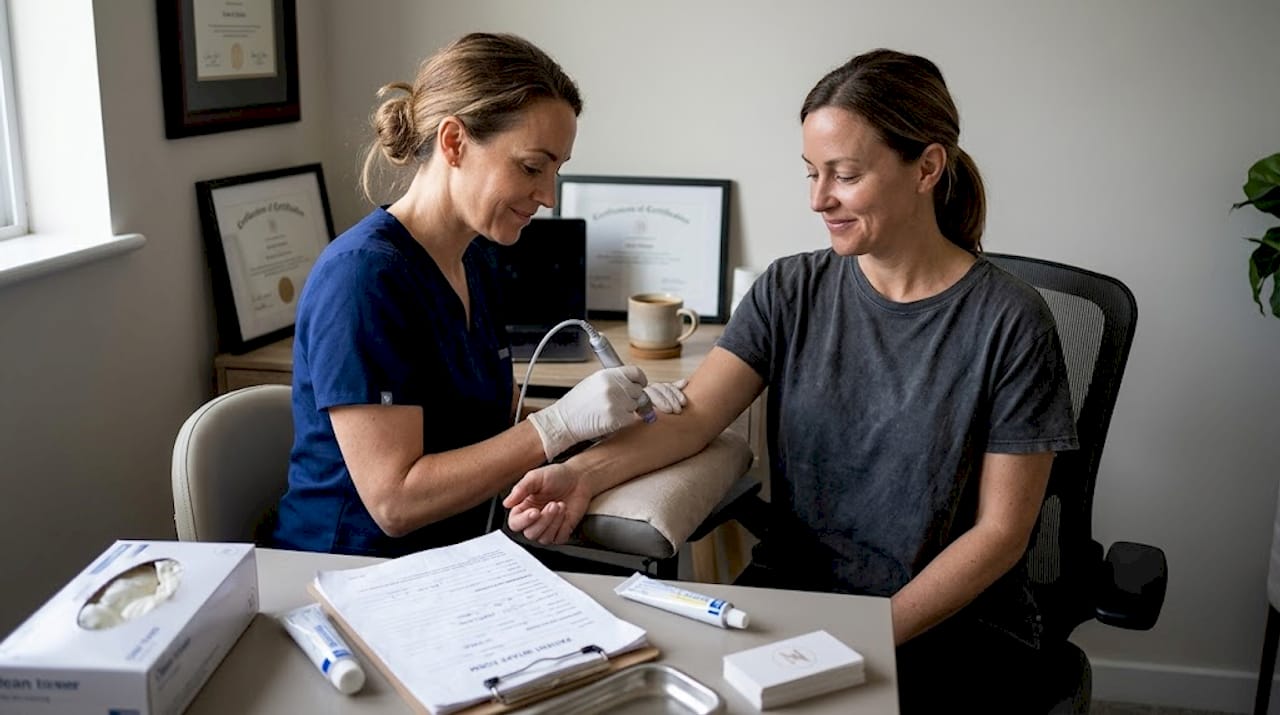
Pro Tip: Before committing to any device, identify your primary skin concern and your Fitzpatrick skin type. These two factors alone will eliminate several categories and point you towards the safest, most effective option for your individual profile.
If you are still exploring the basics, our guide to at-home skincare tools offers a useful starting point before stepping up to clinical-grade technology.
Clinical results: What to expect from advanced devices
Now that you know what each device does, what results should you realistically expect from clinical use? The evidence is encouraging, but the numbers vary considerably depending on the device, the concern being treated, and the individual.
| Device | Concern | Typical improvement | Sessions needed |
|---|---|---|---|
| IPL | Acne lesions | 42 to 62% reduction | 4 to 6 |
| PDL (pulsed dye laser) | Acne | Up to 82.5% reduction | 3 to 5 |
| Combined PDL/Nd:YAG | Acne | Up to 83.5% reduction | 3 to 5 |
| RF microneedling | Wrinkles | 25 to 43% reduction | 3 to 4 |
| RF microneedling | Skin thickness | Over 40% improvement | 3 to 4 |
| LED (blue light) | Mild acne | Moderate reduction | 8 to 12 |
These figures come directly from clinical research. IPL reduces acne lesions by 42 to 62%, while combined PDL and Nd:YAG devices achieve reductions of up to 83.5%. That is a meaningful gap, and it illustrates why device selection matters far more than simply choosing the most well-known brand.
For structural skin concerns, RF microneedling improves skin thickness by over 40% and reduces wrinkles by 25 to 43%, results that rival many injectable treatments without the same downtime profile.
Here is a practical framework for setting expectations:
- Define your primary concern before your first consultation. Acne, pigmentation, and laxity each respond to different devices.
- Ask about session frequency. Most clinical devices require a course of treatments, not a single session.
- Expect a maintenance phase. Initial results improve over weeks as collagen remodels; maintenance sessions sustain them.
- Track your progress. Standardised photography at each visit gives you objective data rather than subjective impressions.
For a broader view of how professional devices and outcomes compare across different treatment modalities, we recommend reviewing the clinical benchmarks before committing to a course of treatment.
Expert insights: How parameters and personal factors matter
Evidence is only half the story, and the finer details can make all the difference. Two people receiving the same device treatment can have dramatically different outcomes based on their skin type, previous treatments, and the settings used by their clinician.
Fluence (energy density), pulse duration, wavelength, and cooling protocols are not arbitrary. They are calibrated to your skin’s specific characteristics. A clinician treating a Fitzpatrick type II patient with the same parameters used for a type V patient is not practising evidence-based medicine.
Best-practice research consistently recommends conservative fluence settings, longer wavelengths, and adequate cooling for patients with darker skin tones to minimise the risk of adverse pigmentary changes.
Key factors to discuss with your provider before any advanced device treatment:
- Fitzpatrick skin type and recent sun exposure, which directly influence safe energy parameters
- History of PIH or melasma, which signals a need for pre-treatment with topical agents
- Current skincare regimen, including retinoids or exfoliating acids that may affect skin sensitivity
- Previous device treatments and any adverse reactions
- Realistic goals and timeline, as some concerns require months of consistent treatment
Higher fluence and density increase PIH risk in skin of colour, and RF microneedling is specifically preferred in these cases due to its chromophore-independent mechanism. Unlike light-based devices, RF energy does not target melanin, which is precisely why it is safer across a wider range of skin tones.
Pro Tip: If you have medium to deep skin and are considering laser or IPL, ask your clinician specifically about their experience treating your Fitzpatrick type. A clinician who routinely works with diverse skin tones will approach your treatment very differently from one who does not.
For those managing pigmentation concerns, our dedicated guide on protocols for pigmentation in skin of colour outlines the clinical approach we take at The M-ethod.
Home-use versus in-clinic: Maintenance, synergy, and limitations
Many enthusiasts now mix and match at-home tools with professional treatments, but where is the line between maintenance and real change? The answer lies in understanding what home devices are genuinely capable of, and where they reach their ceiling.
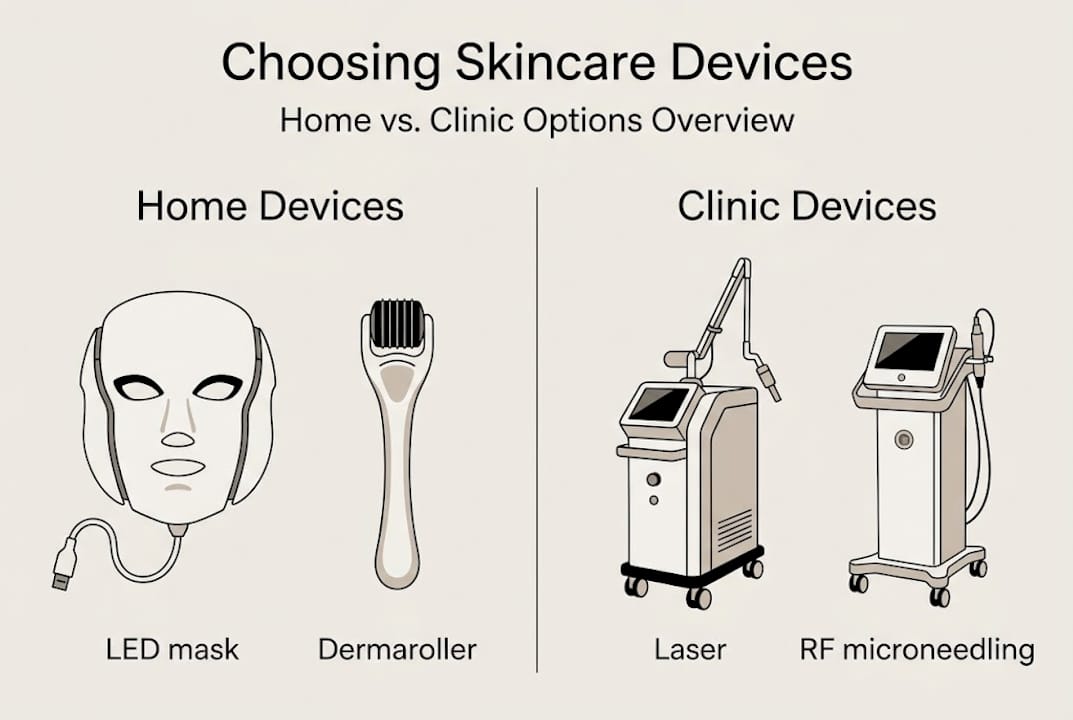
Professional devices penetrate deeper and use higher energy02376-X/abstract), producing faster and more powerful results, while at-home devices are best suited to maintenance, particularly when combined with well-chosen topical products. This is not a criticism of home technology. It is a realistic framing of its role.
Limitations of home-use devices:
- Lower energy output to meet consumer safety regulations, which limits depth of action
- Reduced efficacy for moderate to severe concerns such as deep scarring or significant laxity
- No real-time clinical adjustment based on skin response
- Inconsistent technique without professional guidance can reduce results or cause irritation
Short-term, small-scale studies continue to limit the current evidence base for home devices, and the debate over their efficacy relative to professional options remains active in dermatological literature.
That said, home devices used intelligently as part of a structured plan can meaningfully extend the results of clinical treatments. Here is how to build a synergistic routine:
- Complete your clinical course first. Establish the baseline improvement with professional treatment before introducing home maintenance.
- Choose a home device that complements your clinical treatment. LED panels work well alongside RF microneedling courses; low-level laser therapy can support scalp health between clinic visits.
- Pair with targeted topicals. Vitamin C, niacinamide, and retinoids amplify device outcomes when used correctly.
- Schedule periodic clinical reviews. Every three to six months, reassess with your clinician to determine whether a top-up session is warranted.
For a detailed breakdown of at-home skincare tools explained and guidance on when to choose in-clinic devices, we have covered both perspectives in depth.
Our perspective: What most advanced skincare guides don’t tell you
Here is something the statistics and expert headlines do not always make clear: the most impressive clinical numbers come from controlled research environments, not from the average consumer’s bathroom or even every clinic’s treatment room. Study populations are often small, follow-up periods are short, and protocols are tightly controlled in ways that everyday practice simply cannot replicate.
We see the consequences of this gap regularly. Clients arrive having purchased high-end devices based on a single study or a social media recommendation, without any consideration of whether that device suits their skin type, concern, or lifestyle. The result is frustration, and occasionally, avoidable adverse effects.
The uncomfortable truth is that the device itself is rarely the deciding factor. What shapes realistic outcomes from devices is the totality of your regimen, the expertise of your clinician, the quality of your supporting skincare, and the consistency of your approach. Chasing the newest model without this foundation is an expensive distraction.
Want expert guidance on advanced skincare devices?
Ready to take the next step with your skincare journey? At The M-ethod, we take a clinical, evidence-led approach to every skin concern, whether you are managing acne, targeting stubborn pigmentation, or addressing early signs of ageing. Our curated product range is designed to complement and maintain device results between treatments. Explore our acne treatment from The M-ethod or browse even skin solutions formulated to work alongside professional protocols. For personalised recommendations tailored to your skin type and treatment history, visit The M-ethod to book a virtual consultation with one of our expert clinicians.
Frequently asked questions
Which advanced skincare device works best for pigmentation?
RF microneedling and long-wavelength lasers are the safest and most effective options for pigmentation, particularly in darker skin tones, because RF microneedling is safe for pigmentation in skin of colour due to its low risk of post-inflammatory hyperpigmentation.
Can I use home devices instead of in-clinic treatments?
Home devices are best suited to maintenance and mild concerns. Professional devices yield faster results02376-X/abstract) with deeper penetration, making them the stronger choice for moderate to severe skin concerns.
What risks should I consider when choosing a device for skin of colour?
The primary risk is post-inflammatory hyperpigmentation. Higher PIH risk in skin of colour is well documented with certain light-based devices, which is why RF microneedling and long-wavelength lasers are generally preferred.
How quickly can I see results from advanced devices?
Significant improvements at 30 days have been recorded for wrinkles, pigmentation, and vascular parameters following RF microneedling, though full results continue to develop as collagen remodels over several months.