





Process for client skincare onboarding: your 2026 guide
TL;DR:
- Effective skincare onboarding combines data collection before the appointment and a human connection during the consultation. Practitioners should use structured frameworks like the SEEN method to build trust and develop personalized treatment plans. Regular reassessment and phased product introduction are essential to ensuring long-term, safe, and effective skin health results.
The process for client skincare onboarding is a structured sequence of steps designed to establish trust, gather personalised information, and build effective skincare regimens. In professional skincare practice, this is also called the client intake and consultation framework. Both terms describe the same clinical discipline: collecting the right data, conducting a meaningful consultation, and introducing products in a phased, skin-safe sequence. Done well, it transforms a first appointment into a long-term, results-driven relationship.
What does the process for client skincare onboarding involve?

Effective skincare onboarding combines two distinct phases: data collection and clinical engagement. The data collection phase happens before the client walks through the door. The clinical engagement phase is the consultation itself, where that data becomes the foundation for a personalised treatment plan.
Clients who feel genuinely heard demonstrate higher adherence to homecare and treatment plans. That single fact explains why onboarding quality directly predicts long-term outcomes. A rushed intake form and a generic consultation produce generic results.
The industry standard in 2026 draws on frameworks like the SEEN method, phased product introduction protocols from Dermalytics, and digital intake tools such as ProBeauty AI. These are not optional extras. They are the architecture of a professional skincare client setup procedure.
What are the essential prerequisites for skincare client onboarding?
Preparation determines the quality of everything that follows. Before the consultation begins, you need three things in place: a completed digital intake form, a clear time allocation, and a comfortable, distraction-free environment.
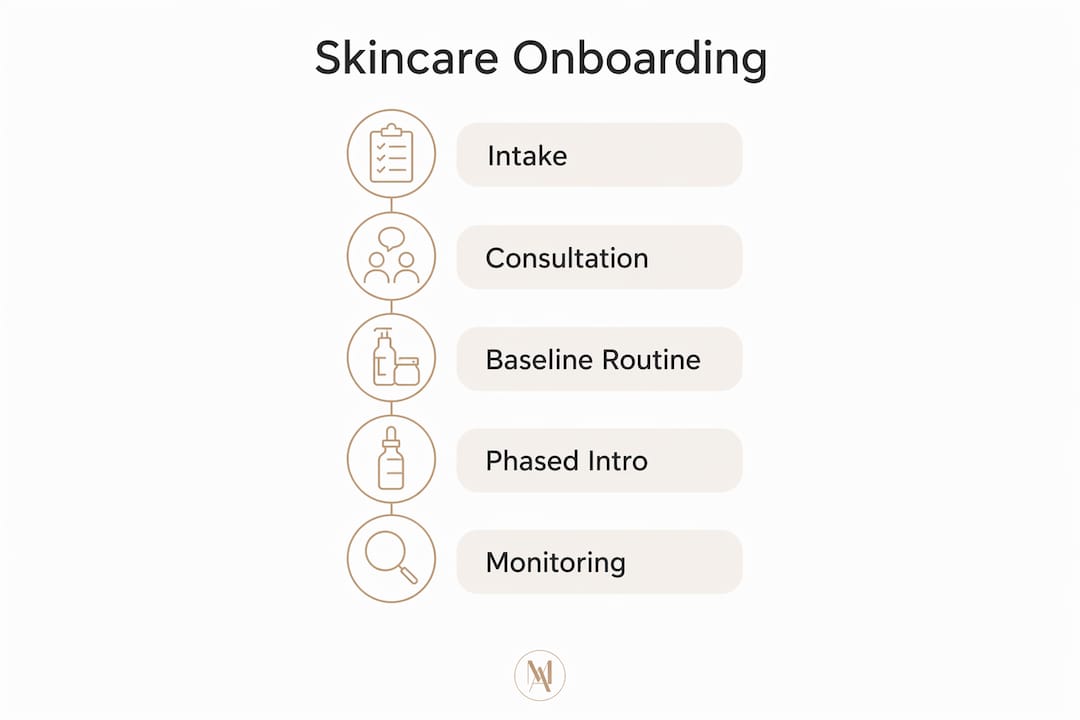
Digital intake forms integrated into booking confirmations significantly boost completion rates and gather essential client data before the appointment. The ideal window is 24–48 hours before the consultation. This frees the appointment itself for clinical assessment rather than administrative catch-up.
The intake form should collect:
- Full name, date of birth, and contact details
- Current skincare products and routine
- Medical history, including medications and known allergies
- Skin concerns ranked by priority
- Recent photographs of the skin in natural light
Mobile-friendly intake forms sent in advance reduce administrative delays and enable full appointment time to be used for treatment planning. A form that is difficult to complete on a phone will simply not be completed. Keep fields concise and use plain language throughout.
Pro Tip: Ask clients to photograph their skin in natural daylight, without make-up, from three angles: front, left profile, and right profile. These images become your baseline for tracking progress at the 8-week and 12-week review points.
On the practitioner side, preparation means reviewing the completed form before the client arrives. Arriving at the consultation having already read the intake data signals professionalism and respect for the client’s time.
How to conduct a skincare consultation that builds genuine trust
The consultation is not a second intake form. Separation between data collection and full consultation engagement is critical. The consultation must begin with human connection before clinical assessment. This distinction is the most commonly missed step in the new client skincare guide that practitioners follow.
The SEEN method provides a reliable framework for structuring the consultation:
- Connect — Begin with open conversation about the client’s day, their general wellbeing, and their skincare history. Do not open with a clinical assessment of their skin.
- Investigate — Ask open-ended questions about their concerns, lifestyle, diet, sleep, and stress levels. These factors directly influence skin behaviour.
- Educate — Explain what you observe in the skin and why. Use plain language. Avoid overwhelming the client with terminology.
- Validate — Reflect their main concerns back to them. Acknowledge what they have tried before and why it may not have worked.
- Prescribe — Present a personalised plan that addresses their specific concerns in a logical, phased sequence.
“Reflecting clients’ main concerns back to them significantly increases trust and retention.” — SPA+CLINIC Consultation Insights
Rapport-building transforms consultations from mechanical intake into trusted partnerships. Practitioners who skip the Connect stage see lower client retention and less honest disclosure of concerns. Clients withhold information when they do not feel safe. That withheld information is often clinically significant.
Pro Tip: During the Investigate stage, ask: “What does your ideal skin look like to you?” This question reveals the client’s emotional relationship with their skin, not just their clinical concerns. It shapes everything from product selection to expectation management.
For a deeper look at open-ended inquiry techniques and visual assessment methods, Them-ethod’s expert consultation guide covers the clinical and relational dimensions in full.
What are the skincare onboarding steps for introducing products safely?
Phased product introduction is the clinical backbone of the onboarding process for estheticians and skincare practitioners alike. The goal is to establish skin barrier integrity before introducing any active ingredients.
The Dermalytics protocol sets a clear starting point: a minimal routine of cleanser, moisturiser, and SPF for a minimum of 14 days before any actives are introduced. This baseline period does two things. It stabilises the skin barrier. It also gives you a clean reference point for identifying reactions when actives are added later.
| Phase | Timeline | Products | Purpose |
|---|---|---|---|
| Baseline | Days 1–14 | Cleanser, moisturiser, SPF | Stabilise barrier, establish tolerance |
| Active introduction | Weeks 3–8 | First active, 2x per week | Assess tolerance, monitor for irritation |
| Second active | Week 9 onwards | Second active added | Build on established tolerance |
| Full assessment | Weeks 8 and 12 | Full routine review | Confirm efficacy and adjust as needed |
Introducing active ingredients slowly, starting at twice per week and delaying the second active until after week 9, is a non-negotiable rule to prevent barrier compromise. Introducing two actives simultaneously makes it impossible to identify which product caused a reaction. This is not caution for its own sake. It is diagnostic discipline.
Key principles for the product introduction phase:
- Never introduce retinoids and exfoliating acids in the same week
- Educate the client on application sequence: cleanser, treatment, moisturiser, SPF (morning)
- Set clear expectations about purging versus adverse reactions
- Document every product introduced and the date it was added
Full assessment at weeks 8 and 12 allows you to monitor tolerance and confirm efficacy before advancing the regimen. These checkpoints are not optional. They are where the clinical value of the onboarding process is realised.
How to maintain and adjust the skincare client onboarding process over time
Skin is not static. Hormonal shifts, seasonal changes, stress, medication, and ageing all alter how the skin behaves. A skincare regimen that works in january may need adjustment by april. The onboarding process does not end at week 12. It evolves.
Revisiting intake data and treatment plans is necessary to adapt to the skin’s dynamic nature and the client’s life changes. Periodic reassessment reduces the risk of treatment mismatch and supports improved outcomes. Schedule formal reviews at three months, six months, and annually as a minimum.
Between formal reviews, digital tools make it straightforward to gather client feedback. A brief check-in message at week 4 asking about product tolerance and any concerns keeps the relationship active and catches problems early.
Common mistakes to avoid in ongoing client management:
- Failing to update the intake record when the client reports a new medication or health change
- Continuing a regimen unchanged despite the client reporting persistent irritation
- Skipping the emotional check-in and focusing only on clinical progress
- Introducing new products without documenting them in the client record
Pro Tip: Create a simple quarterly review template that mirrors the original intake form. Comparing the client’s answers at month one versus month six reveals patterns that a single consultation cannot show. Skin behaviour, lifestyle habits, and product tolerance all shift over time.
Skin’s changing condition means that the skincare client assessment is a living document, not a one-time exercise. Practitioners who treat it as such see measurably better client outcomes and stronger long-term retention.
For clients preparing for their first appointment, Them-ethod’s consultation preparation checklist sets out exactly what to bring, what to expect, and how to get the most from the experience.
Key takeaways
A structured process for client skincare onboarding, combining digital intake, trust-led consultation, phased product introduction, and regular reassessment, produces the most consistent and clinically sound results.
| Point | Details |
|---|---|
| Digital intake first | Send mobile-friendly intake forms 24–48 hours before the consultation to maximise data quality. |
| Consultation starts with connection | Begin every consultation with rapport, not clinical assessment, to build trust and honest disclosure. |
| Baseline routine before actives | Use cleanser, moisturiser, and SPF for at least 14 days before introducing any active ingredients. |
| Phase active introduction carefully | Introduce the first active at twice per week and delay the second active until after week 9. |
| Review regularly | Reassess intake data and treatment plans at weeks 8 and 12, then quarterly, to reflect skin changes. |
Why the Connect stage is the one practitioners underestimate most
I have reviewed a great many consultation frameworks over the years, and the pattern is consistent: practitioners rush the beginning and slow down at the clinical end. The intake form is treated as the relationship. The clinical assessment is treated as the consultation. Both assumptions are wrong.
The Connect stage of the SEEN method is where the real work happens. A client who feels seen in the first three minutes will tell you things in minute ten that they would never have volunteered otherwise. That information changes the treatment plan. It changes the product selection. It changes the outcome.
The most common practitioner pitfall I observe is filling silence with clinical commentary. When a client pauses after describing their skin concern, the instinct is to fill that pause with an explanation or a product suggestion. Resist it. The pause is where the real concern surfaces. Let it breathe.
Balancing clinical thoroughness with client comfort is a skill that develops with practice. The clinical knowledge is learnable from textbooks. The ability to make someone feel genuinely heard is built through attention and intention. Both matter equally in this work.
Ongoing education in consultation technique is as important as staying current with ingredient science. The two are inseparable in delivering results that clients actually maintain.
— Jess
How Them-ethod supports your skincare onboarding journey
At Them-ethod, we have built our approach around the same principles this guide describes: thorough intake, trust-led consultation, and phased, clinically sound product introduction. Our virtual skin consultations connect you with top clinicians who follow a structured assessment process tailored to your specific skin concerns, whether that is pigmentation, acne, ageing, or sensitivity. We work with prescription-strength and dermatologist-recommended products, and we do not recommend anything we have not assessed against your individual skin profile. Read what our clients say about their experiences on our client reviews page and see the outcomes that a properly structured onboarding process delivers. If you are ready to begin, your skin consultation is the natural next step.
FAQ
What is the process for client skincare onboarding?
The process for client skincare onboarding is a structured sequence covering digital intake, clinical consultation, phased product introduction, and ongoing reassessment. It is designed to gather personalised data and build a safe, effective skincare regimen tailored to the individual.
How long before a consultation should intake forms be sent?
Intake forms should be sent 24–48 hours before the consultation. This gives clients time to complete them thoroughly and frees the appointment for clinical assessment rather than paperwork.
Why should actives be introduced slowly during skincare onboarding?
Introducing actives slowly, starting at twice per week, prevents skin barrier damage and makes it possible to identify which product causes a reaction. Dermalytics guidelines recommend delaying the second active until after week 9.
What is the difference between an intake form and a skincare consultation?
An intake form collects clinical data before the appointment. The consultation is a separate, human-led engagement that begins with rapport-building and uses the intake data to inform a personalised treatment plan.
How often should a skincare client’s plan be reassessed?
Formal reassessment should happen at weeks 8 and 12, then at least quarterly. Skin changes with hormones, seasons, and lifestyle, so treatment plans must be updated to remain effective.