




Why specialist skincare is worth importing
TL;DR:
- Expert skincare products use higher active concentrations and advanced delivery systems to modify skin biology, not just surface appearance. Importing from Europe can save money and provide access to clinical formulations unavailable locally. Verification of authenticity and professional guidance are essential for safe and effective use.
Specialist skincare is defined as clinically formulated, dermatologist-developed products that use higher active concentrations and patented delivery systems to modify skin biology rather than simply improve surface appearance. For anyone managing acne, pigmentation, or accelerated ageing, the question of why specialist skincare is worth importing comes down to one fact: the most effective formulations are often not available through local retailers. Medical-grade products achieve deeper skin penetration and measurable biological change, and access to them frequently requires crossing a border. The global market for these products is growing, and so is the case for sourcing them internationally.
What differentiates specialist imported skincare from local alternatives?
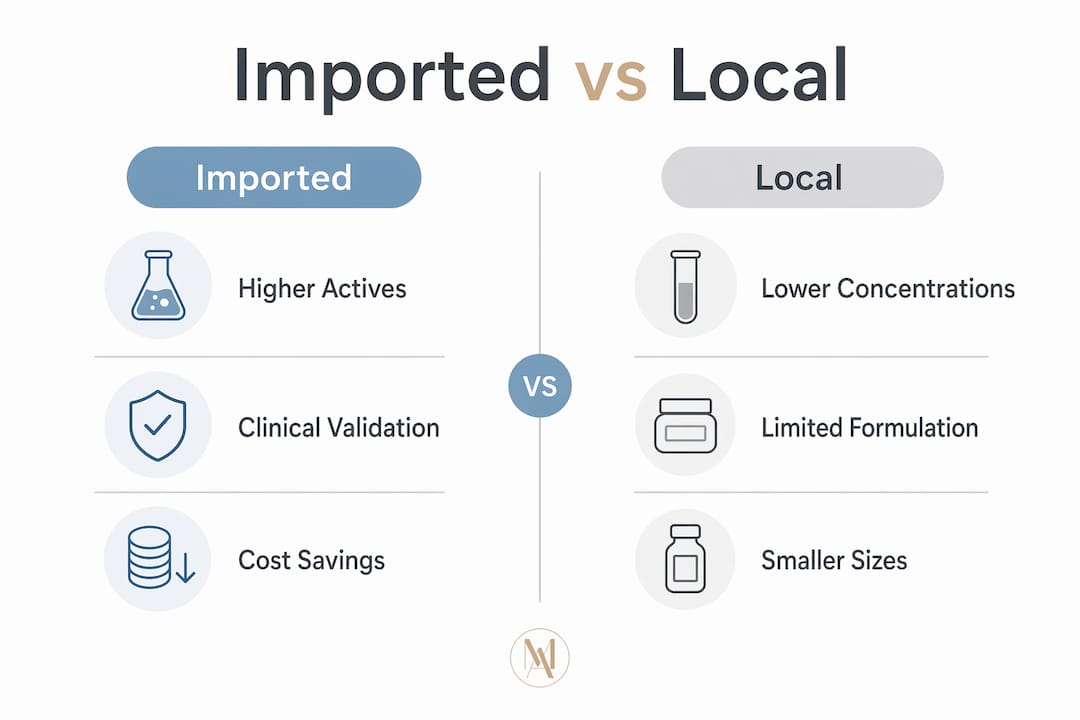
The core difference between specialist and mass-market skincare is formulation depth. Medical-grade skincare uses higher concentrations of active ingredients and advanced delivery systems that achieve deeper skin penetration and impact beyond surface appearance. Standard cosmetics, regulated as OTC products, are legally limited in how far they can modify skin biology.
Professional and medical-grade brands maintain approximately 22% operating margins versus 5% for mass-market products. That margin reflects investment in patented technologies, clinical trials, and delivery mechanisms that genuinely work. You are not paying for packaging or marketing. You are paying for the science behind the formula.
The categories where importing makes the clearest difference include:
- Retinoids and retinol derivatives at concentrations above 0.3%, rarely available over the counter in the UK
- Azelaic acid formulations at 15–20%, used for rosacea and pigmentation, often only available on prescription locally
- Niacinamide and peptide complexes in professional pack sizes that reduce cost per application significantly
- Vitamin C serums with L-ascorbic acid at 15–20% stabilised in anhydrous delivery systems
- Chemical exfoliants such as glycolic and mandelic acid at clinical percentages
Personalised dermato-cosmetic regimens show measurable improvements in barrier function, hydration, and pigmentation within 28 days. That is a clinical timeframe, not a marketing promise. Mass-market products rarely produce biometric changes in that window.
Pro Tip: Before purchasing an imported specialist product, cross-reference the batch number on the manufacturer’s website or contact the brand directly. Authentic products from reputable importers will always carry verifiable batch codes.
How importing specialist skincare leads to real cost savings
Price asymmetry between markets is one of the strongest arguments for importing. French pharmacy skincare brands such as Vichy and Avène cost 35–60% less in France than their US or UK equivalents, partly because French pharmacy pricing is regulated and distribution costs in export markets inflate retail prices substantially. That is not a small difference. On a £60 product, you could be paying £36 in the source market.

Professional pack sizes compound the saving. European pharmacy and clinic channels sell 300ml–500ml formats of serums, cleansers, and treatment creams that simply do not exist in UK retail. Cost-per-ml analysis shows that importing larger professional formats can be more economical than buying local smaller sizes, even after accounting for shipping.
| Format | Typical local price | Imported price (incl. shipping) | Cost per ml |
|---|---|---|---|
| 30ml serum (local retail) | £55 | — | £1.83 |
| 50ml serum (imported) | — | £48 | £0.96 |
| 300ml cleanser (professional import) | — | £32 | £0.11 |
| 30ml cleanser (local retail) | £18 | — | £0.60 |
The table above uses illustrative figures based on published pricing patterns. Your actual saving depends on the specific product, shipping method, and any applicable import duties. Always calculate the total landed cost before purchasing.
Pro Tip: Add up the product price, international shipping fee, and any applicable customs duty before comparing to local retail. A product that saves you £20 on face value may cost more once freight and VAT are included. Use a landed cost calculator or ask your importer for a full breakdown.
Why clinical credibility and pharmacy consultation matter
The pharmacy consultation culture in markets like Spain and France produces a fundamentally different type of skincare product. In these markets, pharmacists are trained clinicians who recommend products based on skin diagnosis, not shelf appeal. The Spanish pharmacy-based dermatology pipeline fosters clinical credibility and protocol-driven skincare, not trend-driven beauty.
Brands built within this pipeline carry a different standard of evidence. ISDIN, Mesoestetic, and Cantabria Labs are all developed within dermatological frameworks, tested in clinical settings, and recommended through pharmacist and dermatologist channels before reaching consumers. That pipeline matters because it means the product has been validated for a specific skin concern, not simply formulated to sell.
Expert dermatologists stress that the value of imported specialist skincare lies in its clinical pipeline and pharmacy consultation, ensuring protocol-based, cumulative skin benefit rather than quick fixes. This is the distinction between a product that addresses a skin condition and one that simply makes skin feel temporarily smoother.
The benefits of sourcing from pharmacy-backed brands include:
- Products formulated to work within a defined treatment protocol, not in isolation
- Clinical validation data available from the manufacturer
- Pharmacist or dermatologist recommendation as part of the purchase process
- Ingredient transparency and concentration disclosure on labelling
- Compatibility with prescription treatments when used under professional guidance
Dermatology experts also caution that medical-grade products are not miracle cures. Professional guidance is necessary to avoid irritation and wasted investment. Importing a high-potency retinoid without understanding your skin’s current barrier function, for example, can cause more harm than benefit. Understanding common skin conditions and how they respond to active ingredients is the foundation of any effective protocol.
Practical considerations and risks when importing specialist skincare
Importing specialist skincare carries real risks if you approach it without due diligence. The most significant is counterfeit product. Buyers should verify temperature-controlled shipping and batch authenticity when purchasing medical-grade formulas internationally. Heat exposure during transit degrades active ingredients, particularly vitamin C, retinol, and peptide complexes, rendering the product ineffective or potentially irritating.
A second risk is substituting prescription-level products without medical oversight. Practitioners caution against replacing prescribed dermatological treatments with imports that lack exact delivery systems or active concentrations. The concentration of an active ingredient matters, but so does the vehicle it is delivered in. A 0.5% retinol in a microencapsulated system behaves very differently from the same percentage in a standard emulsion.
When evaluating an importer or supplier, look for the following:
- Authorised distributor status confirmed by the brand
- Cold chain shipping guarantees for heat-sensitive formulations
- Batch number verification process available to buyers
- Clear returns and authenticity policy
- Compliance with UK import regulations and product safety standards
- Transparent ingredient lists matching the brand’s official product specifications
Not all expensive skincare is better, and importing is most justified for niche actives, concentrations, or delivery mechanisms unavailable domestically. Daily basics such as gentle cleansers and SPF often perform well from local sources. Reserve importing for the products where the formulation gap is genuinely significant.
Key takeaways
Importing specialist skincare is most worthwhile when the formulation, concentration, or clinical validation of a product is simply not available through domestic retail channels.
| Point | Details |
|---|---|
| Formulation depth matters | Medical-grade imports use higher active concentrations and delivery systems that standard cosmetics cannot legally replicate. |
| Cost savings are real but require calculation | European pharmacy brands can cost 35–60% less at source; always calculate total landed cost including shipping and duties. |
| Clinical pipeline adds credibility | Brands like ISDIN and Mesoestetic are developed within dermatological frameworks, not trend-driven beauty cycles. |
| Risks require active management | Verify batch authenticity, confirm cold chain shipping, and never substitute a prescription without medical advice. |
| Expert guidance maximises results | Importing without a protocol wastes money; a professional consultation ensures the right product for your specific concern. |
My honest view on importing specialist skincare
Working with clients who have complex skin concerns, I have seen importing make a genuine difference. The clients who benefit most are not chasing novelty. They are managing conditions like post-inflammatory hyperpigmentation, cystic acne, or rosacea that have not responded to what is available locally. For them, access to a Mesoestetic depigmentation protocol or a clinical-strength azelaic acid formulation is not a luxury. It is the difference between a treatment that works and years of frustration.
What I have also seen is the cost of importing without guidance. A client who sources a high-percentage glycolic toner without understanding their skin’s current sensitivity level can set their barrier function back by weeks. The product is not the problem. The absence of a protocol is. Consulting a skincare expert before importing a specialist product is not optional if you want results rather than reactions.
My honest position is this: importing is worth it when the product addresses a specific, diagnosed concern and fits within a structured protocol. It is not worth it as a way to access prestige brands at a discount for general maintenance. The savings are real, the clinical benefits are real, but they only materialise when the product is right for your skin and used correctly. Prioritise evidence-backed formulations over trends, and always pair your import decision with professional advice.
— Jess
Specialist skincare available for import at Them-ethod
At Them-ethod, we curate imported medical-grade skincare specifically for people with real skin concerns, not general maintenance routines. For acne-prone skin, the PCA Skin ClearSkin Acne Treatment Serum delivers clinically validated actives in a format designed for consistent, protocol-driven use. For those addressing signs of ageing, PCA Retinol Night 0.5% uses a microencapsulated delivery system that minimises irritation while maintaining efficacy. Every product we stock is sourced through authorised channels with full batch verification. Our virtual skin consultations connect you with experienced clinicians who can build a protocol around your specific concerns before you commit to a product.
FAQ
What makes specialist skincare worth importing?
Specialist skincare worth importing offers higher active concentrations, patented delivery systems, and clinical validation that standard domestic retail products cannot legally provide. The formulation gap is the primary justification for sourcing internationally.
Are there examples of specialist skincare unavailable locally?
Retinoids above 0.3%, azelaic acid at 15–20%, and clinical-percentage glycolic acid formulations are common examples of specialist skincare unavailable locally through standard UK retail channels. These are widely available through European pharmacy and clinic networks.
How much can I save by importing skincare products?
European pharmacy brands can cost 35–60% less at source than their UK or US retail equivalents. The actual saving depends on the product, shipping costs, and applicable import duties, so calculating total landed cost is necessary before purchasing.
Is it safe to import prescription-strength skincare?
Importing prescription-level products without medical oversight carries real risk. Practitioners advise against substituting prescribed treatments with imports that may differ in concentration or delivery system. Always consult a dermatologist or skincare clinician before importing prescription-strength formulations.
How do I verify that an imported skincare product is authentic?
Check the batch number against the manufacturer’s official verification system and confirm your supplier holds authorised distributor status. Reputable importers also provide cold chain shipping guarantees and clear authenticity policies to protect product stability during transit.